
2025 among Earth's warmest years on record, new reports say

The globe extends its streak of its hottest years on record, now at 11 successive years, with 2025 ranking as the third-warmest, according to new climate reports
Last year just narrowly escaped becoming the planet's hottest on record.
But that near-miss is no reason to celebrate as 2025 was still among the hottest ever documented, with the year ranking as the third-warmest, according to European Centre for Medium-Range Weather Forecasts (ECMWF), the organization that operates and uses data from the Copernicus Climate Change Service (CS3) and Copernicus Atmosphere Monitoring Service (CAMS).
SEE ALSO: Is hacking the atmosphere a 'cool' idea to offset global warming?
In a news release published on Wednesday, Jan. 14,, ECMWF said in 2025, the global surface air temperature was 1.47 C above the pre-industrial level time frame (1850 to 1900), a tad cooler than the hottest year on record, 2024 (by 0.13 C), and 2023 (by 0.01 C).
Meanwhile, the World Meteorological Organization (WMO) had a slightly lower number for 2025's global surface air temperatures, pegging it at 1.44 C above the 1850-1900 average, enough to claim the year as one of the three warmest on record, but it didn't give it a specific ranking.
"This report confirms that Europe and the world are in the warmest decade on record, and that the European Commission’s investment in Copernicus continues to be critical. As an international organization serving 35 nations, ECMWF provides the world-leading science for informed decisions to be made, and ultimately action taken, to adapt to climate change, because every year and every degree counts. Preparedness and prevention remain possible, but only when action is guided by robust, scientific evidence," said Florian Pappenberger, ECMWF director-general, in a [news release]((https://climate.copernicus.eu/copernicus-2025-was-third-hottest-year-record).
Eleven consecutive years of the planet's warmest years
The global surface air temperature recorded during the last 12 months have been part of a worrisome trend, with the past 11 years being documented as the 11 warmest on record, ECMWF said.
The worldwide temperatures from 2023-25 averaged more than 1.5 C above the pre-industrial level (1850–1900)--the first time on record that a three-year period has exceeded the 1.5 C limit.

Global surface air temperature increase (C) above the average for the 1850–1900 designated, pre-industrial reference period based on the ERA5 dataset, shown as annual averages since 1940. (C3S/ECMWF).
As well, the European agency stated the air temperature over global land areas in 2025 was the second-warmest, while the Antarctic saw its hottest, annual temperature on record. Meanwhile, the Arctic saw its second-warmest.
Because of the current rate at which the globe is warming, the 1.5-degree threshold set out by the Paris Agreement could be reached by the end of this decade--more than 10 years earlier than what was previously outlined at the time of the signing of the accord, ECMWF said.
(NirutiStock/ iStock/ Getty Images Plus)
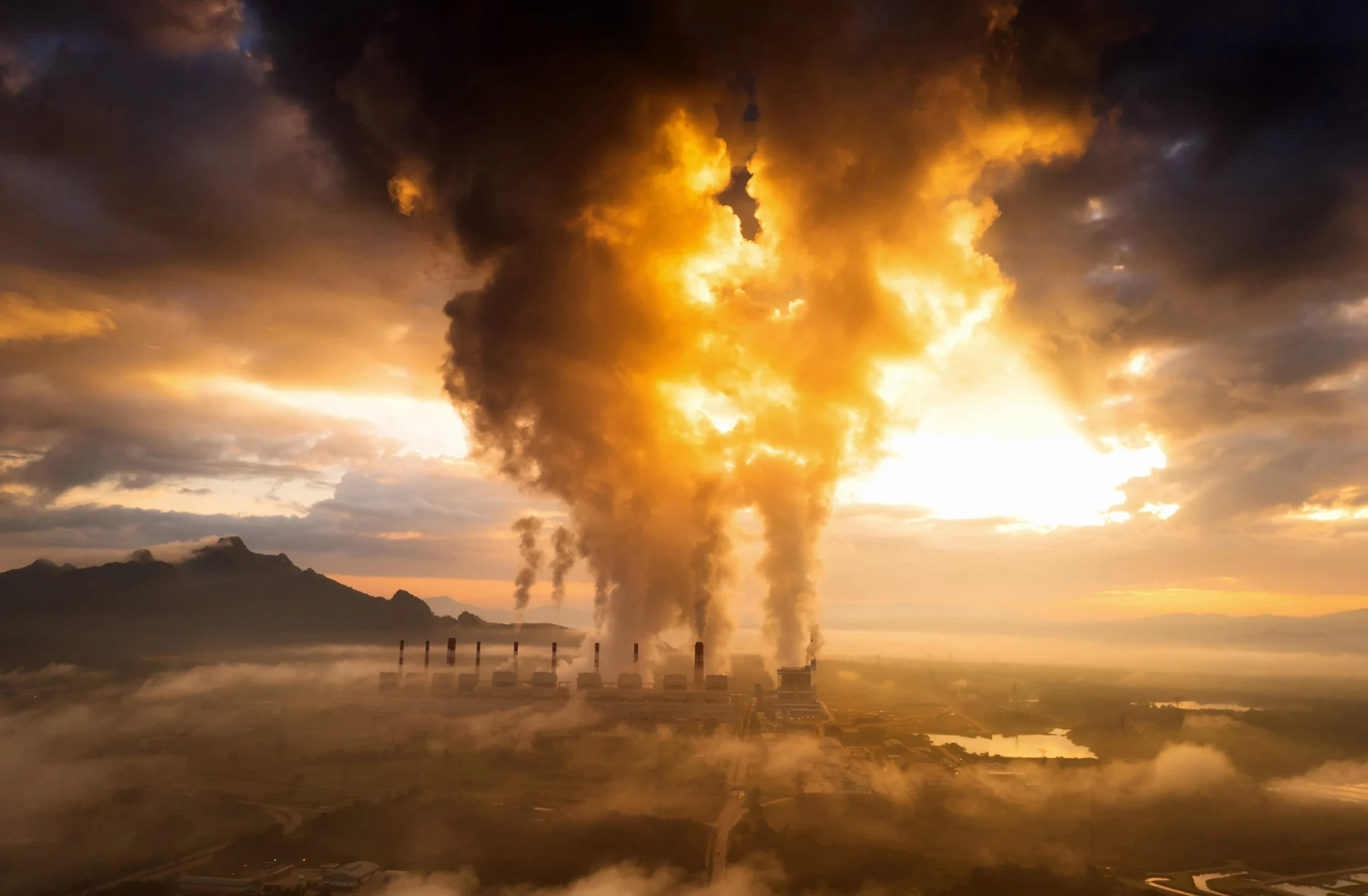
The 2023-2025 period was "exceptionally warm for two main reasons," according to ECMWF, with the first being the greenhouse gases accumulating in the atmosphere from ongoing emissions and reduced uptake of carbon dioxide by natural sinks.
The second is due to sea-surface temperatures hitting "exceptionally high" levels across the ocean, attributed to an El Niño event and other shifting ocean factors, worsened by climate change.
Other elements include aerosol amount modifications, and low cloud and fluctuations in atmospheric circulation.
WATCH: Is Nova Scotia at risk of becoming an island?
Six of WMO's datasets marked 2025 as third-warmest year
The WMO's temperature figure came from eight datasets, with two of them marking 2025 as the second-warmest year in its 176-year record. The additional six datasets designated 2025 as the third-warmest year.
All eight of its data configurations have ranked the past 11 years as the 11 warmest on record, the same result as ECMWF. WMO's merged, average temperature from the 2023-25 time frame is 1.48 C above the pre-industrial era, according to WMO.
“The year 2025 started and ended with a cooling La Niña, and yet, it was still one of the warmest years on record globally because of the accumulation of heat-trapping greenhouse gases in our atmosphere. High land and ocean temperatures helped fuel extreme weather--heat waves, heavy rainfall and intense tropical cyclones, underlining the vital need for early warning systems,” said Celeste Saulo, WMO Secretary-General, in a news release.
