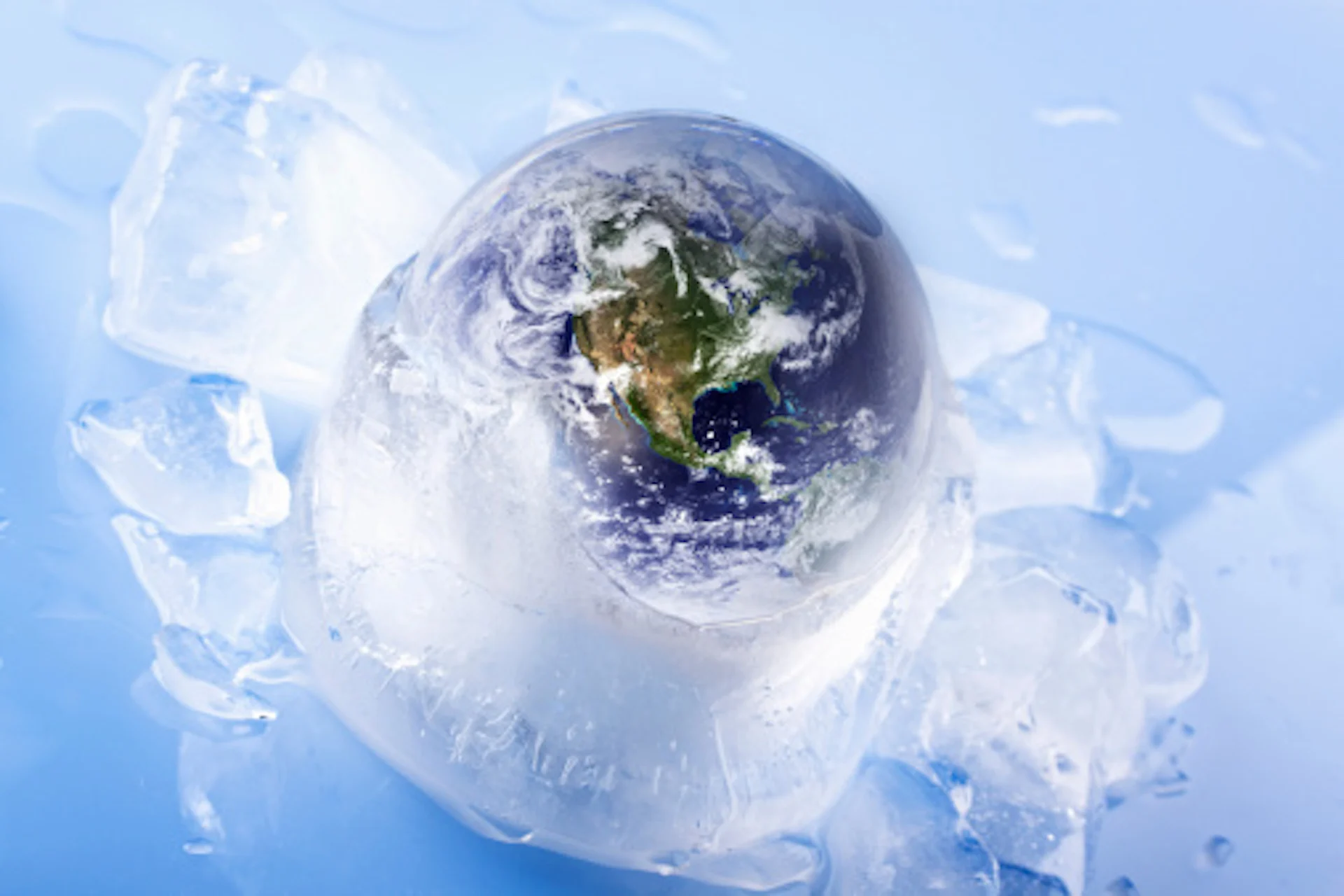
Carbon's hidden superpower: How extreme warming can trigger an ice age

Global warming could eventually bring about a new ice age on Earth, aided by organic carbon buried in the deep ocean, according to a 2025 study
Scientists may have solved a mystery of how Earth recycles its carbon, and what it could mean for the future.
The general understanding of how Earth's climate is regulated is that it happens through the climate-sensitive reaction of carbon dioxide (CO2) removal by the weathering of silicate rocks on land.
SEE ALSO: Ocean heat sets another record in 2025 as Earth sees third-hottest year
As a result, there is a negative, stabilizing feedback on CO2 that behaves as a planetary climate “thermostat,” so to speak, according to authors of a recent study. But the extreme cooling and "snowball Earth" affairs that were periodic during the Precambrian era (prior to 539 million years ago) indicated there were past instances of the aforementioned moderation process breaking down.
(acilo-E+-Getty-Images)
As well, a potential secondary thermostat and an additional, planetary CO2 removal mechanism were alluded to during the times of respite from the far-reaching, organic carbon burial in Earth's history.
“As the planet gets hotter, rocks weather faster and take up more CO2, cooling the planet back down again,” said Andy Ridgwell, University of California, Riverside (UCR) geologist and co-author of the September 2025 study, in a news release.
Carbon burial in the ocean is key factor
What is unknown currently is the exact essence of the interchange between weathering and organic carbon burial, and what determines which one dominates, the study noted.
On geological time scales, global warming can eventually overshoot into cooling, with the study citing organic carbon burial as the missing piece of the puzzle.
The key to a threat of an ice age lies with the carbon burial in the ocean.

Ocean floor. (Getty Images/Jovana Milanko/467304999-170667a)
"The stabilization of Earth’s climate by negative feedbacks between atmospheric carbon dioxide and silicate rocks can potentially be overridden by faster processes causing rapid burial of large amounts of organic carbon," researchers said in the study.
With carbon dioxide (CO2) increasing in the atmosphere, that is helping to heat up the planet, nutrients such as phosphorus get pushed into the sea. The outcome sees an abundance of plankton that absorbs CO2 during the photosynthesis process. When plankton dies, they export carbon to the deep ocean.
But, in a warmer world with increased, algal growth, oceans will see a drop in oxygen, which will lead to a recycling of phosphorus--as opposed to it getting buried. That reaction will generate a feedback loop where additional nutrients in the water create more plankton, with even more oxygen eliminated and the further recycling of nutrients, the study indicated.
Meanwhile, while that is ongoing, vast amounts of carbon are buried and the Earth cools as a result.

(buzbuzzer/ E+/ Getty Images)
According to UCR, in the study’s computer model, an ice age could be triggered from the resulting cooling of the planet.
Overshoot will occur, scientists predict
With more and more CO2 being added to the atmosphere, Earth will continue its warming trend in the short term, with the study's model forecasting an eventual, cooling overshoot.
But the next cooling overshoot will be a bit different--with an indication from researchers that it will likely be milder than past occurrences as a result of more oxygen in the atmosphere now than then, putting a damper on the nutrient feedback.

(coldsnowstorm/ E+/ Getty Images)
“[It's like] placing the thermostat closer to the [air conditioning] unit,” said Ridgwell, in the news release. "Still, it could be enough to bring forward the start of the next ice age."
The UCR geologist said the focus needs to be on limiting the warming the Earth is currently experiencing as it won't matter when the next ice age will be if we don't act now.
“That the Earth will eventually cool back down, in however wobbly a way, is not going to happen fast enough to help us out in this lifetime," said Ridgwell.
WATCH: Giant seaweed farm hopes to be carbon capture solution
Thumbnail header image is an illustration. The Earth globe image is provided by NASA. Getty Images/Asbe/183411985-170667a.
