Shining a Light on Resilience: The lasting spirit of Acadia in New Brunswick


Today, the Acadian spirit is expressed in cultural forms such as those found at Le Pays de la Sagouine, an Acadian theatrical village near Bouctouche, New Brunswick
The history of Acadians in New Brunswick is one of tenacity, starting with a 17th-century French settlement on Canada's east coast. Roman Catholic colonists from West-Central France arrived in the 1600s and lived alongside the Mi'kmaq and Wolastoqiyik. Acadians faced constant hardship as they built their colony amid civil wars and French-British conflict.
Building on their early settlement, France built Fort Beauséjour, a major fort, on the route connecting present-day New Brunswick and Nova Scotia. Construction began in 1751, but the fort lasted only a few years. After a two-week siege in 1755, it surrendered to the British and was renamed Fort Cumberland. During this period, trade and land disputes between France and Britain peaked, worsening Acadian hardship. Starting in 1755, the British deported the Acadians in the Grand Dérangement (The Great Upheaval).
During these hardships, Acadians refused to take allegiance to the British, seeking French neutrality.
The British saw this as a threat and feared an Acadian revolt. After capturing Fort Beauséjour, they cleared the region for British Protestants to settle. During the upheaval, 10,000 Acadians endured brutal conditions on British ships; many died from starvation and disease. Survivors were scattered across France, the American colonies, the Caribbean, and Louisiana, while some fled to Quebec.
(Credit: Akadi Lumina)
Despite extensive destruction, many Acadian families returned or moved inland, forming communities in northern and eastern New Brunswick, where they built a vibrant, distinctive culture that now represents about one-third of the province's population. Following the Treaty of Paris in 1763, many more Acadians returned, founding communities on the Acadian Peninsula, in Memramcook, and along the Saint John River valley. Throughout the 19th century, Acadians often remained a minority, facing cultural challenges as they developed a separate identity and preserved their heritage.
(Credit: Akadi Lumina)
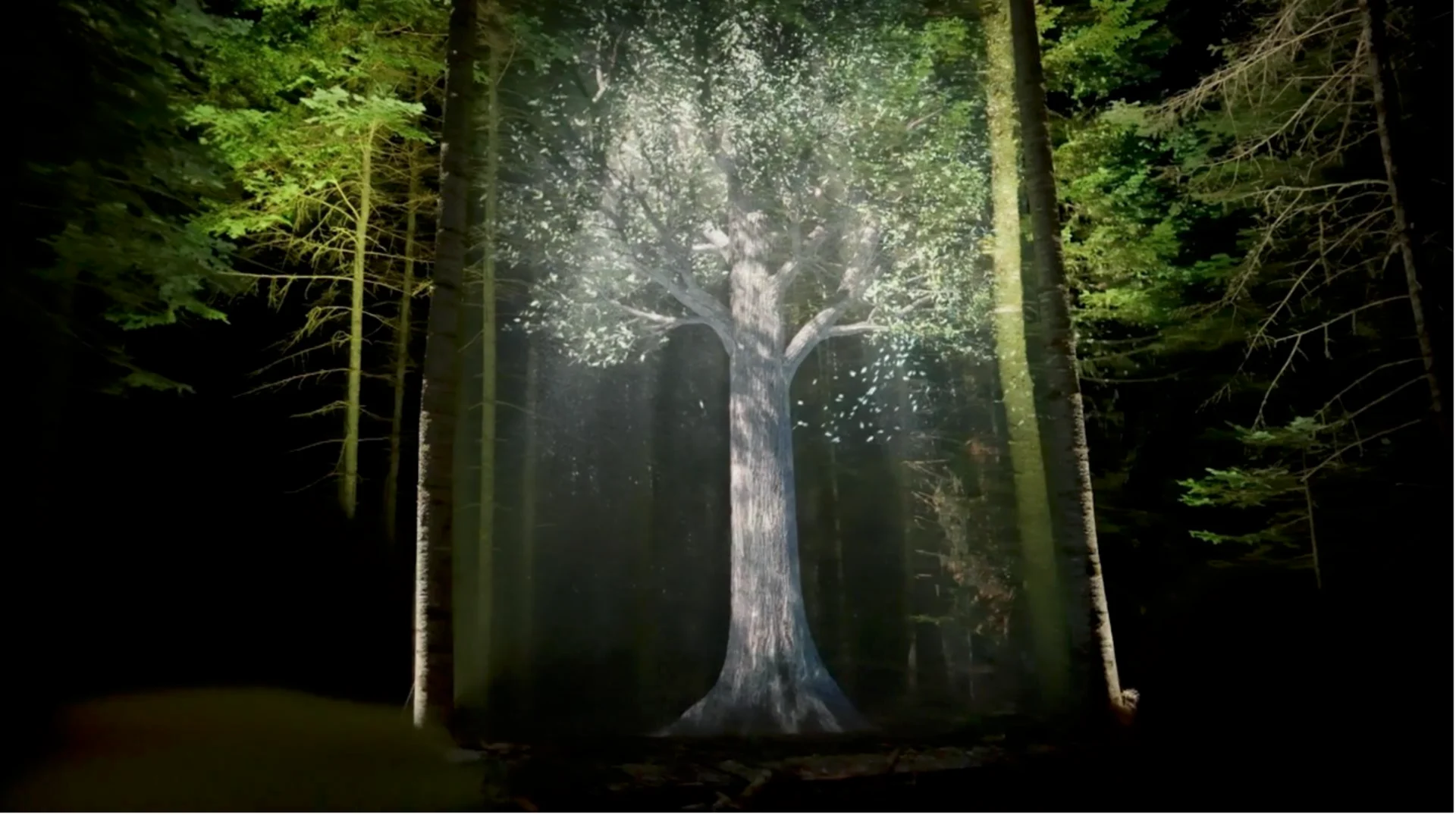
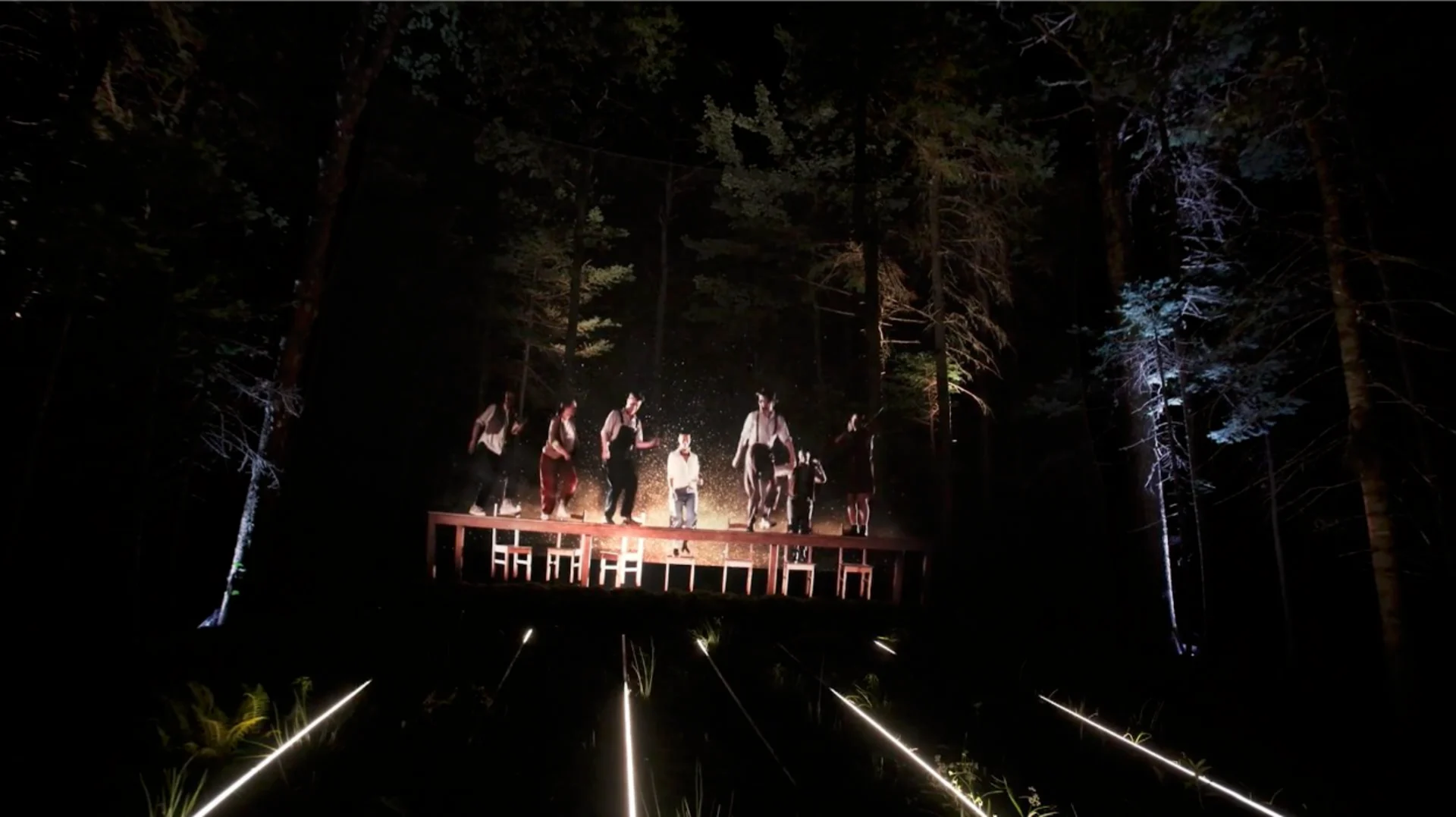
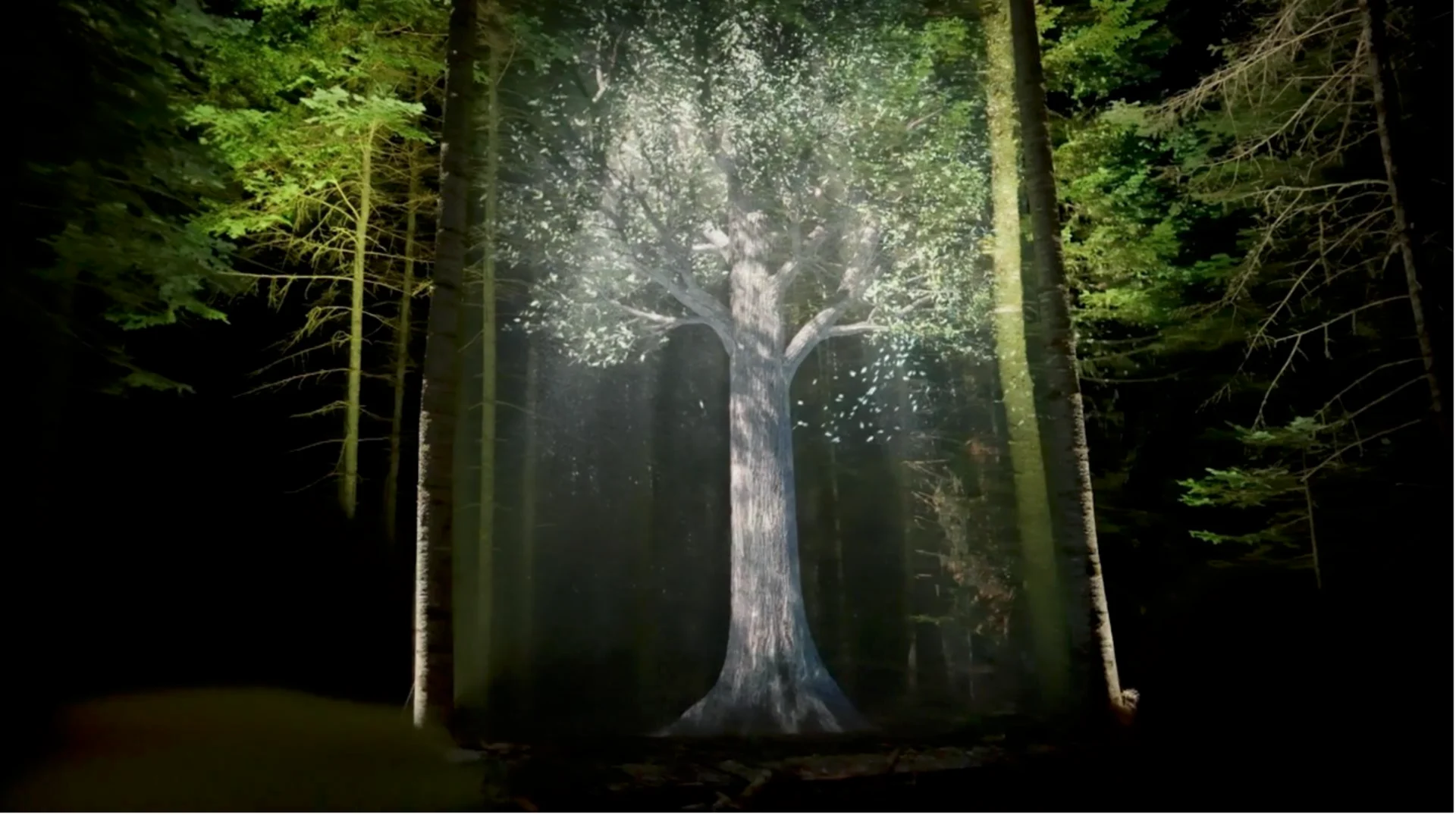
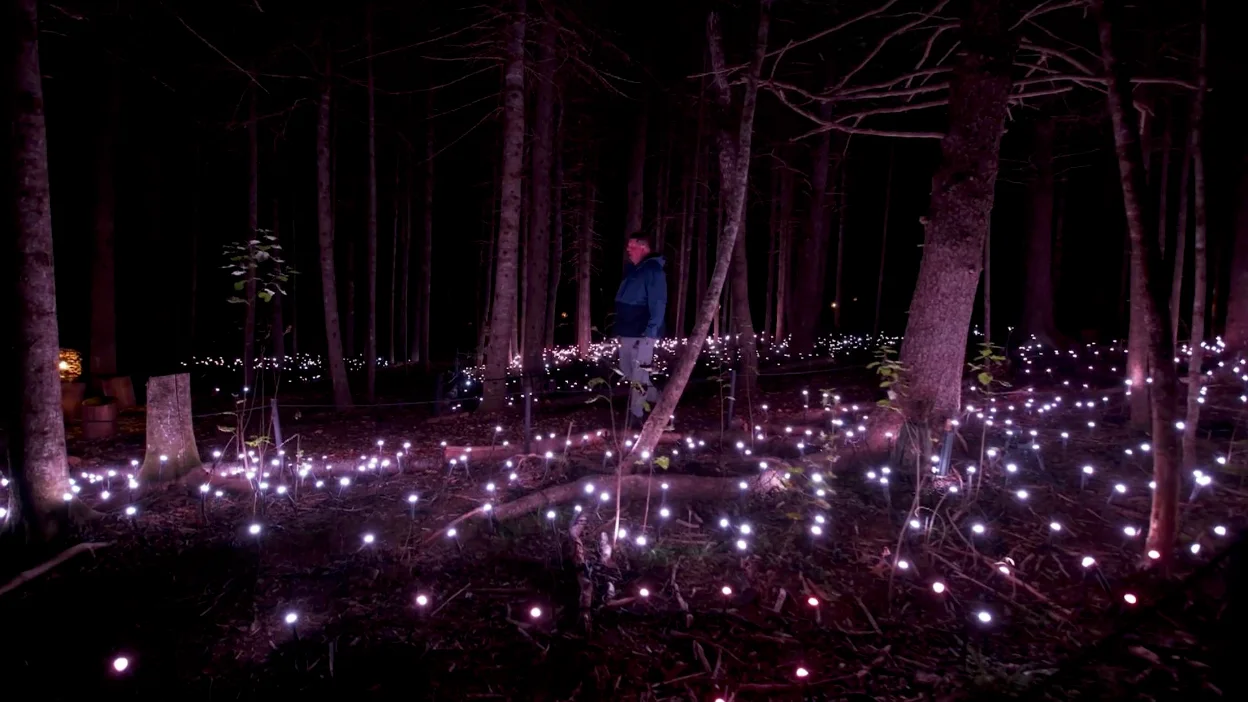
Today, the Acadian spirit is expressed in cultural forms such as those found at Le Pays de la Sagouine, an Acadian theatrical village near Bouctouche, New Brunswick. The characters created by Antonine Maillet, the soul of contemporary Acadian literature, come to life here. As part of the experience, Akadi Lumina unfolds as night falls. This 1.5 km forest pathway is illuminated with lighting, projections, soundscapes, and set design, immersing visitors in an Acadian story world. Over 100 Acadian artists shaped ten zones along the path, each expressing what it means and feels like to be Acadian. Each zone delivers a captivating experience to enjoy at your own pace as you discover enchanted moments on an artistic voyage inspired by a resilient, joyful people. Let the colours of Acadie shine through light, poetry, video, and music, and a glimpse of what shimmers in its soul.
Akadi Lumina (Credit: The Weather Network)
Through all of this, descendants of French settlers forced to leave their homes during Le Grand Dérangement have preserved their culture, traditions, and language despite many obstacles. As a result, Acadians have strongly influenced Canada’s history and society, and modern-day Acadie continues to play a considerable role in New Brunswick’s success. In this spirit, Akadi Lumina touches the heart with the inspiring fortitude and charm of generations of Acadians.
CLICK HERE to return to the Experiencing Canada main page for more videos and articles.