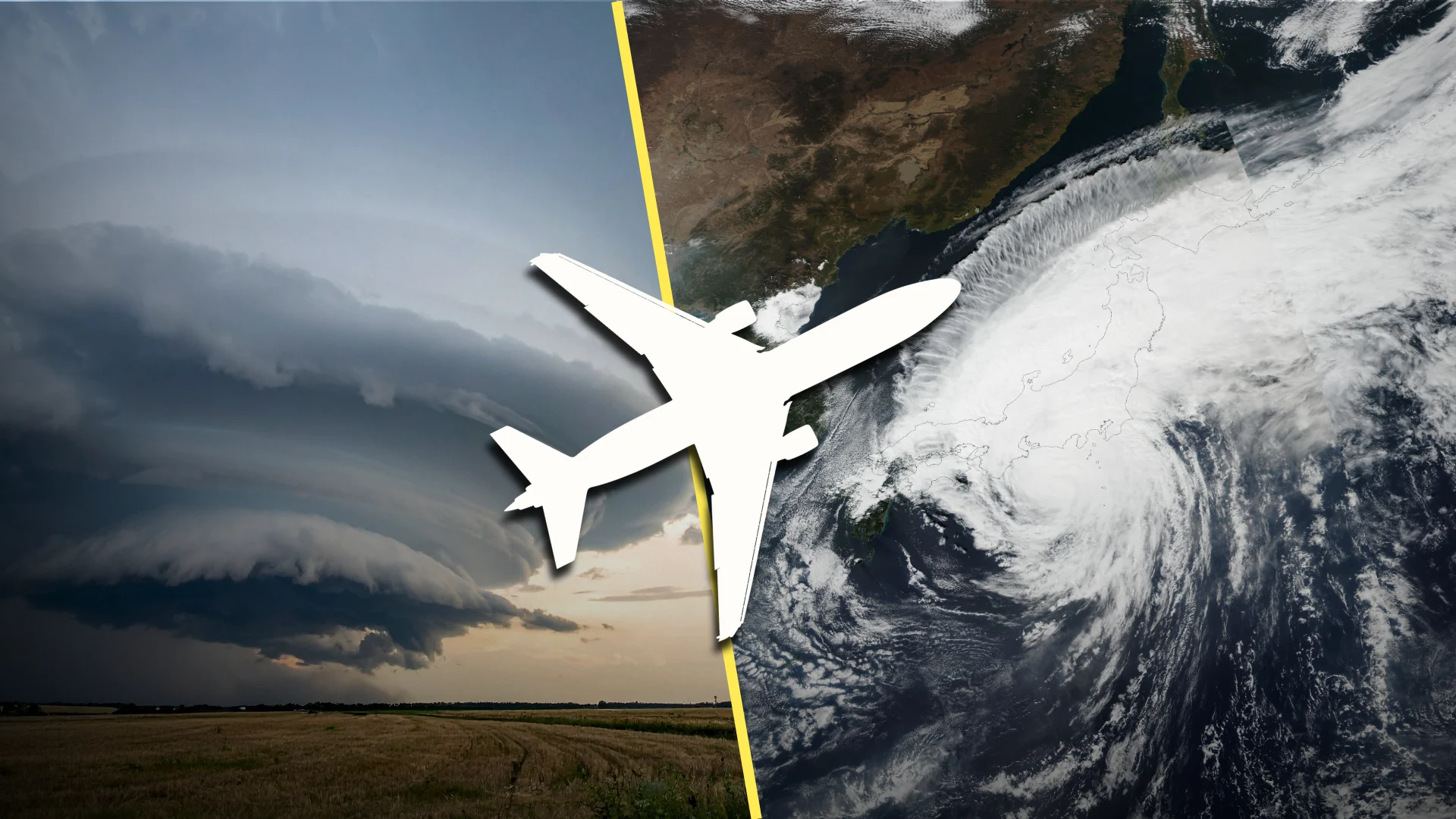
The world's busiest airports face these unique weather challenges

Thunderstorms, typhoons, and choking smog can hamper operations at some of the world’s busiest airports
Flying and weather are interconnected wonders. Millions of people take to the skies every day on flights that are at the mercy of our atmosphere’s changing whims.
Foul weather can instantly trigger a slew of delays and cancellations that have ripple effects lasting for days. And it turns out that some of the world’s busiest airports are exposed to some uniquely challenging weather conditions.
DON’T MISS: Why bad weather can wreak havoc on airline schedules
The world’s busiest airport sees frequent thunderstorms
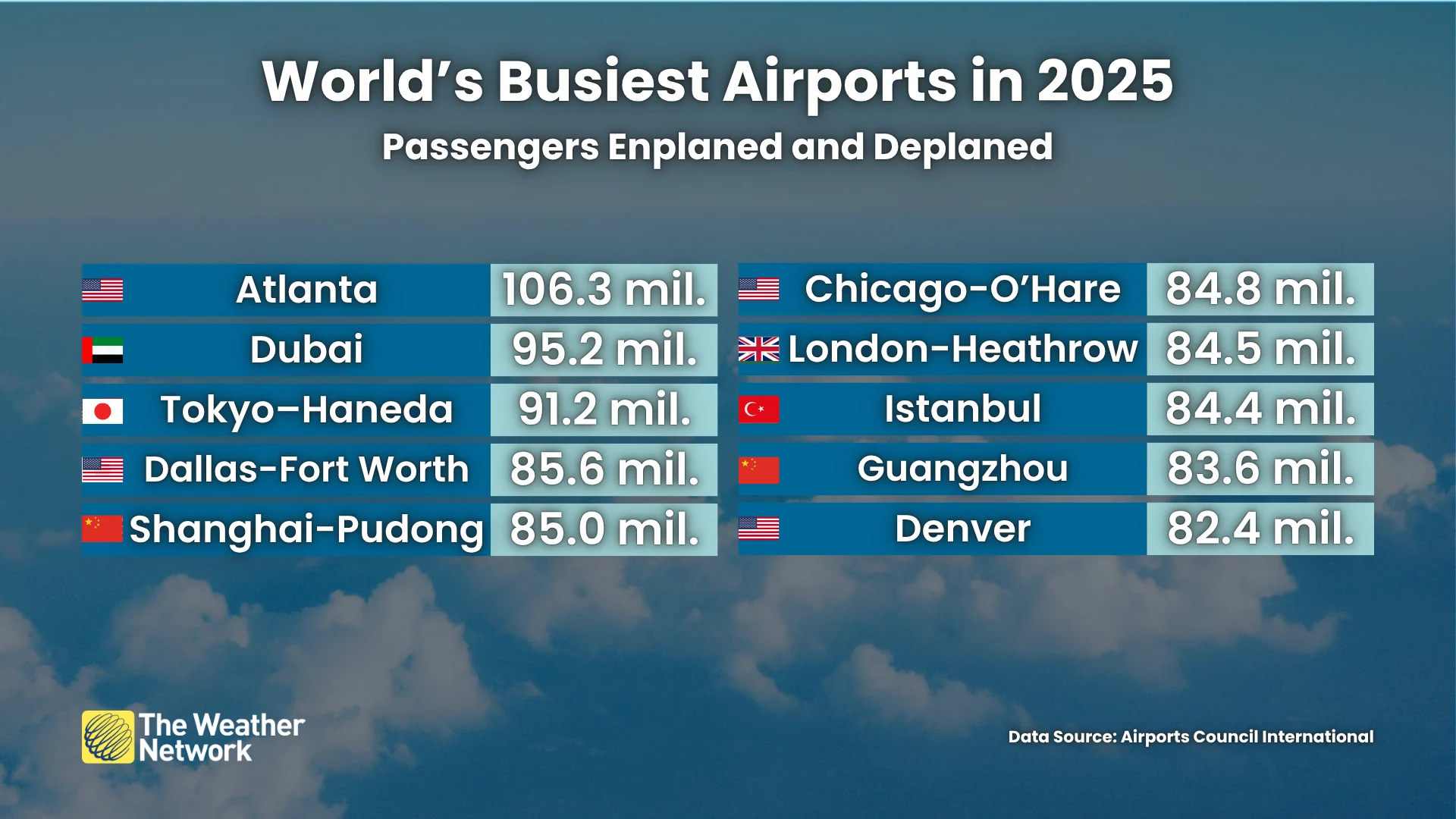
Atlanta’s Hartsfield-Jackson is the busiest airport in the world, holding that title almost consecutively since the late 1990s. The huge airport handled more than 106 million passengers in 2025, averaging around 2,100 arrivals and departures every day.
Atlanta is also home to impressive thunderstorms that can rumble directly over the airfield, putting a halt to this complex 24/7 operation.
Intense severe weather outbreaks during the spring, and relentless pop-up thunderstorms during humid summer afternoons, can throw a wrench in even the most well-crafted itinerary.
Thunderstorms can pose a significant risk to planes during takeoff and landing.
Sudden wind shear is common in storms, and it’s one of the most serious weather hazards any flight can face. Extreme rain and hail can also pose a safety hazard; one such incident led to a plane crash near Atlanta back in 1977.
Extreme heat can slow operations at the busiest international airport
Dubai International Airport is second-only to Atlanta in terms of annual travellers, hosting more than 95 million passengers in 2025.
RELATED: How airlines keep you safe in extremely hot weather
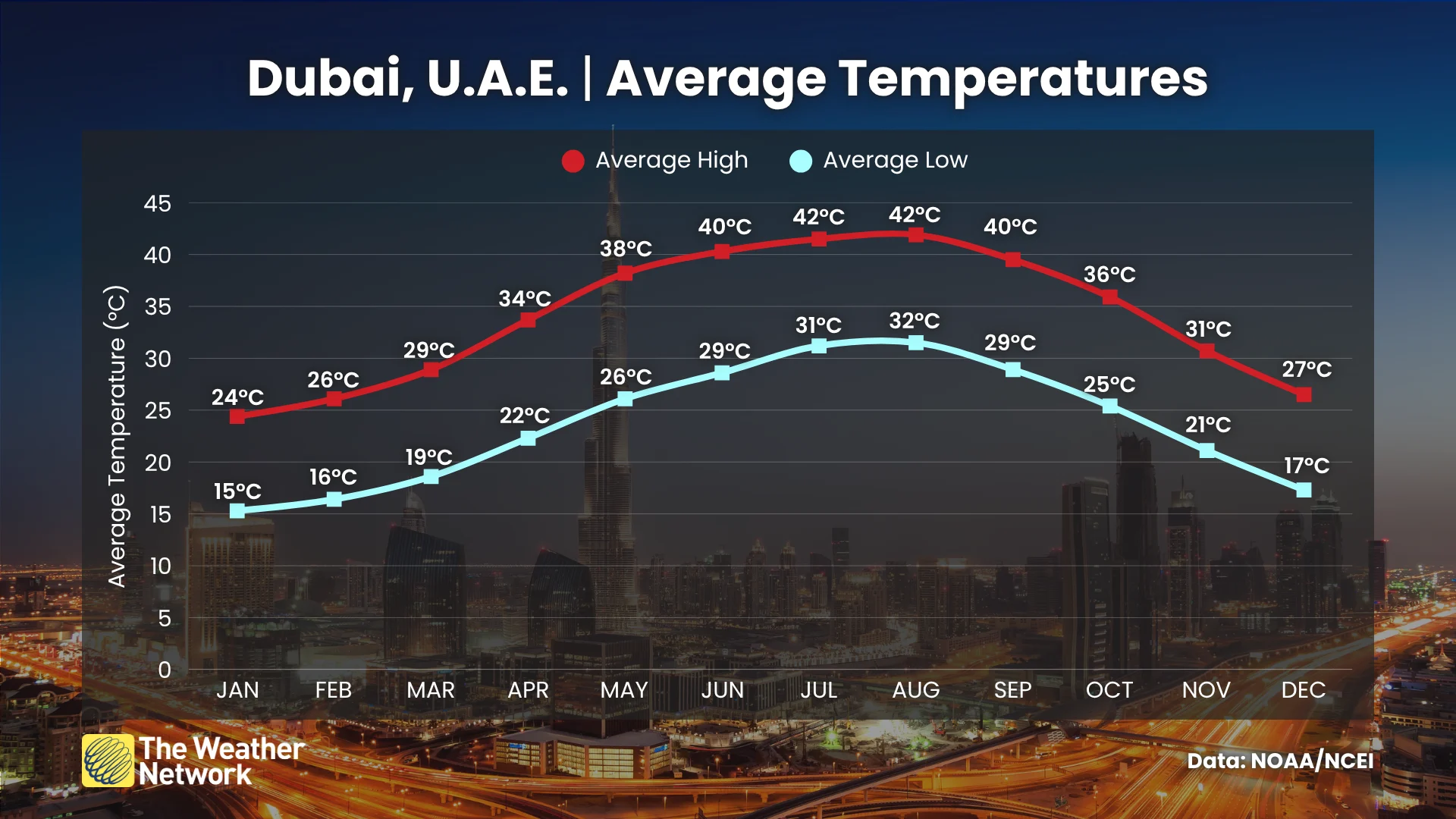
While the bustling city on the Arabian Peninsula isn’t known for its volatile weather, its average conditions are a reminder that extreme heat also counts as extreme weather.
Dubai’s average daytime temperature hovers at or above 40°C between June and September, with the city’s midsummer lows registering warmer than Toronto’s average high in July (27.4°C).
Very hot temperatures can cause delays and even some cancellations. Ground crews have to take special precautions when heat rises to untenable levels.
Airplanes also achieve less lift in the thinness of hot air, requiring higher speeds to take off and manoeuvre. As a result, Dubai Airport’s longest runway clocks in at more than 4,500 metres in length, a good bit longer than Canada’s lengthiest runway in Calgary (4,267 metres).
Typhoons routinely hit Japan
Tokyo is a major global hub for travellers heading to or from Asia. The city’s Haneda Airport was the third-busiest in the world in 2025; the route between Tokyo and Sapporo alone handles hundreds of flights per week.

RELATED: Sapporo is a skier's paradise as one of the world’s snowiest cities
Japan is no stranger to natural disasters. Residents are on constant alert for earthquakes, tsunamis, and volcanic eruptions. The atmosphere doesn’t go any easier on this densely populated archipelago.
Typhoons are a frequent and significant hazard throughout Japan. Tokyo’s location on the eastern extent of Honshu exposes this urban area of 40+ million to dangerous conditions when typhoons recurve through the region.
Powerful wind gusts, heavy rainfall, low visibility, and tornadoes can cause major flight delays and cancellations for travellers heading through this critical global hub.
Beijing is often shrouded in smog
Anyone who’s flown into Vancouver, Halifax, or St. John’s has likely experienced thick fog for at least part of their visit.

Many major airports reside next to cold bodies of water. Fog is a common sight in San Francisco as warm air from the east interacts with cold Pacific waters to the west.
But it’s a different story in China’s capital. Beijing experiences frequent airline delays as a result of poor visibility despite being located hundreds of kilometres inland.
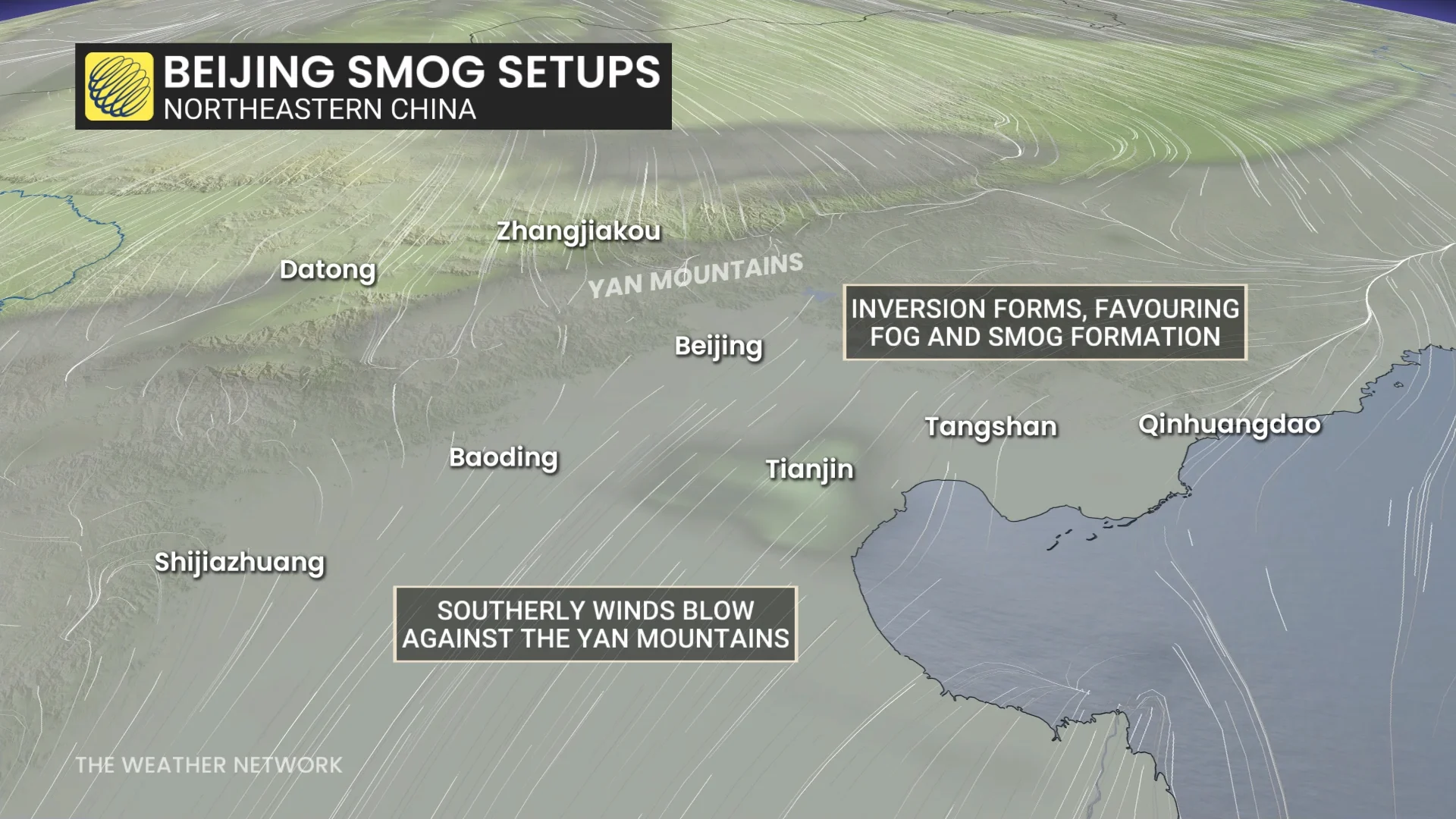
Beijing is often covered in smog, which is a hazardous mixture of pollution and fog that can force air quality readings to plummet for days at a time. The capital region’s unique geography plays a significant role in its formation.
The city sits in a flat plain at the foot of the Yan Mountains, an orientation that leads to frequent temperature inversions. These atmospheric ‘lids’ prevent air from mixing out, keeping fog and pollution hugging tight to the ground for extended periods of time, especially during the cooler months.
Header image created using graphics and imagery from Canva.