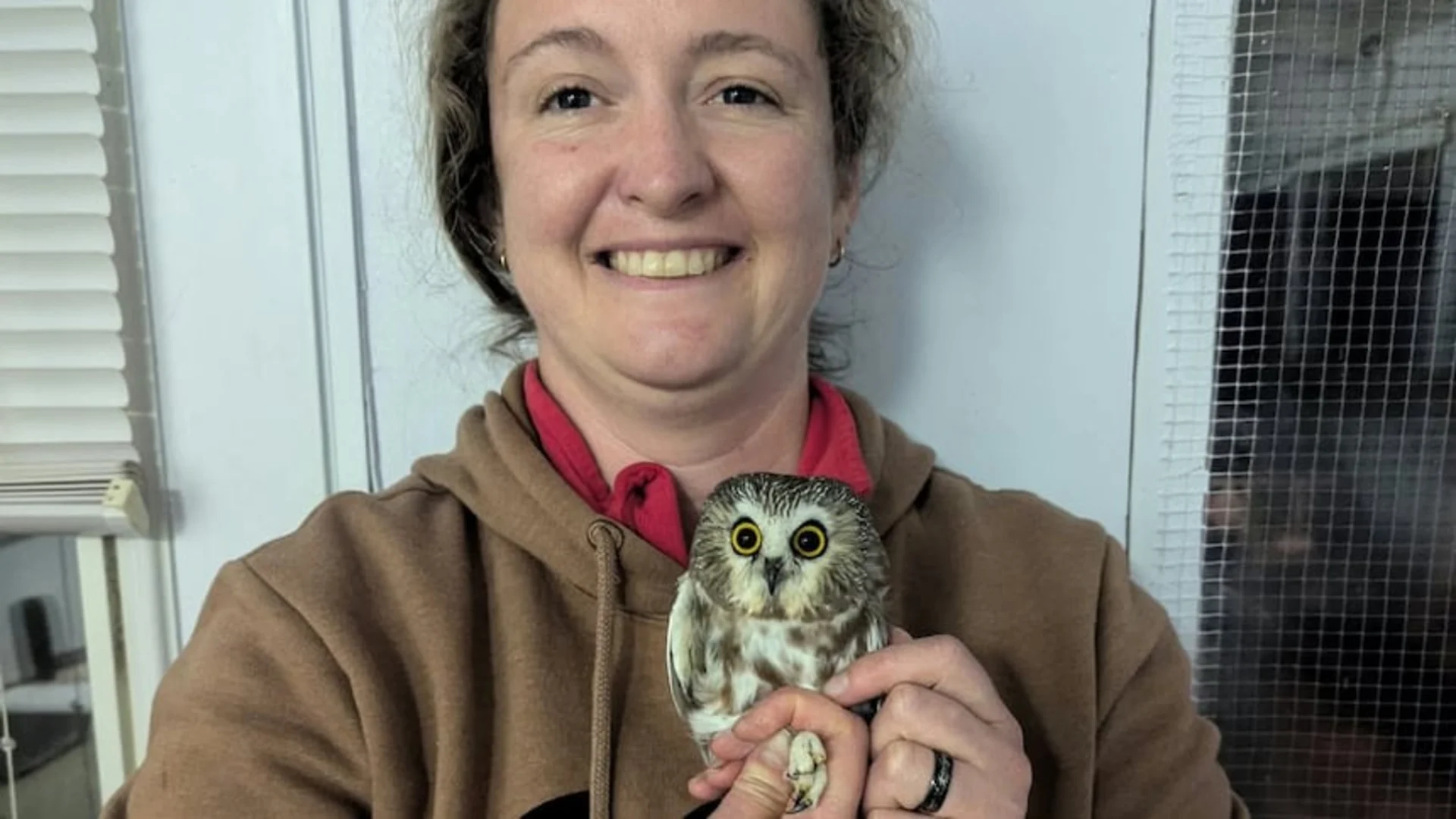
Record-breaking owl migration in northern B.C. leaves bird banders scrambling

A massive influx of migrating owls has researchers at the Mughal Marsh Banding Station working overtime, as the birds pass through northern B.C. in numbers that haven't been seen in years.
"It has been such an amazing year up there," said Jeannine Randall, a bird biologist for the Mackenzie Nature Observatory, about 200 kilometres north of Prince George via major highways.
ANIMALS: Crowning the fattest bear: The annual battle of the bulge
"We usually catch about 100, and we've caught 266 for the season right now with two weeks still left to go. So it's a record-breaking year."
The unprecedented surge led to an unusual problem: a shortage of the official, strictly controlled, tracking bands used to monitor the birds.
"We were running out, in particular, of one of the sizes — because saw-whet owls, which is the main species we target, take more than one size of bands," Randall explained.
"We were running out of the larger size of band because they were back-ordered from the bird banding office."
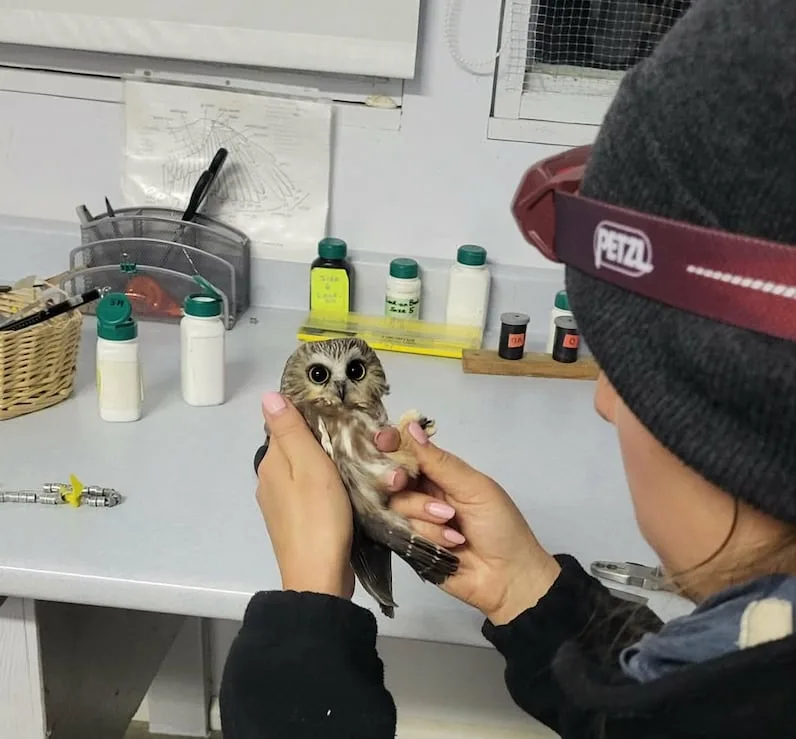
A volunteer bands one of the tiny saw-whet owls. (Submitted by Jeannine Randall)
While the station reached out to other organizations for help, they quickly discovered that the owl boom was a widespread phenomenon, leaving many stations facing similar shortages.
Randall says the surge in numbers is likely related to their prey.
"Most of the owls that we're catching are birds that were hatched this year," Randall said. "I think the main thing that's likely driving this is an abundance of small rodents this year. That's their main prey ... mice and things like deer mice and voles."
Populations overall on the decline
While the high numbers at Mackenzie are encouraging, they may not reflect the long-term reality for all owl species in the province.
Rémi Torrenta, a biologist with Birds Canada, notes that many owl populations have actually been decreasing over the past 25 years.
"Some species are pretty stable or even increasing, like the barred owls, and most species are actually ... decreasing over the past 25 years," Torrenta said.
"That's probably the case of a lot of species in B.C., including the northern saw-whet owls."
READ MORE: The invasive spotted lanternfly has been officially detected in Canada
Torrenta explains that the high volume of owls seen this year is likely part of a well-documented four-year cycle.
"When there are lots of owls, there are suddenly too many owls, and the rodent population crashes the year after," Torrenta explained.
"Eventually the owls don't have enough food and so they have to migrate farther south to search for food. This phenomenon is called a mass eruption."
To better understand these trends, Birds Canada co-ordinates the Nocturnal Owl Survey, a citizen science program that relies on volunteers across the country to track owl numbers each spring.
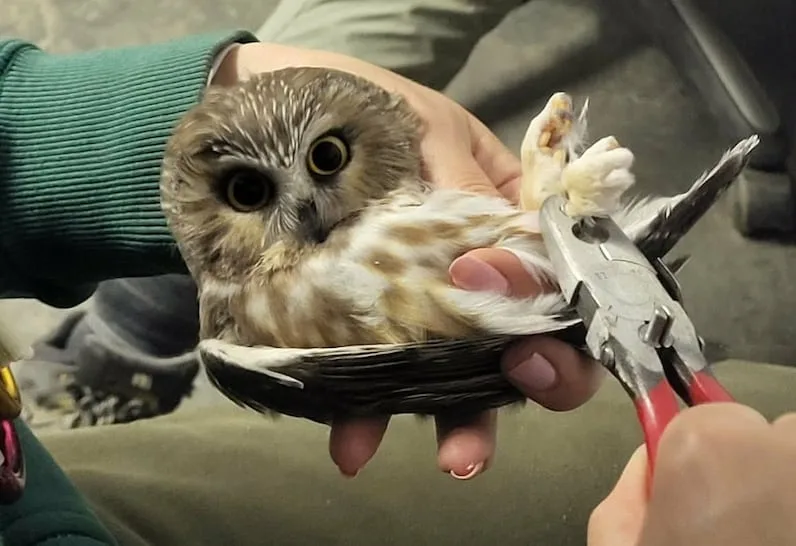
An northern saw-whet owl at the Mughal Marsh banding station near Mackenzie, B.C. (Submitted by Jeannine Randall)
"Thanks to these volunteer programs ... we are able to better track owl numbers and trends across the country," Torrenta said.
Randall says the Mackenzie Nature Observatory banding project is an important of that wider science research, providing crucial data for monitoring owl populations and migration routes.
Recently, the station recaptured an owl that had originally been banded in Victoria in 2024, offering a rare glimpse into the species' travel patterns.
"If nobody's looking at this stuff, then we don't have the information to make management decisions or even to really understand the species well," Randall said.
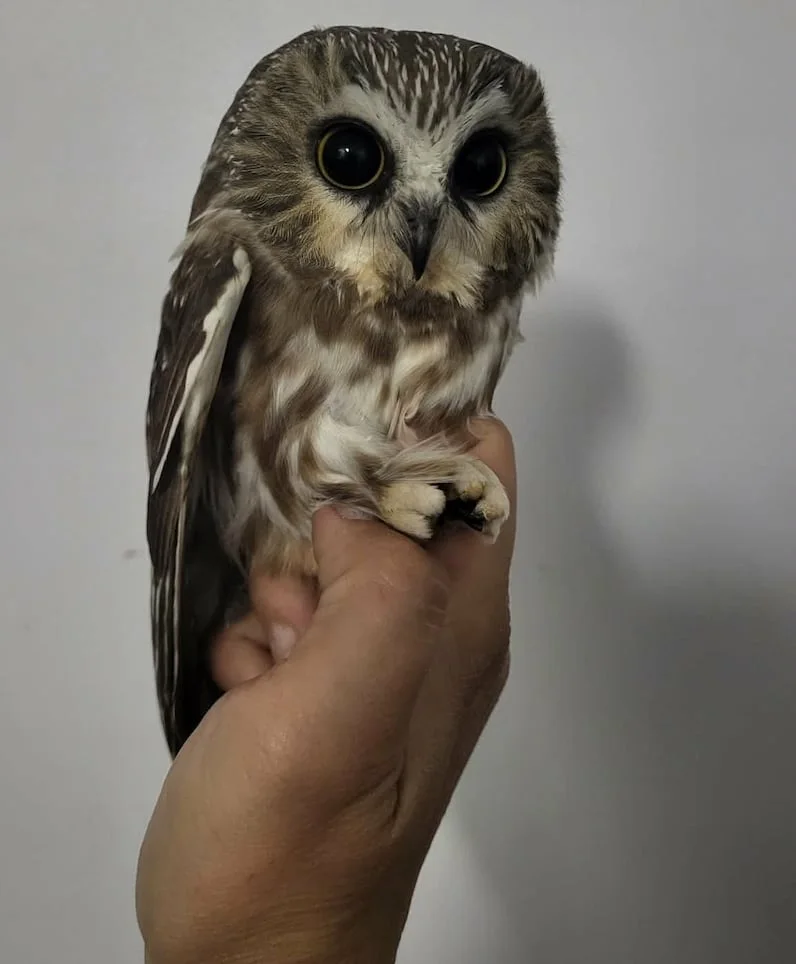
A tiny saw-whet owl at the Mughal Marsh banding station near Mackenzie, B.C. (Submitted by Jeannine Randall)
This article, written by Tom Popyk, was originally published to CBC News