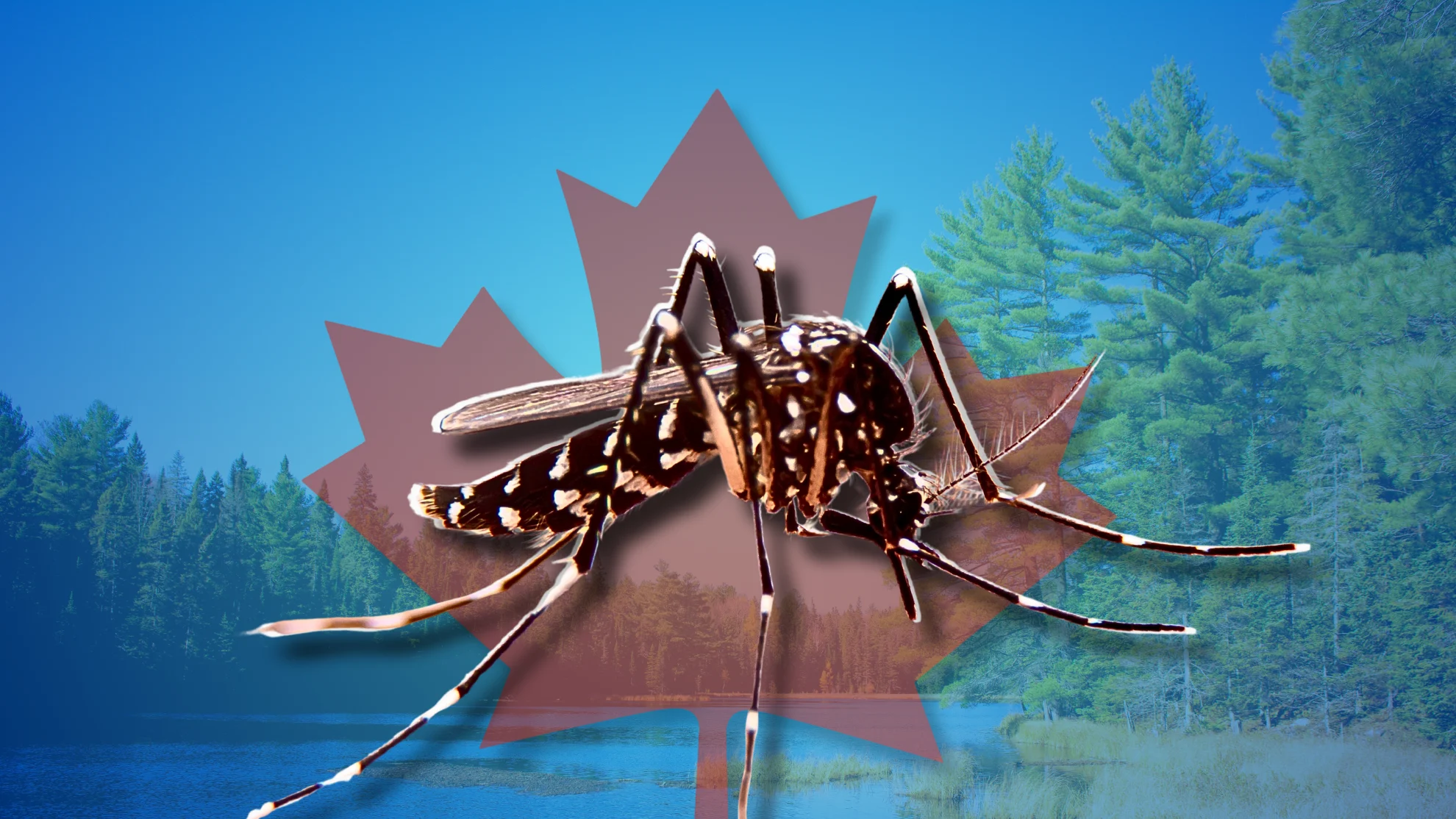
Where are Canada's mosquito hotspots?

Here are the places you're likely to run into mosquitoes ... and some places where you may be able to avoid them.
Mosquito season is here, and they will be buzzing around until late fall (and possibly longer, if we have an unseasonably warm fall season).
They breed in stagnant water, and you'll often find them congregating in ponds, marshes, birdbaths, and puddles.
It doesn't take much: Mosquitoes can lay their eggs -- up to 400 at a time -- in as little as 0.6 cm of water. For a mosquito, ideal temperatures lay between 22°C and 27°C, and in these conditions, it can take around 10 days to go from an egg to an adult.
While these factors turn any area into a mosquito hotspot, there are some parts of Canada that see more activity than others.
Alberta takes the win this year
A mix of climate, local vegetation, and other conditions generally determines what makes an area more appealing to mosquitoes.
And while there are parts of Canada that tend to have larger mosquito populations overall, sometimes a boom will happen elsewhere.
That appears to be the case in 2026 with Alberta in the midst of one of the worst mosquito seasons in decades, according to experts.
It all started when heavy rain in May left behind plenty of bodies of standing water for eggs to be laid in.
But it isn’t just this season’s eggs hatching, Entomologist Ken Fry told The Canadian Press(via Global News).
Fry told the outlet that mosquito eggs can persist in an ecosystem for up to a decade, hatching only when they sense they are underwater.
The recent rain created enough moisture to trigger the eggs that weren’t able to hatch in the past due to drier summers.
People in eastern Canada may be seeing more mosquito activity than usual this year as well, due to a cold and wet spring season.
Other Canadian mosquito hotspots
We would be remiss if we failed to mention Komarno, Manitoba, located an hour north of Winnipeg. Mosquitos are so prevalent here the community established a giant mosquito monument, commemorating their presence each summer, as well as the rural municipality's name, which is a Ukrainian word for "lots of mosquitoes."
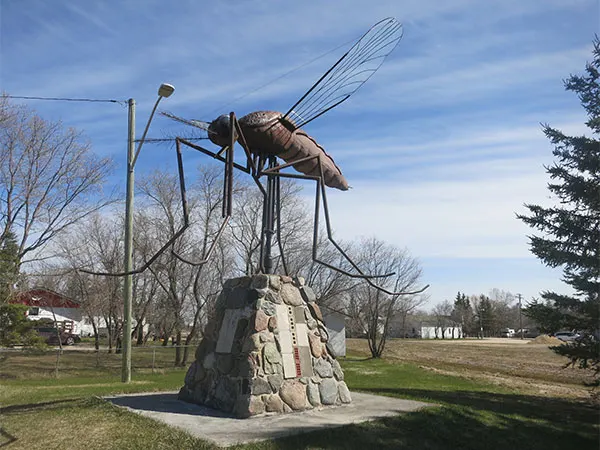
Behold: The giant mosquito monument.(Gordon Goldsborough/Manitoba Historical Society Archives
Northern Manitoba and the boreal forest. Further north, Manitoba's boreal forest has an abundance of vegetation and wetlands, two things mosquitoes love. They aren't alone: There are an estimated 32,000 insect species that inhabit the area. Unfortunately, this unique geography means residents of northern Manitoba face a small risk of being exposed to West Nile Virus, a mosquito-borne illness. While the chances of contracting the disease remain low, officials urge people to take extra precautions between May and September.
Baker Lake, Nunavut. This region is considered the "mosquito capital" of the territory. Mosquito season used to be brief here, historically lasting between 4 and 6 weeks. Thanks to climate change, experts say the season is getting longer: Mosquitoes are arriving earlier and sticking around longer.
Algonquin Provincial Park, Ontario. Dense forests and more than 1,500 lakes means this park experiences a lot of mosquito activity. especially in cooler, shaded areas. Thankfully, you can check the mosquito forecast before heading out on the trail.
Northern British Columbia and Yukon. Climate change is extending mosquito season in these regions. There is an estimated 50 species of mosquitoes in northern B.C. and 30 in the Yukon. While most are native, at least two species are invasive.
Places with the fewest mosquitoes
Weather and local geography influence mosquito activity, so you're less likely to find them in drier and cooler climates, and windy cities tend to have decreased mosquito activity.
Higher elevations, cooler nights, and dry conditions in places like the Okanagan in B.C.
Under normal weather conditions, Calgary and Canmore tend to have environments that reduce mosquito breeding as well -- but, as already discussed, these areas have not seen normal weather conditions this year.
Areas that experience coastal winds are likely to have fewer mosquitoes.
Header image: Created by Cheryl Santa Maria for The Weather Network using file photos from Canva Pro.