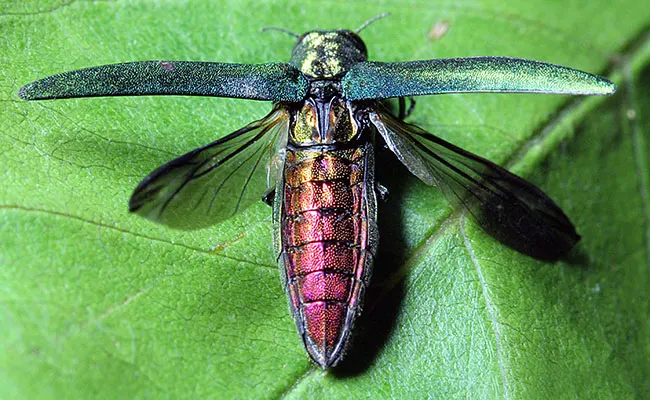
After the emerald ash borer, Ontario forests enter a new phase

Millions of Ontario ash trees are gone, but the emerald ash borer isn't.
After devastating neighbourhoods across the province, the invasive emerald ash borer insect largely disappeared from the headlines. But with another active wildfire season raising new questions, researchers say that while insects like the mountain pine beetle have contributed to wildfire risk in western Canada, the emerald ash borer isn't playing that role in northwestern Ontario.
Since first arriving near Windsor more than two decades ago, the insect has spread into Quebec, the Maritimes, and even parts of B.C.
But in southern Ontario, the damage has already been done, with some tree populations smaller than they once were, and a lot of dead trees.
The dead trees can still pose a hazard. That's why municipalities have spent years removing ash trees along streets, parks and trails, while arborists urge homeowners to leave dangerous removals to the professionals.
With the worst of the infestation now behind many Ontario communities, researchers are shifting their focus to understanding what comes next by tracking the beetle's remaining populations and studying natural controls, like predatory wasps.
After decades spent trying to stop this invasive insect, researchers are now learning how forests can adapt.
Header image: File photo/Wikipedia/USDA-APHIS. Public domain.