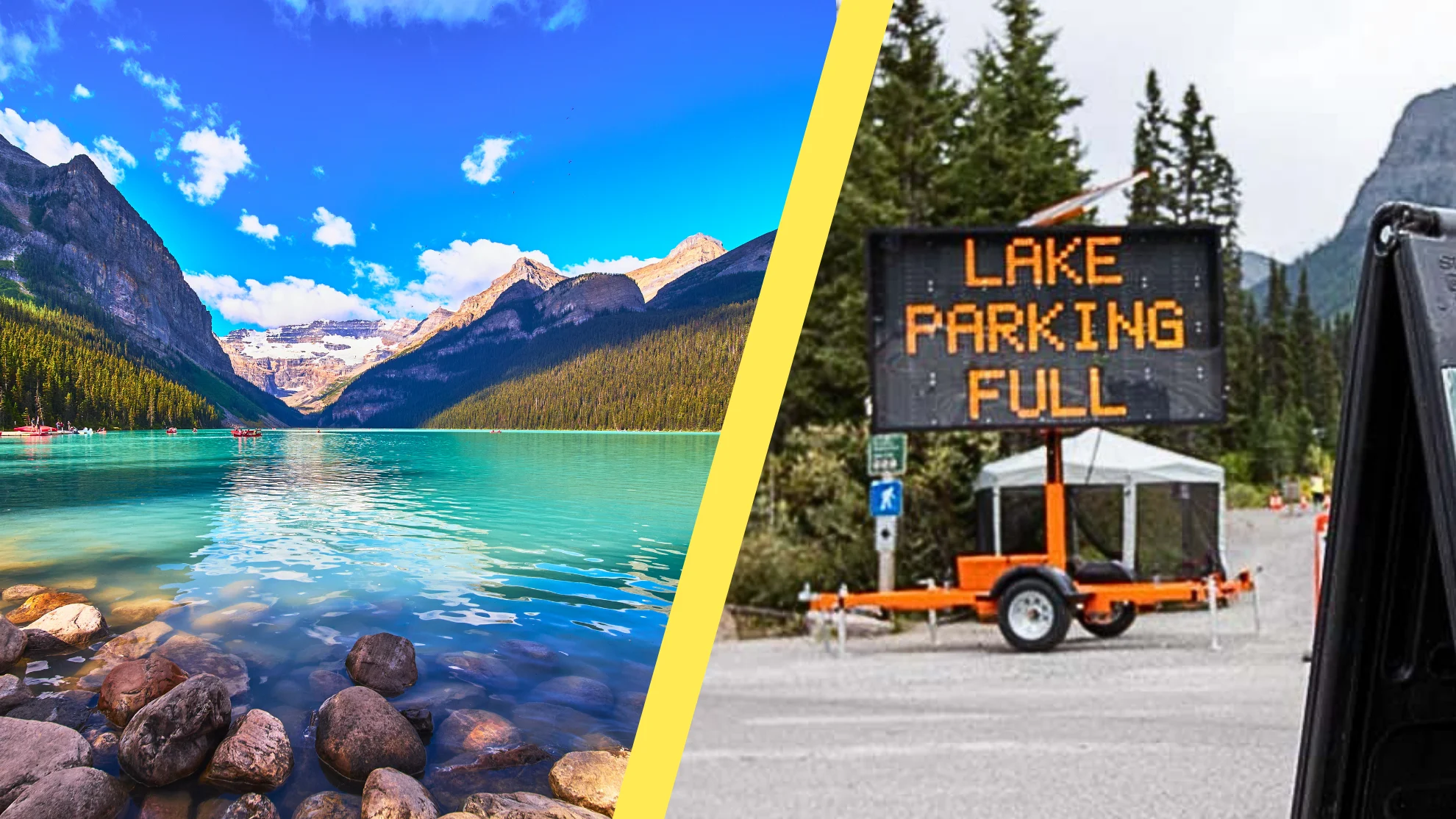
75% of cars are turned away at Lake Louise. Plan ahead this long weekend

Heading to a national park this weekend? Plan ahead: There will be traffic.
The August long weekend is one of the busiest times of the year in Banff and if 2025 statistics are any indication, the Canada Strong Pass could make the roads even busier than past years.
On one hand, the free admission that comes with the pass is making it easier to explore Canada’s most iconic spots. On the other, that means more traffic, congestion, wait times, and potentially long lines.
Parking spots are limited in Banff
Lake Louise is one of the most visited destinations in Canada, according to Parks Canada.
It currently attracts around 2.6 million people per year, which is up 70 per cent since 2010.
But while foot traffic has increased, parking spots have not, prompting Banff officials to issue a public service announcement on Facebook ahead of the long weekend.
“Parking at the Lake Louise lakeshore is limited, especially during busy times,” the announcement reads.
“In fact, about 75 per cent of vehicles that attempt to park at the lakeshore during peak periods are unable to find parking and must turn around.”
Parks Canada says an estimated 87 per cent of visitors to the Banff area arrive by personal vehicle, and recommends people opt for public transit instead.
“Taking transit helps more visitors access this popular destination while reducing traffic congestion,” Banff says on Facebook.
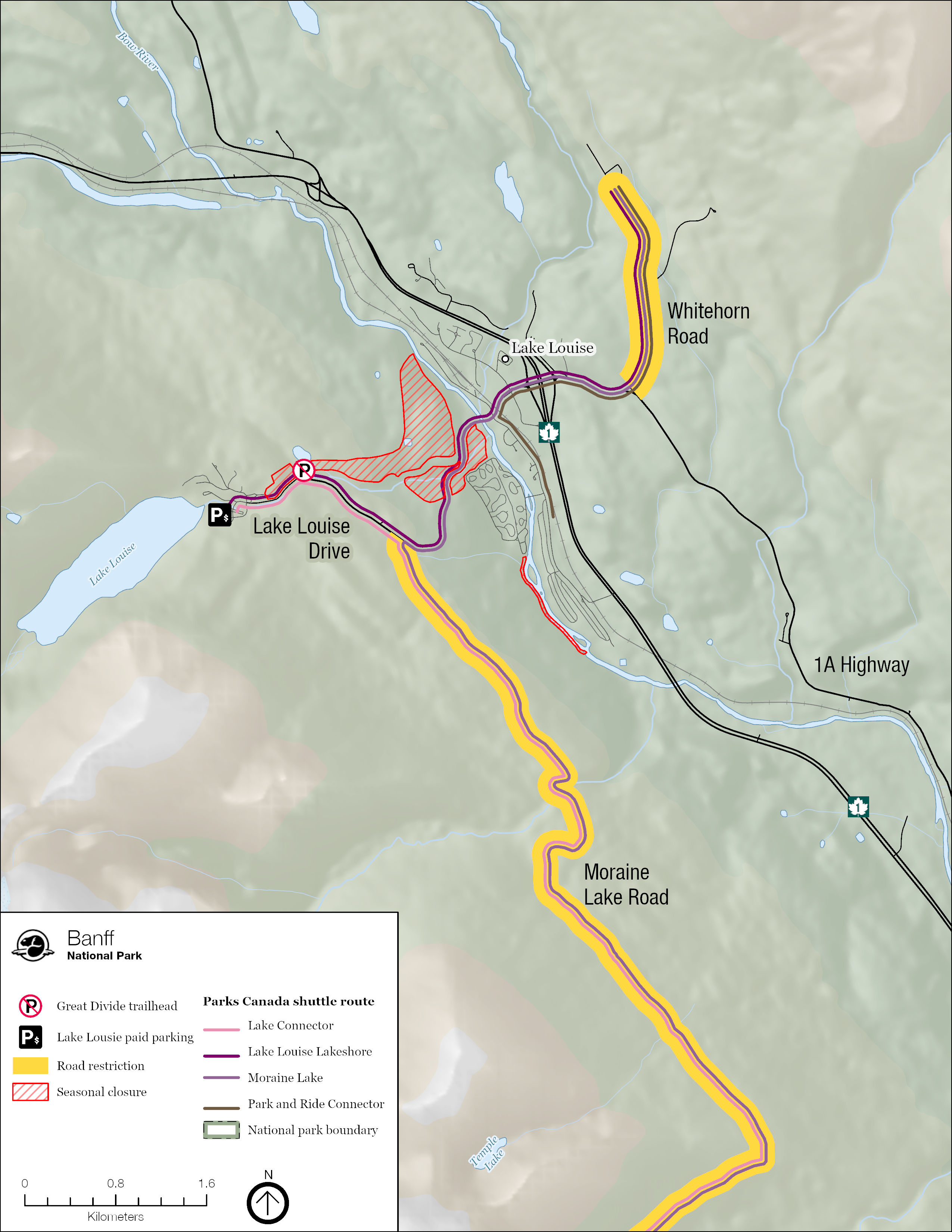
A map displaying visitor use management actions currently in place. in Banff National Park. (Click here for an enlarged version on the Parks Canada website) (Parks Canada).
No spots after 8 a.m.
The lakeshore parking lot has around 400 spots and is usually full by 8 a.m. during peak season.
That isn’t enough spots to accommodate a growing number of visitors, Parks Canada says on its website.
“In 2023, the Moraine Lake area saw approximately 5,000 visitors per day. The Upper Lake Louise area saw approximately 9,000 visitors per day.”
Traffic doesn’t just affect tourists
Waiting in traffic only to be turned away is disappointing for a car of tourists, but it can have a far deeper impact on wildlife.
“High traffic volumes may cause wary species to avoid using the area or crossing the roadway during busy periods, reducing the effectiveness of key wildlife movement corridors and potentially impacting core reproductive range for grizzly bears,” Parks Canada says.
“Meanwhile, Lake Louise Drive sees hundreds of vehicles every hour during the busiest parts of the afternoon, creating congestion, frustrating visitors and making emergency access more difficult.”
The Canada Strong Pass could increase the pressure
The introduction of the Canada Strong Pass is expected to make already-busy destinations even more popular this summer.
By removing admission fees for Parks Canada locations between June 19 and September 7, the program, which debuted in 2025, has produced an uptick in nature explorers.
In 2025, Canadian parks saw visitors increase by about 13 per cent compared to 2024.
What visitors should do before heading out
Extra traffic won’t just be an issue at Banff this weekend: If you're thinking about visiting any of Canada's most popular national parks this long weekend, it may be best to plan ahead.
Visitors should:
Check whether reservations or shuttle bookings are recommended or required.
Consider using public transit or park-operated shuttle services whenever available.
Arrive early if driving is permitted.
Have a backup destination lined up in the event parking is full.
Check the weather forecast before heading out.
For Lake Louise specifically, Parks Canada recommends using the transportation options available through CarFreeBanff.ca.