
I tried the viral 'snow-washing' hack for wool. Here are my results

Skip the washing machine and toss your wool in the snow.
I love wool, and I own a lot of it. I knit and crochet my own clothes, and I have a weakness for vintage items made from natural fibres.
Over the years, that has translated into an above-average wool collection — and that's great!
Clothing that is 100 per cent wool has a lot of benefits compared to clothing made out of acrylic or polyester.
It’s better at temperature regulation in warm and cool weather, it’s more breathable than synthetic fibres, which are essentially plastic, and it has strong antibacterial properties that help it resist and repel odour better, which means more time in between washing.
Which is a good thing, because washing wool can be a process. While some items can be machine washed, others can't, and you definitely can’t put a lot of it in the dryer. The combination of agitation, moisture, and heat will, at worst, turn some wool into a block of felt or, at best, cause it to lose its shape.
Some wool items can be hand-washed while others need to be dry-cleaned ... so I was intrigued when I saw this cleaning tip circulating on social media:
It’s called snow-washing. It apparently came from Nordic countries and was allegedly used by Vikings.
How do you use snow to clean wool?
Snow washing is a method of cleaning or freshening up wool, using a combination of cold, clean snow and natural light to remove dirt and debris. It is said to reduce or eliminate odours, and freshen and brighten fibres.
UV light from the sun will have a sanitizing effect.
It’s a gentle, chemical-free way to keep wool fresh a little longer, but it won’t work on heavily-soiled items.
How to wash wool with snow
Snow washing works best when using clean, powdery snow — avoid this when the snow is wet.
Outdoor temperatures should be below-freezing and sunny days are best. For maximum results, use items that are 100 per cent wool.
You can wash just about anything this way, including hats, mittens, and scarves, blankets, rugs, and clothing.
Just make sure the items don’t contain any leather or suede, which don’t react well to moisture.
Trying out the technique
I live in southern Ontario, and yesterday just happened to be a snow day. There was lots of fresh powder on the ground, so I raided my wardrobe and headed outside.
I chose four items: A merino wool cardigan, which is labelled ‘hand-wash only’, a wool blazer that is dry clean only, and two virgin wool skirts, also dry clean only:
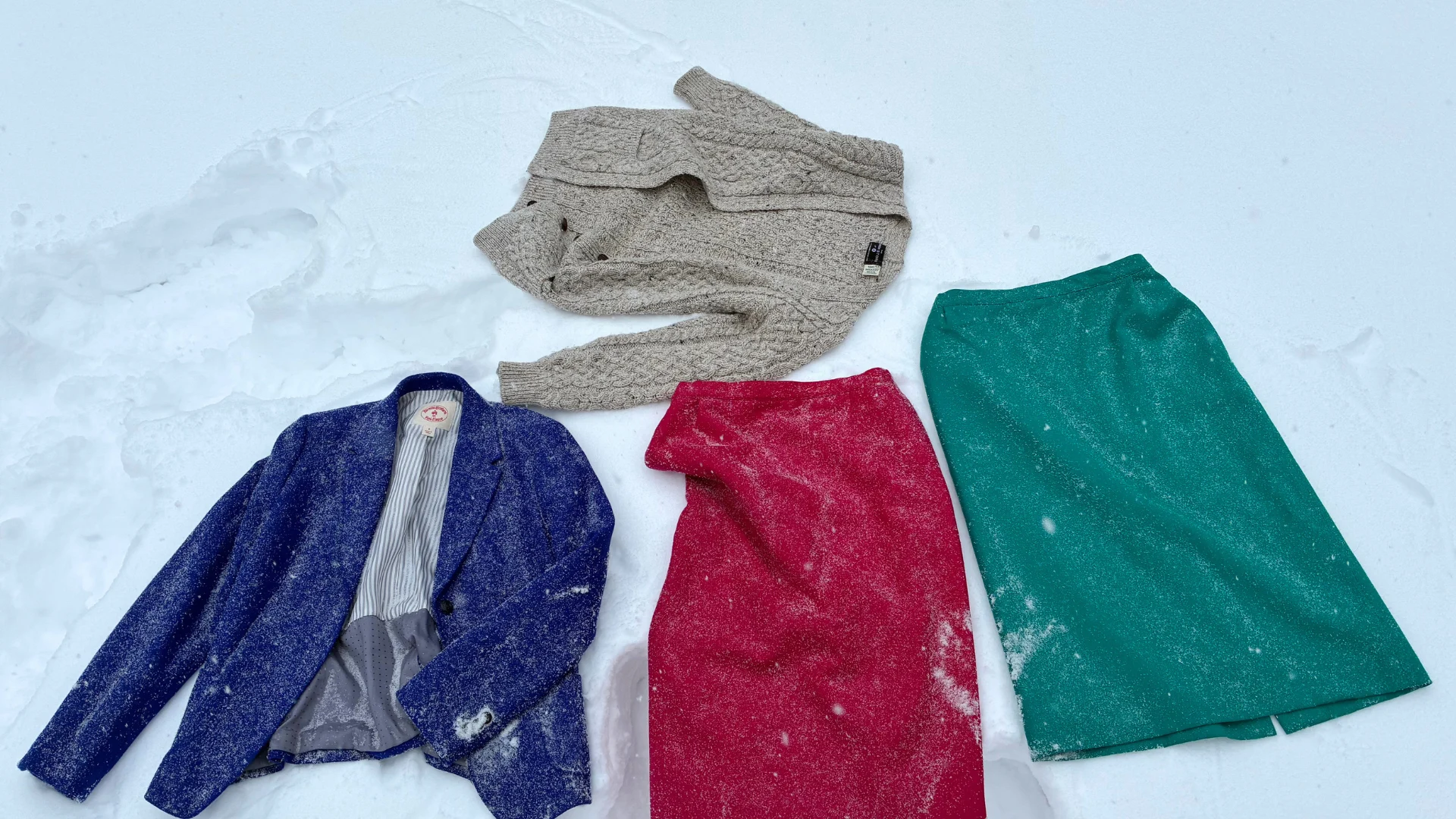
Here goes nothing!
I placed them flatly in the snow and lightly buried them, letting them rest for about half an hour before flipping them and letting them rest some more.
In my research, I found discrepancies around the amount of time you’re supposed to leave the items in the snow. Some videos recommend a few hours, while others say 20-40 minutes total is enough.
I opted for an hour as some sort of middle ground.
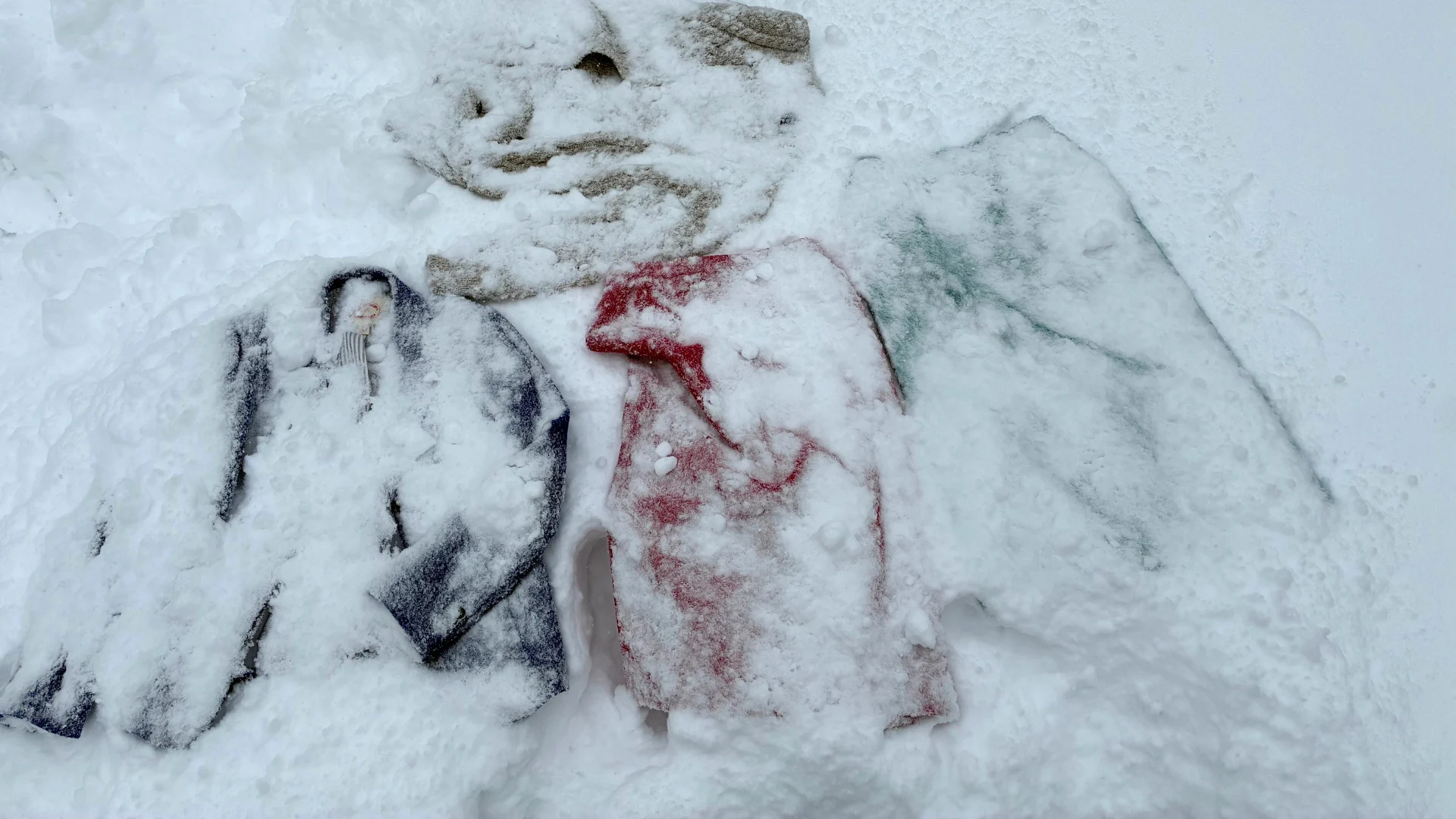
Buried. Feeling a little nervous at this point.
After that, I shook the items off and hung them up (or, in the case of the cardigan, laid it flat) to dry for several hours — but I will say, they felt pretty dry from the moment they were brought inside.
The result
In short, I found this to be really effective.
My items looked cleaner and brighter. They all had that ‘fresh air’ smell when I brought them inside, and the skirts retained that scent even when completely dry, hours later.
Prior to washing, my blazer had slight pilling around the collar that seemed to come off much easier once snow-cleaned.
Will I do it again? Yes, definitely. In fact, now that I know it works, I’m going to take advantage of the snow and bury some of my handknit sweaters. These are my prized possessions, and I wouldn’t subject them to any form of cleaning that I wasn’t 100 per cent confident in.
My advice? Give it a try, just make sure you follow the instructions. Snow washing is a great idea, but if you use wet snow or bury an item that doesn’t like moisture, you aren’t going to get the result you were hoping for.