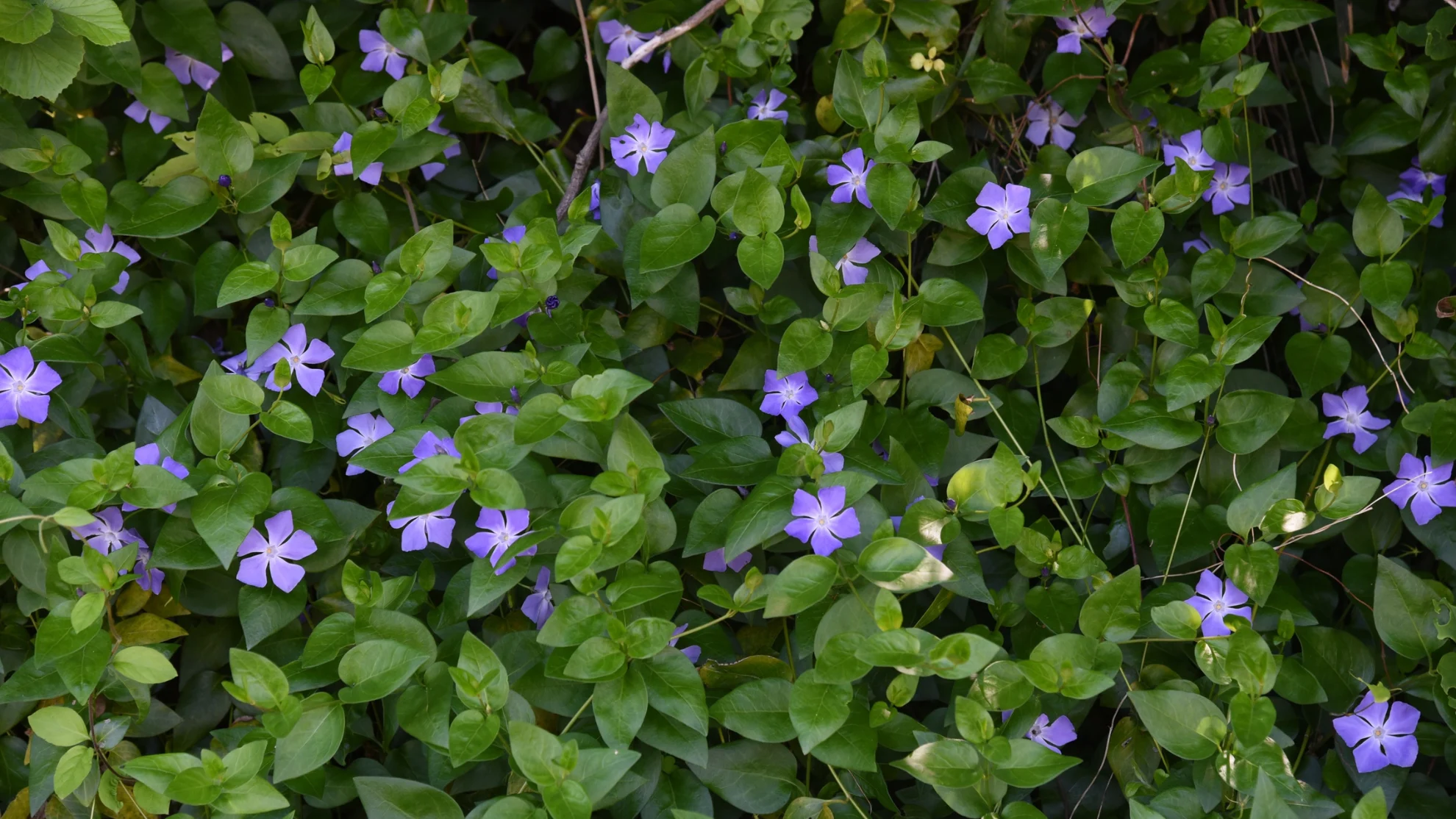
This invasive plant is sold in garden centres and spreading in the wild

Instead of periwinkle, consider using native plants in your garden.
Gardeners in search of easy groundcover might be tempted to reach for periwinkle — which is widly sold in garden centres across Canada.
It’s easy to see why: It’s a beautiful plant with glossy evergreen leaves and bright purple flowers.
But there's a problem.
Periwinkle is considered an invasive plant in Canada, regularly showing up on top ten lists of problematic invaders, due to its fast spread and lack of predators.
It was first brought to Canada in the 1700s from Europe and Eurasia as an ornamental groundcover.
Periwinkle doesn't always stay in the garden and can spread into nearby forests, forming dense mats that crowd out native wildflowers and tree seedlings. Once established, it's incredibly difficult to remove, and it makes it harder for neighbouring native plants to bloom.
It can also be toxic to pets, causing gastrointestinal issues, low blood pressure, or tremors when ingested in larger quantities.
But you don’t have to sacrifice aesthetics.
Consider planting native groundcovers that support local wildlife, like wild ginger. This plant also creates lush green carpets in shady gardens.
Or try foamflower, which produces delicate white blooms in the spring.
In sunny or partially shaded spots, Canada anemone is a great choice.
Native plants have evolved alongside our local bees, butterflies, birds, and other wildlife for thousands of years. They provide the food and habitat these species need, while staying in balance with the ecosystems around them.
There's big benefits to planting native plants
Planting native varieties provides shelter and food for home-grown insects, birds, and other animals that benefit the ecosystem.
You'll also save water and time, compared to what you would spend caring for a non-native plant.
Native plants tend to be better at retaining moisture than non-native varieties. It's an evolutionary advantage that can translate into big savings for you in terms of money, resources, and effort.
Native greenery is also more weather-resistant, having evolved to survive Canada's harsh winters, rollercoaster springs, and summer dry spells, increasing the chances they'll bloom in your garden year after year, once again saving you money, resources, and effort.
Once established in your garden, native plants are relatively easy to maintain. It's that home advantage once again: Over time, native species have developed natural defenses against local diseases and 'pest' insects that can damage or kill exotic plants. If you'd like to cut down on harsh chemicals and encourage natural predator insects to do the work instead, native plants will help.
Planting native varieties is a win-win solution: You’ll have a beautiful garden that helps protect Canada's forests and the wildlife that depends on them.