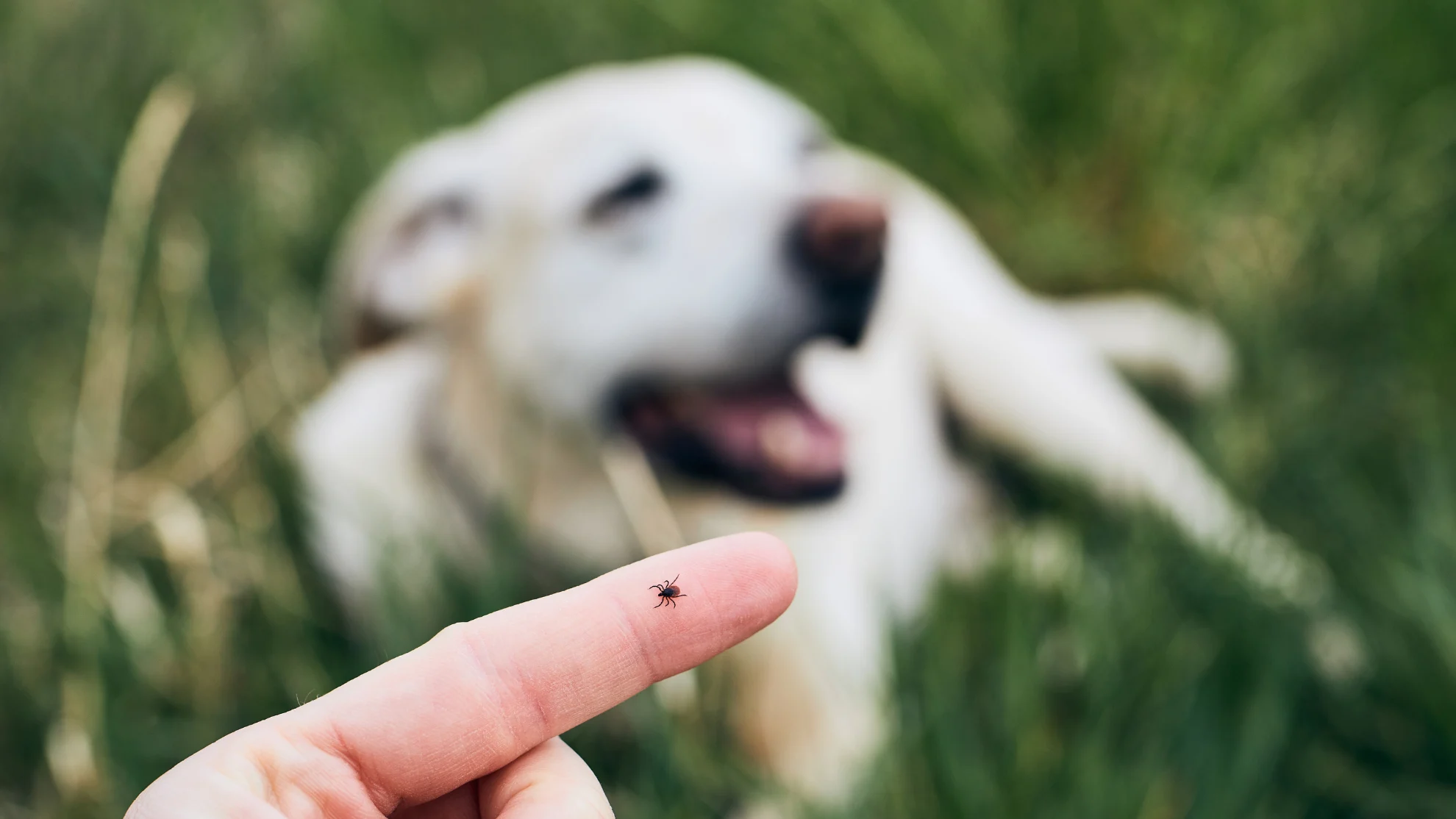
Five unforgiving facts about ticks


..and why they don’t die in winter
You just got a dog and suddenly everything in life is better. More walks, more fresh air, more outdoor adventures.
The less fun part of dog ownership is learning that ticks also love those same spaces. The good news is you can take simple precautionary steps so ticks do not crash your adventures with your new best friend.
If you think ticks only show up in deep summer or cottage country, you are not alone. Many dog owners picture them appearing once hiking season hits its stride. Unfortunately, ticks did not get that memo.
Here are five tick facts every new and young dog owner should know.
1. Ticks become active at about 4 degrees Celsius
Ticks do not wait for summer.
Unlike mosquitoes, which rely on warm and humid weather, ticks become active whenever temperatures rise above roughly 4 degrees celsius and the ground does not hold snow.
A mild winter afternoon or an early spring thaw can wake them up. If it feels early but the weather stays mild, people often get caught off guard.
Ticks follow temperature, not the calendar.
2. Winter does not kill ticks
Many people assume winter wipes ticks out. It does not.
Ticks survive by hiding under leaf litter, brush, soil, and even snow, which insulates them from extreme cold. When temperatures drop, ticks enter a dormant state. When conditions warm up, they resume searching for a host.
Did you know? Ticks are not insects. As eight-legged arachnids, they can slow their bodies down in the cold and become active again when conditions improve.
From a science perspective, that survival strategy impresses. From a dog owner perspective, it causes frustration.
3. Ticks stay tiny, and dogs do not feel the bite
Ticks excel at going unnoticed.
Before feeding, many are no bigger than a poppy seed, which makes them easy to miss, especially for first-time dog owners still learning what feels normal on their dog’s fur.
Tick bites also do not hurt. Dogs do not yelp, scratch, or react when a tick attaches. The tick latches on quietly and feeds without drawing attention.
That stealth puts dogs at higher risk because they explore the exact places ticks wait. Tall grass, leaf litter, wooded trails, and brushy park edges give ticks ideal spots to latch onto passing hosts.
Some ticks can carry diseases like Lyme disease, which is why early detection and prevention matter, especially for dogs that spend a lot of time outdoors.
You might be the first to notice something’s off by feel, not sight, a small bump on your dog’s skin that feels like an apple seed. Tick bites don’t usually cause immediate itching, but redness or irritation can develop where the tick is attached. More concerning symptoms can show up weeks or even months later, including shifting leg lameness, loss of appetite, and low energy. Any unusual changes in your dog’s behaviour are worth a check with your veterinarian.

(File photo/Getty Images)
SEE ALSO: Latest tick news across Canada and tips to prevent Lyme and other tick-related diseases
4. Ticks show up closer to home
Some ticks travel across Canada the same way people do, by hitching a ride. These are called adventitious ticks.
Instead of booking a flight, they latch onto migratory birds. As birds move between regions, ticks move with them, sometimes travelling hundreds or even thousands of kilometres.
That movement helps explain why ticks no longer remain a cottage country problem.
Ontario, Quebec, and parts of Atlantic Canada continue to report high tick activity. More people now encounter ticks in urban parks, neighbourhood green spaces, and backyards.
Some tick species establish themselves in certain regions and reproduce there. Others arrive temporarily after hitching rides. Either way, ticks often show up much closer to home than many dog owners expect.
5. Weather drives tick activity
Weather plays a major role in when ticks stay active.
Ticks thrive in moisture, shade, and dense vegetation. Humid conditions help them remain active longer, while shaded areas like tall grass and leaf litter provide cover as they wait for a host.
As temperatures climb above about 4 degrees and outdoor activity increases, the chance of tick encounters rises as well. Your dog does not need to head deep into the woods to encounter one. City parks, neighbourhood trails, and even backyards all count.

(File photo/Gettty Images)
What Dog Owners Can Do Right Now
The good news is this. Tick risk remains manageable.
Dog owners do not need to panic or cancel outdoor plans. A few simple habits can make a real difference in day-to-day life with a dog.
Building quick tick checks into your routine after walks, hikes, or backyard play helps catch problems early. Move your hands slowly over the body and check hidden areas, especially around the ears, collar, paws, and tail.
Sticking to groomed trails can also reduce exposure since ticks often wait along the edges of tall grass and brush.
It is also a good idea to talk to your veterinarian about prevention options that fit your dog’s lifestyle and local tick activity. Check your retailer for veterinary recommended products like K9 Advantix II.
You got a dog for the adventures, not the extra passengers. Walks, park days, weekend plans, and whatever comes next should feel fun, not stressful. A bit of tick know-how goes a long way in keeping spring and summer focused on the good stuff, more time outside, more memories, and more life with your new best friend.
K9 Advantix II, Elanco and the diagonal bar logo are trademarks of Elanco or its affiliates. ©2026 Elanco or its affiliates.
(Header image made using Canva)