
85% of California's gold undiscovered: Heavy snow can make it more accessible

In 2023, a big snowpack led to a mini gold rush.
On January 24, 1848, James W. Marshall found gold in Coloma, California, kickstarting a gold rush that brought upwards of 300,000 people into the area in search of fortune.
Between 1848 and 1855, an estimated 750,000 pounds of gold were extracted from the land — and experts say there’s still plenty to uncover, with estimates suggesting between 80 and 90 per cent of California’s gold is remains undiscovered.
How heavy snow can lead to a mini gold rush
In 2023, a combination of heavy spring rain and an above-average winter snowpack created enough waterflow to dredge up sediment and make some of the untapped gold more accessible.
Speaking with Spectrum News in 2023, amateur gold miner Mark Dayton said he was able to return to sites multiple times because the water was continually bringing down new sediment, which helped him uncover an ounce of gold worth $2,000.
Burn scars from California wildfires make it easier for the water to wash away the landscape, he said.
Significant recent snowfall in ‘mother lode belt’
The lion’s share of California’s gold is in the western Sierra Nevada foothills, which is home to a 193-km-long, 6-km-wide belt of gold-producing quartz veins and mineral rock. The area is referred to as the “mother lode belt”, and it is the region that sparked the gold rush. Today, deposits still exist deep underground and along riverbeds.
California’s winter started off slow but in late December, the snowpack in the Sierra Nevada jumped from 2 cm to 30 cm following several strong winter storms. NASA satellites captured images on December 11 and December 29, highlighting the impact:
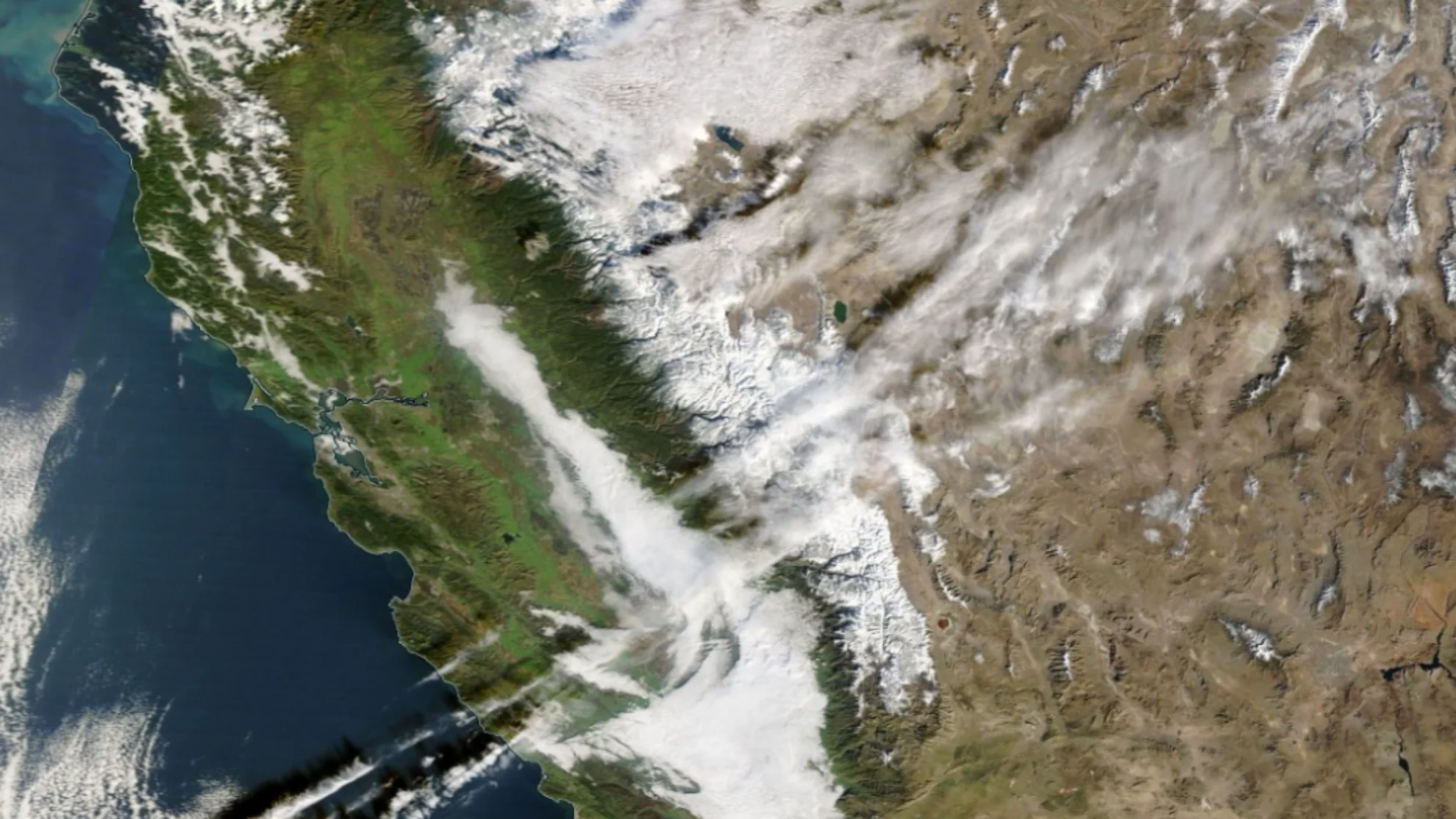
Satellite image of the Sierra Nevada on Dec 11. (NASA Worldview)

Satellite image of the Sierra Nevada on Dec 29. (NASA Worldview)
In some of the deepest pockets of the Sierra Nevada, snow measured 180 cm deep by late December, KRON 4 reported.
While average snowfall for the region varies each winter, NASA says higher elevations usually see between 200 and 300 cm of accumulation throughout the season.
The storms that kicked off the mini gold rush of 2023 deposited 366 cm of snow on the ground over the course of seven days.
As of January 5, the Sierra Nevada snowpack was sitting at about 93 per cent of its average for that date, but certain locales, like the Southern Sierra, were sitting at 114 per cent, according to local news site My Mother Lode.
That’s still a bit off for the amount of snow required to spark the 2023 gold rush, but there’s still time: We’ll be watching to see if additional snowstorms, coupled with spring rain, are enough to send the nuggets flying once more.
RELATED: Earthquakes could be gold nugget factories
Header image: File photo via Canva Pro.