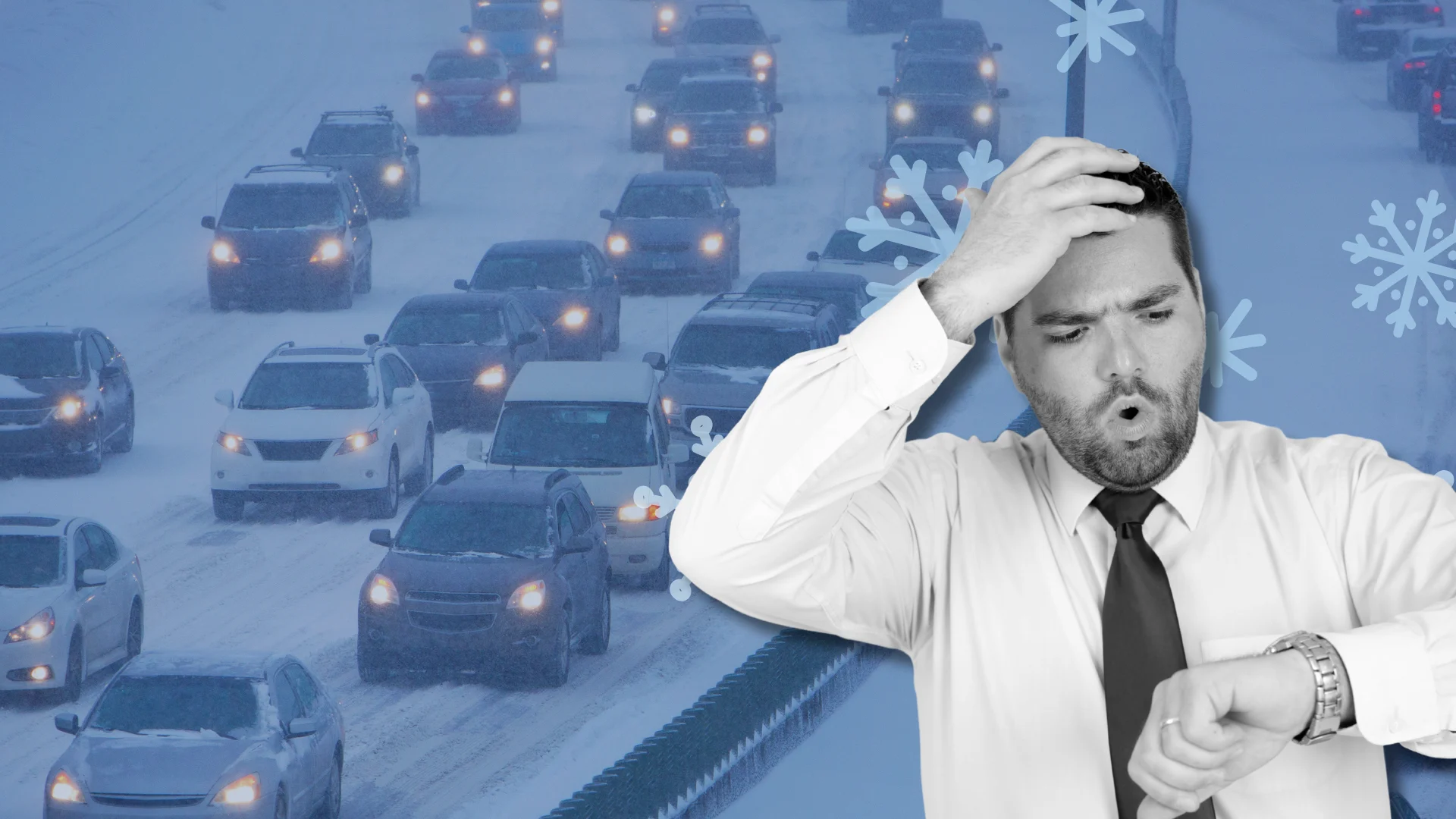
Snow, freezing rain are coming. Here's how much it could slow down your commute

Plan ahead: You'll thank yourself later.
An icy winter storm is set to hit the Greater Toronto Area (GTA).
Our meteorologists here at The Weather Network are calling for a messy mix that includes freezing rain and ice pellets. Major travel delays, power outage potential, flight cancellations, and school closures are all on the table:

Don't expect to get anywhere quickly in these conditions
There are a few factors that slow down commute times during a snowstorm, or storm with mixed precipitation, including:
Reduced visibility due to falling and blowing snow.
Snow and ice accumulation that can create slippery conditions.
Strong winds that can blow snow and reduce visibility, cause trucks to lose control, or toss debris onto the road.
Road closures due to obstructed roadways or accidents.
Other motorists reducing their speed to match the conditions.
The presence of slow-moving snow plows or sand and salt trucks.
This may all seem like common sense, but it's important to keep in mind that each point can add extra minutes to your commute. Combine a few of these and your drive could be much longer than anticipated.
How much does snow and ice slow down traffic?
There's no set number for how much a snowstorm will delay your commute, due to the variability of the factors listed above, combined with the severity of the storm, but the U.S. Department of Transportation's Federal Highway Commission says that average speeds decrease by:
30 to 40 per cent on urban roadways when there is snowy or slushy pavement.
3 to 13 per cent on the highway when there is light snow.
5 to 40 per cent on the highway when there is heavy snow.
In the United States, freezing rain accounts for roughly 18 per cent of all weather-related car crashes, and about 13 per cent of weather-related injuries.
With freezing rain, traction becomes a major issue. Experts often recommend drivers reduce their speed by Up to 50 per cent in icy conditions. Given that, you should leave yourself a lot of extra time, and assume your commute time will be doubled.
These are general estimates. A storm that falls during rush hour could add even more time to a drive, something to keep in mind as we are already calling for the storm to possibly impact the morning commute.
Navigating slippery roads that haven't been plowed or salted will require motorists to slow down significantly and could potentially lengthen your drive even more.
Staying safe on winter roads
Installing winter tires will go a long way towards keeping you safe. Weather Network meteorologist Tyler Hamilton says this can help improve stopping distance by up to 30 per cent in wintry conditions.
Pack an emergency kit for your car, just in case, and drive defensively.
Learn more: Winter emergency kit essentials
While the weather can change quickly as a storm moves through, it is always a good idea to check for weather watches and warnings in your area and assess your local highway conditions before heading out.
A little planning goes a long way towards staying safe on snowy Canadian roads.
If you're wondering what the worst winter roads are, and the trickiest times to drive, check out this report on Canada's most dangerous winter routes.
Header image: File photos via Canva Pro. (Cheryl Santa Maria, The Weather Network)