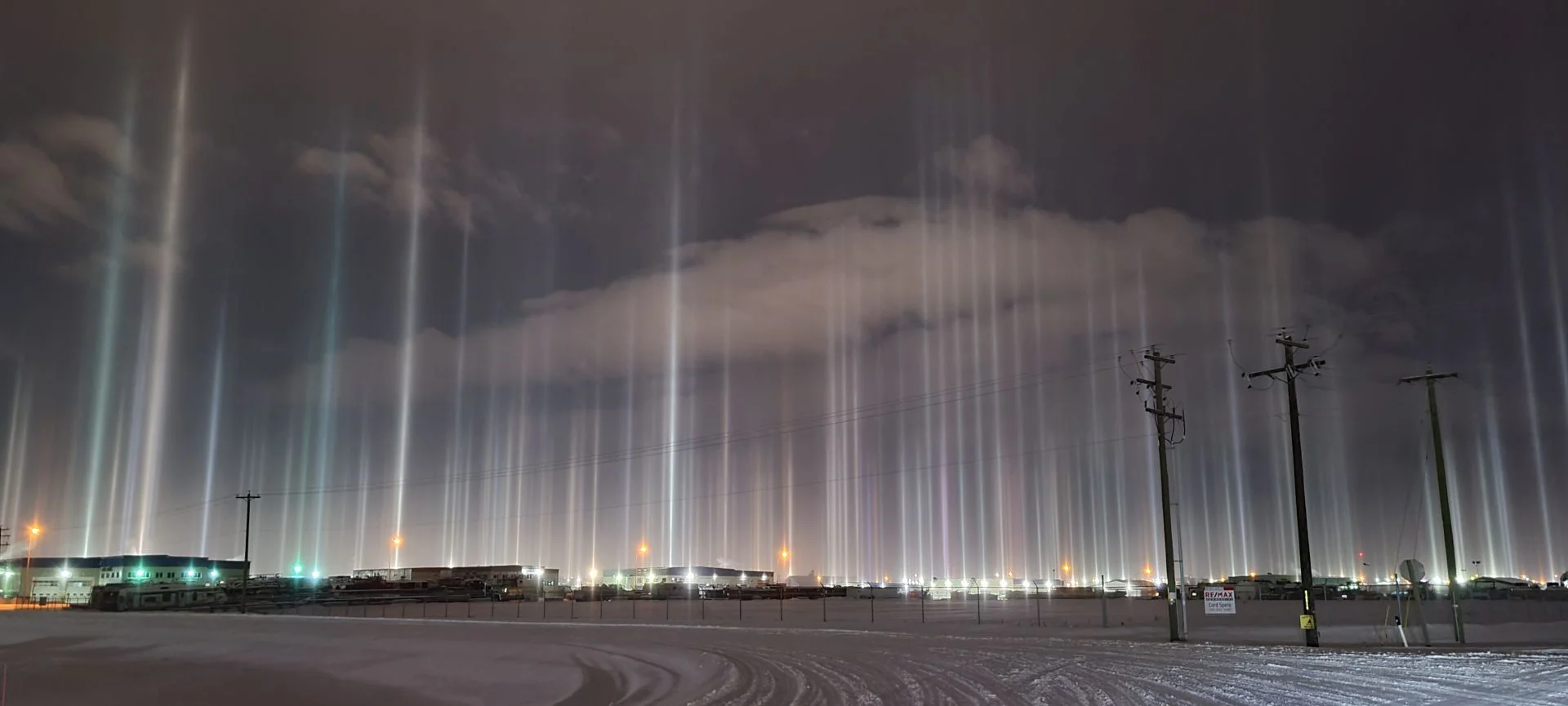
When the skies come alive: The magic of ice crystal displays

On cold, sunny days, tiny ice crystals in the atmosphere can create breathtaking displays like halos, sundogs, and light pillars.
Cold winter days don’t just bring frigid temperatures, they can also bring some of the most spectacular sky displays of the season.
Yes, even in winter, we can see many different atmospheric, optical phenomena.
Atmospheric, optical phenomena are visual displays created when sunlight or moonlight interacts with ice crystals, water droplets, or dust in the atmosphere through scattering, refraction, reflection, and diffraction.
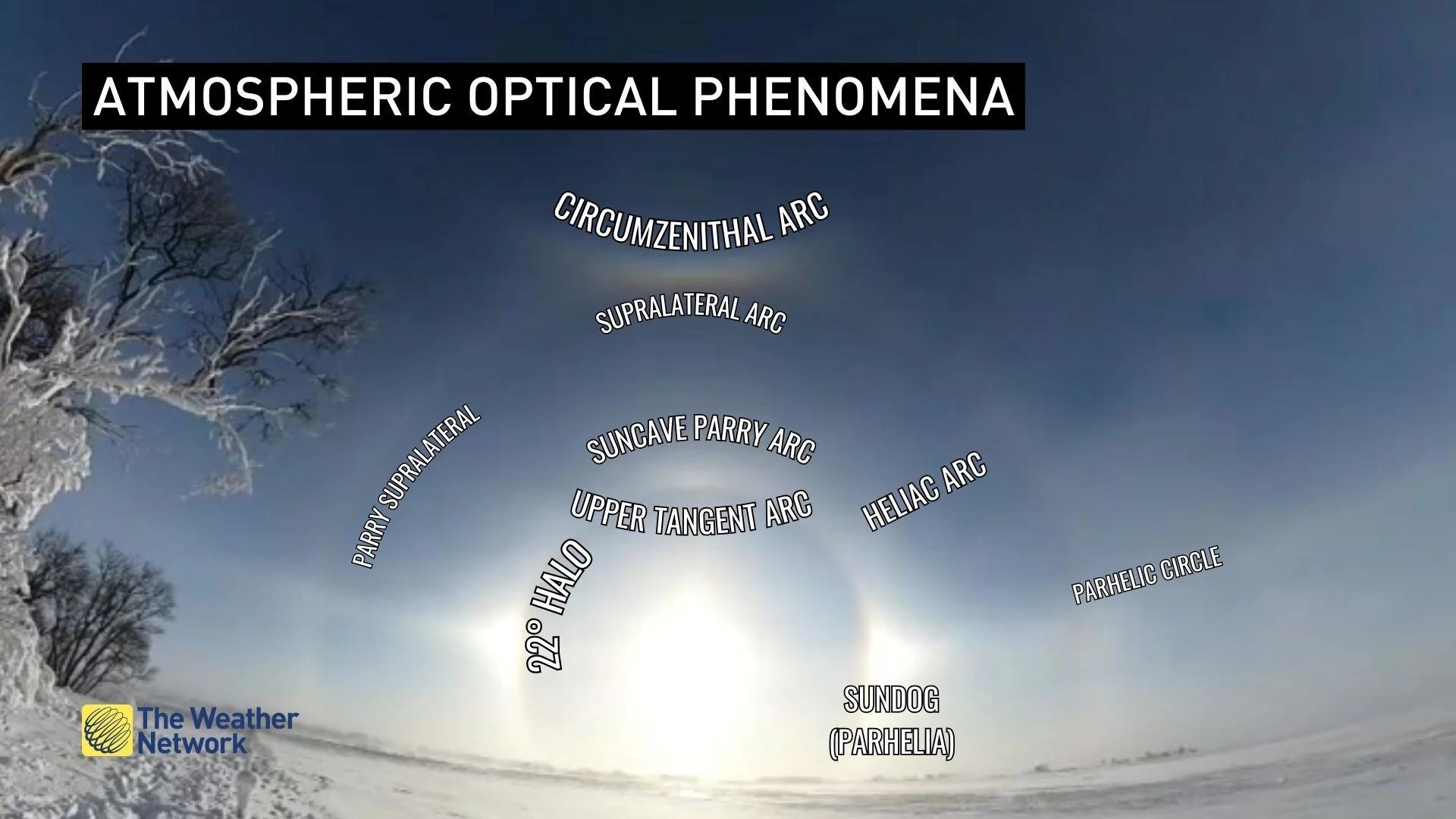
In the winter months, these dazzling displays are all thanks to tiny ice crystals interacting with sunlight. Transparent hexagonal crystals are naturally found floating in the air on cold days. As sunlight passes through them, the light is refracted and reflected off their surfaces, which bends and scatters the light.
This process is what leads to atmospheric, optical phenomena like halos, sundogs, and light pillars, which are most commonly seen during very cold weather.
The exact appearance of these atmospheric displays depends on a few factors: Angle of the sun, the shape of the crystal, as well as the direction in which the crystal is facing.
The most common of these phenomena is the 22-degree halo. It looks like a glowing ring surrounding the sun or moon. This occurs when sunlight or moonlight bends as it passes through tiny ice crystals high in the sky, always at a 22-degree angle from the light source.
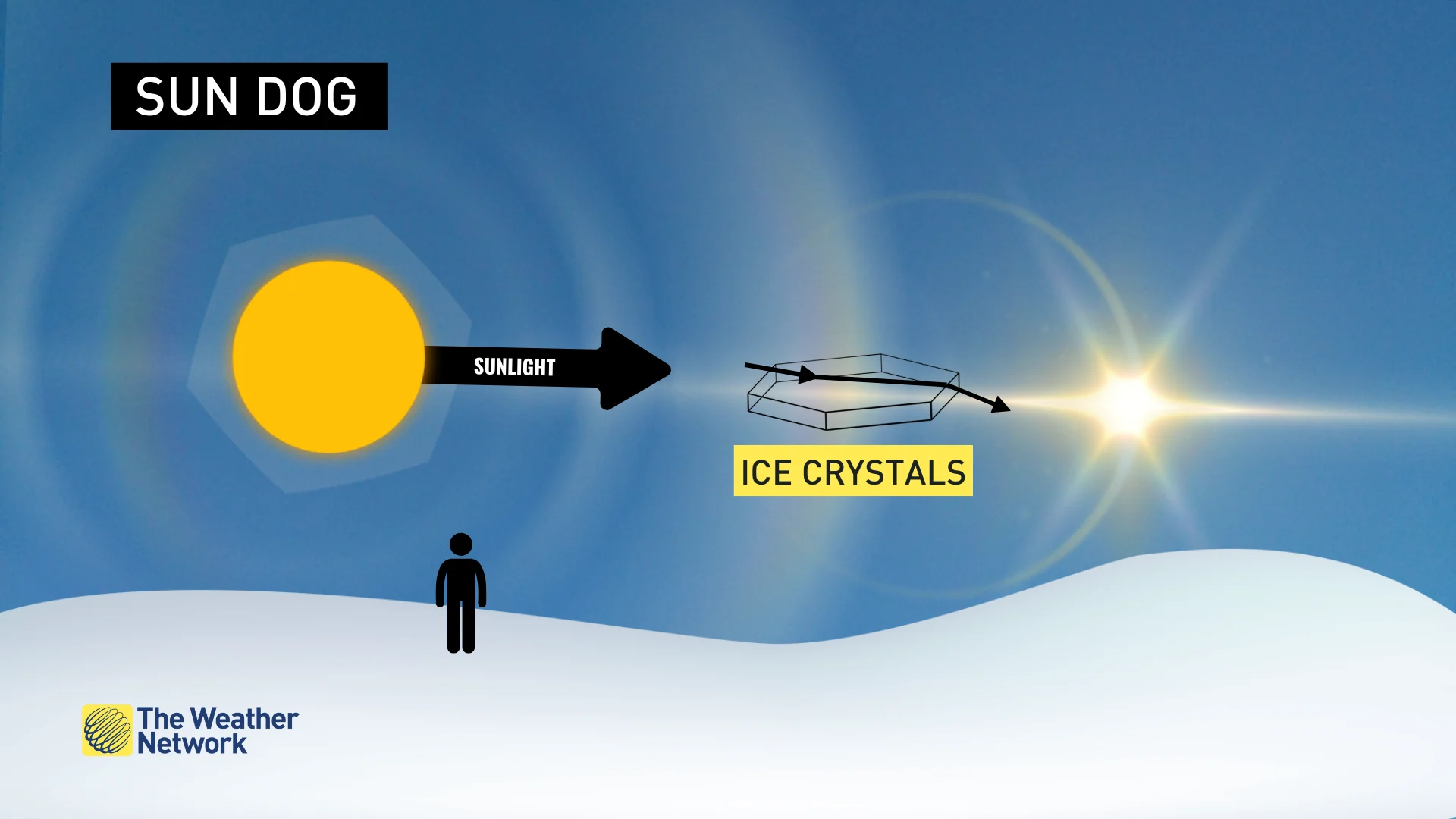
Another spectacular sight is a sundog, a bright patch of light that appears on either side of the sun. This occurs when sunlight bends through tiny ice crystals high in the atmosphere, most noticeable on winter days when the sun is close to the horizon.
Also popular on cold winter nights? Light pillars! These columns of light extend vertically from natural or artificial light, and usually take on the colour of the light source. It happens when light reflects off ice crystals floating in the cold air, creating a magical, pillar-like effect.
In extremely cold conditions, especially during freezing fog, the same magic can produce icebows. Instead of forming from raindrops, an icebow forms when sunlight is refracted and reflected through tiny ice crystals in the atmosphere.
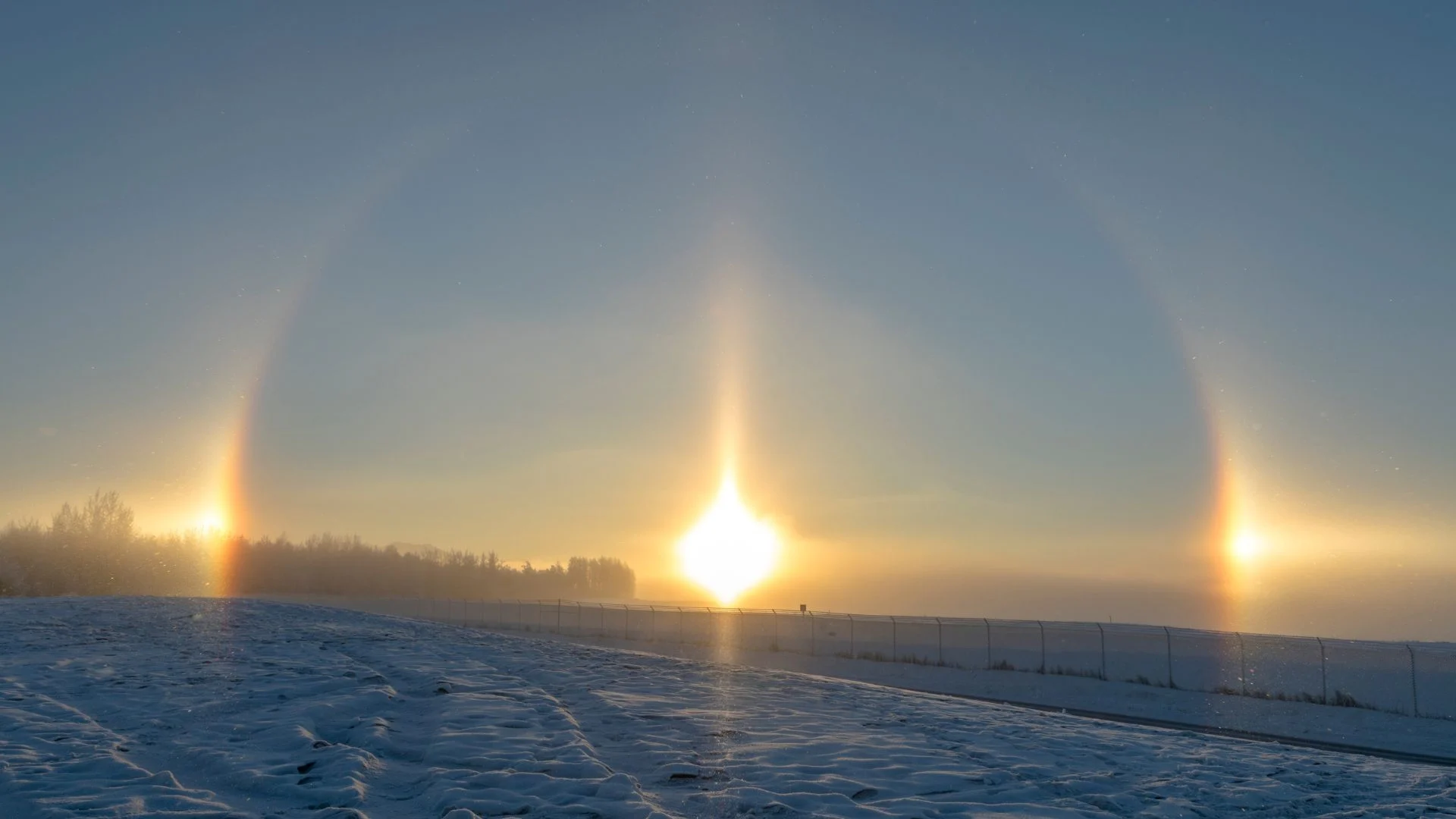
Sundog. (CANVA)
The sky doesn't stop there! From parhelic circles, upper tangent arcs, circumzenithal arcs, and parry supralateral arcs, the list of fantastic atmospheric displays goes on and on.
So this winter, when temperatures drop and the sun is shining, take a moment to look up! You might just catch one of these amazing atmospheric displays lighting up the sky!
Thumbnail courtesy of Jesse Frehlich/Submitted to the Weather Network.