Alien comet 3I/Atlas closest to Earth Friday. Here's where you can see it

This may be the best time to see this celestial visitor before it is gone forever.
Interstellar comet 3I/ATLAS will soon reach its closest distance to Earth, so this may be our last, best chance to see this rare object before it heads back out into the universe, never to return.
It's been nearly five months since astronomers first spotted the alien comet flying through our solar system. In that time, telescopes here on Earth, up in space, and even orbiting around another planet, have been snapping images of this visitor, attempting to give us our best look at it before it slips beyond our view.
One of the latest views, taken from the Gemini North telescope on November 26, 2025, reveals the green hue of the gases surrounding the comet.
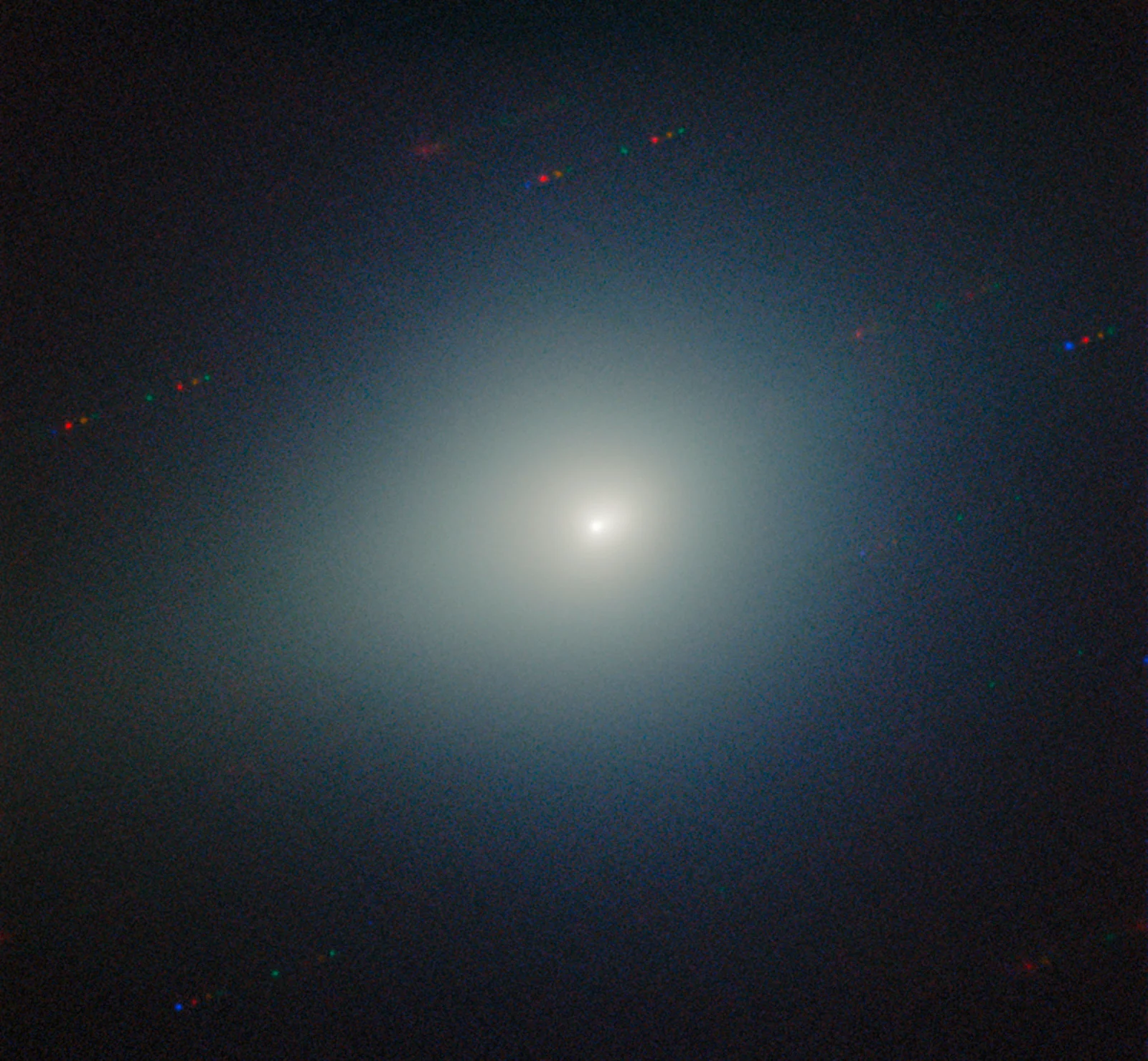
This image of 3I/ATLAS from the Gemini North telescope overlaps four different coloured-filter exposures to reveal the comet's colour. (International Gemini Observatory/NOIRLab/NSF/AURA/B. Bolin. Image Processing: J. Miller & M. Rodriguez (International Gemini Observatory/NSF NOIRLab), T.A. Rector (University of Alaska Anchorage/NSF NOIRLab), M. Zamani (NSF NOIRLab))
"In earlier images of the comet," NOIRLab said in a press release last week, "it appears to have a red hue. However, in the new image released today, it appears to have a faint greenish glow. This is due to light emitted by gases in the comet's coma that are evaporating as the comet heats up, including diatomic carbon (C2), a highly reactive molecule of two carbon atoms that emits light at green wavelengths."
According to NOIRLab, the image above captures the green glow of the comet due to the combination of four different colour-filtered exposures (blue, green, orange, and red). As each exposure was taken, the comet remained fixed in position at the center of the telescope's field of view, while the positions of the background stars changed relative to the comet. Thus, while the four exposures overlap perfectly for the comet, each background star becomes a line of colourful dots. Just to the lower-right of the comet, a longer, more spaced-out line of dots reveals an unknown main belt asteroid that was coincidentally captured in the same images.
A few days after that, astronomers once again pointed the Hubble Space Telescope at 3I/ATLAS, and captured this view.
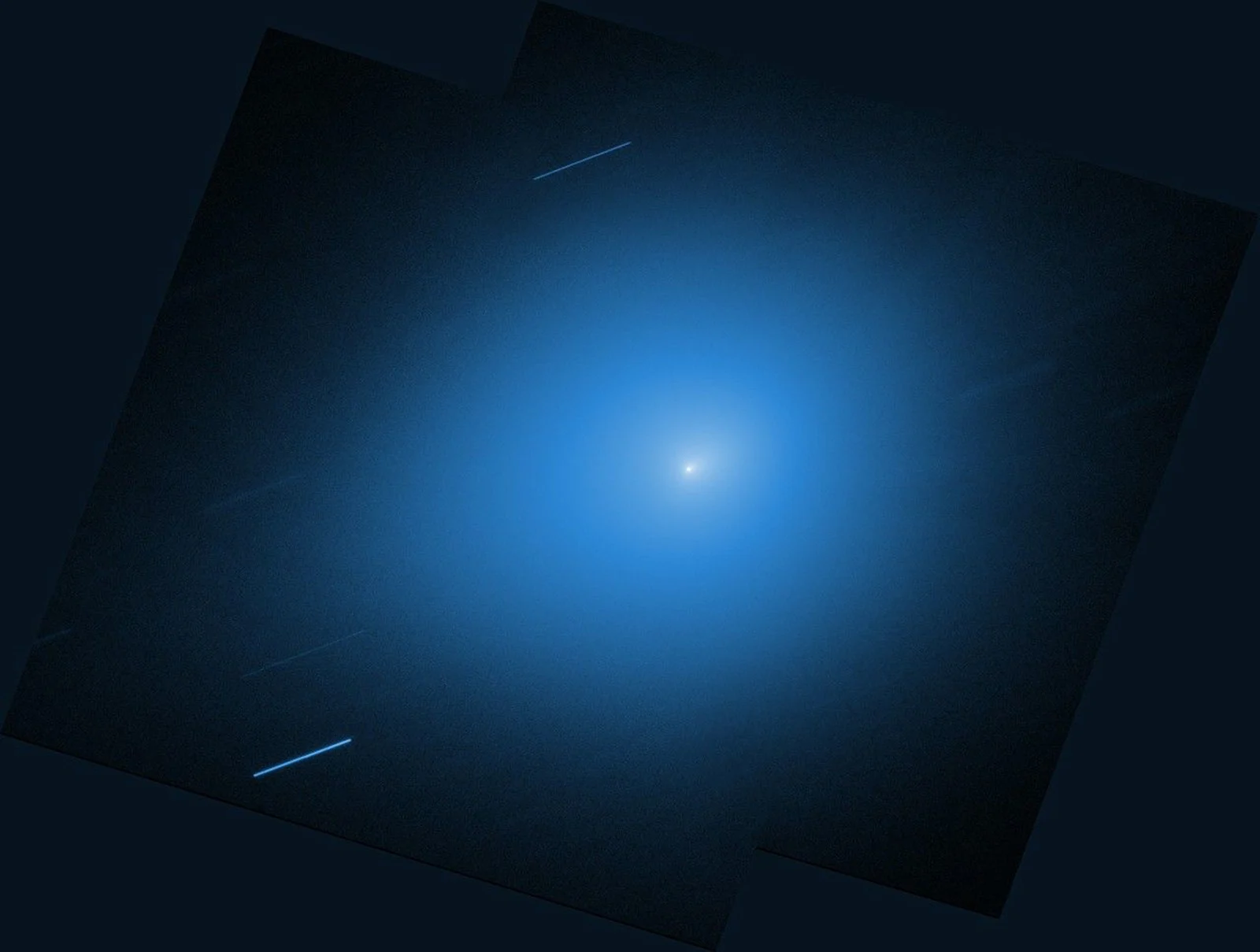
NASA's Hubble Space Telescope imaged 3I/ATLAS on November 30. Stars appear drawn out into lines as the foreground comet moves relative to the background. This is a 'false colour' image, capturing light emitted in the near-ultraviolet (350 nm), and shaded blue to bring out the details of the coma structure. (NASA, ESA, STScI, D. Jewitt (UCLA), M.-T. Hui (Shanghai Astronomical Observatory). Image Processing: J. DePasquale (STScI))
Astronomers intend to continue their observations of the comet, with every resource we have, even as it begins to move away from Earth. This is because the period of time after perihelion tends to bring out extraordinary activity from comets.
"Many comets have a delayed reaction in experiencing the Sun's heat due to the lag in time that it takes for heat to make its way through the interior of the comet," NOIRLab said. "A delay can activate the evaporation of new chemicals or trigger a comet outburst. Gemini will continue to monitor the comet as it leaves the Solar System and detect changes in its gas composition and outburst behavior."
RELATED: How to get the most out of meteor showers and other night sky events
Closest distance to Earth
On Friday, December 19, 2025, comet 3I/ATLAS will make its closest approach to Earth.
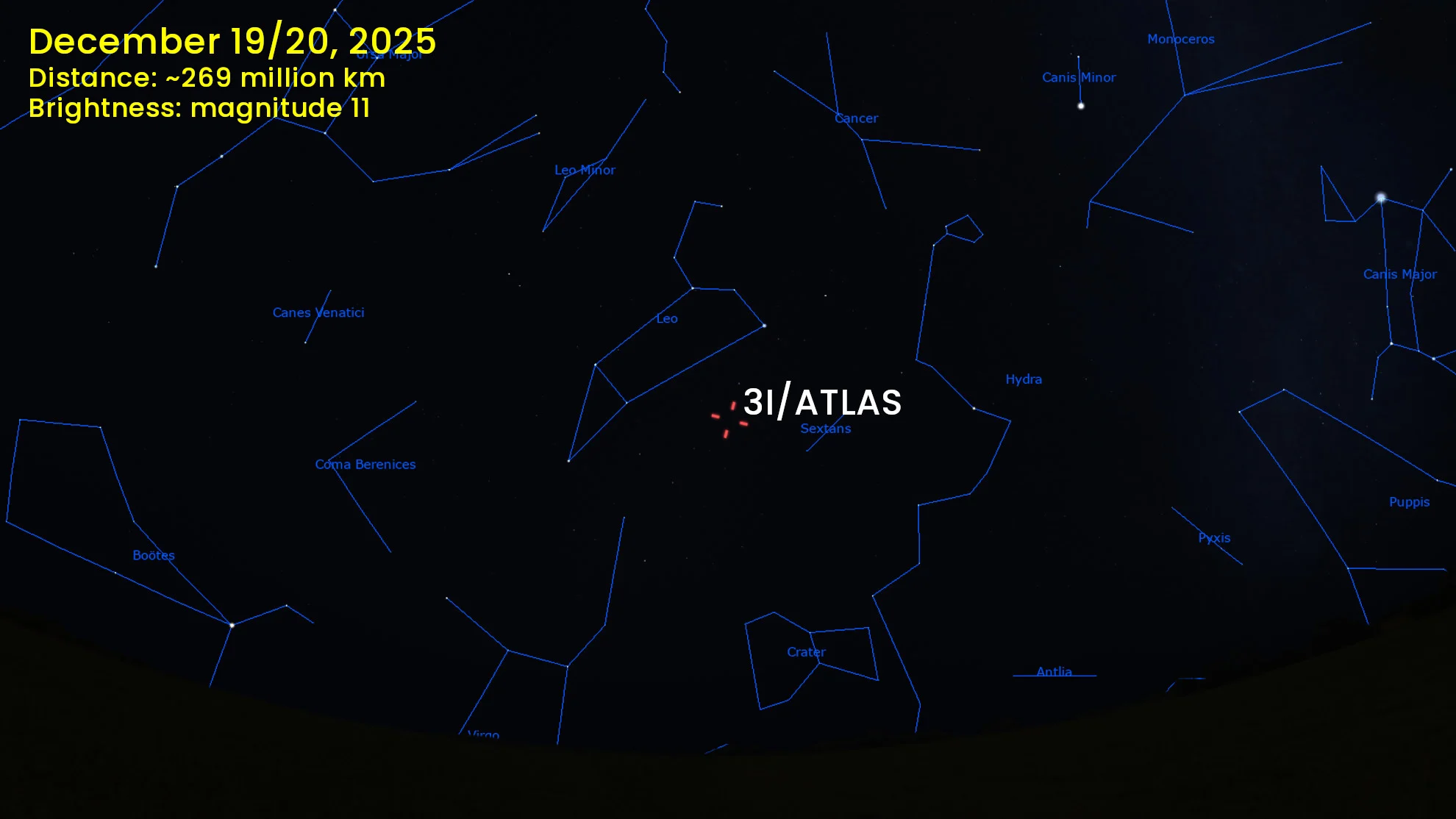
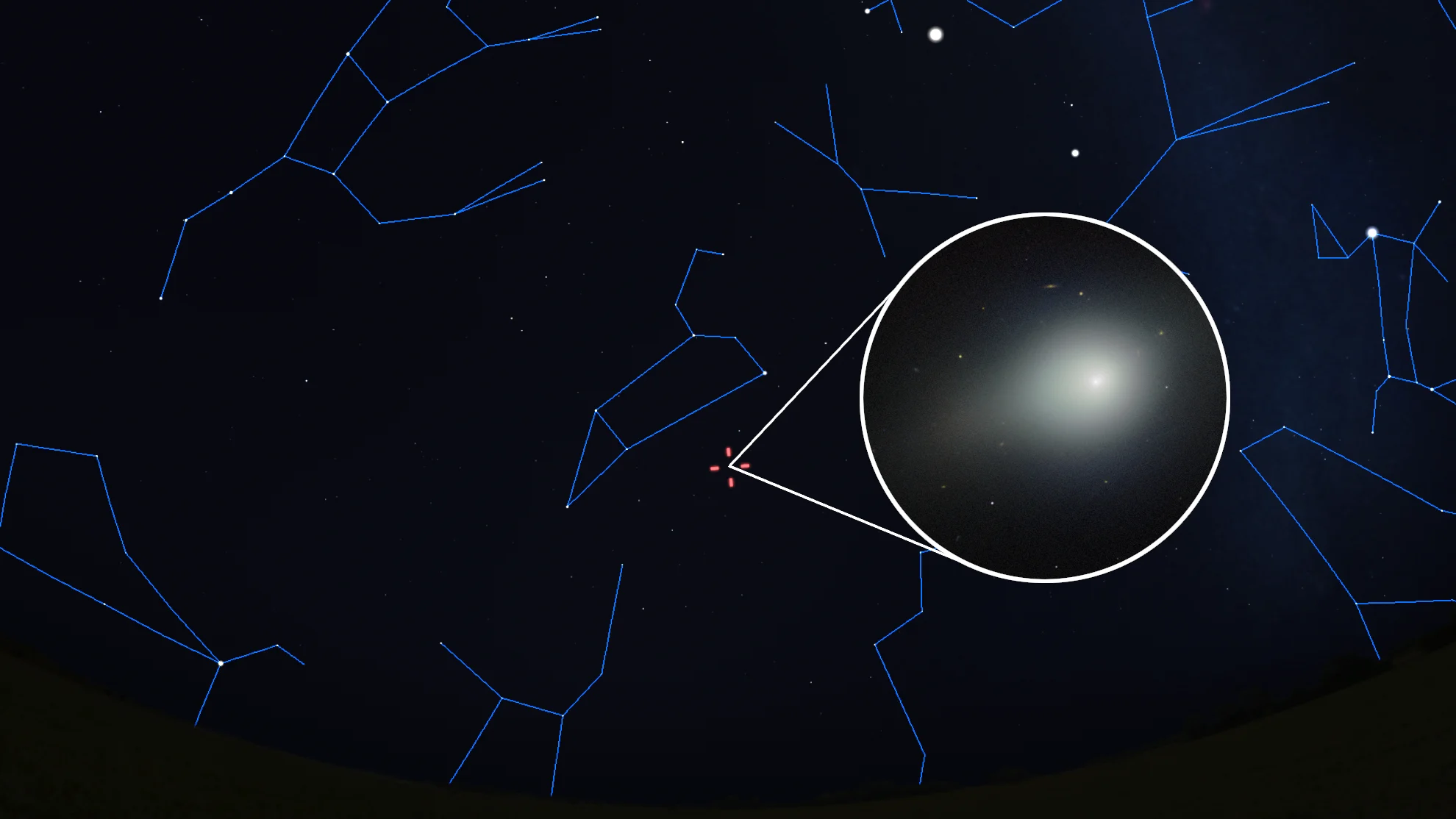
3I/ATLAS can be found near the constellation Leo when it reaches its closest distance to Earth, overnight on December 19-20, 2025. (Stellarium/Scott Sutherland)
However, 'closest approach' does not mean that it will be particularly close to us at that time.
On the contrary, during its 'perigee' (closest approach to Earth), 3I/ATLAS will be over 259 million kilometres away. By comparison, the Sun is roughly 150 million km away from us.
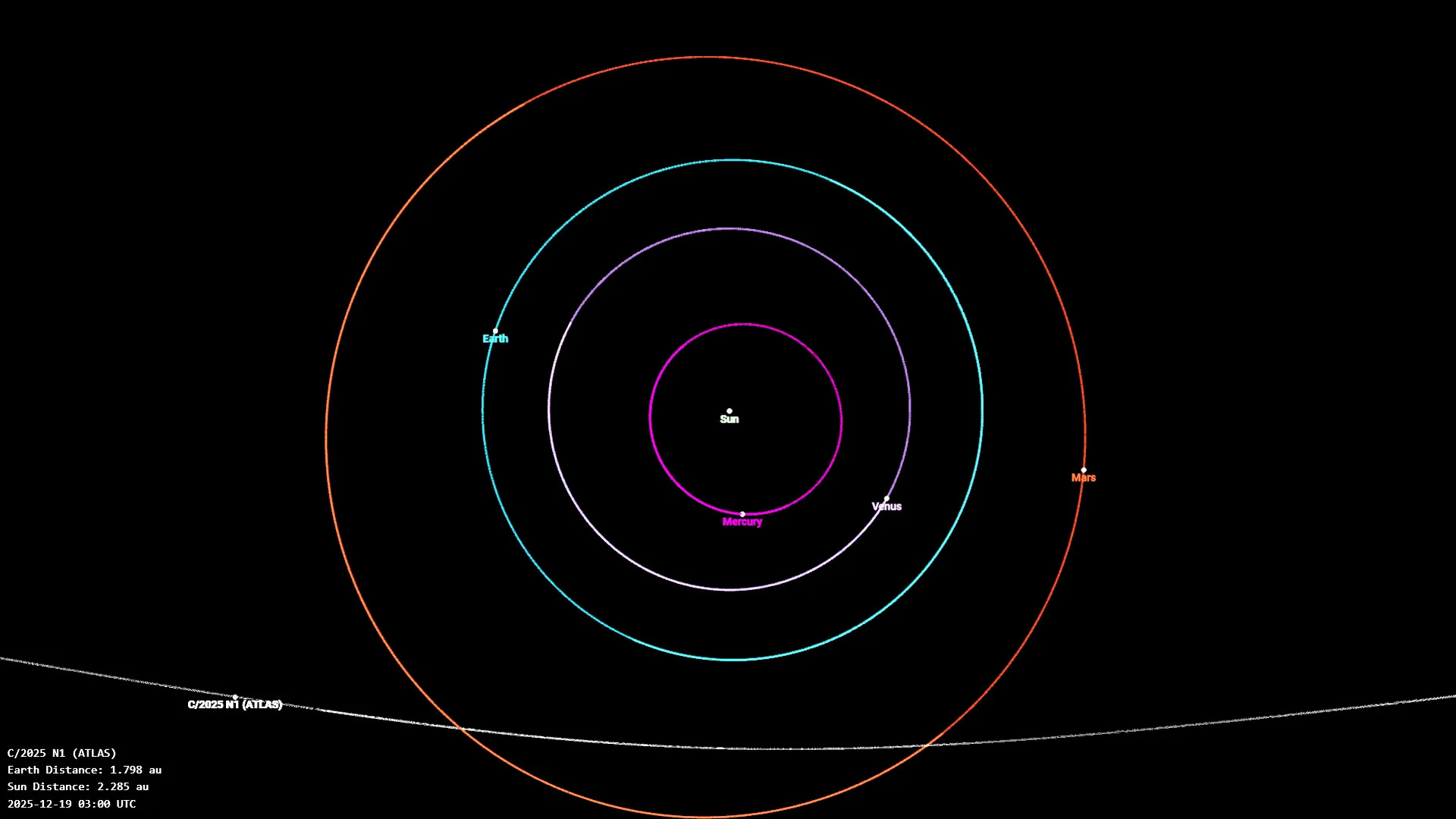
3I/ATLAS's position in the solar system (bottom left), on December 19, 2025. The comet's path is carrying it from right to left along the curved white line that passes through the lower part of the view. (NASA/JPL-Caltech)
Even at that immense distance, though, there is a still a chance for us to see this alien visitor.
On the Comet Observation database (COBS) website, amateur astronomers have been cataloguing their observations of 3I/ATLAS in our sky, from their various locations on Earth. Ever since the comet emerged from behind the Sun, in late October, it has been far brighter than originally predicted. It reached a peak brightness of around magnitude +10 at the beginning of November, and at the moment, it appears to be around magnitude +11.
For context, the planet Venus reaches up to magnitude -5, while Sirius, the brightest star in the sky, is magnitude -1. The average person, under dark skies, far from any light pollution, can see stars as dim as magnitude +6 with the unaided eye. (In astronomy, the lower an object's magnitude is, the brighter it is in the sky.)
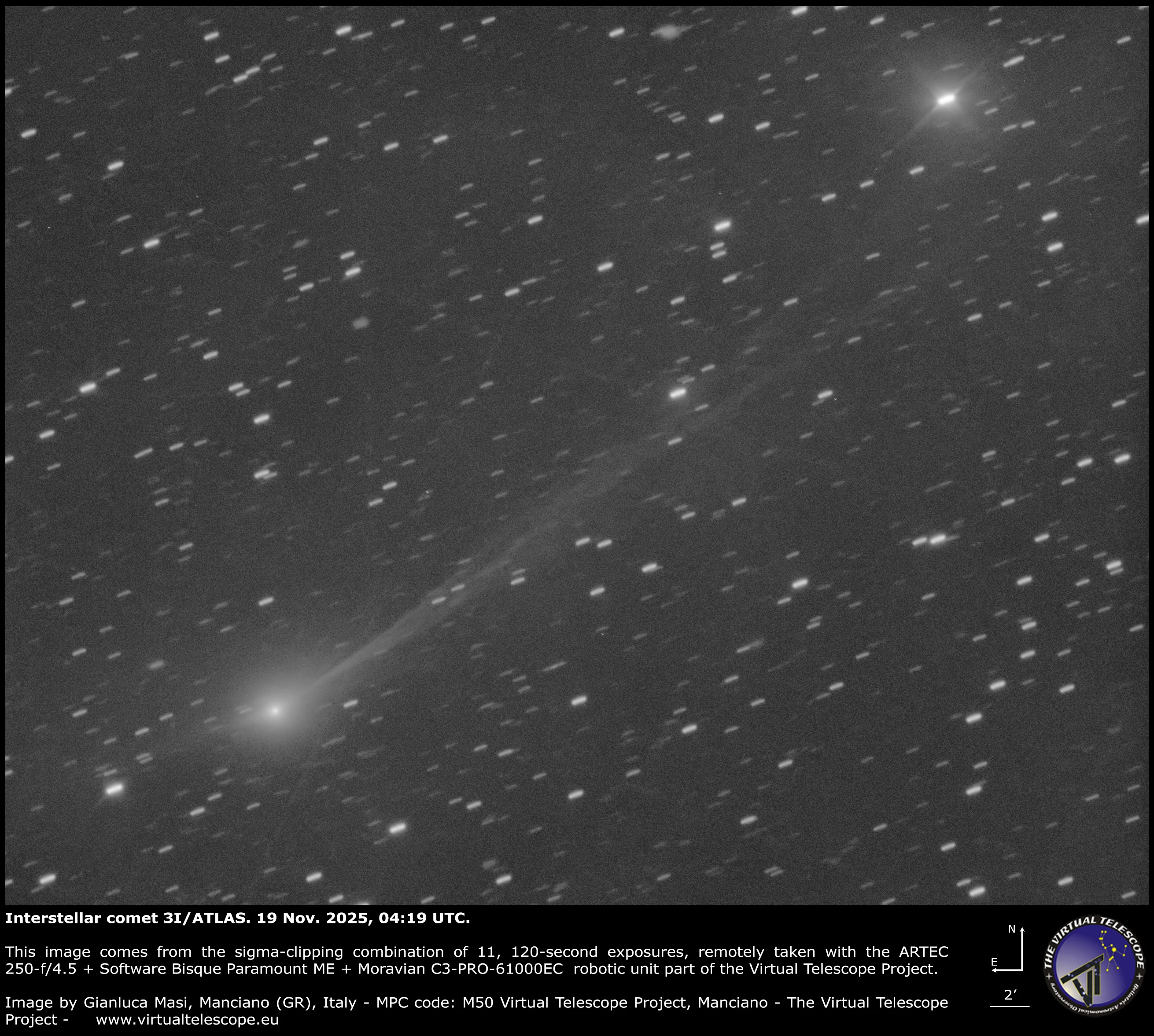
3I/ATLAS as imaged from a robotic telescope unit operated by the Virtual Telescope Project, in Manciano, Italy, on November 19, 2025. This wider view of the comet, compared to the Gemini North and Hubble images (above), also captures the comet's long, wispy tail, and shorter, dimmer anti-tail. (Gianluca Masi, Virtual Telescope Project)
So, there's no way that we'll be able to see comet 3I/ATLAS in the sky without some kind of equipment to help us out. In this case, a backyard telescope with a 6-inch or 8-inch aperture should be sufficient.
Original predictions had the comet dimming to magnitude +14 by the end of December, which is the lower limit for an 8-inch aperture telescope. However, based on COBS observations, it may remain bright enough to see into the new year.
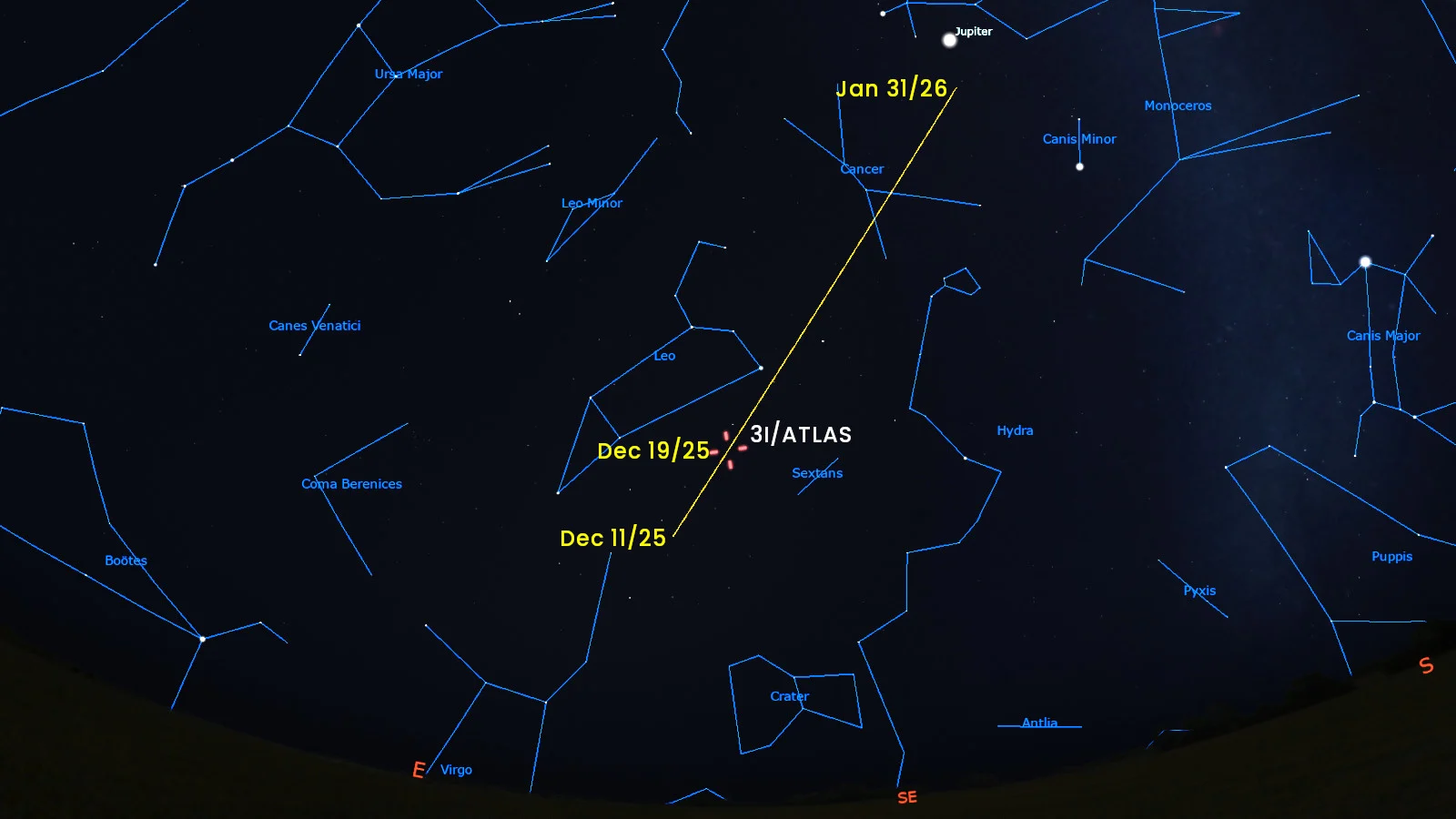
3I/ATLAS transitions from Leo to Cancer in the weeks following its closest approach to Earth. (Stellarium/Scott Sutherland)
Watch for the comet to track by the constellation Leo through the end of December and the beginning of January. After that, if it remains bright enough to see, it will transit through the constellation Cancer by the end of January.