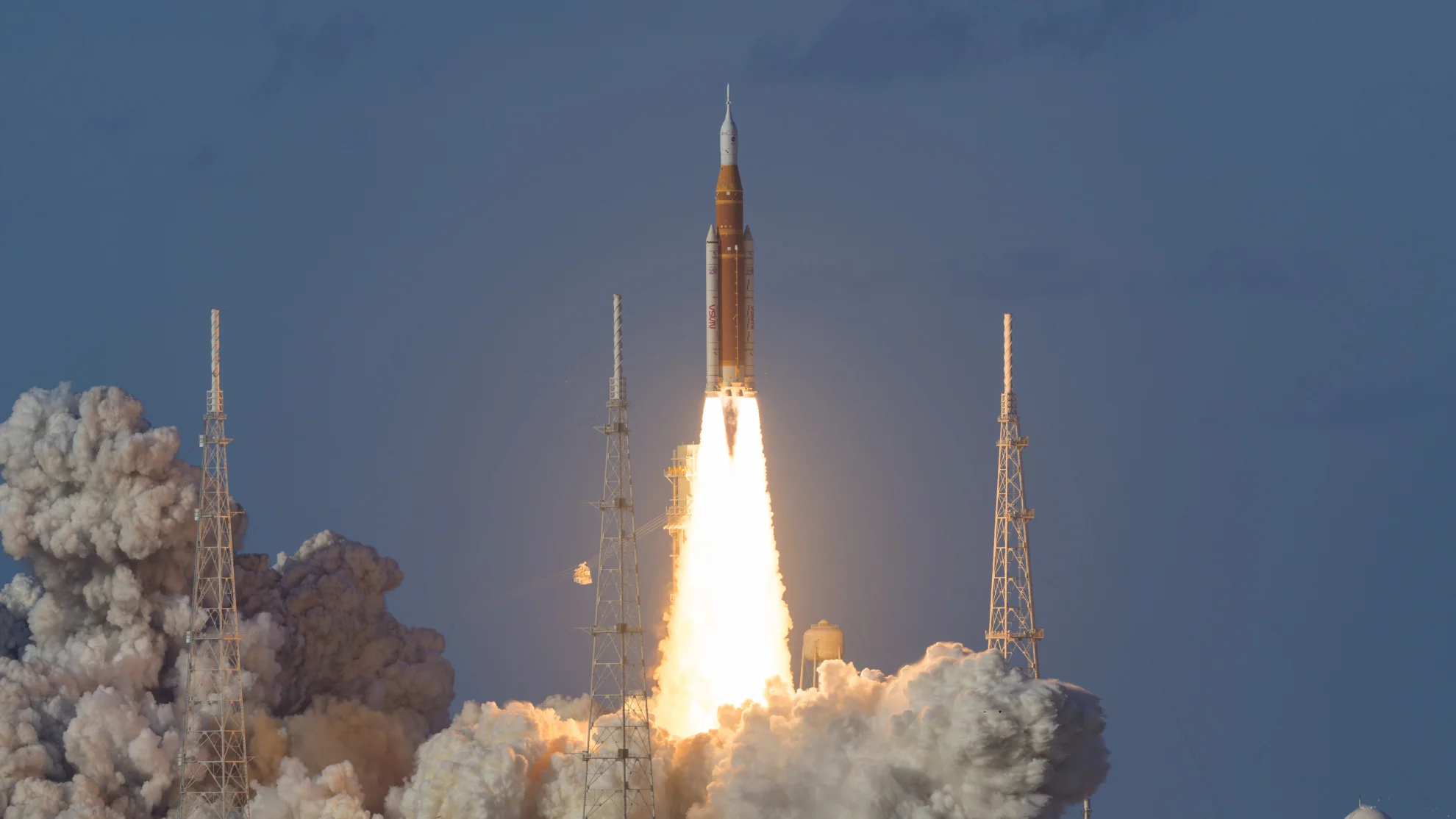
Artemis 2 Live: First crewed Moon flight since 1972 successfully launches

Four astronauts are about to blast off on a historic new flight around the Moon and back.
Commander Reid Wiseman, Pilot Victor Glover, and Mission Specialist Christina Koch from NASA, along with Mission Specialist Jeremy Hansen from the Canadian Space Agency, are expected to lift off later today, April 1, 2026, from NASA's Kennedy Space Center. Their mission: to become the first human crew to fly to the Moon and back since Apollo 17 in 1972.
The Artemis 2 launch now window opens at 6:35 p.m. Eastern Daylight Time.
READ MORE: Will fair weather hold for Wednesday's historic Artemis 2 Moon launch?
Live updates for this historic test flight will be published below.
6:46 p.m. EDT
Now, over 9 minutes into the flight, the Orion spacecraft, European Service Module, and SLS second stage have now separated from the SLS core stage.

A computer graphic shows an external view of this stage of the Artemis 2 launch, after the solid rocket boosters and core stage have all separated from the spacecraft and upper stage. (NASA TV)
The next major update for the mission will happen around 7:25 p.m. EDT.
READ MORE: The Artemis 2 will soon shatter a 55-year-old spaceflight record
6:35 p.m. EDT
LIFTOFF!!
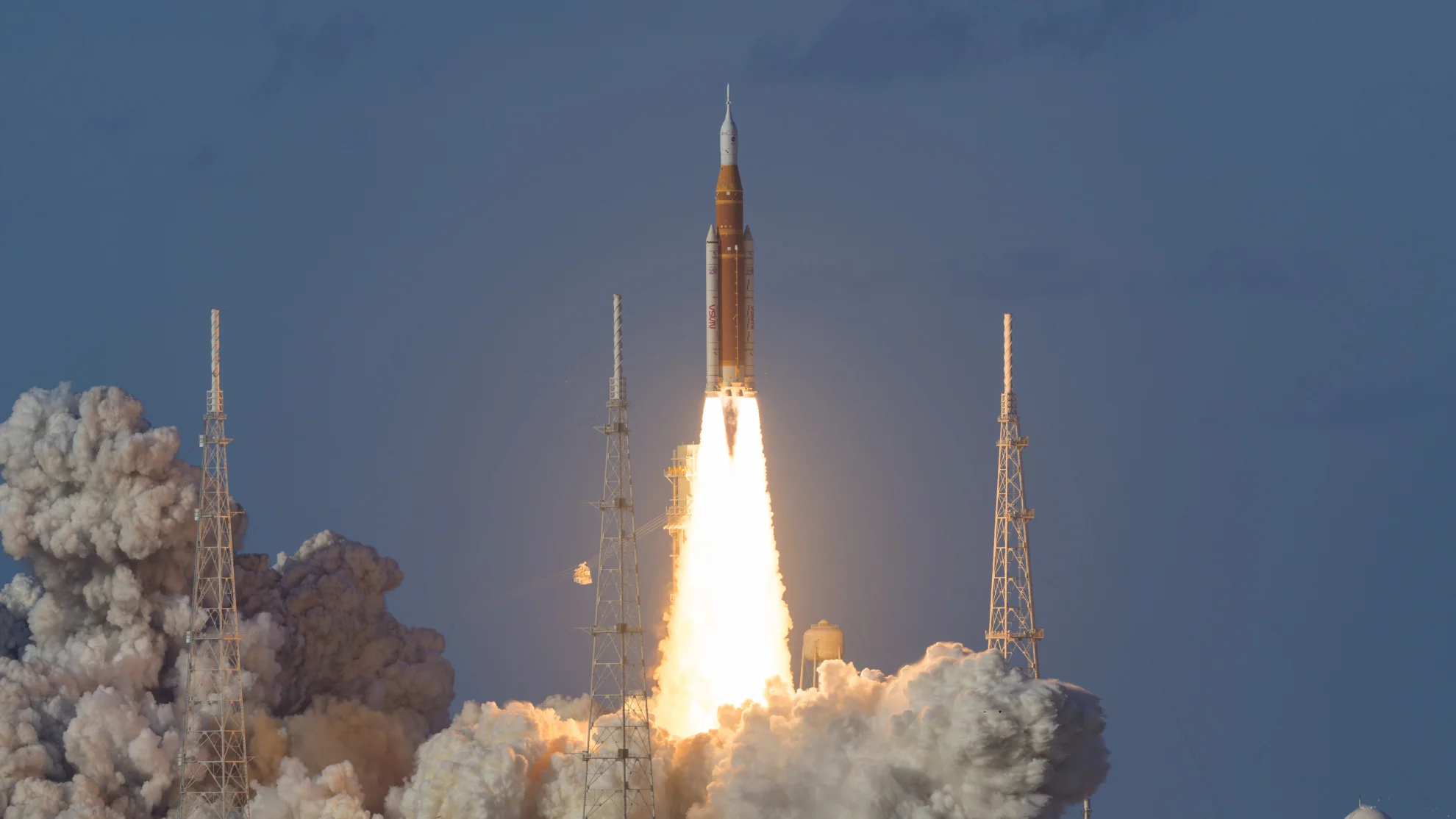
NASA’s Space Launch System rocket launches carrying the Orion spacecraft with NASA astronauts Reid Wiseman, commander; Victor Glover, pilot; Christina Koch, mission specialist; and CSA (Canadian Space Agency) astronaut Jeremy Hansen, mission specialist on NASA’s Artemis II mission, Wednesday, April 1, 2026, from Operations and Support Building II at NASA’s Kennedy Space Center in Florida. NASA’s Artemis II mission will take Wiseman, Glover, Koch, and Hansen on a 10-day journey around the Moon and back aboard SLS rocket and Orion spacecraft launched at 6:35pm EDT from Launch Complex 39B. (NASA/Bill Ingalls)
6:33 p.m. EDT
Less than two minutes to launch!!
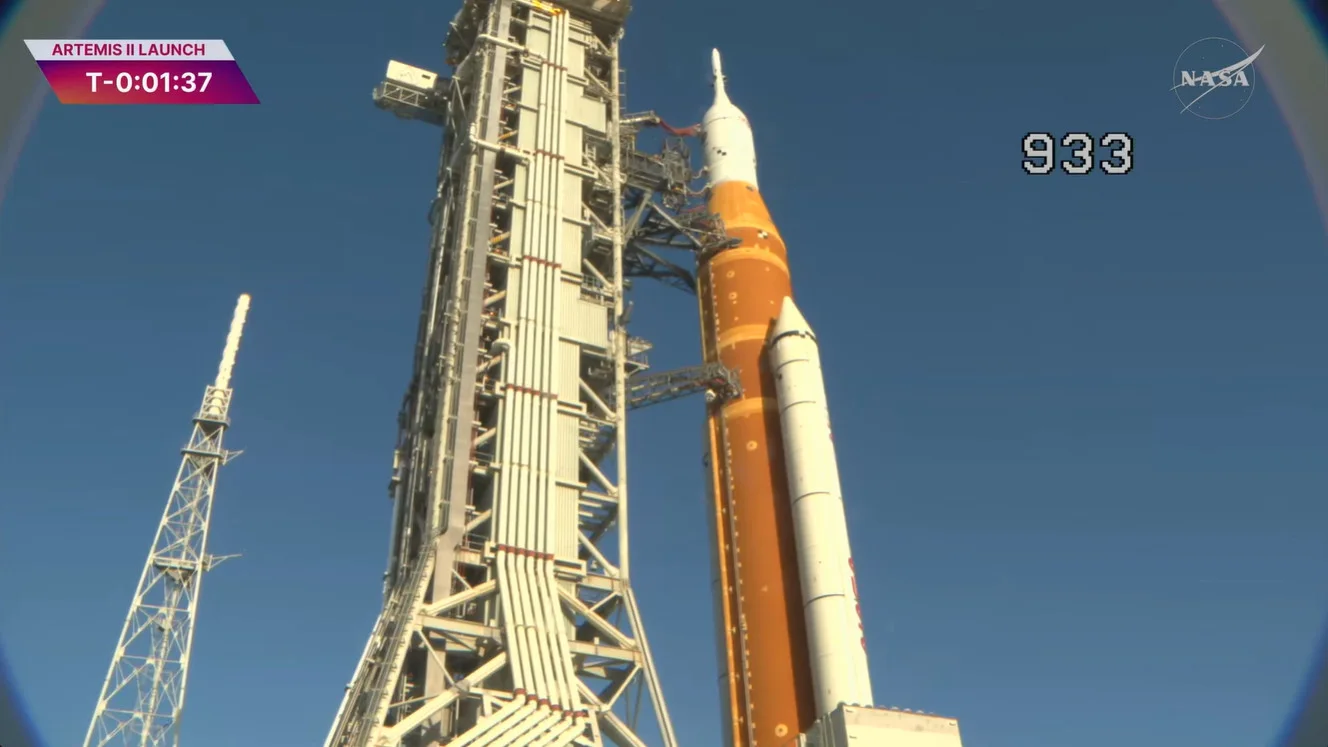
(NASA TV)
6:30 p.m. EDT
The crew access arm has now swung away from the rocket, signally a final stage of the launch countdown.
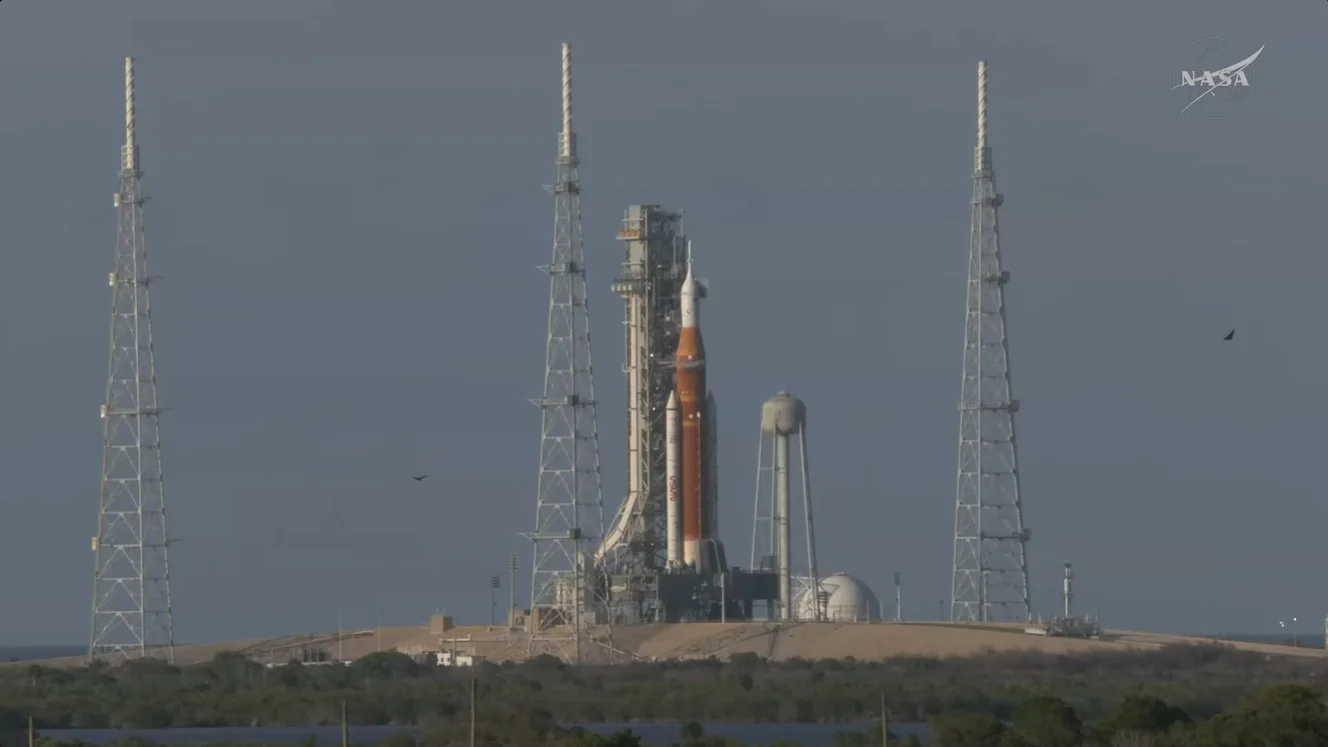
(NASA TV)
The launch abort system has also been armed and is ready in case of any major issues during launch.
6:25 p.m. EDT
Mission control has now conducted the official poll of all stations, for Go/No Go.
All stations have reported in, replying "Go", with Jeremy Hansen replying for the Artemis crew, adding "Going for all humanity."

(NASA TV)
The launch clock is now starting terminal countdown, at T minus 10 minutes. This will make the launch at 6:35 p.m. EDT.
6:15 p.m. EDT
The countdown clock is paused at the 10-minute mark, to allow mission control to verify with all managers that the launch is good to go.

(NASA TV)
6:10 p.m. EDT
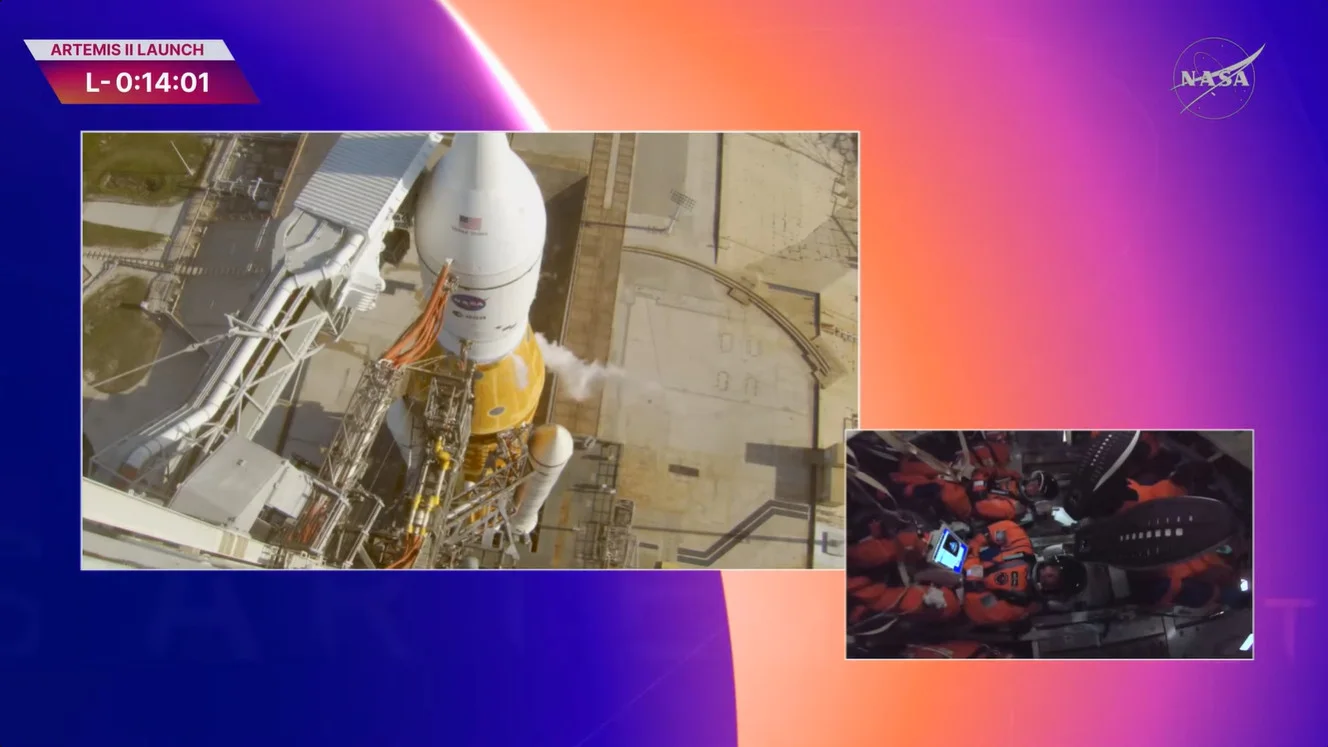
With less than 15 minutes left for the launch of Artemis 2, the ground crew has cleared the issue with the launch abort system battery.
(NASA TV)
Artemis 2 now appears to be Go for launch!
5:36 p.m. EDT
Both the Orion capsule door and the door for the launch abort system have now been closed, sealing the crew in for their flight to the Moon, and the access arm of the launch tower has now been retracted from the rocket.

(NASA TV)
The ground crew is currently investigating a battery issue with the launch abort system. This may simply be a sensor issue, reporting eronious data. However, if it proves to be something more serious, it may require intervention before they can launch the rocket.
Also, with the sky clearing in the area of Kennedy Space Center, the current weather conditions are now 90 per cent "go" for launch.
5:20 p.m. EDT
The Artemis crew has two mission patches.
The overall patch features the ionic "Earthrise" view of the Moon and Earth, first seen during the Apollo 8 mission, in 1968, and abbreviates the Artemis II name into "All", to emphasize that this flight around the Moon is for all of humanity.
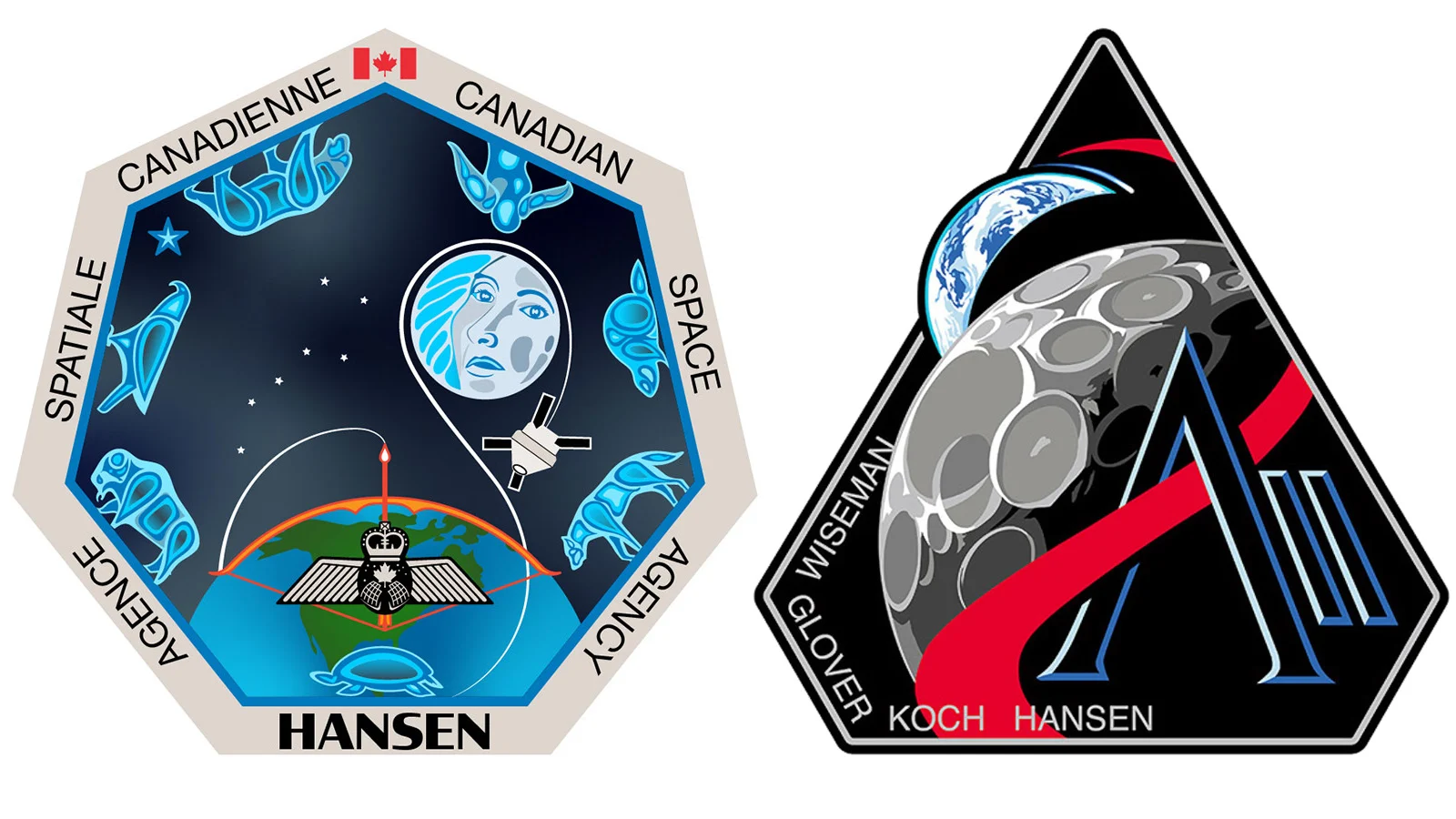
The Artemis 2 mission patches - the overall mission patch (right), and Jeremey Hansen's Canadian Space Agency patch (left). (CSA/NASA)
Jeremy Hansen's CSA patch was created by Anishinaabe artist Henry Guimond of the Turtle Lodge, and merges imagery and icons from several different sources to honour Hansen's participation in this historic mission.
According to the CSA, the heptagonal shape, and the animals positioned around the border of the patch, refer to the Seven Sacred Laws, or Seven Grandfather Teachings: the Buffalo, representing respect, the Eagle, representing love, the Bear, representing courage, the Bigfoot, representing honesty, the Beaver, representing wisdom, the Wolf, representing humility, and the Turtle, representing Truth.
It also includes the bow, representing Artemis, the Greek goddess of the hunt, nature, and the Moon, which launches a set of Royal Canadian Air Force astronaut wings on a path around the Earth, and then out to circle Grandmother Moon and return home. Also, the Big Dipper (Ursa Major) and the North Star (Polaris) are included as a reminder of humanity's place in the universe, with the five points of Polaris representing the five members of Hansen's family.
The silver border stands for the walls of the Orion spacecraft that will carry the crew to the Moon, with Canadian Space Agency/Agence Spatiale Canadienne written in this border representing the agency's participation and contributions to the mission.
Finally, the thin blue border inside the silver border represents the light or spirit that is in all of humankind, plants, and animals, tying all of these themes together.
4:40 p.m. EDT
The mission control team is currently troubleshooting an issue with the eastern range, which is related to the launch abort system, which would engage to separate the crew capsule from the rest of the rocket in case of a major issue, to bring them down for a splashdown in the ocean.
A "unique" aspect of these troubleshooting efforts has one of the controllers leaving mission control, to go to the Vehicle Assembly Building next door, to retrieve a piece of 'legacy hardware' that was used during the Space Shuttle era.
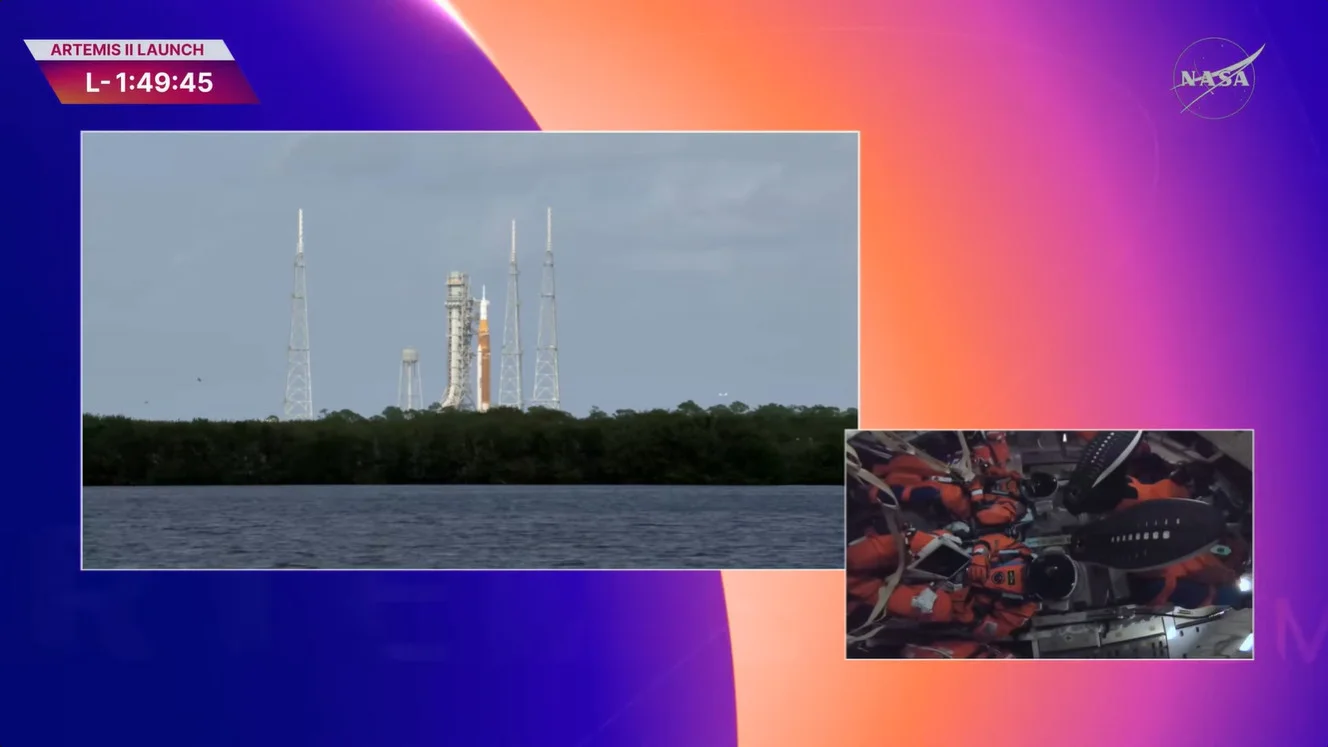
The Artemis 2 rocket stands at Launch Complex 39B, at Kennedy Space Center (top left), while the crew sits in the Orion capsule as launch preparations continue (bottom right). (NASA TV)
During these efforts, the rest of the rocket and crew preparations continue for the opening of the launch window at 6:24 p.m. EDT.
4:10 p.m. EDT
There is now roughly 2 hours left in the countdown for liftoff of Artemis 2.
Once the rockets ignite, it will take only a little over 8 minutes for Orion and the European Service Module to reach low-Earth orbit!

(NASA)
Click here for a zoomable version of the graphic above.
The big launch milestones are:
T+00:00 - liftoff
T+01:11 - followed by Max Q, the point at which the atmosphere exerts the greatest pressure on the rocket as it cuts through the air
T+02:09 - separation of the solid rocket boosters (SRB)
T+03:18 - jettison of the launch abort system (LBS)
T+08:03 - core stage main engine cut-off (MECO)
T+08:15 - core stage/interim cryogenic propulsion stage separation
At this point, the astronauts will now be in low-Earth orbit, and Rise should begin floating around the capsule, showing us that they are in zero-g.
Afterwards, at roughly 50 minutes into the launch, the interim cryogenic propulsion stage will ignite, raising the level of their orbit, with another similar burn nearly an hour later, to extend their apogee distance (their farthest distance from Earth during their initial orbits).
After three hours and 24 minutes, Orion and the European Service Module will then separate from the interim cryogenic propulsion stage, perform some proximity maneuver tests, and then use the ESM's engines to raise their orbit once again.
2:50 p.m. EDT
The four Artemis 2 astronauts, Reid Wiseman, Victor Glover, Christina Koch, and Jeremy Hansen, are now strapped into their seats on the Orion spacecraft.

This interior view of the Orion capsule shows all four Artemis 2 crew members in their chairs. (NASA TV)
The closeout crew is now working through the final phases of this stage of the countdown, before the close and seal the Orion capsule hatch.
1:50 p.m. EDT
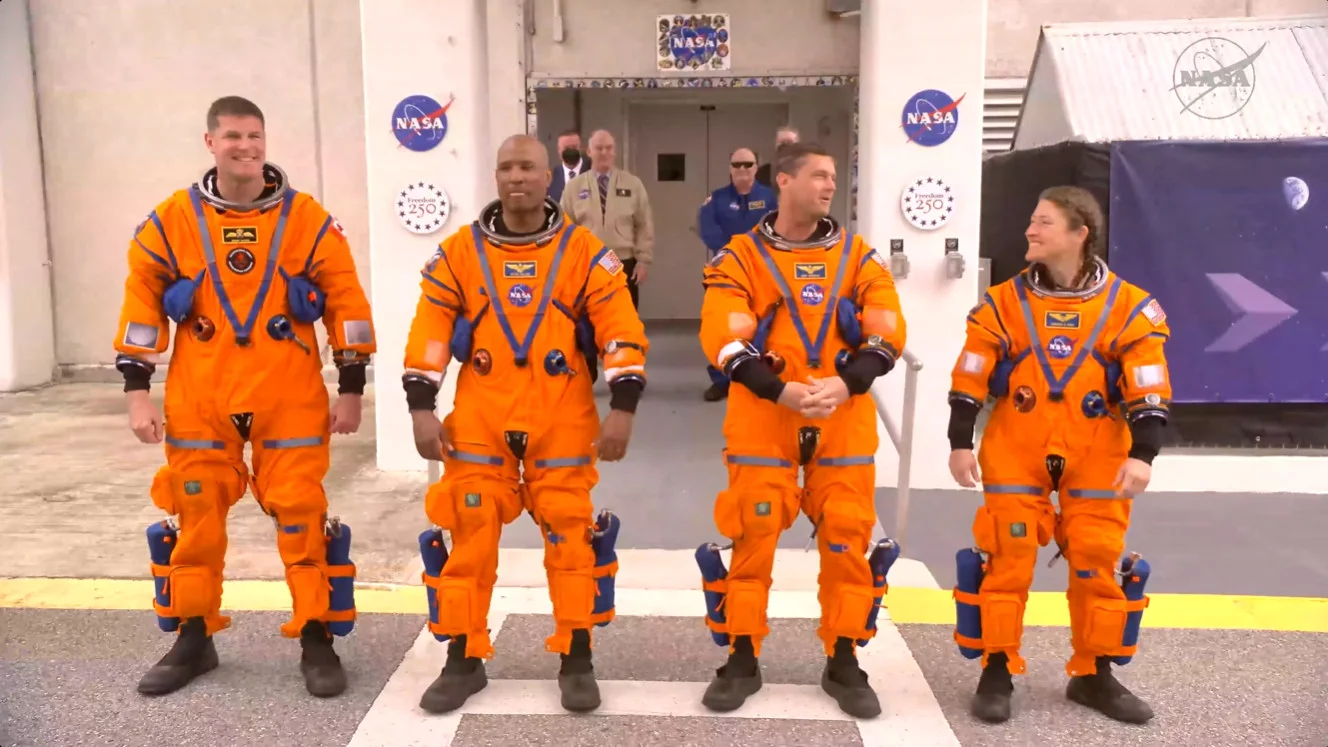
The Artemis 2 crew has now emerged in their orange flight suits, to speak to their families, and then to board the transport to Launch Complex 39B.
1:25 p.m. EDT
In addition to the Earth weather taking place around Launch Complex 39B, space weather around Earth and in deep space has the potential to impact the success of this mission.
Solar flares emit powerful bursts of high-energy x-rays. Coronal mass ejections are immense eruptions of solar plasma that expand out into space, and cause disturbances in Earth's magnetic field known as geomagnetic storms as they sweep past us. Both of these phenomena can affect spacecraft and satellites around Earth and in deep space.
However, NASA's primary space weather concern for Artemis 2 is solar particle events, also known as solar radiation storms.
During particularly powerful solar flares, the intense explosion of magnetic energy can cause solar particles, mainly protons, to be accelerated to a large fraction of the speed of light. Taking only 10s of minutes to reach Earth from the Sun, these high-energy solar protons pose a radiation risk to astronauts in space, as they can penetrate spacesuits and spacecraft, potentially damaging both electronics and human DNA.
"If a significant solar particle event occurs near the Artemis II crew, it could raise radiation levels inside the spacecraft," NASA says. "Too high a total lifetime exposure can contribute to increased risks of developing cancer or health disorders that could impair cognition and performance. During the Artemis II mission, NASA will minimize that risk."
1:10 p.m. EDT
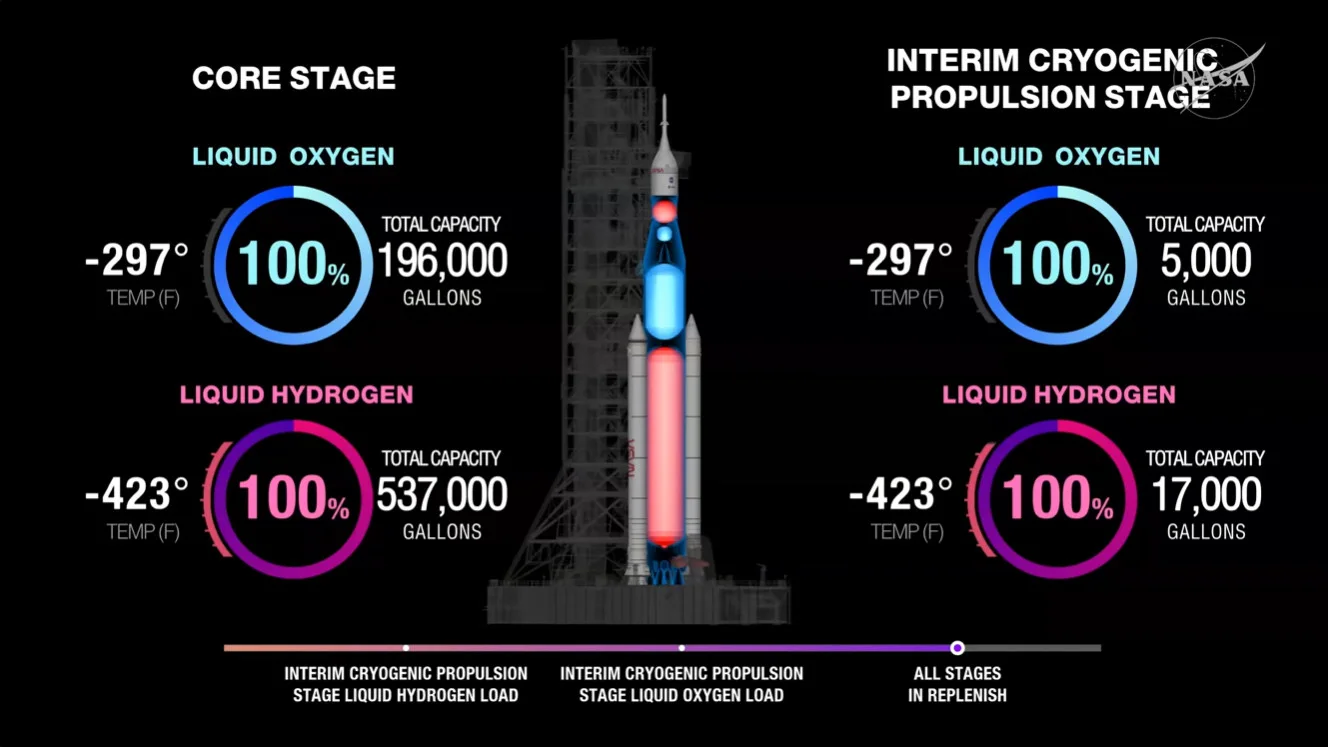
Both the SLS core stage and upper stage are now fully fuelled and in "replenish mode" for both liquid hydrogen and liquid oxygen.
(NASA TV)
The ground crew also reports that there are no leaks from the fuel system, which is excellent news after the problems noted during the previous fueling attempt, as they conducted wet dress rehearsal on Thursday, February 19.
12:20 p.m. EDT
As of about 6 hours from when the Artemis 2 launch window opens, the launch weather officer informed mission control that some showers were expected over the next couple of hours, but there is no threat of lightning.
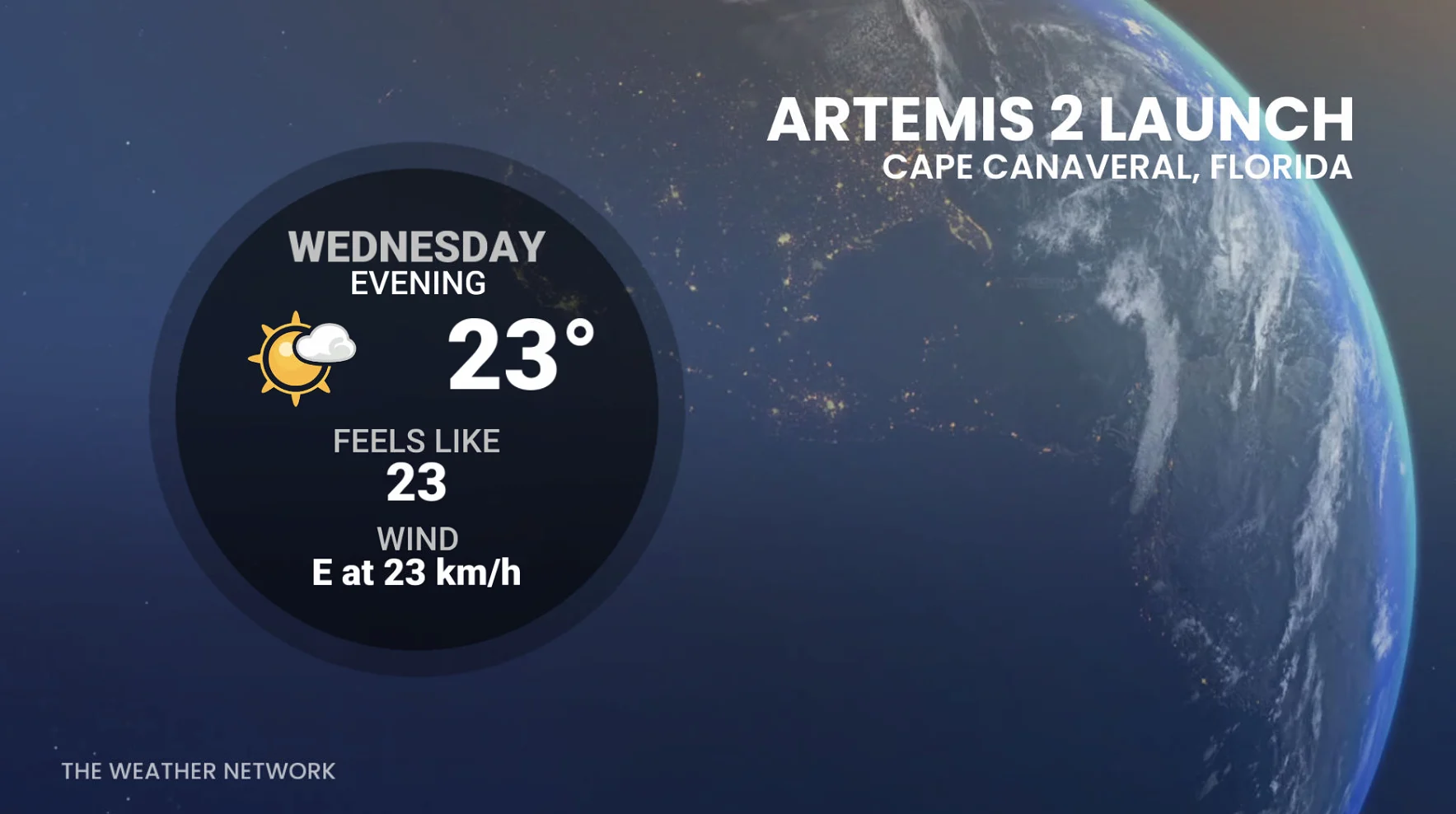
However, they are still expecting weather conditions to be 80 per cent "go" for the launch window later today.
DON'T MISS: Look up in April! Two comets may shine along with the Lyrid meteor shower
11:46 a.m. EDT
A long tradition for NASA's human spaceflight missions continues with Artemis 2, as the crew will be bringing a "zero-gravity indicator" on the Orion spacecraft with them.
Zero-gravity indicator is a fancy name for a small plushie that accompanies the crew in their capsule. While everyone and everything else on the flight is either stowed or secured, this item is left out, so that it will begin to float once they reach orbit, indicating to the crew that they are, indeed, experiencing zero-g.
The Artemis 2 zero-g indicator is named "Rise."
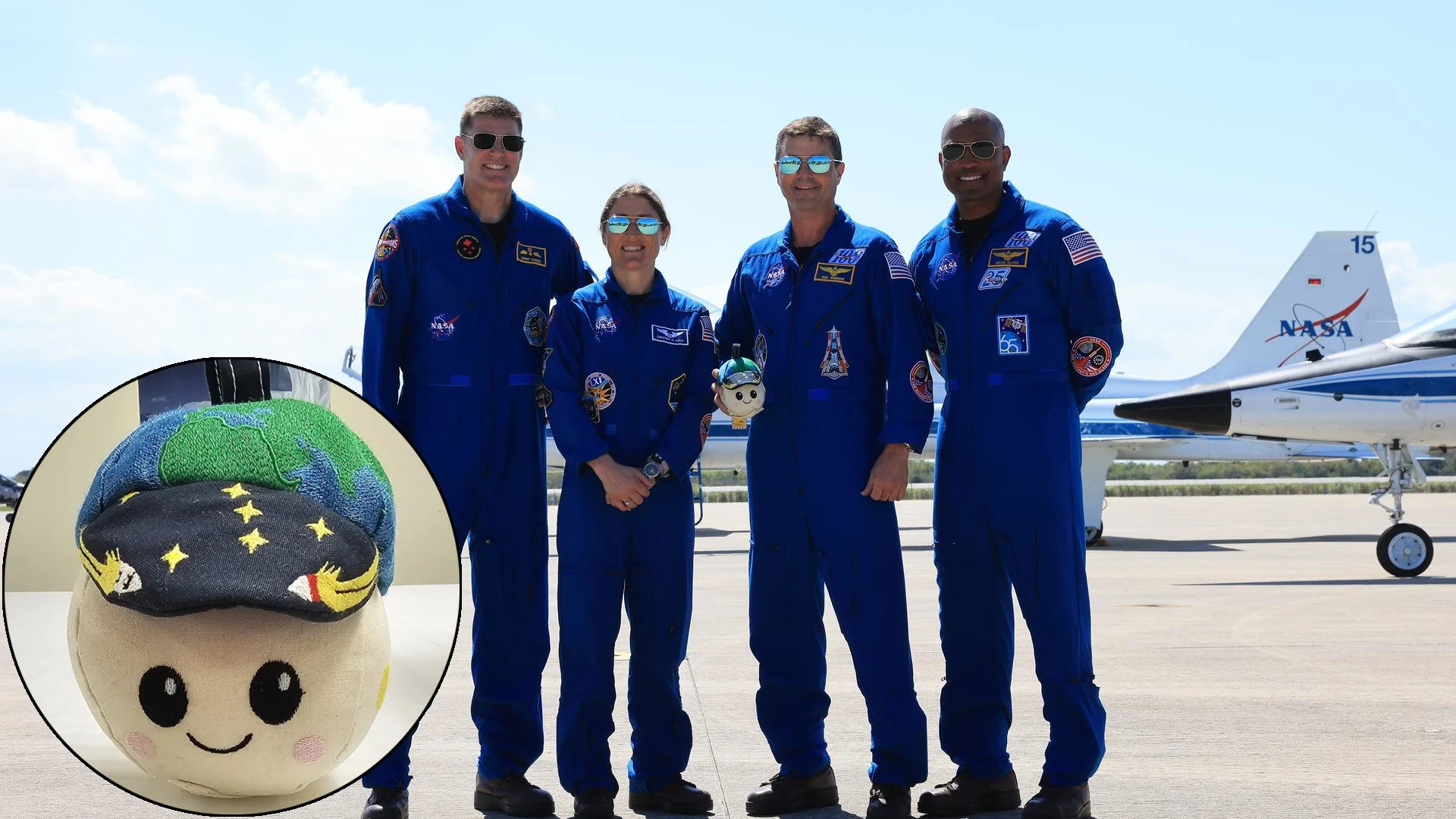
From left to right, CSA astronaut Jeremy Hansen, NASA astronauts Christina Koch, Reid Wiseman, and Victor Glover stand on a flight runway at Kennedy Space Center, with Wiseman holding "Rise," the small plush zero-g indicator the crew will bring with them on the Orion spacecraft. Inset, lower left: a closeup of Rise. (NASA/Kim Shiflett)
Designed by Lucas Ye of Mountain View, California, "Rise" was inspired by the iconic Earthrise moment captured by the Apollo 8 crew as they emerged from the far side of the Moon, during their mission in December 1968.
Rise was one of 25 finalists, picked last August from over 2,600 submissions that came in from around the world as part of a public contest to choose the Moon Mascot of this mission.
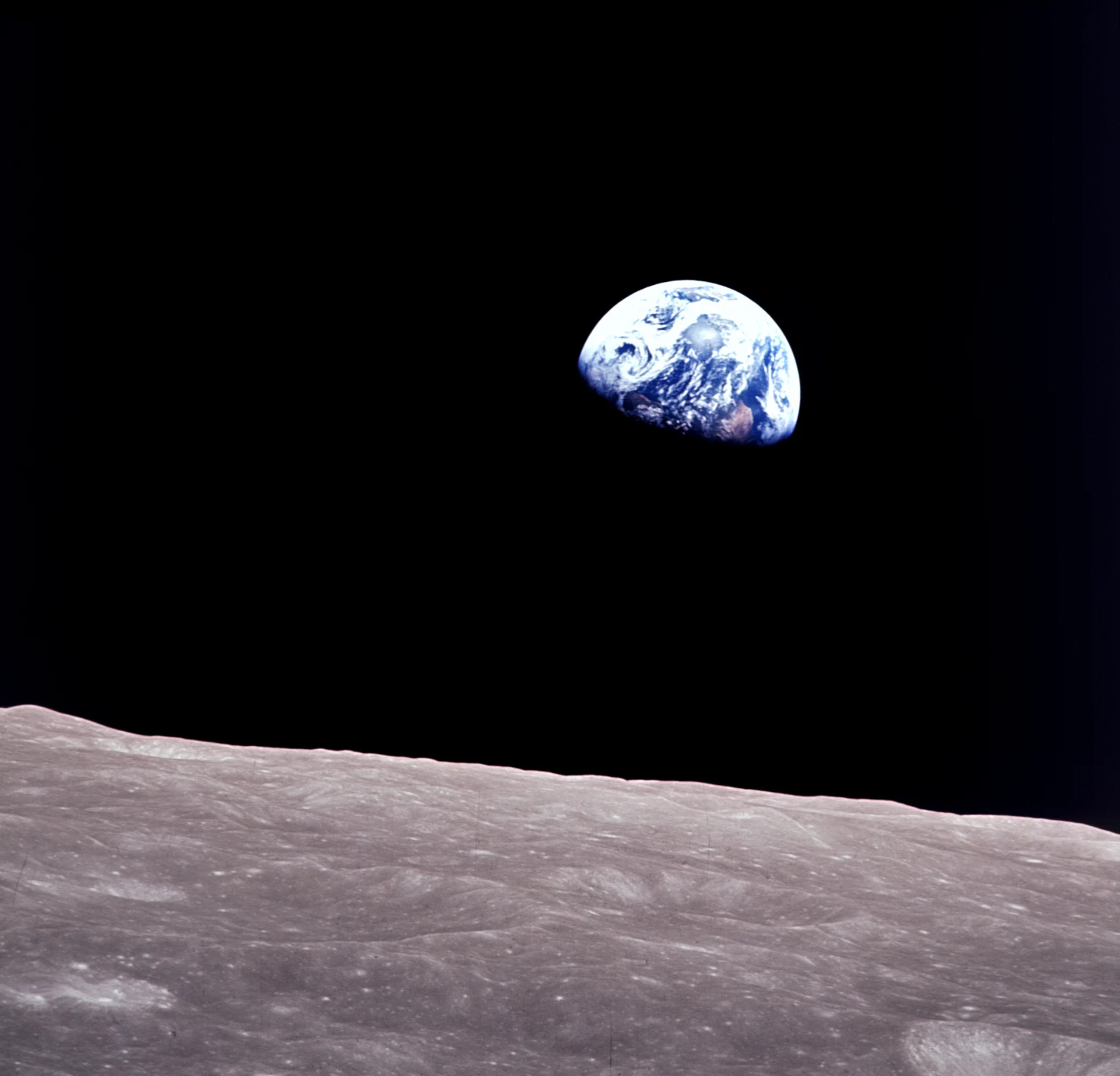
The Apollo 8 Earthrise photo, taken by NASA astronaut William Anders on December 24, 1968. (NASA)
The astronauts on board the spacecraft will be able to tell they are in space simply by the feel. Since they are strapped in and everything else in the capsule is stowed away, for safety, this little plush provides proof to those of us watching from the ground that they have actually reached the microgravity of Earth orbit.
11:21 a.m. EDT
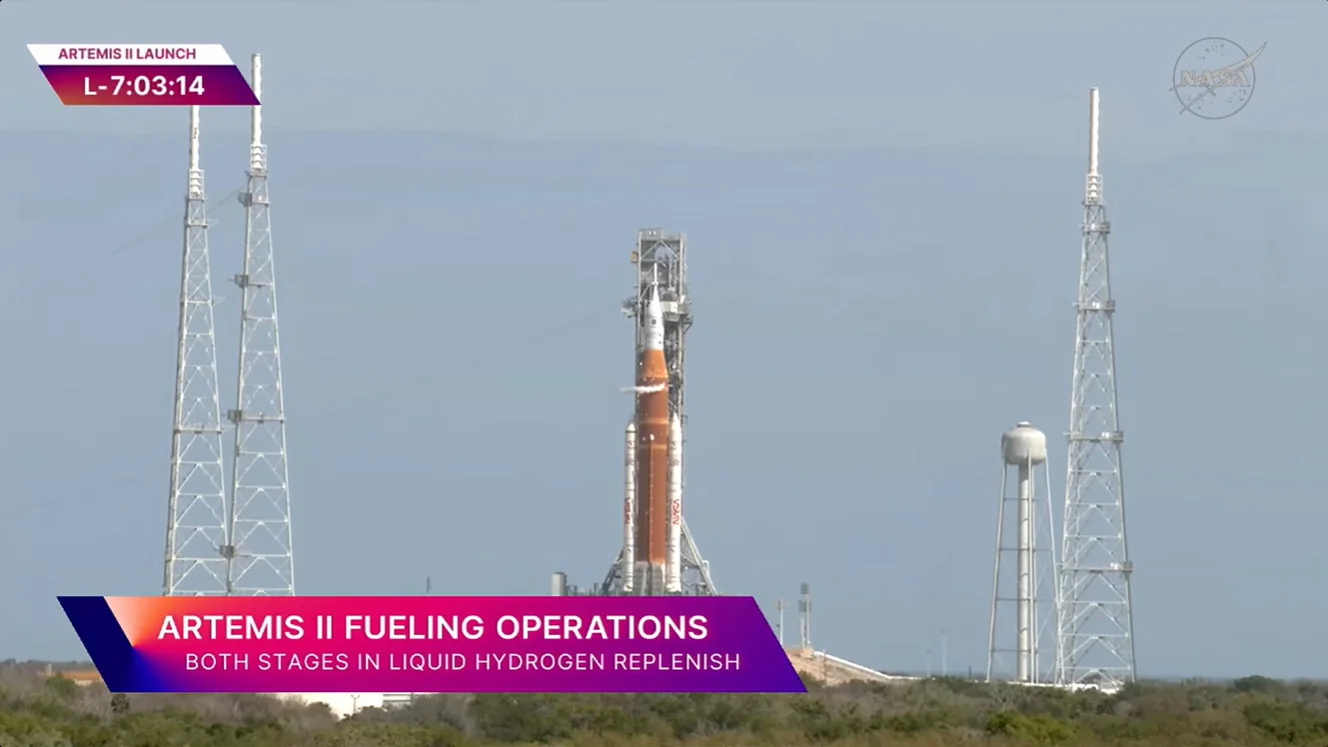
The core stage of the Space Launch System rocket is now fully fuelled, and ground crews have transitioned the process to "replenish mode" for the rest of the Artemis 2 countdown to launch. For the upper interim cryogenic propulsion stage, they are in replenish mode for liquid hydrogen, and "fast fill" mode for liquid oxygen.
(NASA TV)
There is always some bleed-off of these supercooled fuels, which we can see as tiny plumes of gas streaming away from the rocket (as seen in the screencapture above). This "replenish mode" keeps the fuel tanks topped up and ready for lift off.
9:52 a.m. EDT
After chilling the fuel system of the upper stage of the rocket, ground crews began filling the interim cryogenic propulsion stage with liquid hydrogen.

(NASA TV)
According to NASA, "this step rapidly loads super-cold LH2 into the SLS upper stage tanks, ensuring the upper stage is fueled and ready to perform its fundamental role of raising the Orion spacecraft into a high Earth orbit ahead of a proximity operations demonstration test and Orion's translunar injection burn."
8:35 a.m. EDT
Fueling of the SLS core stage has begun, as liquid hydrogen and liquid oxygen flow into the rocket's fuel tanks.
The filling of these tanks over the next few hours begins slowly, to ensure the least amount of temperature stress on the rocket's components, as it allows the fuel system to gradually adjust to the extremely low temperatures of the liquid oxygen (less than -183°C) and liquid hydrogen (less than -253°C).

(NASA TV)
After the system is properly chilled, the ground crew will initiate fast-fill to more rapidly load the tanks with super-chilled fuel.
7:45 a.m. EDT
NASA ground crews at Kennedy Space Center's Launch Complex 39B began the process of chilling down the fuel lines between the mobile launch platform and the Space Launch System (SLS) rocket, in preparation for those lines to transfer liquid oxygen and liquid hydrogen fuel to the rocket core stage.

(NASA TV)
According to NASA: "Chilldown is a critical step in preparing the rocket for safe and efficient fueling, reducing risks and maintaining system integrity. The process gradually cools the rocket’s plumbing and engine systems to cryogenic temperatures using super-cold liquid hydrogen, helping to prevent thermal shock and ensuring the hardware is conditioned for the full flow of propellant during tanking."