Eyes to the sky! February's Full Snow Moon shines this weekend

The Snow Moon is certainly living up to its name in 2026.
If you have reasonably clear skies this weekend, take a few minutes to observe the night sky and especially this year's Snow Moon.
The next Full Moon occurs on Sunday, February 1. On that day, the Sun, Earth, and Moon will line up, with sunlight illuminating the entire near-side of our celestial companion. From just before sunset to just after sunrise the next morning, the Moon will be up all night long.
However, according to NASA, the Moon will appear full (over 98 per cent illuminated), from Saturday night through Tuesday evening. This is due to the fact that, with the Moon being over 370,000 kilometres away, it is challenging to spot the 1-2 per cent of the Moon that is in shadow on the days before and after the official date of the Full Moon.
Check your local forecast, via our website or app, to see if your sky conditions are right for viewing.
What is a Snow Moon?
For over a century, the first Full Moon of each month has had a popular name assigned to it. Any 'bonus' Full Moon, like the one we see at the end of May in 2026, is called a "Blue Moon".
The February Full Moon, when we have them, is known as the Snow Moon.
"February is typically a time of heavy snowfall," says The Old Farmer's Almanac. Other names they include, which are mostly taken from Indigenous lunar calendars, are Bear Moon, Eagle Moon, Raccoon Moon, Groundhog Moon, and Hunger Moon.
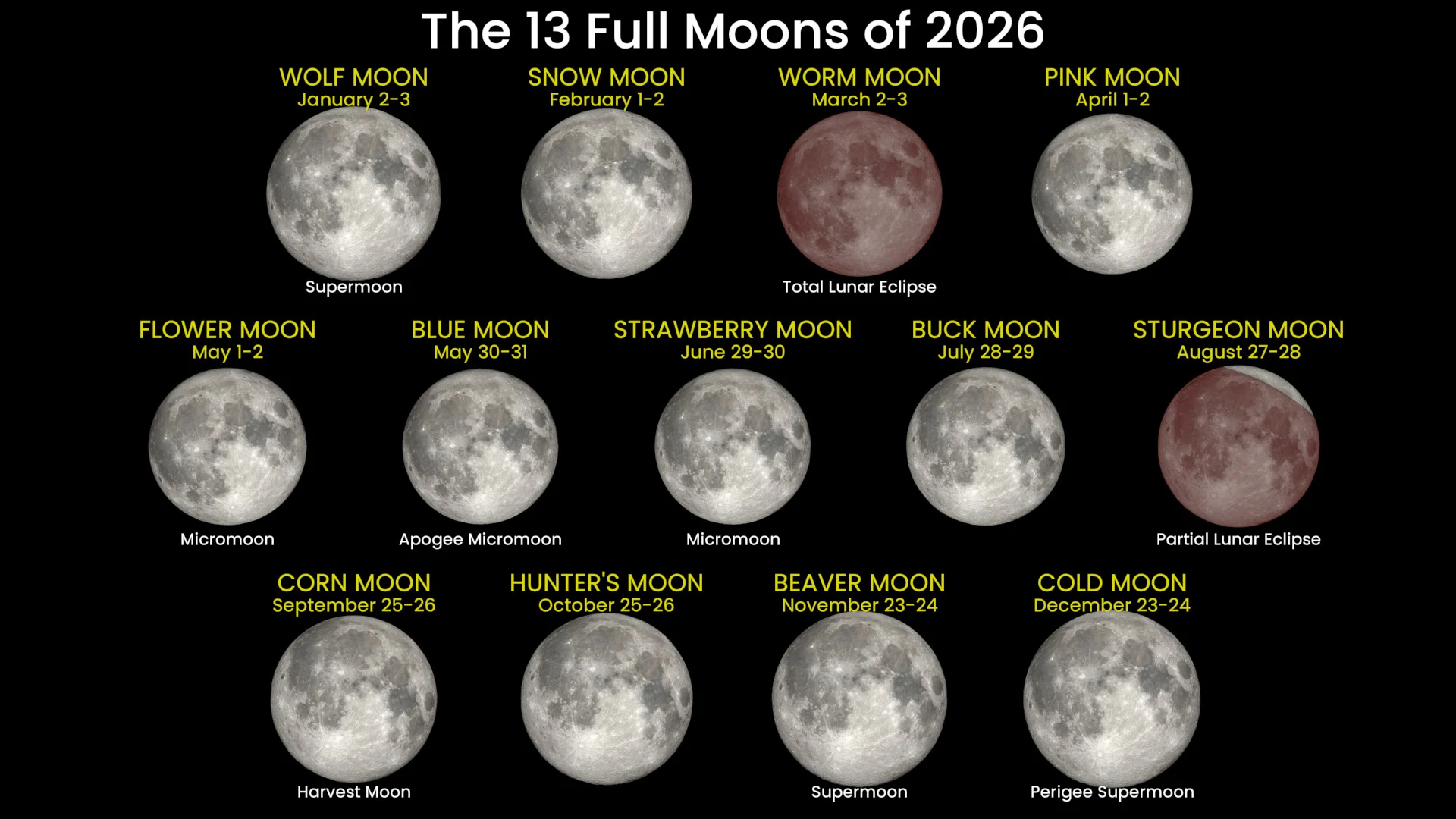
This graphic collects all the relevant data about each of the 13 Full Moons of 2026 — their date, popular name, whether they are a 'super' or 'micro' Moon, a perigee or apogee Full Moon, and whether they are remarkable in some other way (Lunar Eclipse, Blue Moon, or Harvest Moon). (NASA's Scientific Visualization Studio/Fred Espenak/Scott Sutherland)
READ MORE: Why does the Moon look so big? What is the mysterious Moon Illusion?
Some Indigenous peoples named the February Moon after animals, such as the goose (the Haida and the Omaha), the rabbit (the Potawatomi), the crow (the Shawnee), the coyote (the Shoshone), or the black bear (the Tlingit). There are also references to cold (the Lakota and Wishram), frost (the Algonquin and Arapaho), and sleet (the Comanche).
The Kalapuya of the Pacific Northwest refer to it as "atchiulartadsh" which translates to "out of food" and could be a possible reference for 'Hunger Moon'.
It should be noted that, in Indigenous lunar calendars, these names are not for just the Full Moon. Instead, they actually refer to the period from one New Moon to the next. Following along from previous 'lunations', this Snow Moon began after the January 18 New Moon, and will end just before the February 17 New Moon.
Snow for the Snow Moon?
Given the weather across Canada, especially in the last week of January, the Snow Moon is definitely living up to its name this year.
IN PHOTOS: Toronto's snowiest day on record, 40-50+ cm reported
Parts of southern Ontario, and especially in the Greater Toronto area, are still digging out from the historic snowstorm that impacted the region on January 25. The intense storm buried downtown Toronto in over 60 cm of snow. Meanwhile Pearson International Airport reported a record-setting single-day snowfall amount of 46 cm.
This same storm system also dropped up to 20 cm of snow across southern Quebec, with blowing snow becoming a major problem as gusting winds lofted this dry light snow into the air, reducing visibility and creating hazardous travel conditions.
This winter storm is now lingering across Atlantic Canada, dropping up to 10 cm of snow on New Brunswick, PEI, much of Nova Scotia, the most of the island of Newfoundland. Parts of northern Cape Breton Island and eastern Newfoundland saw up to 20 cm.
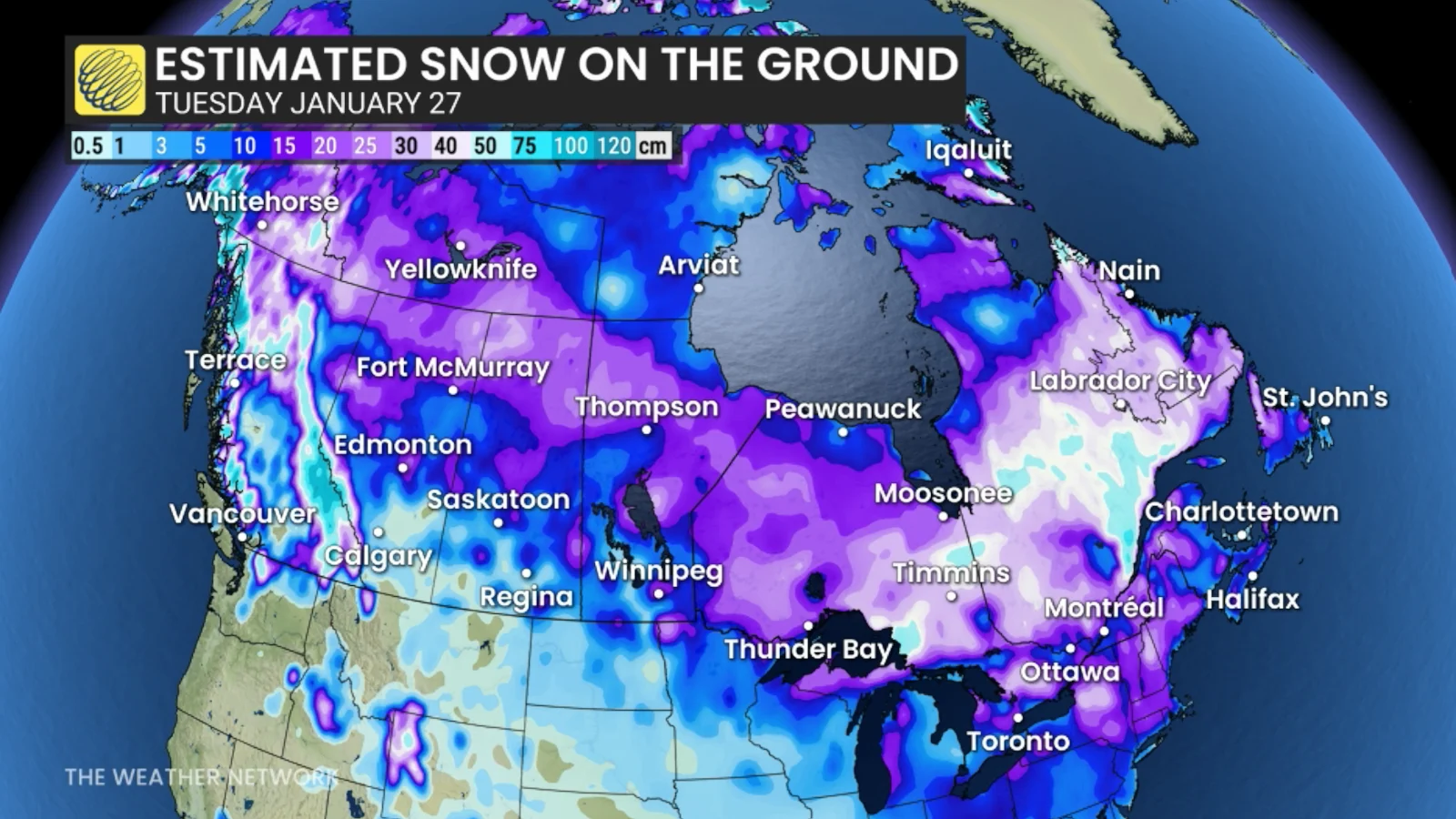
And although the above map shows snow cover as of January 27, rather than on February 1, due to the frigid air that has enveloped much of the country, that snow is going to stick around for some time.
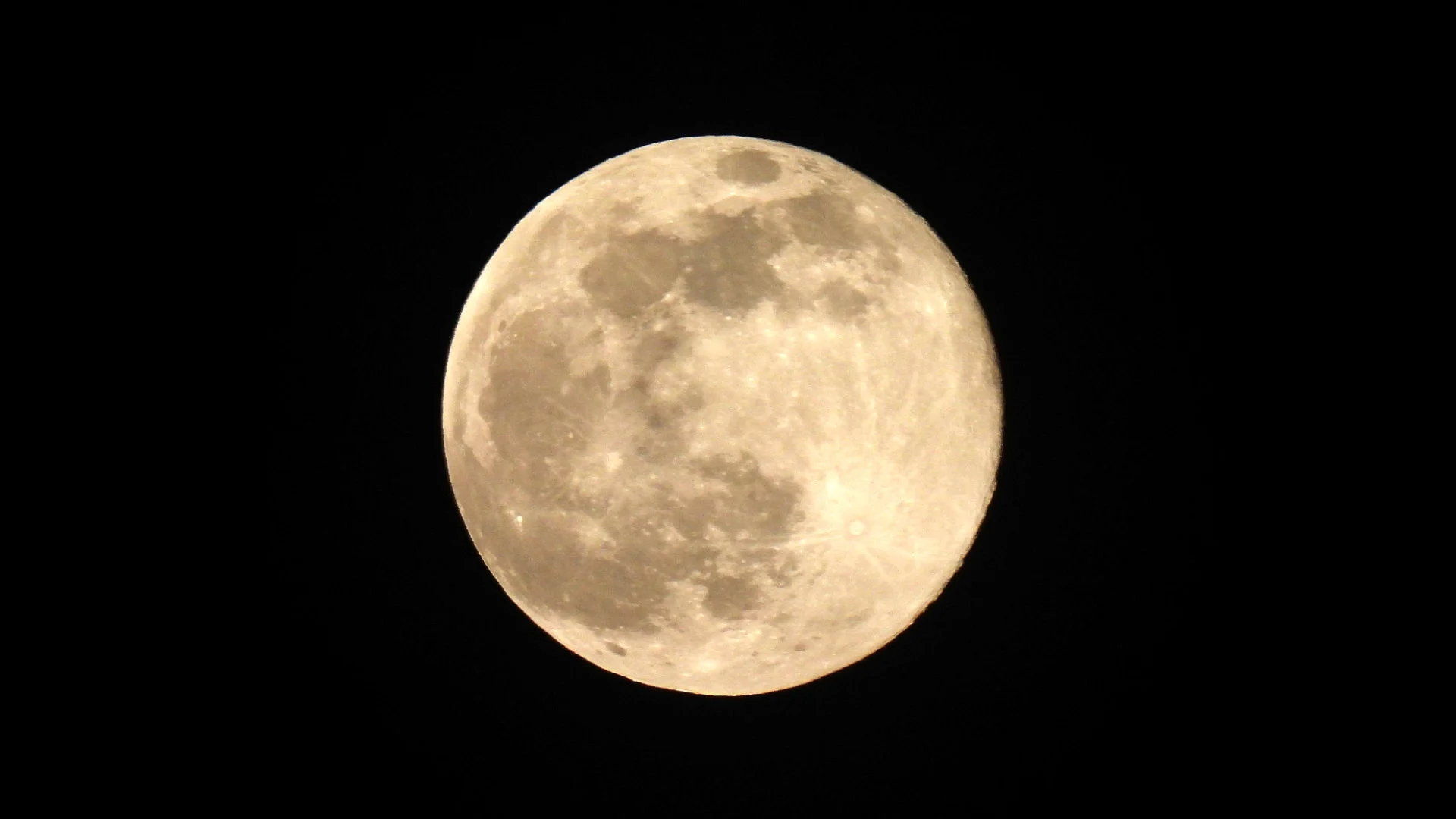
(Thumbnail courtesy Hazel Clover, who captured this picture of the Snow Moon in 2023, and uploaded it to the Weather Network's UGC Gallery.)