Blustery solar wind may spark auroras across Canada tonight

Eyes to the sky for another chance to spy the Aurora Borealis lighting up the night!
An immense hole in the Sun's atmosphere is facing directly at us, and the high energy particles streaming out of it are about to wash over Earth, boosting our chances of spotting the Northern Lights stretching across the sky.
A few days ago, a large coronal hole rotated into view along the Sun's eastern limb. Spanning an enormous region of the northern hemisphere, this gap in the Sun's local magnetic fields is now aimed directly at us, and emitting an intense stream of high energy solar particles into space.
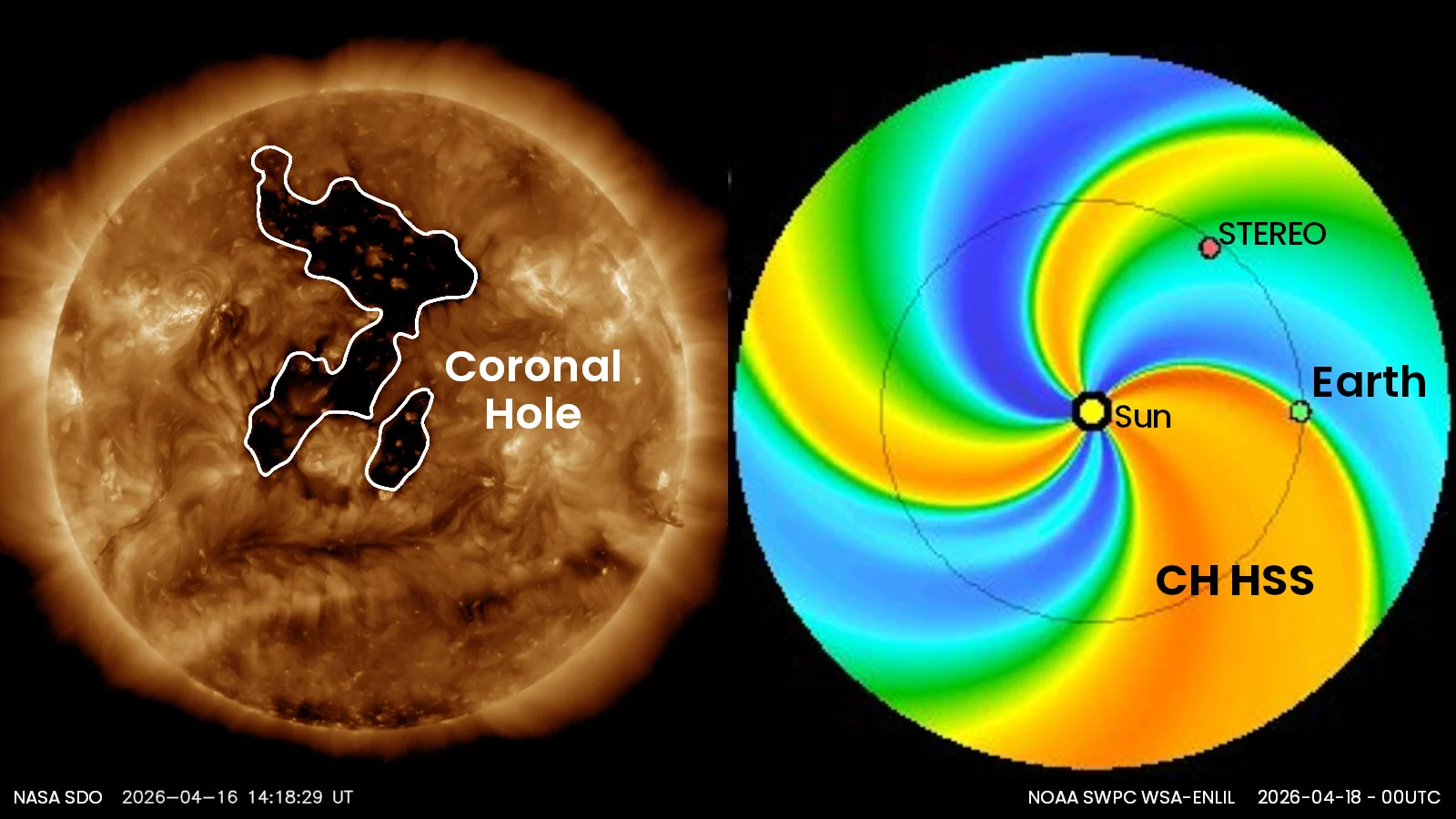
The coronal hole, as imaged by the Solar Dynamics Observatory on April 16 (left), and a computer model showing the high speed stream of the solar wind emitted by this coronal hole reaching Earth on April 18 (right). (NASA SDO/NOAA SWPC)
Forecasters at NOAA's Space Weather Prediction Center have issued a geomagnetic storm watch as this 'coronal hole high speed stream' (CH HSS) approaches.
They expect G2 (moderate) storm levels to begin after 21 UTC on the 17th, and continue until 6 UTC on the 18th. That's the equivalent of the evening hours on Friday, April 17 until around 2 a.m. EDT on Saturday morning. A few hours of G1 conditions could persist afterward.
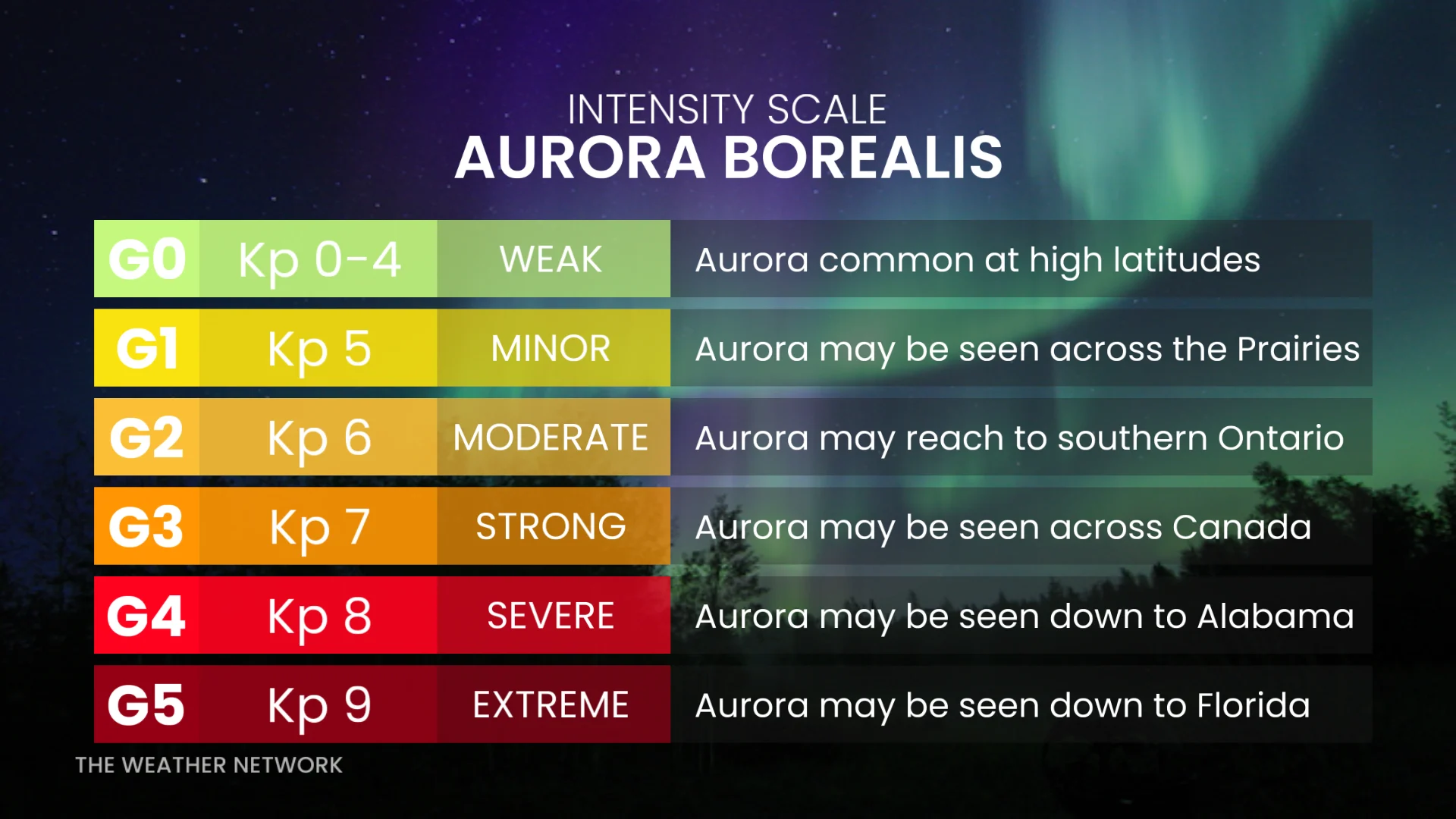
This timing favours the eastern half of Canada, although the aurora arc may remain too far north to be seen from regions of southwestern Ontario along the shores of Lake Erie.
Even as the geomagnetic storm weakens, though, auroras may be visible through the central Prairies overnight.
DON'T MISS: Geomagnetic storms: When should we look up and when should we worry?
What is happening here?
We have not seen any major solar flare activity as of late, nor have there been any notable coronal mass ejections (solar storms).
This opportunity for us to see the Northern Lights stems from a phenomenon known as a co-rotating interaction region.
Basically, there are two types of solar wind. The first is the normal, sedate flow that is constantly streaming away from the Sun, at every moment of every day. This occurs simply from particles escaping from the top of the Sun's atmosphere (the corona) into space, and is comparable to a light breeze.
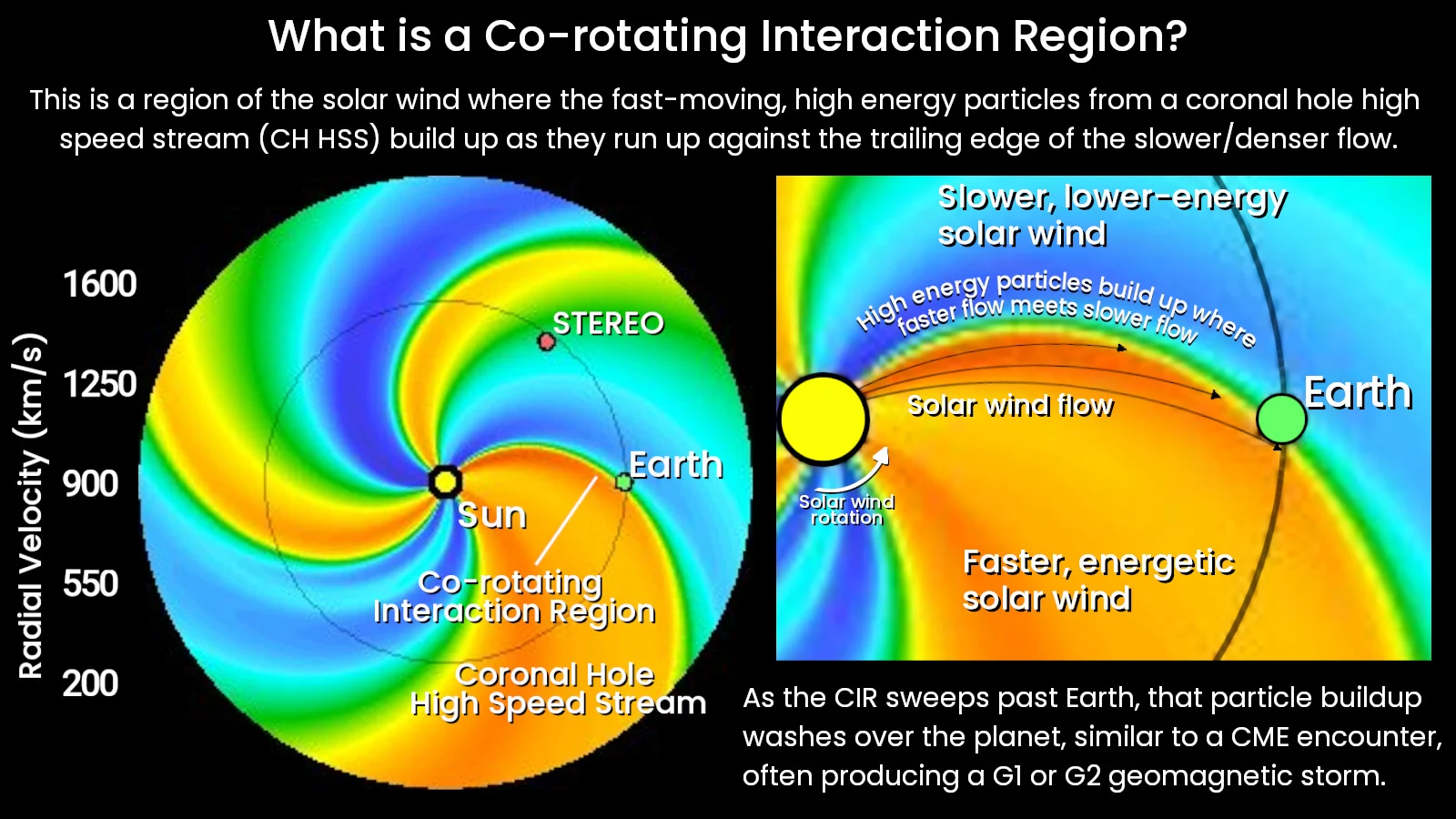
This infographic describes what a Co-Rotating Interaction Region is, how it forms, and how it can impact Earth. (NOAA SWPC/Scott Sutherland)
Click here for a zoomable version of the infographic above.
The second type originates from coronal holes — large, dark regions of the Sun's atmosphere where the magnetic fields have peeled back, exposing the Sun's surface directly to space. The solar wind streaming out of a coronal hole is not as dense as the normal solar wind, but it is faster, and the particles carry more energy, resulting in a much more 'blustery' flow.
A co-rotating interaction region forms right at the boundary between these two types of flow, where the leading edge of the fast stream runs into the trailing edge of the slower stream. There, the higher energy particles hit the slower solar wind flow and become trapped, resulting in a buildup of them over time.
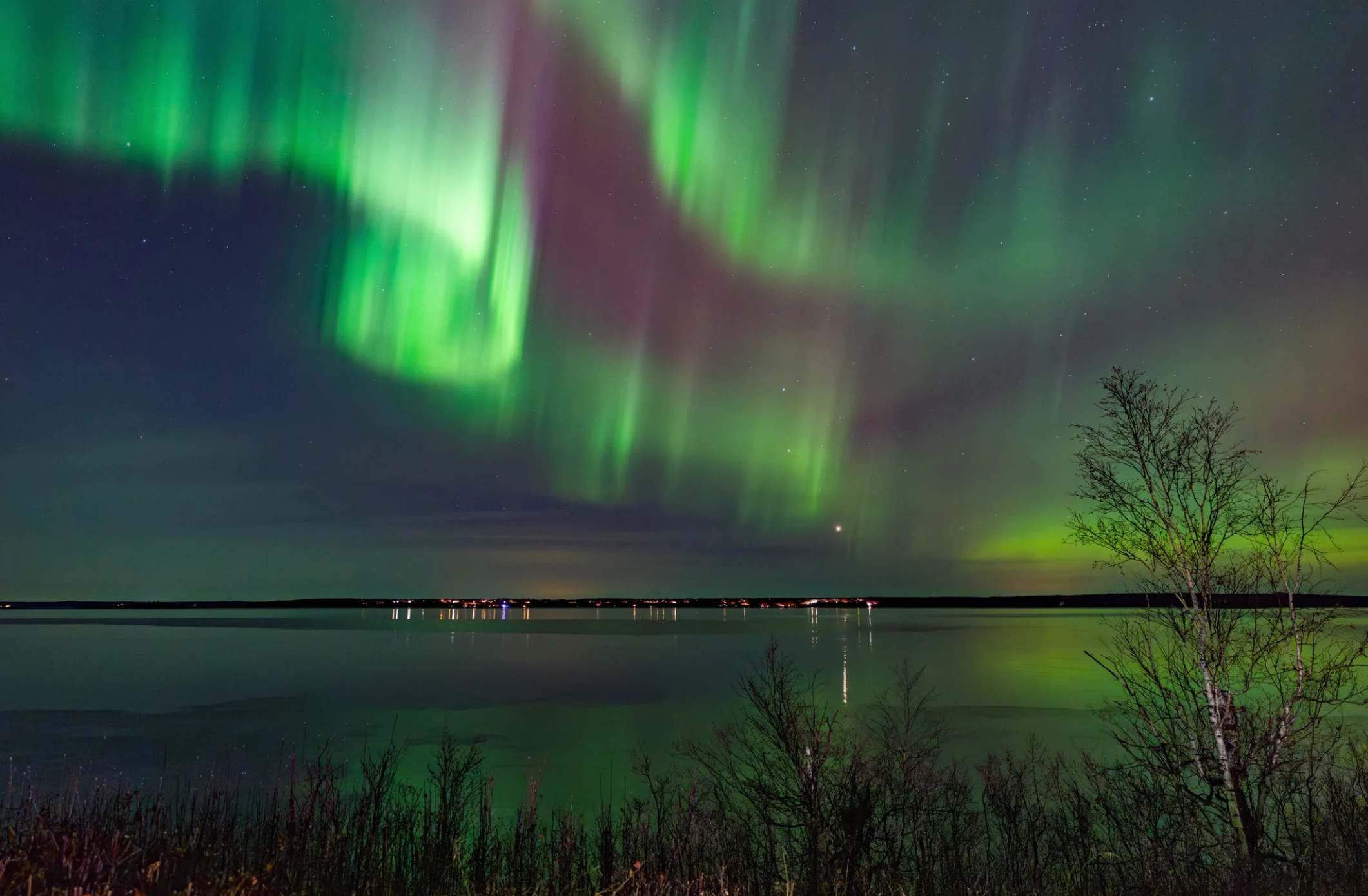
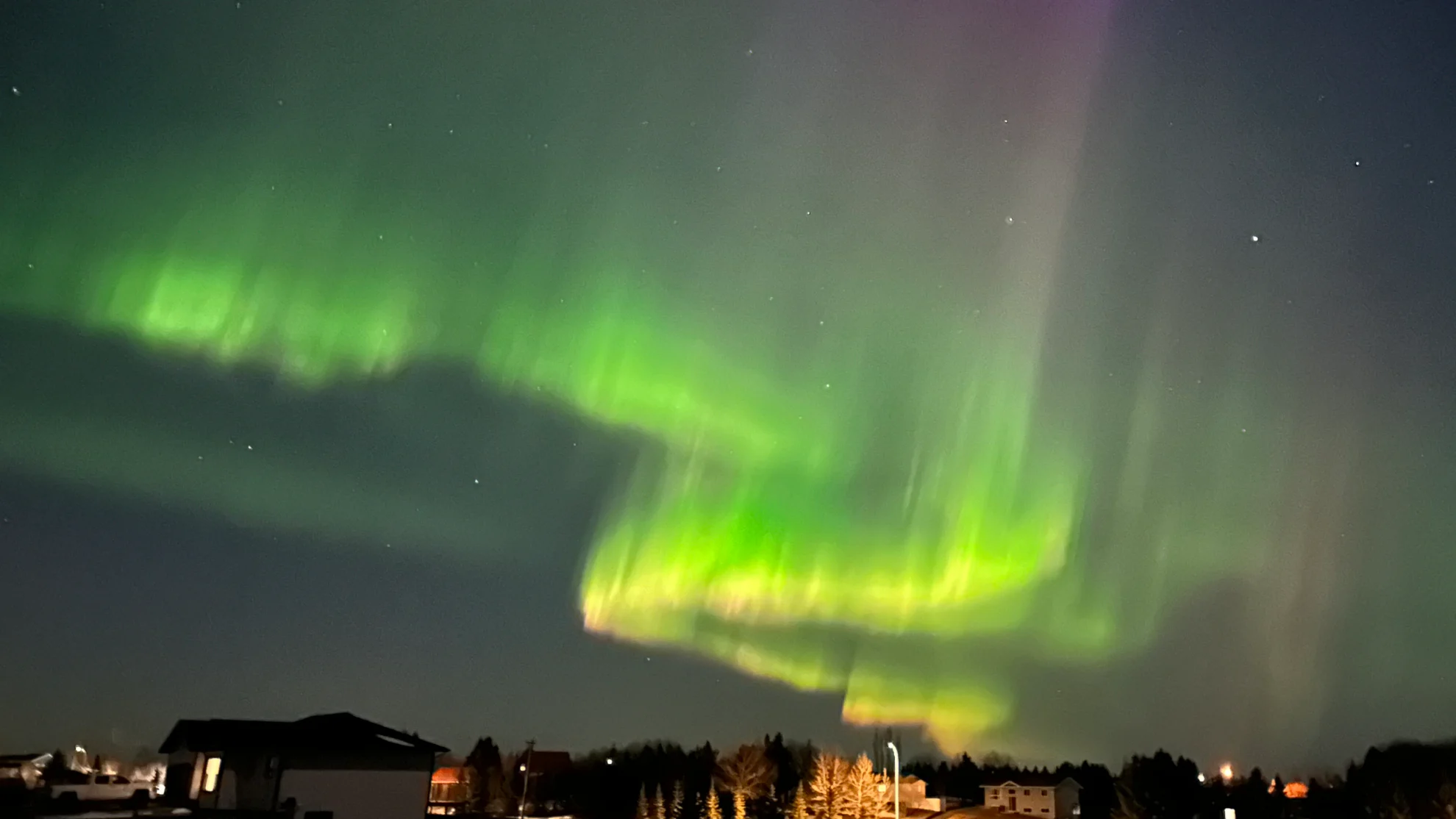
This display of the Northern Lights was captured from Lac La Bich, Alberta, on November 12, 2025. (Jason Cain/UGC)
Since those particles all carry a piece of the Sun's magnetic field along with them, as the buildup becomes more concentrated, the strength of the magnetic field intensifies along the boundary.
Then, when that boundary sweeps past Earth, the impact is similar to the passage of a coronal mass ejection. The magnetic field of the CIR interacts with Earth's geomagnetic field, causing a disturbance. The strength of that disturbance depends on the energy of the particles, how concentrated they are, and how quickly the CIR sweeps past us.
(Thumbnail image shows a display of the Northern Lights over central Alberta from April 4, 2025, captured by Chris and Wina Reid, who uploaded the picture to The Weather Network's User-Generated Content gallery.)