
As Artemis 2 delayed until April, NASA makes major changes to Moon program

Artemis 3 is no longer bound for the Moon, while the space agency has officially added Artemis 4 to the program roster.
Even as NASA crews effect repairs to the Artemis 2 rocket this week, the agency has announced new changes to the Artemis program, shifting the focus of Artemis 3 and adding a new mission to the roster on their path to landing the first human crew on the lunar surface since 1972.
Just one day after the successful wet dress rehearsal of the Space Launch System that will propel the Artemis 2 crew to the Moon, NASA ground crew teams noted a serious issue with the helium flow through the rocket's fuel system.
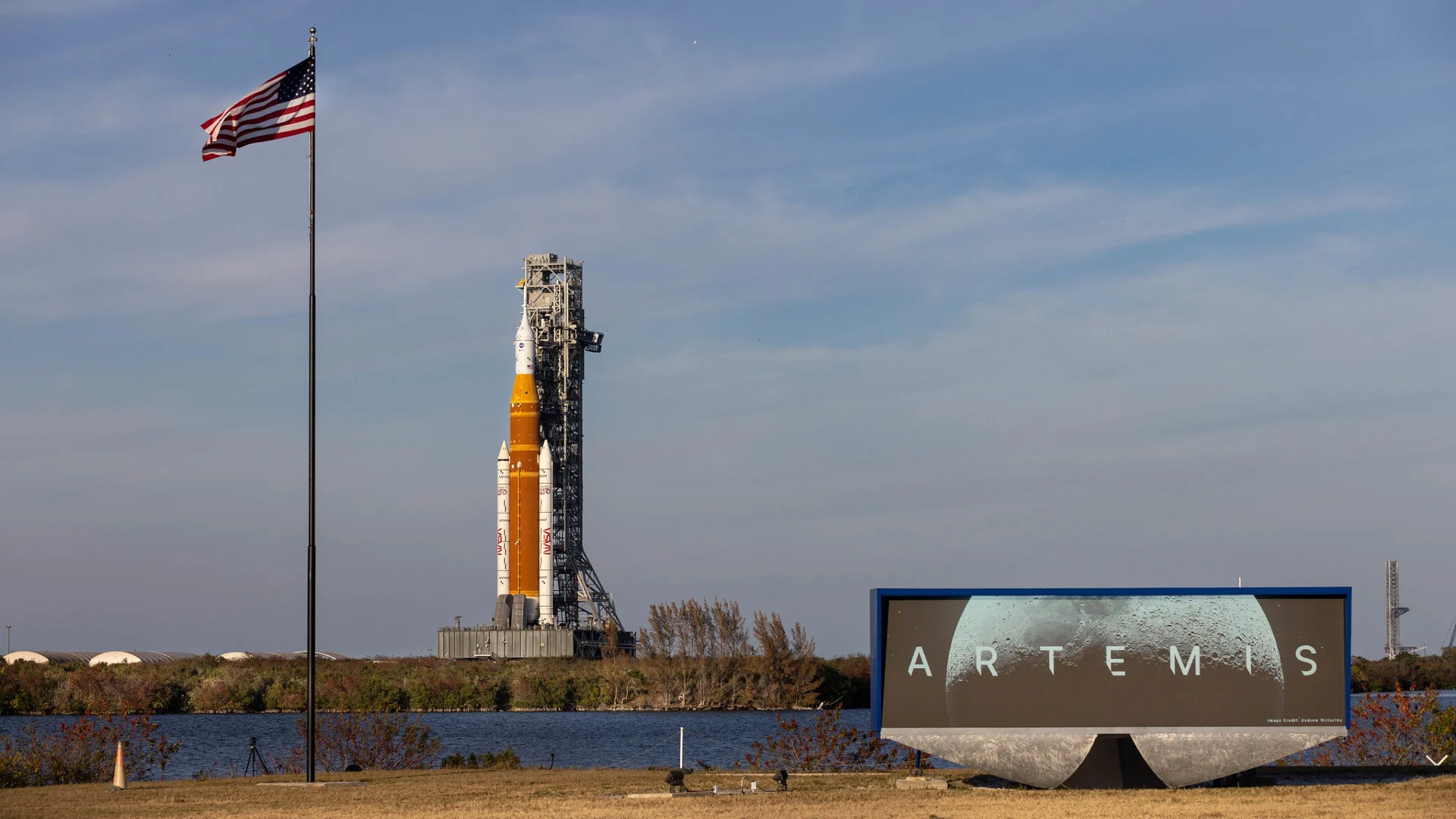
NASA’s crawler-transporter 2 carries the Artemis 2 Space Launch System rocket, with the Orion spacecraft secured to mobile launcher 1, back towards the Vehicle Assembly Building at NASA’s Kennedy Space Center in Florida, on Wednesday, Feb. 25, 2026. (NASA/Cory Huston)
"The upper stage uses helium to maintain the proper environmental conditions for the stage’s engine and to pressurize liquid hydrogen and liquid oxygen propellant tanks," the agency stated in a mission update on Feb. 21. "The systems worked during NASA's Artemis II wet dress rehearsals, but teams were not able to properly flow helium during normal operations and reconfigurations following the wet dress rehearsal that concluded Feb. 19."
While backup systems remained in operation to keep the helium flowing properly, the issue with the primary system was deemed a serious enough technical issue that mission leaders chose to roll the rocket back from Launch Complex 39B to the Vehicle Assembly Building for repairs.
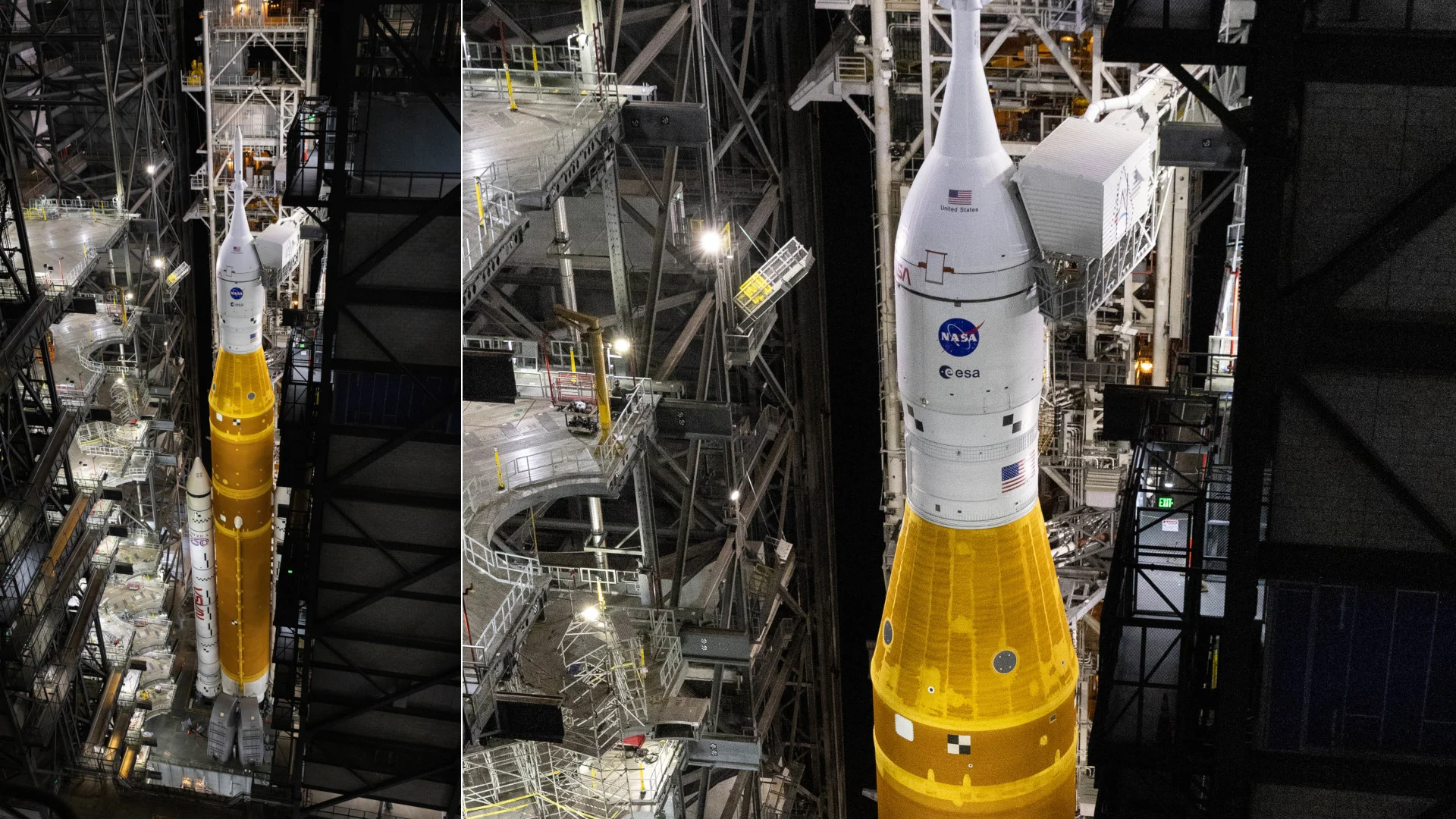
NASA’s Artemis 2 SLS and Orion spacecraft stand in the Vehicle Assembly Building (VAB) Kennedy Space Center, on Wednesday, February 25, 2026 (full view on the left, closeup of the rocket's upper stage and Orion spacecraft on the right). (NASA/Cory Huston)
There, ground crew teams have easy access to every level and system of the rocket, something they lacked at LC39B, to more quickly and easily troubleshoot the issue.
According to NASA, once Orion and SLS were back in the VAB, mission engineers rapidly narrowed down the helium flow problem to one of two components: 1) a quick-disconnect seal on the tubing that feeds helium into the rocket, and 2) a check valve on the other end of that tubing.
They are now working to address the issue, to potentially return the rocket to the launch pad, in time for an April launch.
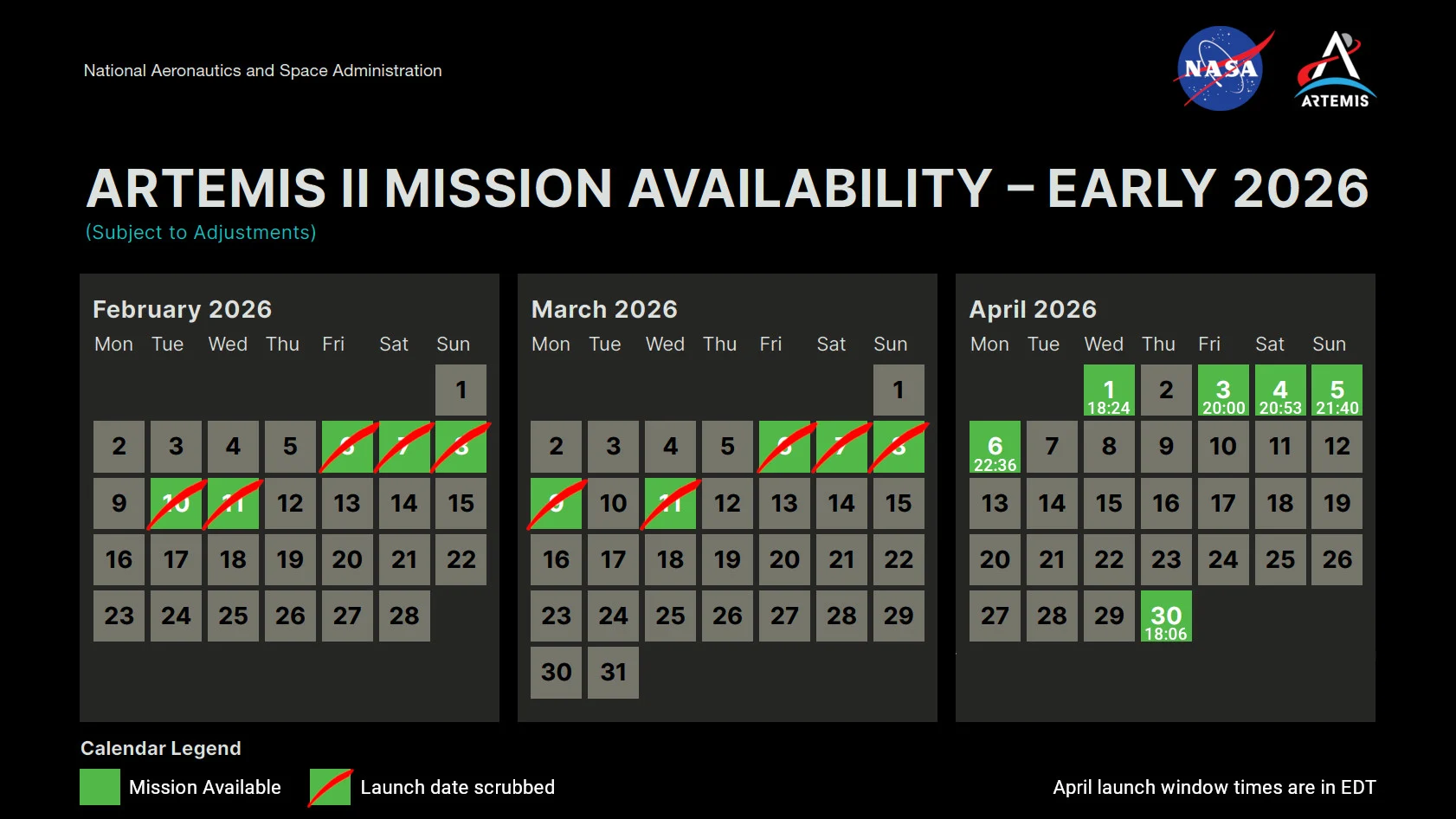
The calendar of potential launch windows, as of February 27, 2026, now includes only April dates, as all others have been scrubbed. (NASA/Scott Sutherland)
DON'T MISS: A total lunar eclipse will shine over Canada! Here's how to watch from anywhere
New Artemis 4 mission added!
While ground crews work to assess and repair the Artemis 2 SLS, the agency just announced a major change to the Artemis program.
Following the Artemis 2 flight around the Moon and back, Artemis 3 was expected to launch sometime in the next few years, likely in 2027 or 2028, to land the first humans on the lunar surface since Apollo 17, in 1972.
As of Friday, February 27, this has changed.
Artemis 3 is now expected to launch sometime in 2027, to conduct spacecraft tests in low-Earth orbit.
"This new mission will endeavor to include a rendezvous and docking with one or both commercial landers from SpaceX and Blue Origin, in-space tests of the docked vehicles, integrated checkout of life support, communications, and propulsion systems, as well as tests of the new Extravehicular Activity (xEVA) suits," NASA said in a press release on Friday.
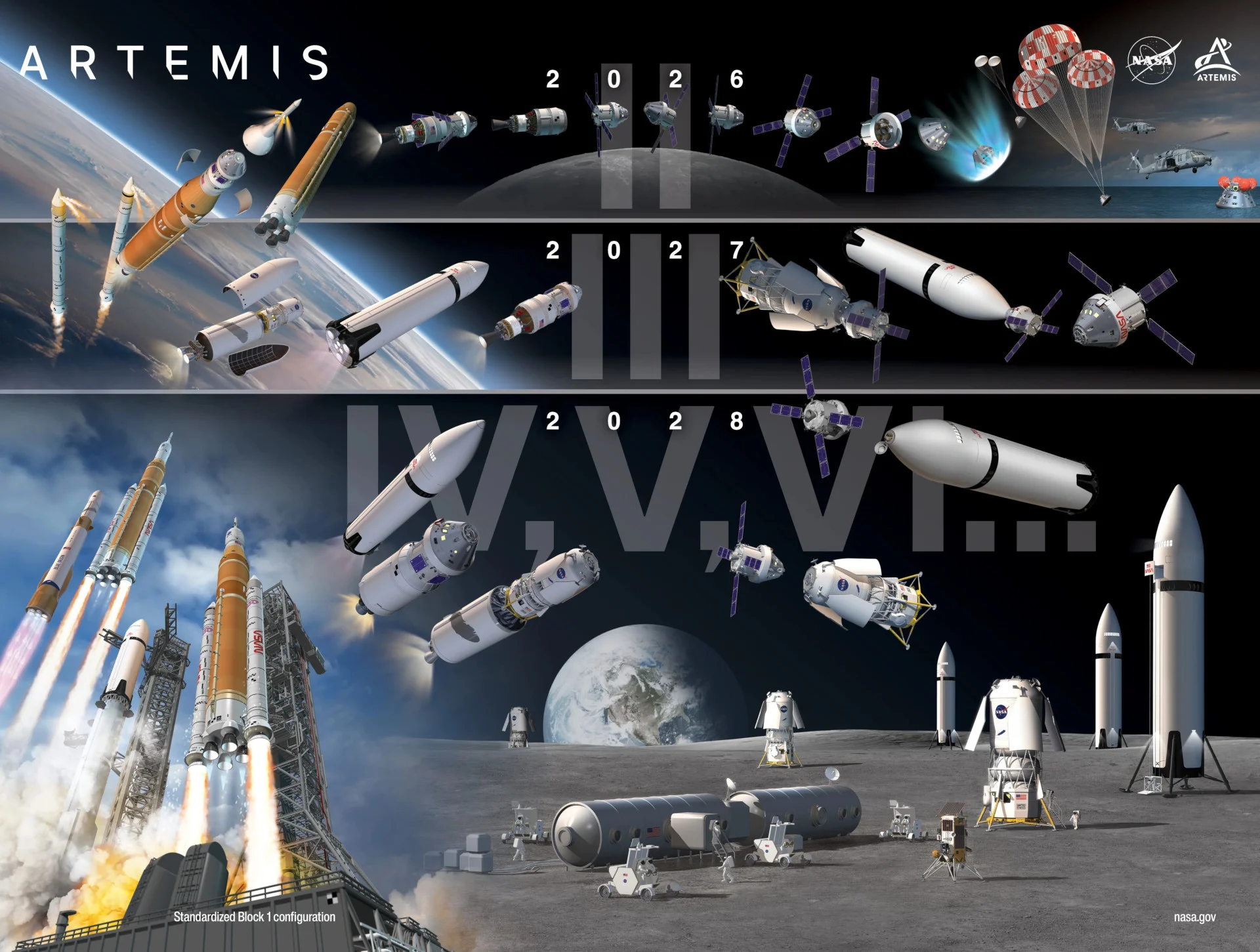
The new Artemis Program infographic, detailing the changes to the program, with Artemis 3 in low-Earth orbit, and newly-announced Artemis 4 onward landing on the Moon. (NASA)
SPRING ASTRONOMY: A Great Comet may shine along with meteor showers and bright planets this spring
After a successful Artemis 3 mission, the newly-announced Artemis 4 mission is slated to carry on the program from there, to be the first of a new series of crewed lunar landings, starting in 2028.
According to NASA Associate Administrator Amit Kshatriya, the issue that prompted this change of plans is how complicated it will be to alter the current Orion and SLS configuration to accommodate future missions. The goal is now to keep the rocket systems as close to the current 'Block 1' configuration as possible.
"Standardizing vehicle configuration, increasing flight rate and progressing through objectives in a logical, phased approach, is how we achieved the near-impossible in 1969 and it is how we will do it again," Kshatriya explained.
Indeed, with this announcement, the Artemis program is now more closely following the 1968-1969 Apollo schedule, which led up to Neil Armstrong and Buzz Aldrin becoming the very first humans to walk on the Moon on July 24, 1969.
While the 2022 uncrewed Artemis 1 mission had no direct counterpart in the Apollo program, Artemis 2 is similar in design to Apollo 8. During that flight, which took place in December 1968, astronauts Frank Borman, Jim Lovell, and William Anders became the first crew to leave Earth's gravitational influence, fly around the Moon, and return for a splashdown.
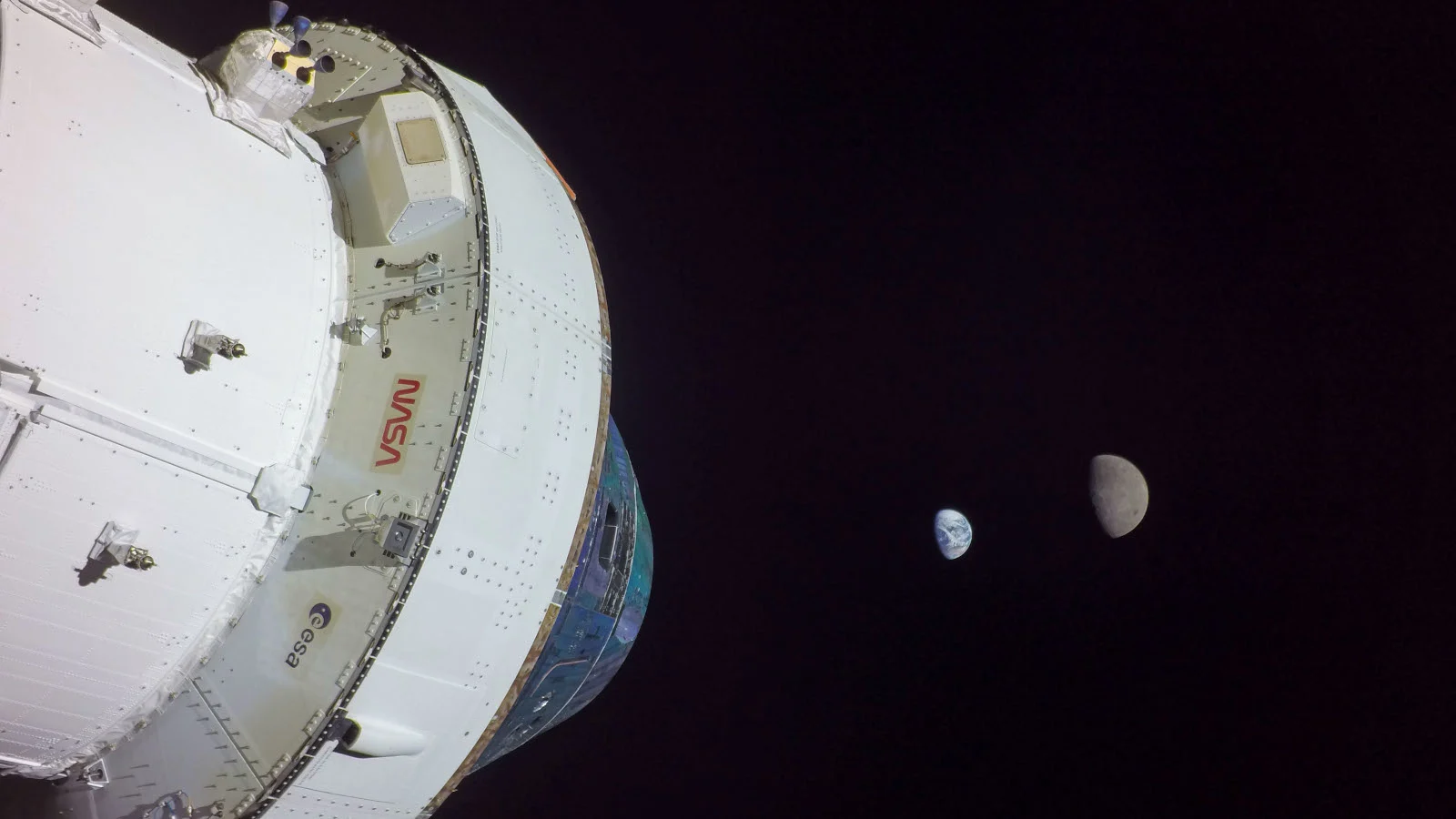
The uncrewed Orion spacecraft, during the Artemis 1 mission, reaches its farthest distance from the Earth and Moon, at 432,210 km away, on November 28, 2022. (NASA)
FROM SPACE: CRASH Clock — a satellite collision in low-Earth orbit could be just days away
The new mission profile for Artemis 3 now appears to be analogous to Apollo 9, from March 1969, during which James McDivitt, David Scott, and Rusty Schweickart conducted tests of the full Apollo spacecraft's systems and maneuvers in low-Earth orbit.
"The entire sequence of Artemis flights needs to represent a step-by-step build-up of capability, with each step bringing us closer to our ability to perform the landing missions. Each step needs to be big enough to make progress, but not so big that we take unnecessary risk given previous learnings," Kshatriya said in the NASA press release.
With the formal addition of Artemis 4 to the program, will that be the mission that becomes the updated Apollo 11, landing the first humans on the Moon since 1972? Or, will it be the new Apollo 10, instead?
Back in May of 1969, roughly two months before Apollo 11, NASA astronauts Thomas Stafford, John Young, and Eugene Cernan conducted a full dress rehearsal of the Moon flight and landing. During the mission, Stafford and Cernan approached within 14 kilometres of the lunar surface. Their goal was to ensure that all of the spacecraft systems, and the planned procedures for the landing, would work. They then returned to the orbiting Command Module, without touching down, and the trio made the journey back to Earth.
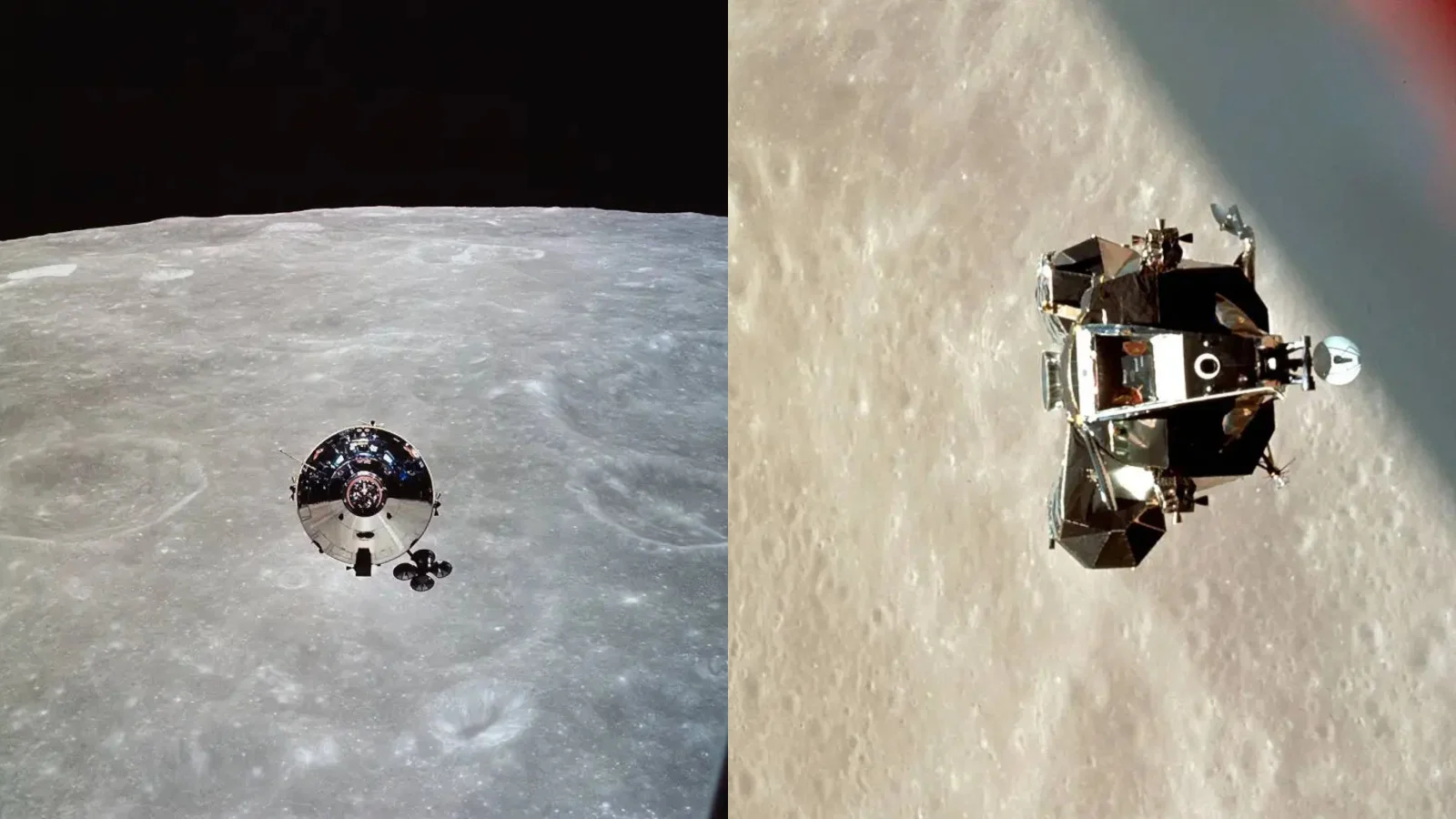
Views of the Apollo 10 Command Module (left) and Lunar Module (right), captured by the crew after the two segments of the spacecraft had separated while in lunar orbit. (NASA)
READ MORE: Artemis 2 may launch soon, shattering a 55-year-old spaceflight record
Given the difficulties we've already seen with robotic landing attempts at the lunar south pole, it might become necessary to plan a similar Artemis test flight. It would then fall to subsequent Artemis crews to perform the actual landings.
According to NASA, they will release the updated plans for Artemis 3 in the near future. Mission profiles for Artemis 4 and beyond should follow sometime after. In the meantime, it appears as though we may be seeing a crewed launch to the Moon once every year, at least for the next few years.
"I'm grateful to Administrator Isaacman for taking this bold step and moving quickly to assure we have the support and resources needed to launch Artemis astronauts to the Moon every year," Lori Glaze, acting associate administrator for Exploration Systems Development Mission Directorate at NASA Headquarters, said in the press release. "Our team is up to the challenge of a successful Artemis II mission, and soon thereafter, enabling a more frequent cadence of Moon missions."
(Thumbnail image shows NASA's Artemis 2 SLS rocket on the launch pad on February 1, 2026, with the Full Moon setting behind it, courtesy NASA photographer Jim Ross)