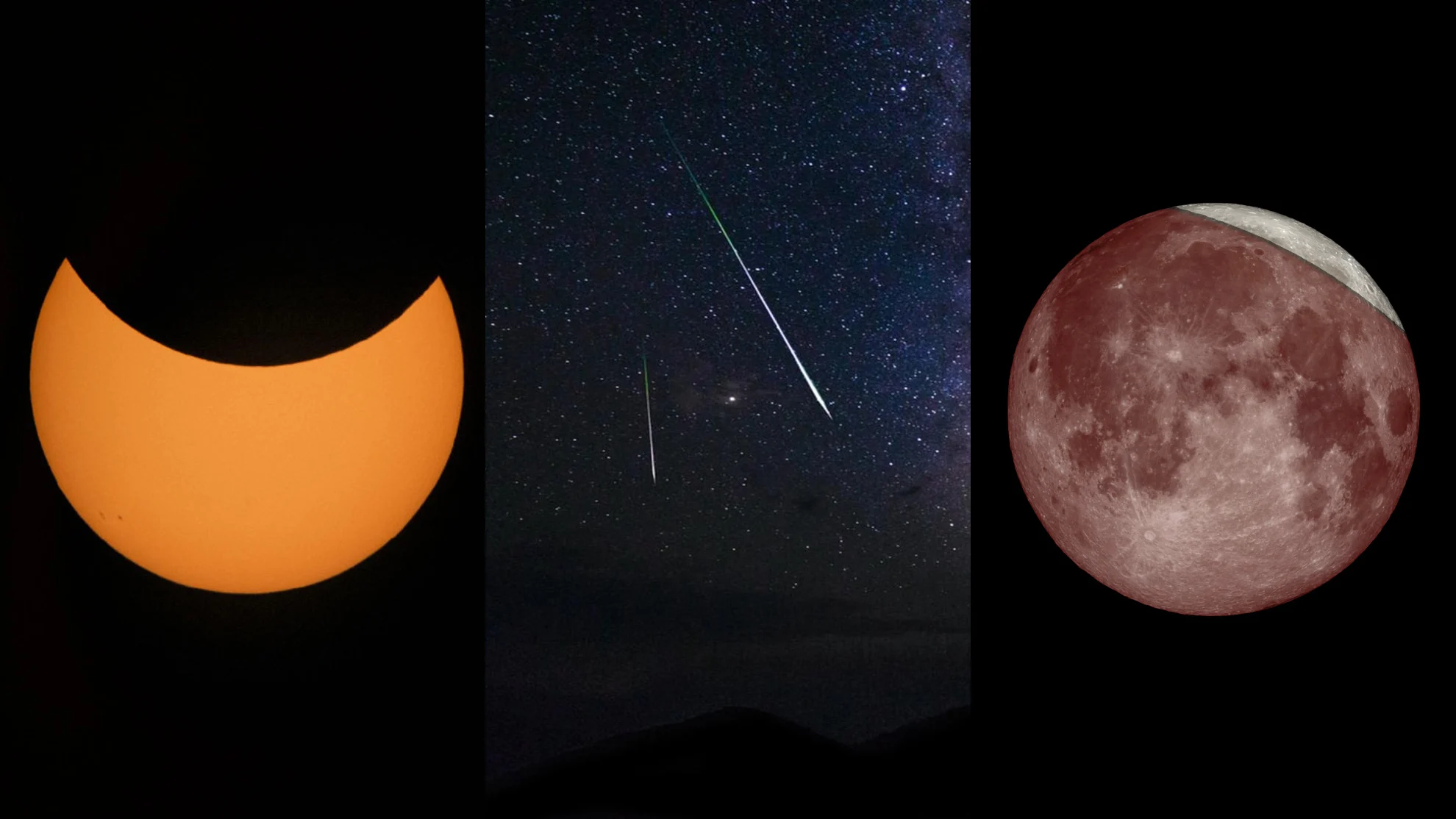
Two eclipses and the Perseids: Which event will be the 'headliner' for August?

Keep your eyes to the sky in August. There is A LOT going on up there this month!
Summer 2026's major astronomical events are concentrated in the month of August — a partial solar eclipse, the Perseid meteor shower during a New Moon, a predawn planetary conjunction, and a partial lunar eclipse at the end of the month — so don't forget to look up!
Here's what’s going on in August of 2026:
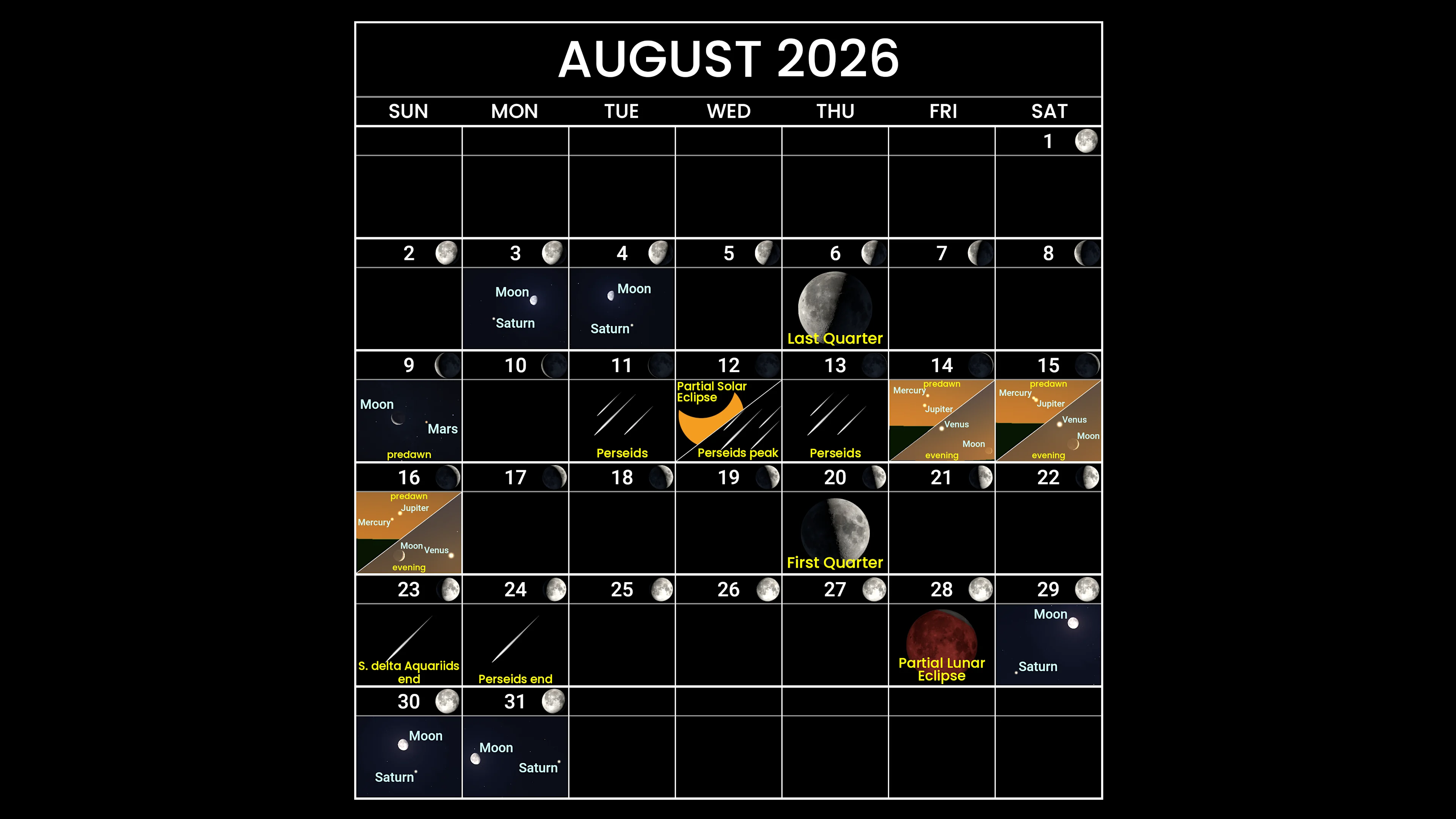
Click here for a zoomable version of the above calendar.
Visit our Complete Guide to Summer 2026 for an in-depth look at the Spring Seasonal Forecast, tips to plan for it, and much more!
The Moon
The Waning Gibbous Moon will shine in the sky on the first night of August, rising at around 10 p.m. local time. The Moon will rise roughly 20 minutes later each following night, until the Last Quarter Moon crests the horizon just before midnight on the night of the 5th to 6th.
Following that, the Waning Crescent Moon will be visible from after midnight through the morning from the 7th to the 11th. The New Moon will cross the daytime sky on the 12th, producing a partial solar eclipse for observers across most of Canada. Read on for more details on this event.
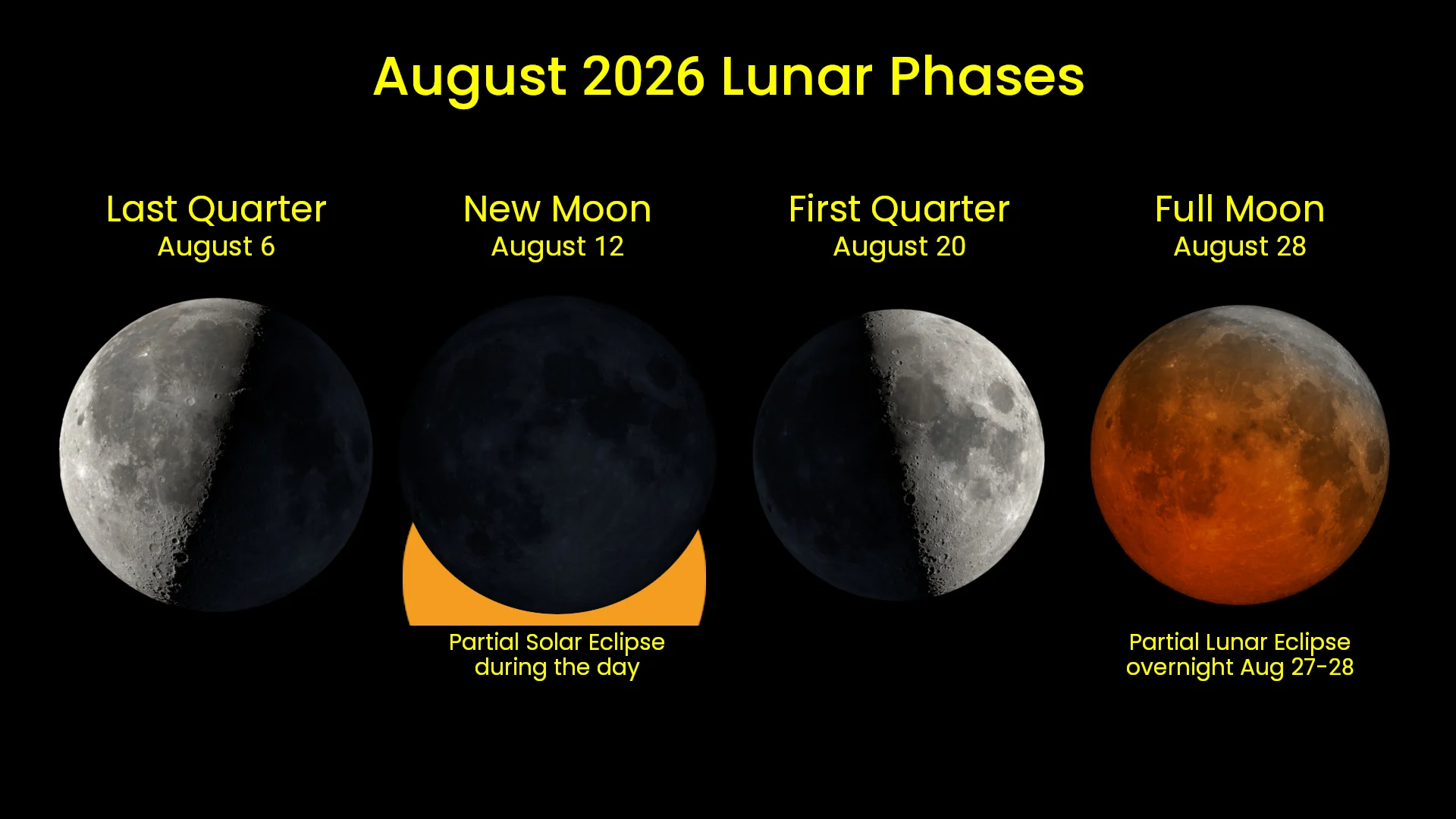
The primary lunar phases for August 2026, including the August 12 solar eclipse, and the August 27-28 lunar eclipse. (NASA's Scientific Visualization Studio/Scott Sutherland)
After the 12th, the Waxing Crescent Moon will rise in the morning hours and can be seen in the western sky after sunset, from the 13th to the 19th. The First Quarter Moon will rise around noon on the 20th, and will be up until roughly midnight that night, and we will see the Waxing Gibbous Moon in the sky, rising later and later each afternoon and setting later and later after midnight, up until the 26th.
On the night of the 27th to 28th, the Full Moon will shine in the sky. However, throughout the night, the Moon will grow steadily darker as it plunges into Earth's shadow, producing a partial lunar eclipse, and then will become brighter as it exits the shadow once more. More on this, below.
Then, we will again see a Waning Gibbous Moon in the sky from the night of the 28th through until the 31st.
DON'T MISS: Asteroid Apophis' 2029 flyby of Earth will be visible to billions of people
Partial Solar Eclipse
During the day on August 12, the Sun and the New Moon will align in the sky to produce a solar eclipse.
This will be a total eclipse along a line tracing from the Arctic down through Greenland, Iceland, the Atlantic Ocean, Portugal, and Spain, before ending in the Mediterranean Sea. Along this 'path of totality', the Moon will completely block the Sun for as little as a few seconds, up to a maximum of 2 minutes and 18 seconds.
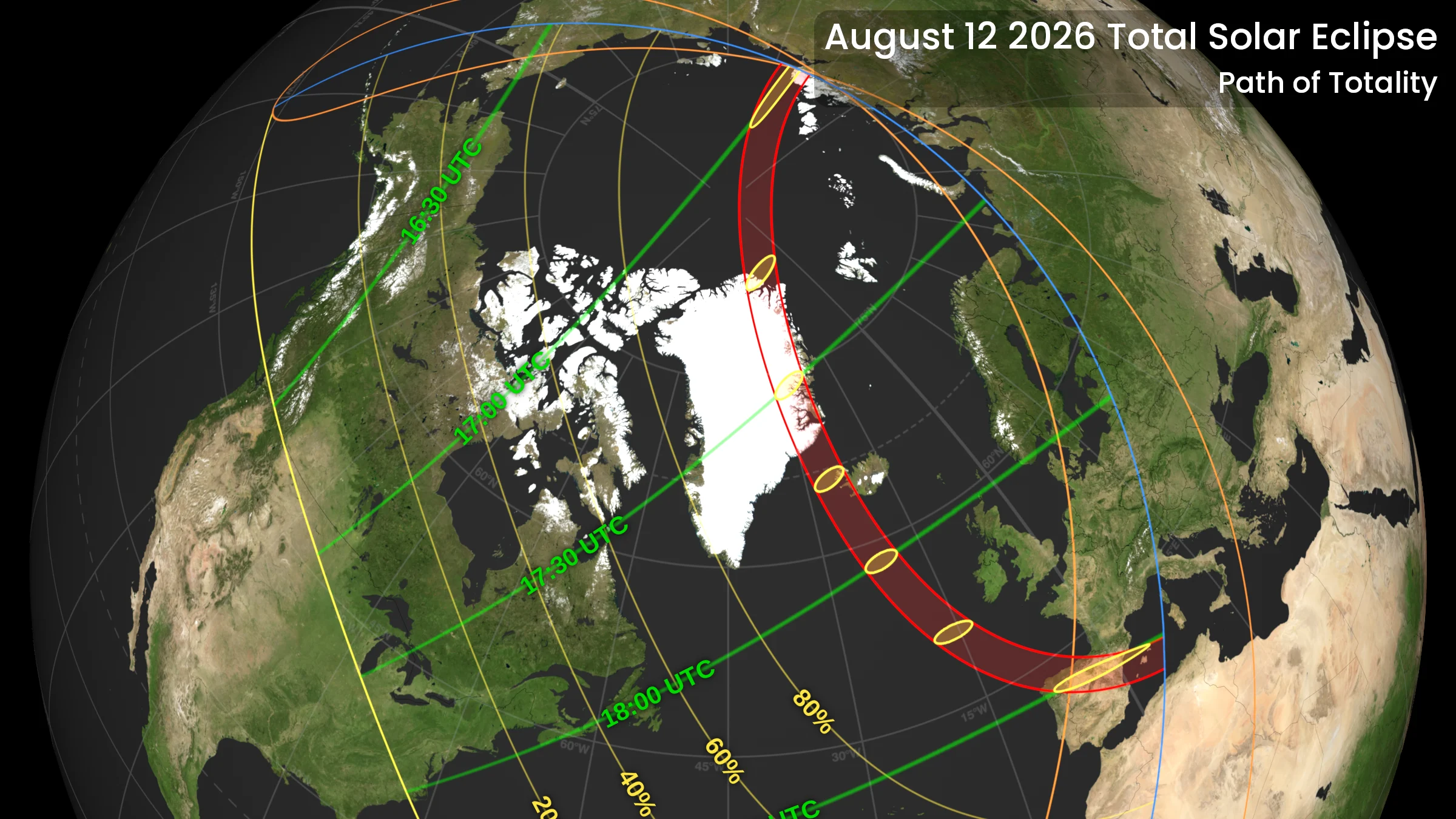
The red "path of totality" of the August 12 solar eclipse stretches from the northern shore of Siberia to the Mediterranean Sea. The green and yellow lines represent partial solar eclipse visibility. (NASA)
Mark your calendar: The Moon 'takes a bite' out of the Sun this summer
Across Canada, this alignment of the Sun and Moon will be off, giving us a partial solar eclipse instead. The magnitude of the eclipse — the amount of the Sun covered by the Moon — is greatest in the northern and eastern parts of the country.
Provided there are clear skies, locations on Ellesmere Island and Baffin Island, coastal regions of Labrador, and along the northern and eastern shores of the island of Newfoundland will be best for viewing the greatest eclipse magnitude.
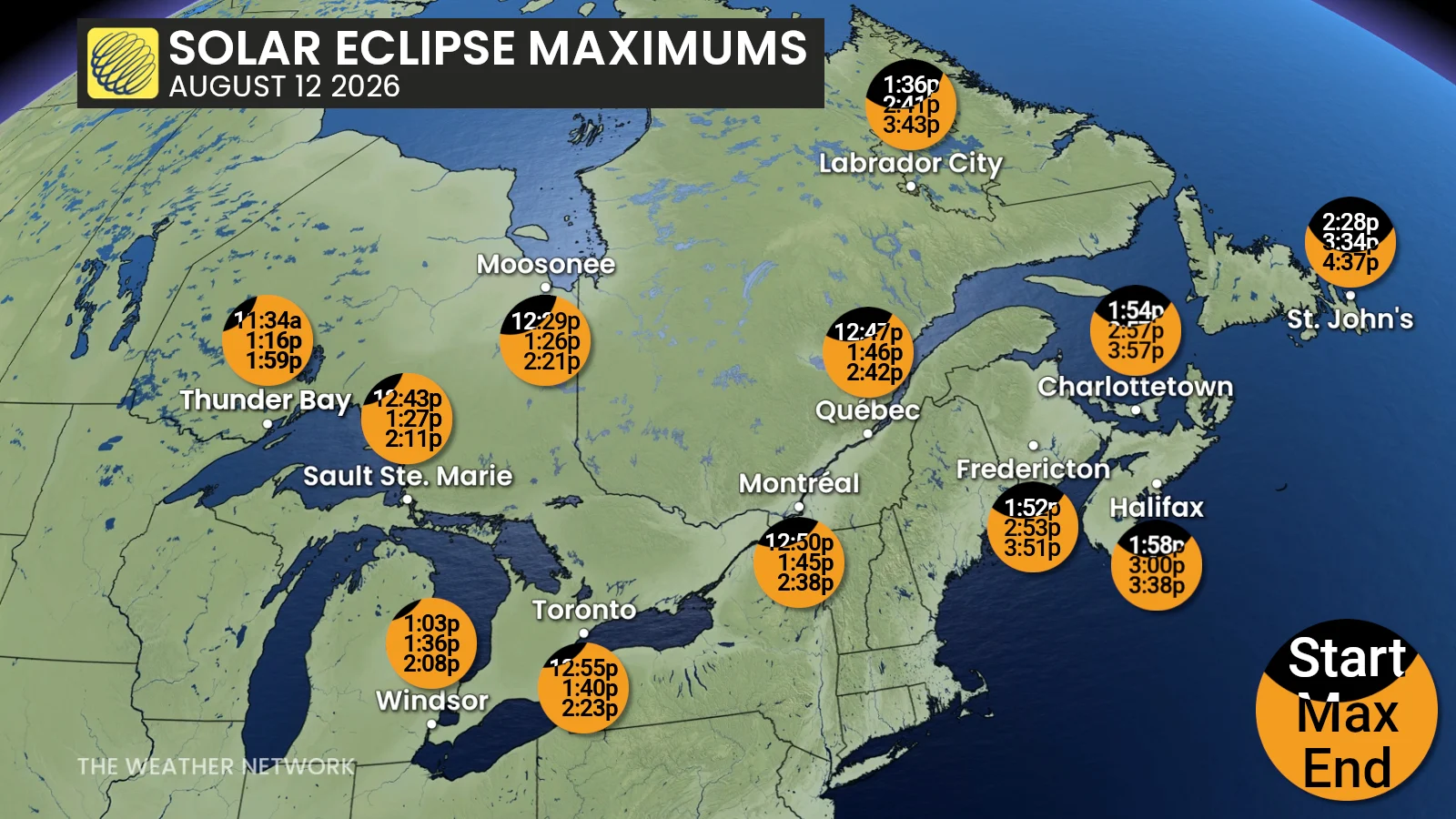
The timing and maximum partial eclipse for locations across eastern Canada. All listed times are local to that location's time zone. (The Weather Network)
The farther west and south the observer is, the smaller the magnitude of the partial eclipse.
Unfortunately, due to their distance from the path of totality, those in southwestern British Columbia completely miss out on this astronomical event.
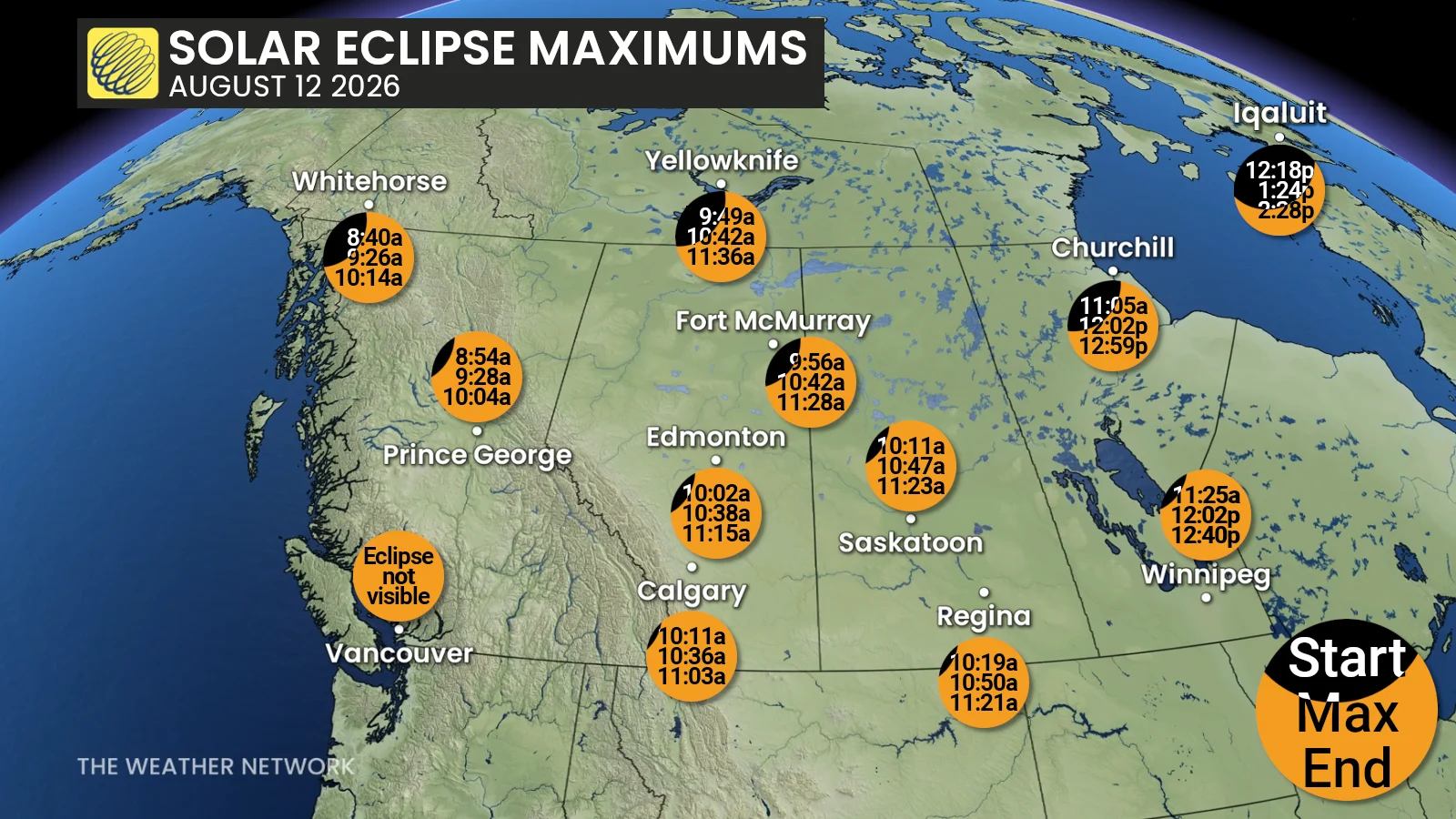
The timing and maximum partial eclipse for locations across western Canada. All listed times are local to that location's time zone. (The Weather Network)
For Atlantic Canada, the eclipse begins in the early afternoon, peaks mid-afternoon, and ends late afternoon.
For the rest of the country, the timing shifts later the farther southwest the observer is within each time zone, while crossing time zones adjusts the timing earlier with each step.
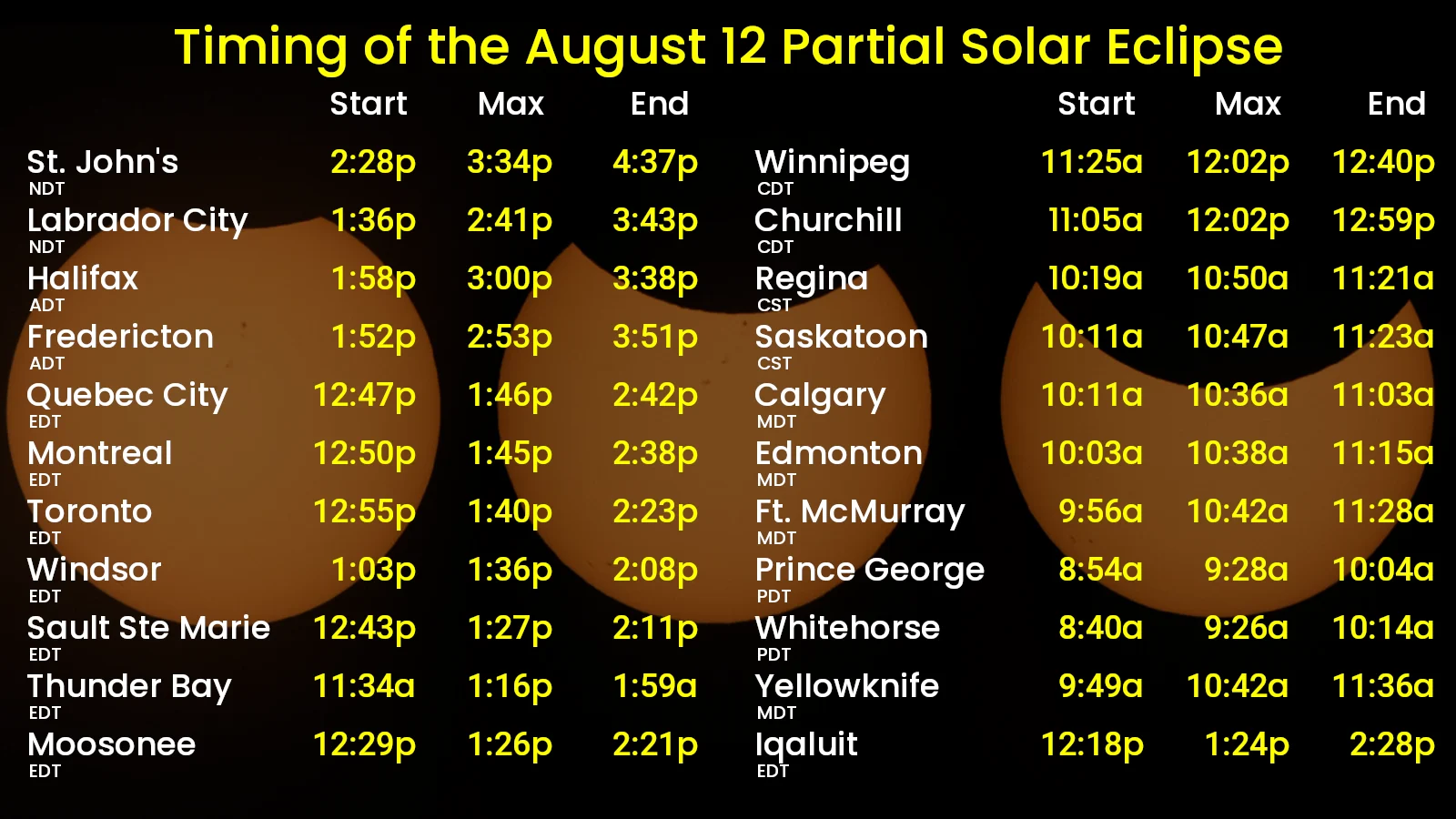
(The Weather Network, background image courtesy NASA/Noah Moran)
As shown in the above timetable, even in locations that only have a thin sliver of the Sun covered by the Moon, the eclipse can still last for more than an hour.
MORE INFO: Follow these tips to safely observe any solar eclipse
Perseid Meteor Shower
The August 12 New Moon and solar eclipse sets up perfect viewing conditions for that night, giving us the darkest skies possible. This is fortunately timed with the peak of one of the best meteor showers of the year — the Perseids.
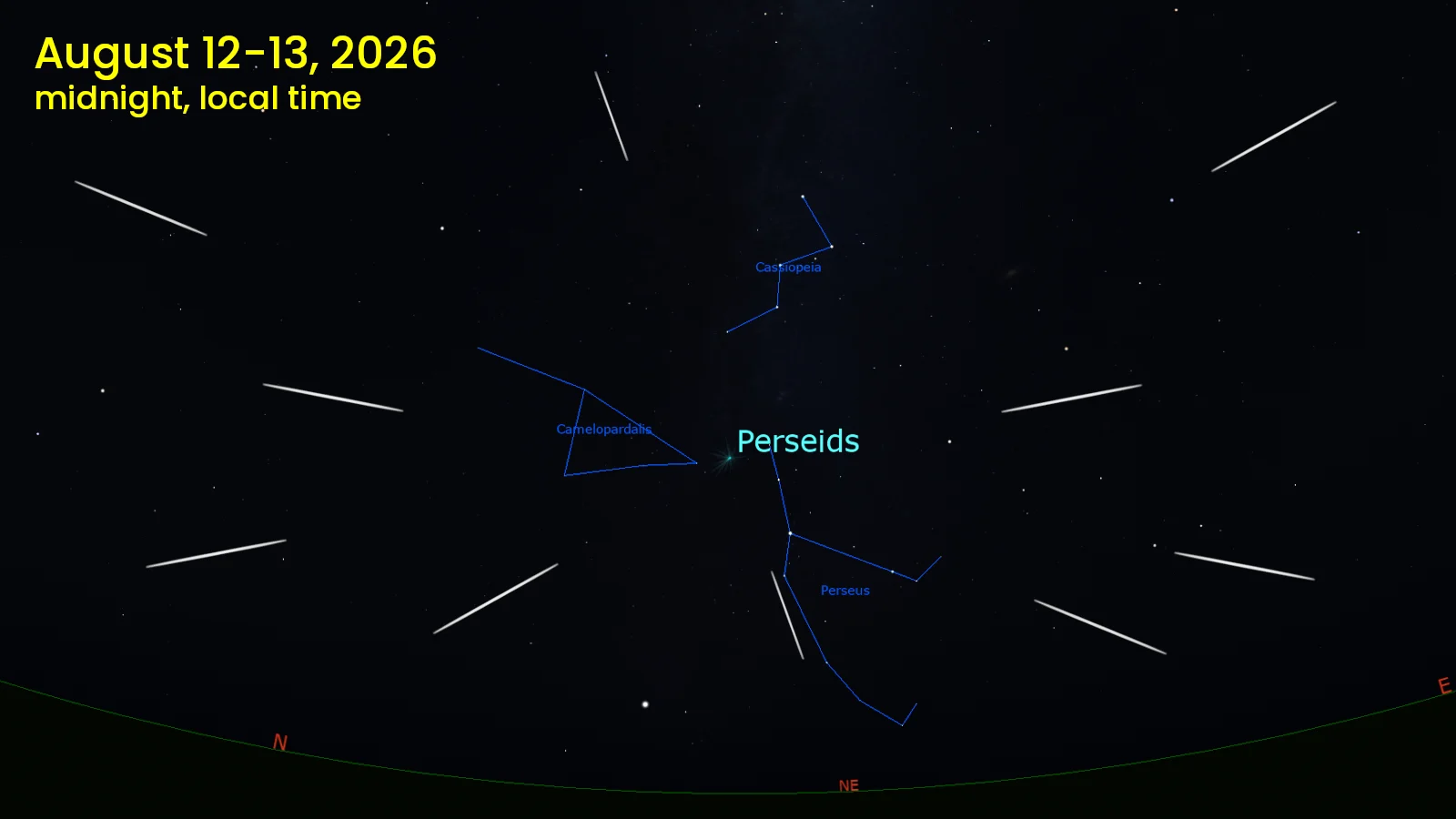
The radiant of the Perseid meteor shower (the spot in the night sky where the meteors appear to originate from) lies between the constellations of Perseus, Camelopardalis, and Cassiopeia, in the northeast sky. (Stellarium)
Meteors are caused by bits of dust, ice, and rock plunging into Earth's atmosphere from space, where they compress the air in their path, causing that air to glow, white hot. At certain times of the year, we pass through concentrated streams of meteoroids, left behind by comets and asteroids, resulting in dozens to hundreds of meteors streaking through our night skies. These are known as meteor showers. Most are weak, only producing a handful of meteors every hour, but stronger ones can deliver 20 or 30 per hour, and even up to 100 or more every hour for the strongest.
Right now, we are crossing the debris stream of a comet known as 109P/Swift-Tuttle, which is producing the Perseid meteor shower, one of the strongest of the entire year. The Perseids are also famous for producing the greatest number of bright fireball meteors.
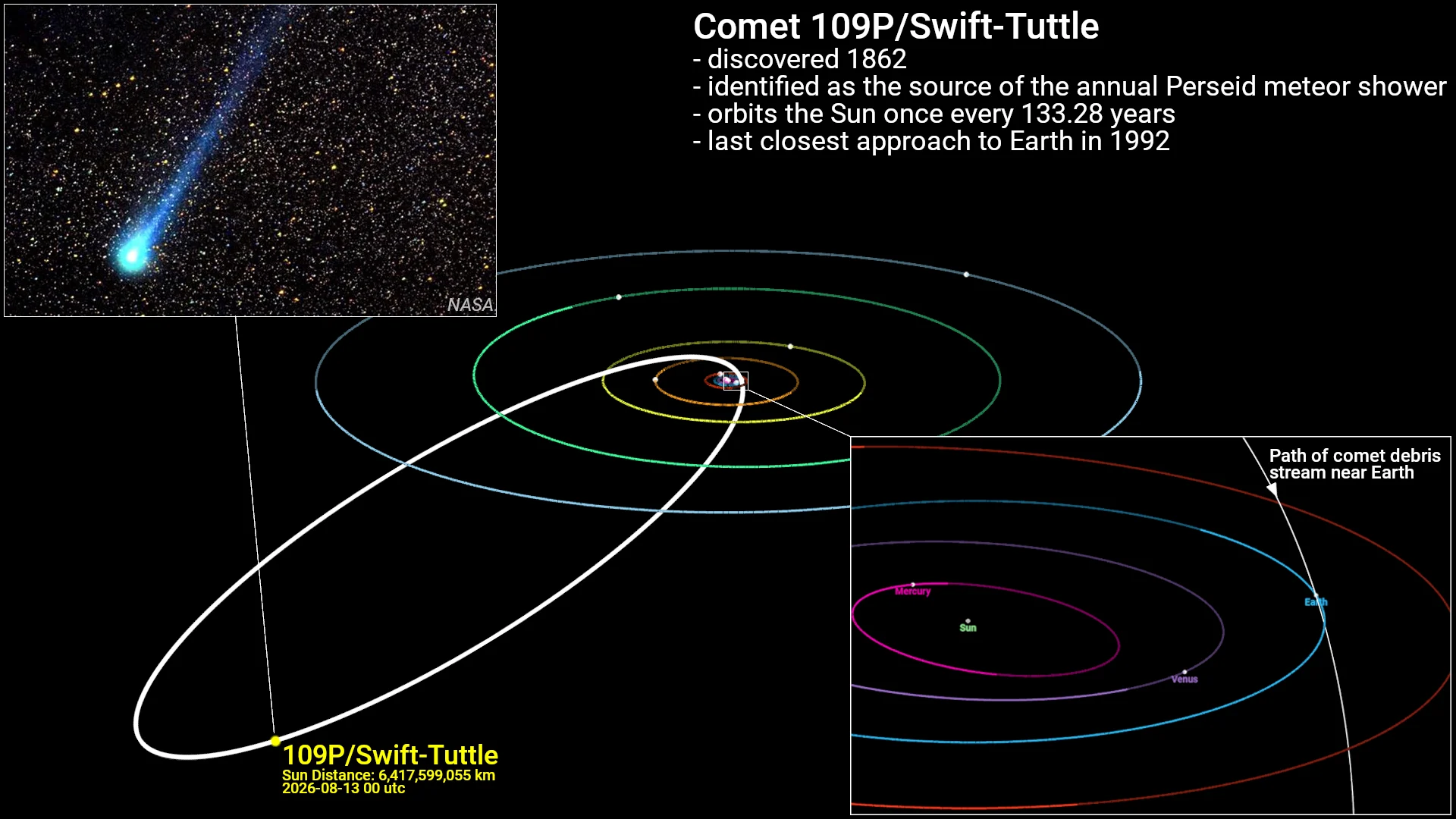
Comet Swift-Tuttle's orbit, an image of it from NASA (top left), and the path of its debris stream past Earth each August (bottom right). (NASA, NASA/JPL-Caltech, Scott Sutherland)
Each year, the Perseids light up our sky from around July 17 through August 24. They start off slowly, but the number of meteors ramps up into early August, with the shower peaking on August 12-13. On that night, the shower typically produces between 75-100 meteors every hour.
Afterwards, the numbers ramp down again, to about half the peak rate on the night of the 13th, and then slowly taper off on the nights following, until the shower ends.
Read More: How to get the most out of meteor showers, auroras, and other night sky events
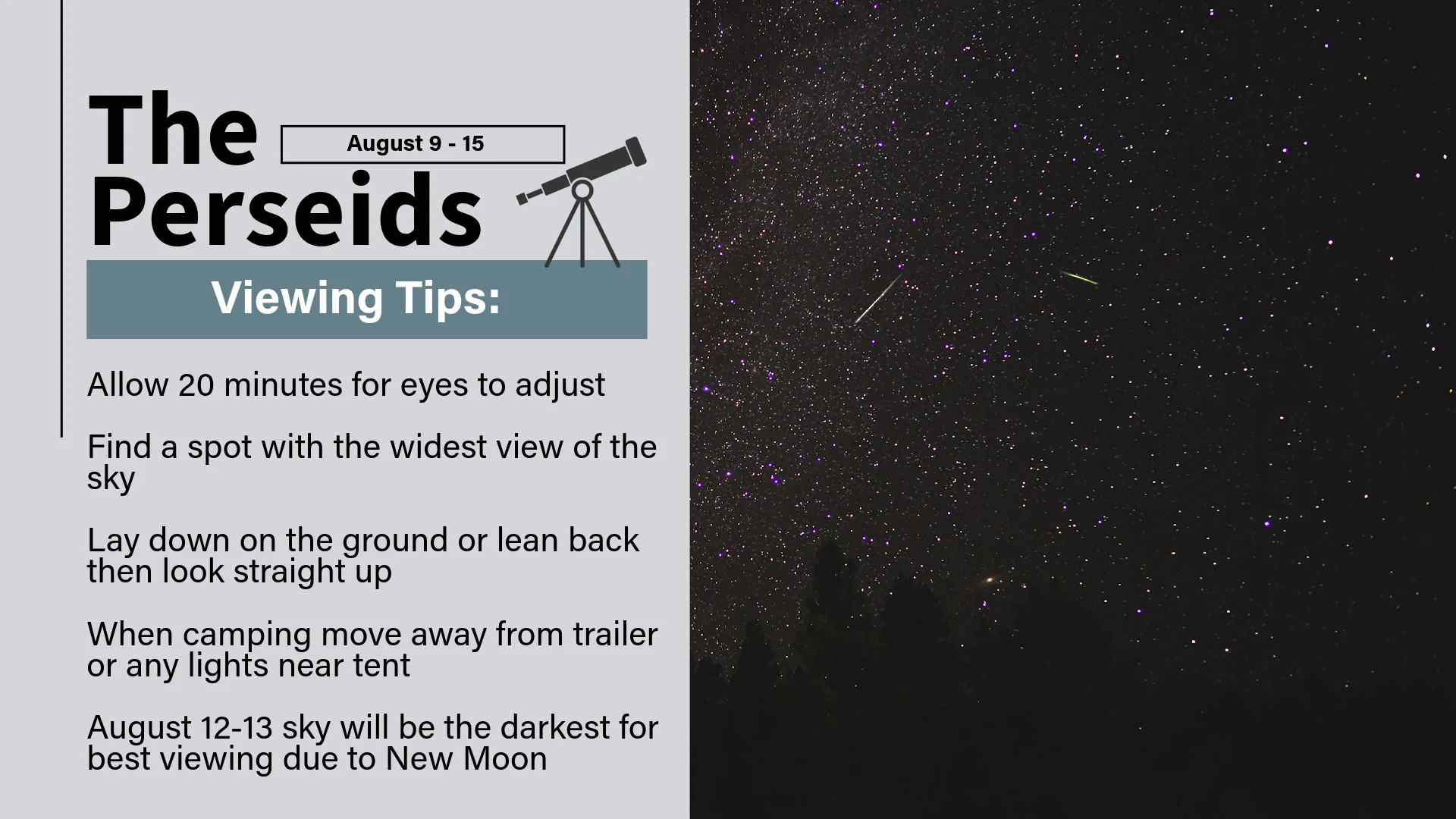
This year, we have some amazing timing for the Perseids, as the shower peaks during a New Moon. With no Moon in the sky throughout the night of the 12th to 13th, we only need to concern ourselves with sky conditions and getting away from urban light pollution to get the most out of the event.
Also, with only a very thin Crescent Moon in the sky on the nights before and after the peak, these are also great times to get out to see the Perseids. The number of meteors will only be about half of the peak rate, but that can still put on a great show in the sky.
LEARN MORE: Why this year's Perseid meteor shower is a must-see event
The Planets
Four planets can be seen in the sky to start off the month of August. Venus will be in the western sky each evening, emerging from twilight as the Sun sets. Then, throughout the night, Saturn will rise first, a little after 11 p.m. to start, followed by Mars about 2:30 a.m., and then Mercury just before sunrise.
Each night, Venus will set earlier and earlier, while each morning, Saturn and Mars rise earlier, with Mercury rising later. By the second week of August, Jupiter will also appear in the predawn sky, rising after Mercury, and getting higher in the sky each morning.
Look for Saturn near the Waning Gibbous Moon on the nights of the 3rd and 4th. Then, the Waning Crescent Moon will be near Mars on the morning of the 9th.
On the mornings of August 14-16, Jupiter and Mercury will come very close together in the sky, forming a close planetary conjunction, predawn on the 15th.
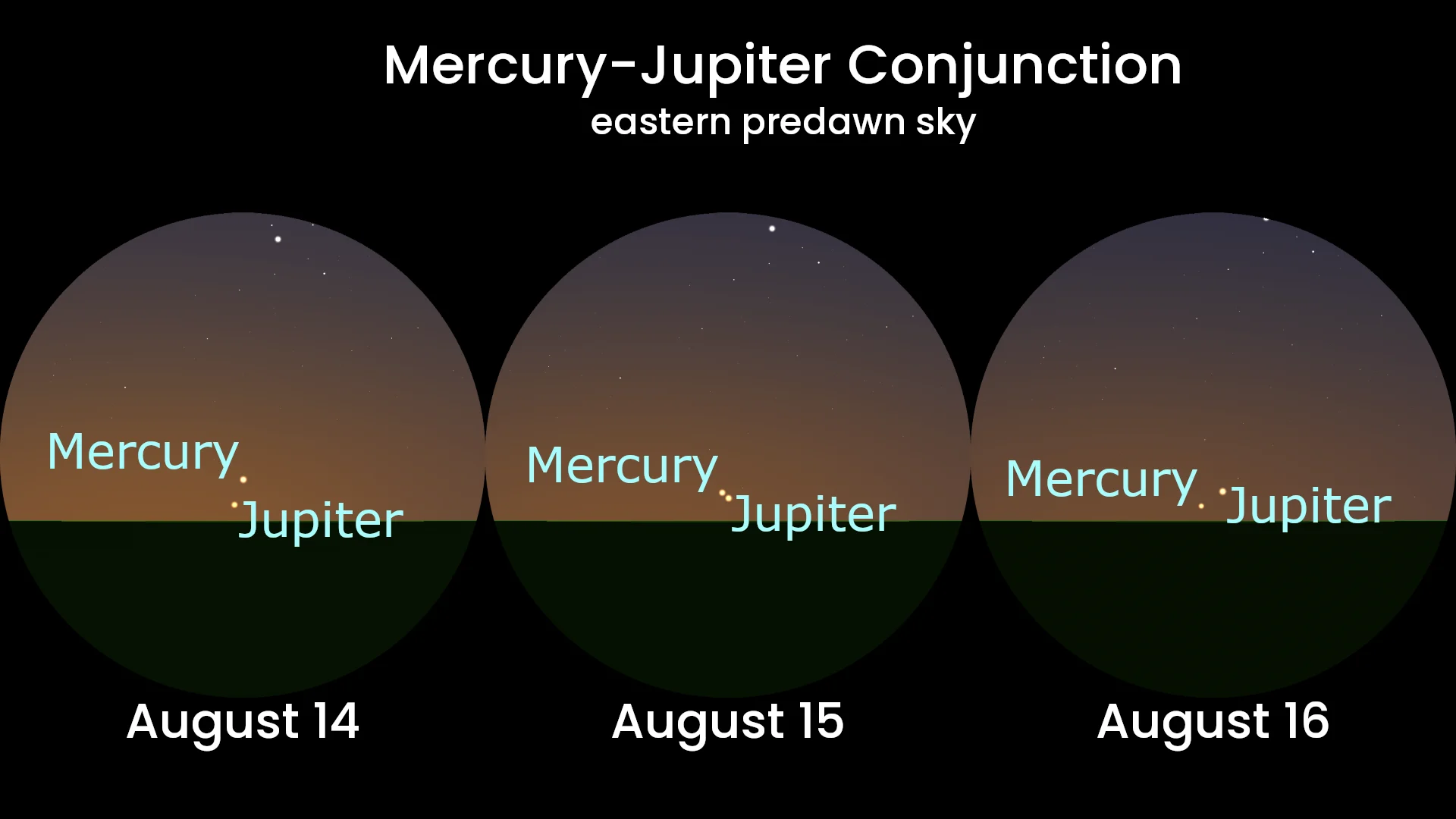
Mercury-Jupiter conjunction, as seen through binoculars or a telescope, in the eastern sky from August 14-16, 2026. (Stellarium/Scott Sutherland)
The time of day will require us to be early-risers for the event, as the two only crest the eastern horizon around 5:15 to 5:20 a.m., local time. Plus, morning twilight will offer a challenge, as the two will vanish from sight as the dawn brightens, giving us only a short window for spotting them. Having access to a telescope or binoculars will make them easier to see.
On those same nights (from the 14th to the 16th), we can look to the east to spot the Waxing Crescent Moon near bright Venus in the hours just after sunset.
Then, on the final days of the month, the Waning Gibbous Moon can be seen, again, hanging out with Saturn as the two cross the night sky together.
Partial Lunar Eclipse
On August 27th, the Sun, Earth, and the Full Moon will again line up, this time with the Moon on the opposite side of Earth from the Sun. This will give us a Full Moon in the sky to start, which will become a partial lunar eclipse as the Moon passes through Earth's shadow throughout the night.
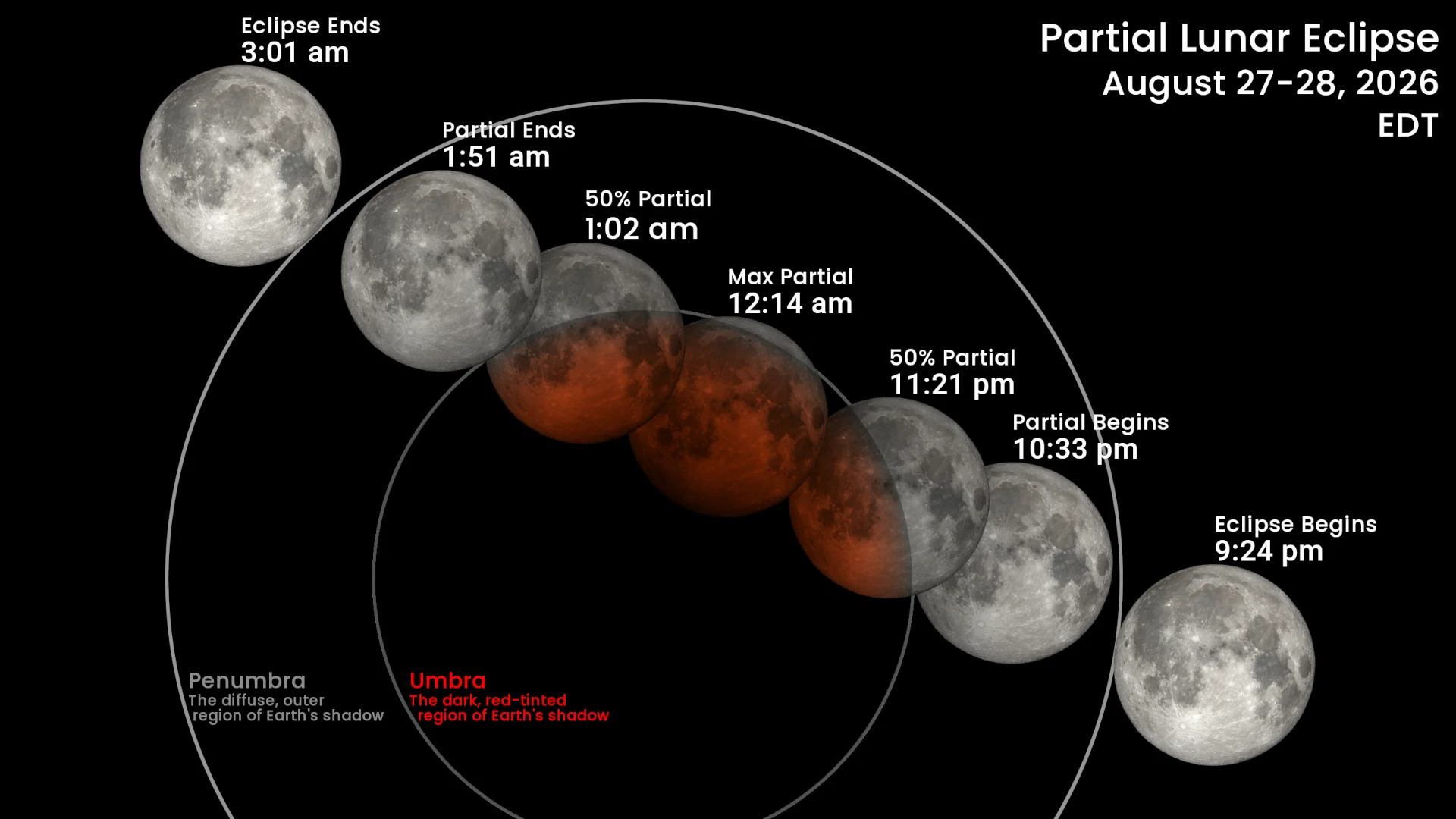
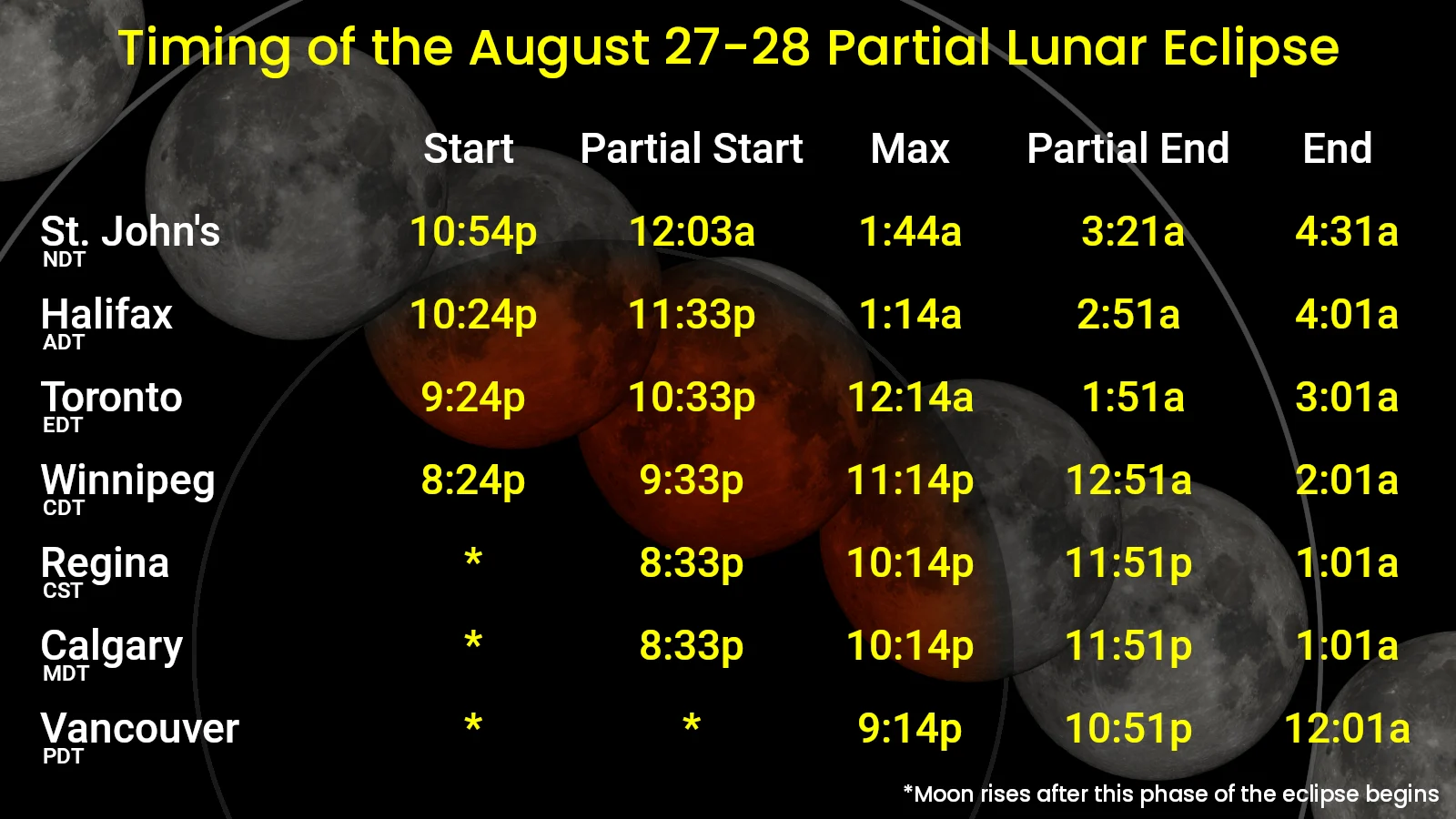
The details and timing of the Partial Lunar Eclipse, for the eastern timezone. (NASA's Scientific Visualization Studio/Fred Espenak/Scott Sutherland)
Similar to the partial solar eclipse on the 12th, this eclipse is more focused on the eastern half of Canada.
For Saskatchewan and Alberta, the Moon will rise during the 'penumbral' portion of the eclipse. Farther west, the Moon will already have started its journey across the darker umbra by the time it crests the horizon.
Copy, Moon Joy: Keep the Moon Joy alive with over 12,000 new photos from Artemis 2
However, anyone across Canada with reasonably clear skies should be able to see most of this eclipse, including the maximum partial eclipse, when the Moon will be around 93 per cent immersed into the darkest part of Earth's shadow.
At maximum, most of the Moon's surface will be dark, with a slight red tinge, while a thin sliver of the Moon's north polar region will be brighter, shadowed only by the more diffuse penumbra.
The Constellations
In the south, in the evening, the constellations Aquarius, Capricornus, Sagittarius, Scorpius, Libra, Virgo, and Leo will be arrayed from east to west just above the horizon. Above those will be Aquila ("the Eagle") and Ophiuchus ("the Serpent Bearer"), with Cygnus ("the Swan"), Lyra ("the Harp"), Hercules, Corona Borealis, and Boötes ("the Herdsman"), high overhead.
To the north, Pegasus and Andromeda will be visible along the eastern horizon after sunset, with Cassiopeia and Camelopardalis to the north, and Ursa Major ("the Big Dipper") to the northwest. Ursa Minor ("the Little Dipper"), Draco ("the Dragon"), Cepheus, and Lacerta ("the Lizard") will be higher up in the sky.
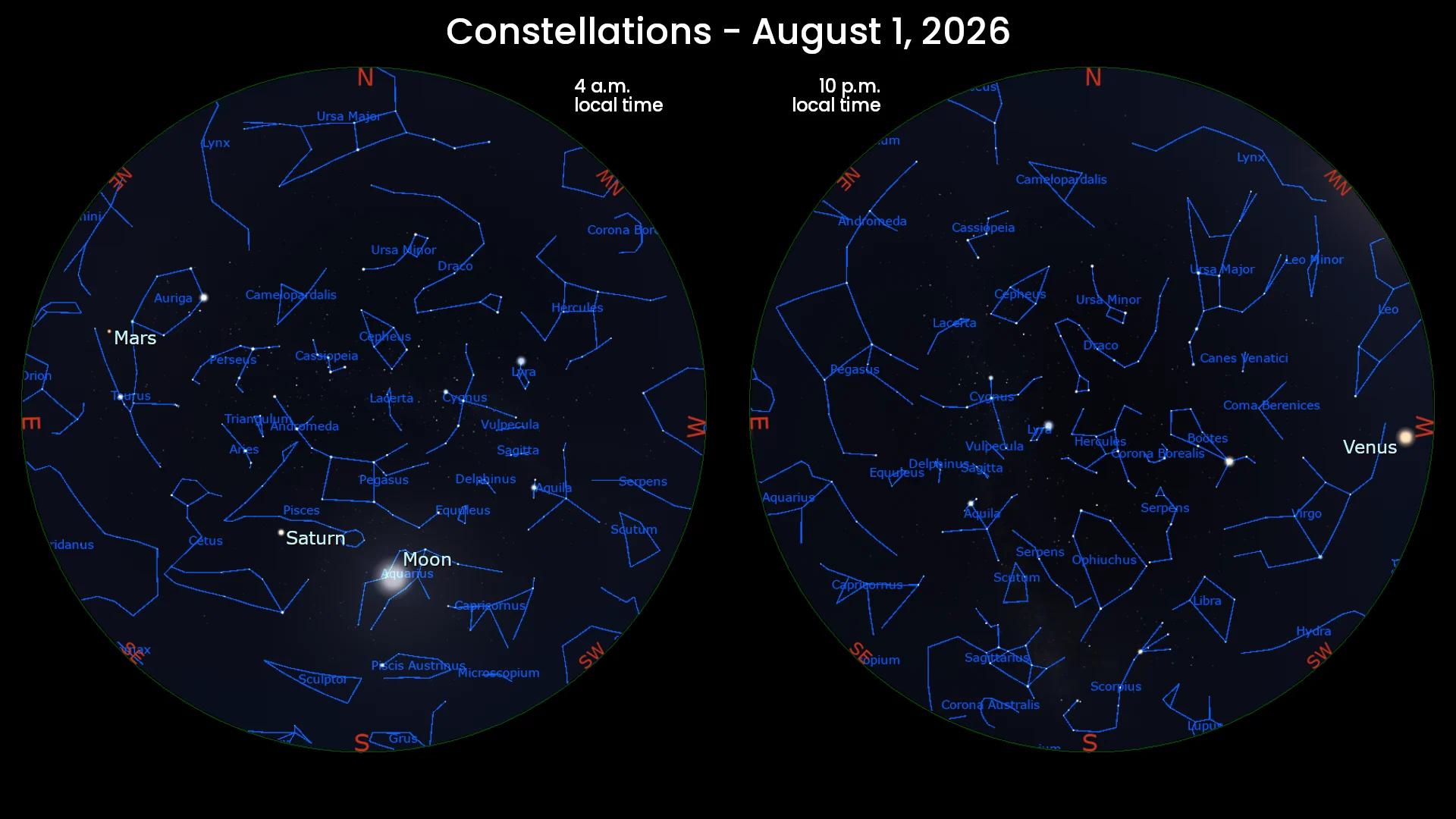
(Stellarium/Scott Sutherland)
After midnight, Taurus, Cetus ("the Whale"), Pisces, Pegasus, and Andromeda will take their place in the eastern sky, with Orion and Gemini rising closer to dawn. As the month progresses, Orion and Gemini will rise higher and higher in the sky, with Eridanus ("the River") becoming more prominent in the southeastern sky before dawn.
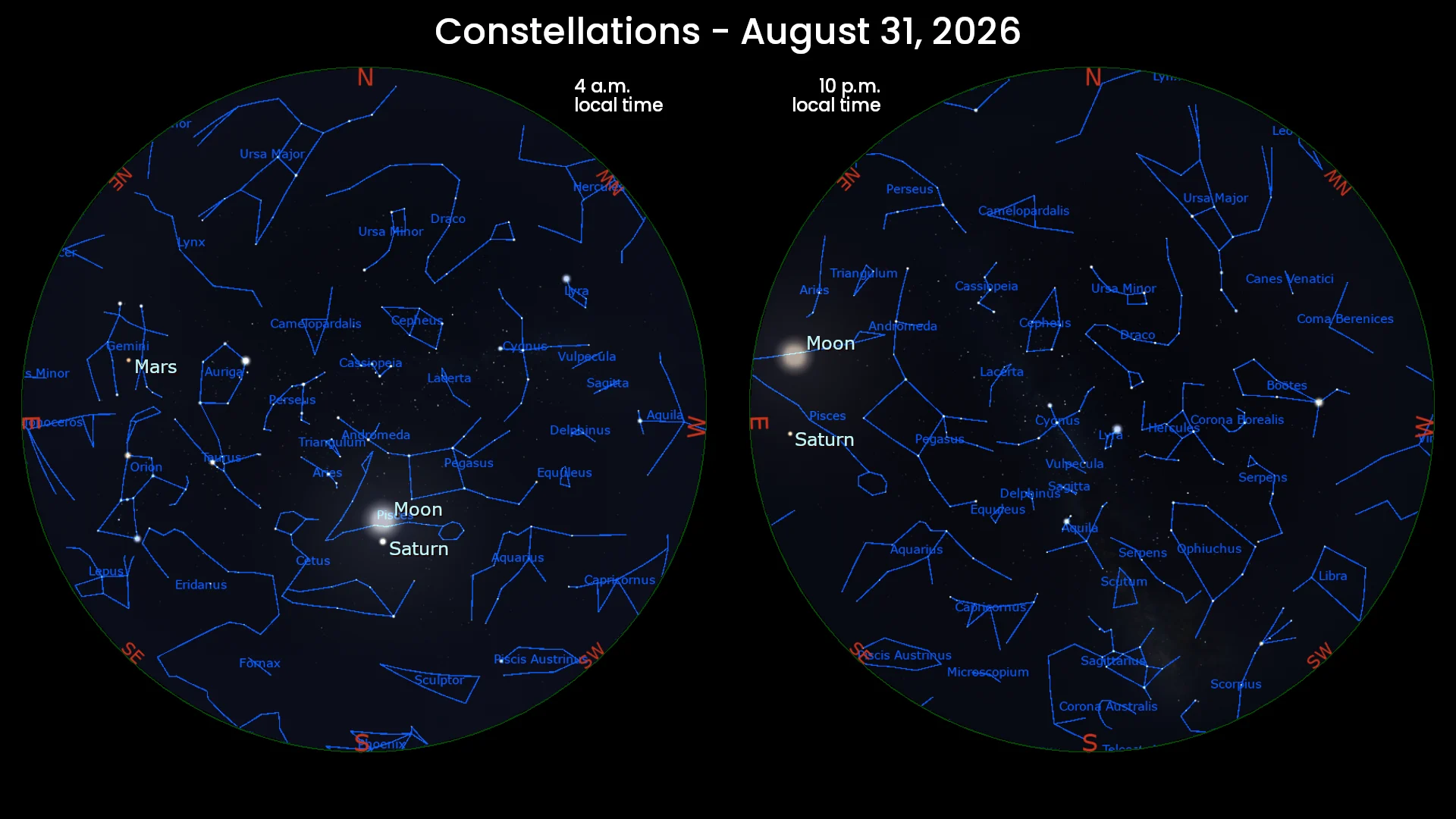
(Stellarium/Scott Sutherland)
Throughout the night, Aries and Triangulum will rise, along with Perseus, and then Auriga ("the Charioteer"), followed by the Lynx towards dawn.
With files from The Weather Network.