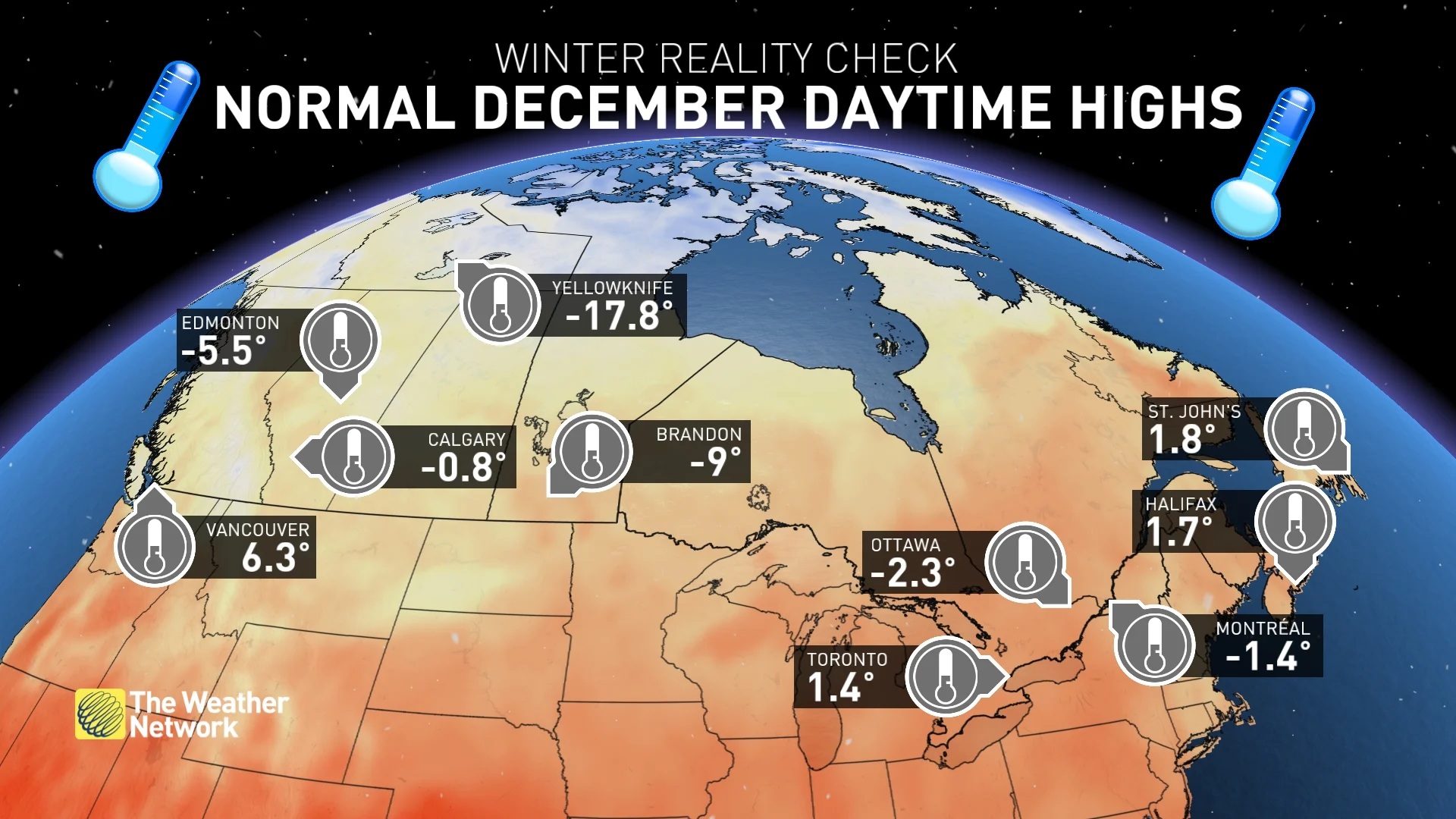
3 things you'll want to know with fall arriving next week

Ready or not, the fall season arrives next week, and there's a few important things you'll want to keep in mind as we move into the autumn months
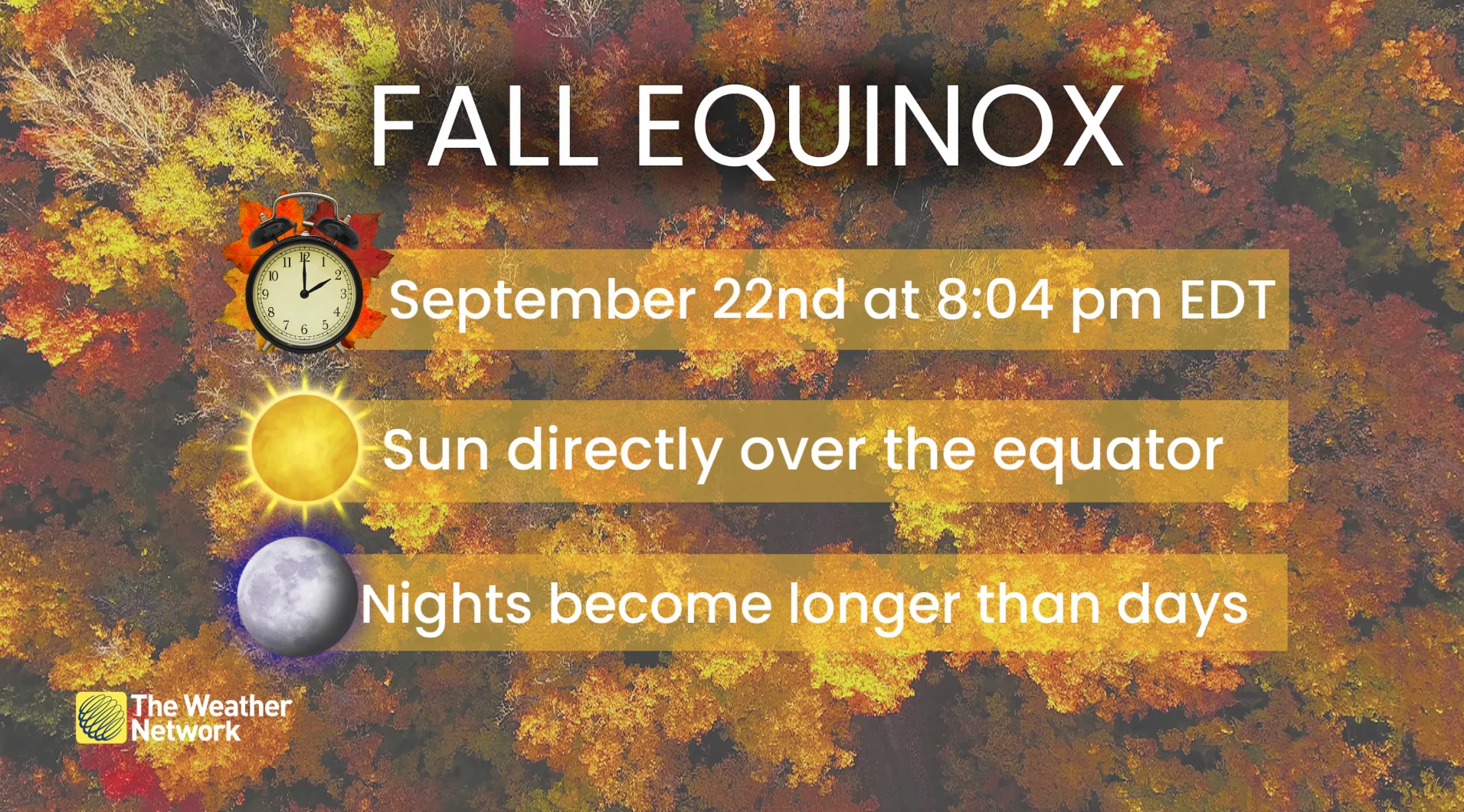
We will officially welcome the fall season on September 22, a start to the Autumnal Equinox, when the sun crosses the celestial equator.
The date in the Northern Hemisphere varies slightly, arriving on September 22 or 23 each year. However, meteorological fall consistently begins on September 1 and ends on November 30. These fixed dates allow scientists to streamline the tracking of weather records and simplify comparisons of seasonal temperatures.
Visit our Complete Guide to Fall 2026 for an in depth look at the Fall Forecast, tips to plan for it and much more!
Despite the more obvious signs of the changing seasons like falling leaves, and pumpkin spice everything, there's a few important things to keep in mind as we transition out of the summer months.

Daylight hours decrease
From the first day of fall to the first day of winter, the amount of daylight hours drops from 12 hours and eight minutes, to just nine hours and 27 minutes.
It's certainly the time of year when we notice mornings and nights getting much darker.
SEE ALSO: Why daylight hours take a considerable nosedive in September
Clocks fall back, but not for all anymore
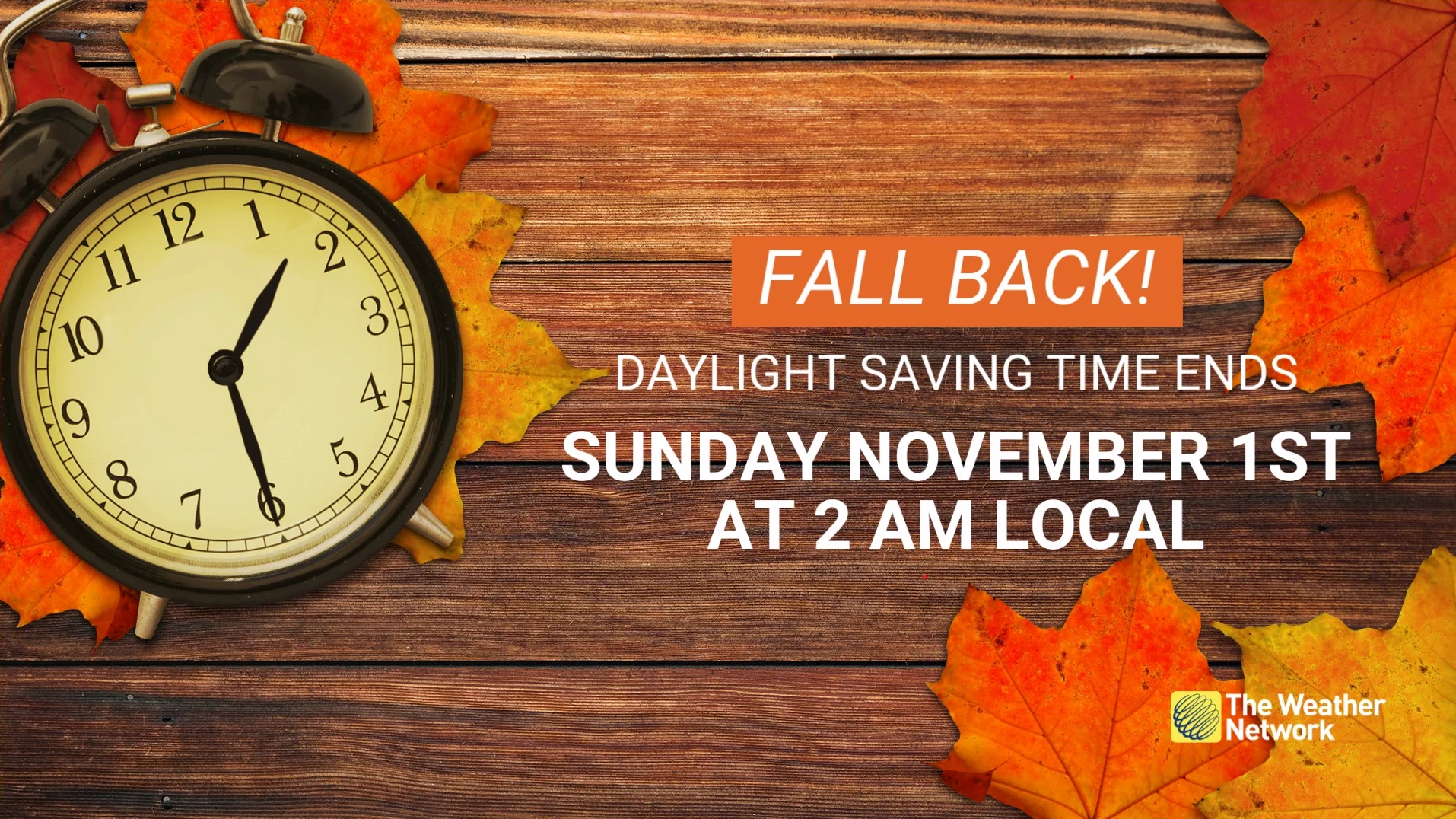
The fall season also marks the twice-annual time change, with clocks set to fall back at 2 a.m. local time on Sunday, November 1.
Daylight Saving Time (DST) is observed in most of Canada, with exceptions such as most of Saskatchewan. British Columbia and Alberta have also shifted to permanent year-round daylight saving time to eliminate biannual clock changes.
According to B.C. government officials, this change aims to "improve people’s overall health, reduce disruptions for families, simplify scheduling, and provide an extra hour of evening light during winter months."
Alberta has similarly adopted permanent Alberta Time (formerly Mountain Daylight Time or MDT), officially abbreviated as "ABT."
The transition to a consistent year-round time took effect on Sunday, March 8, 2026, when clocks were moved ahead for the last time in both B.C. and Alberta.
The idea behind DST is to maximize the amount of sunlight we see throughout the day, though the switchover isn't universally popular. Among the potential drawbacks to pushing the clocks back 60 minutes, include depression, as the decreased hours of daylight are difficult to manage for many, and a loss of natural vitamin D due to the drop in the amount of available sunlight through the winter.
Bundle up, the average high temperatures fall quickly
Fall is a transitional season leading into winter, bringing a noticeable drop in average daytime highs. In many regions, this temperature decrease can be quite significant as the frosty months draw closer.
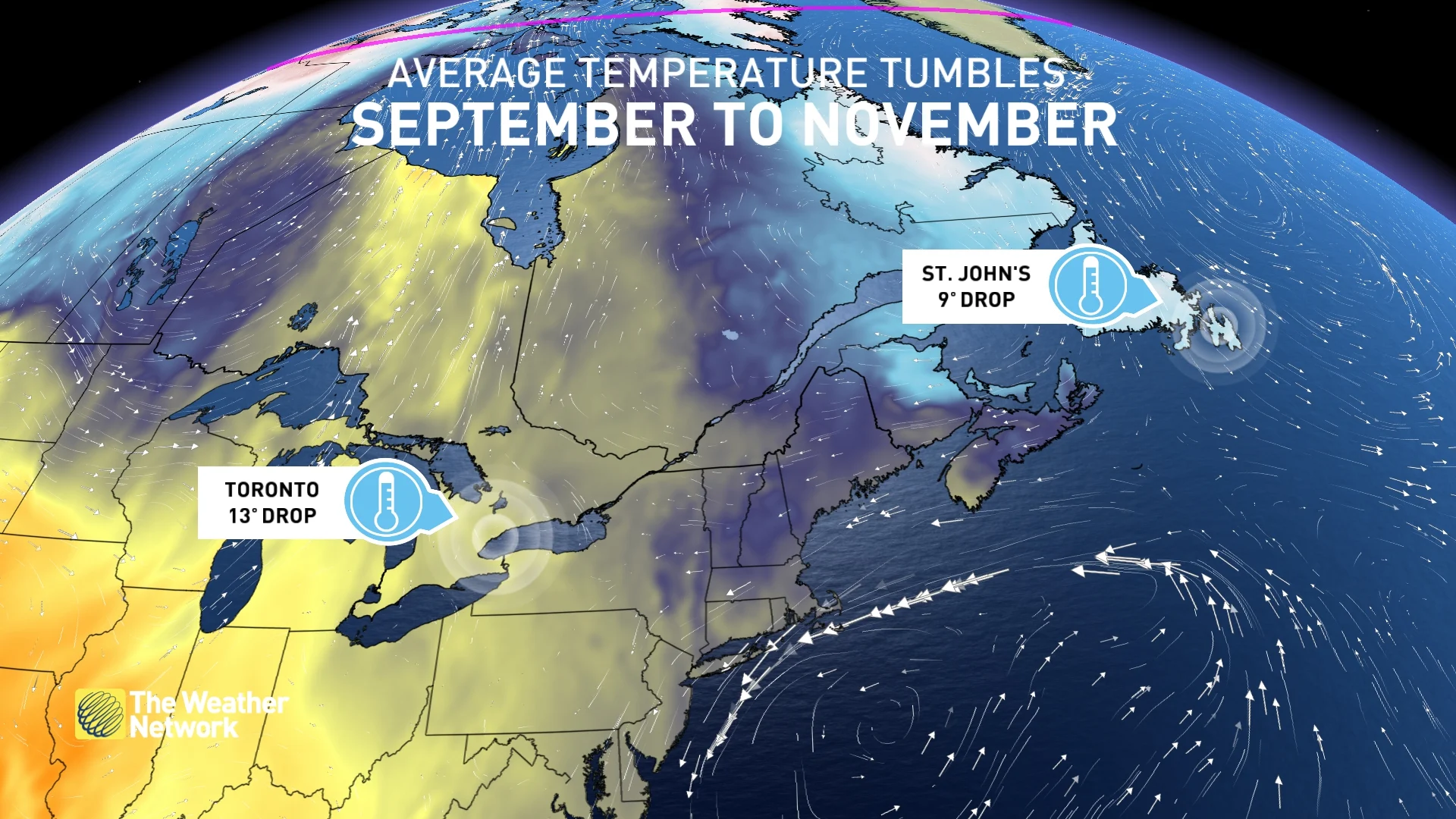
In Edmonton, Alta. for example, the city will lose as much as 16°C between just September and November. The daytime high in September is 10°C versus a chilly -5.2°C by November.
Meanwhile, Toronto, Ont. falls by 13°C, while St. John's, NL takes an almost 10-degree hit.
Reality check: Winter is coming...