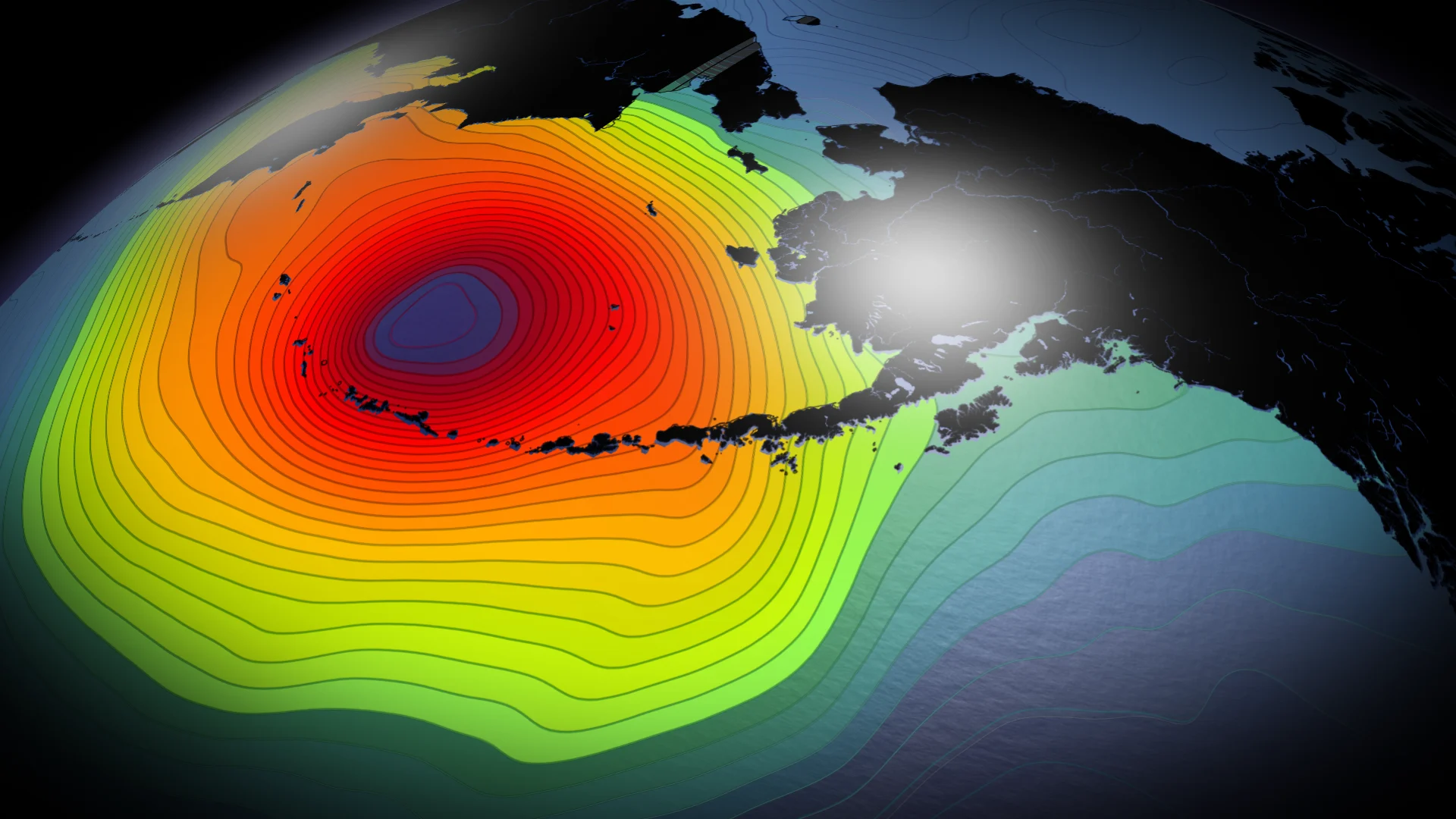
A 943 hPa giant: Meet the deepest low on Earth this week

Follow the journey of a powerful, atmospheric system from its development near Japan to its peak intensity in the Bering Sea. This report analyzes a historic, low-pressure system over the Bering Sea, tracking its development and strength
A powerful low in the Bering Sea intensified into the deepest, low-pressure system on Earth on Tuesday.
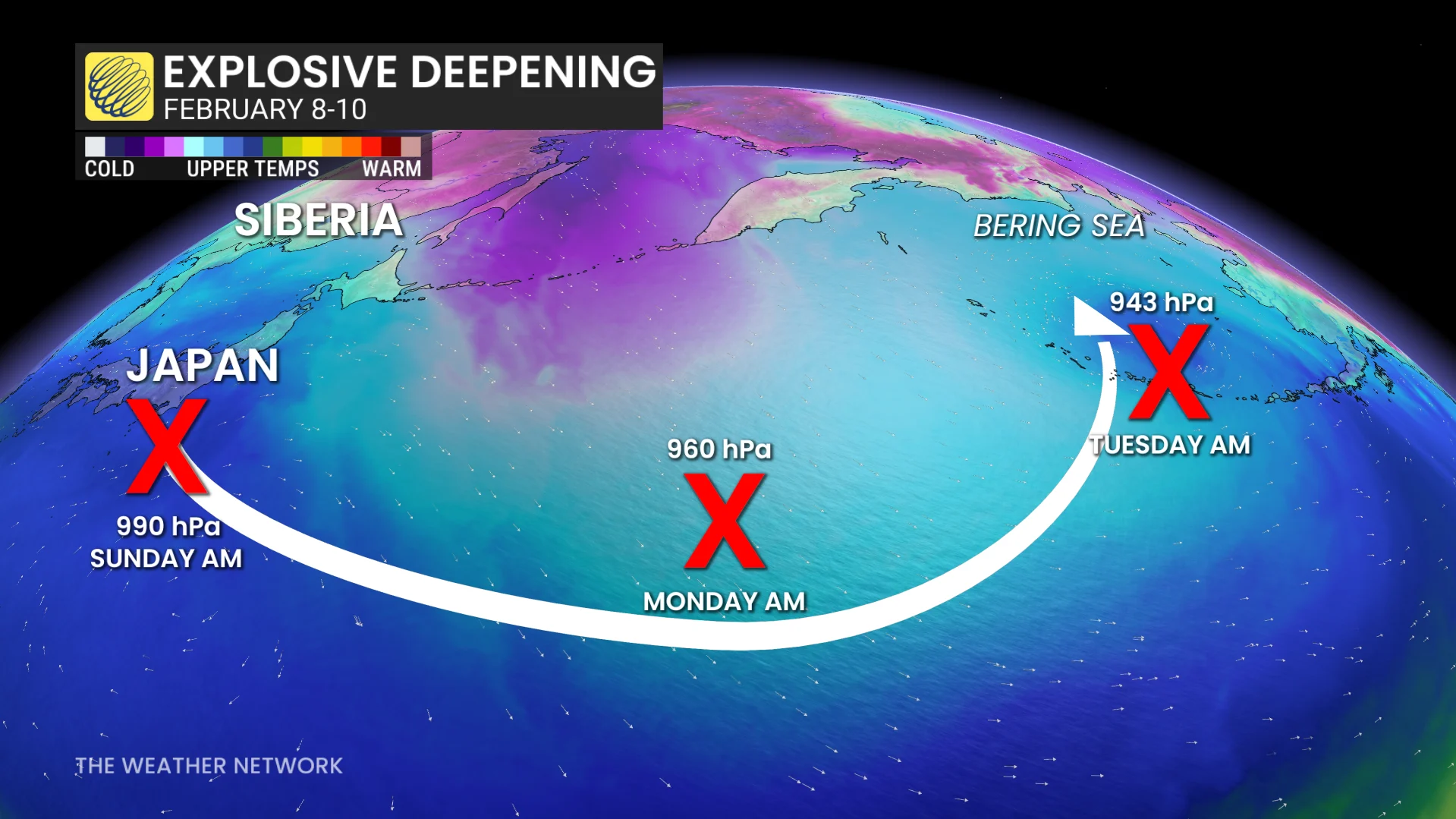
The storm bottomed out at an extraordinary deep pressure of 943 hPa, rapidly falling from around 990 hPa east of Japan Sunday morning.
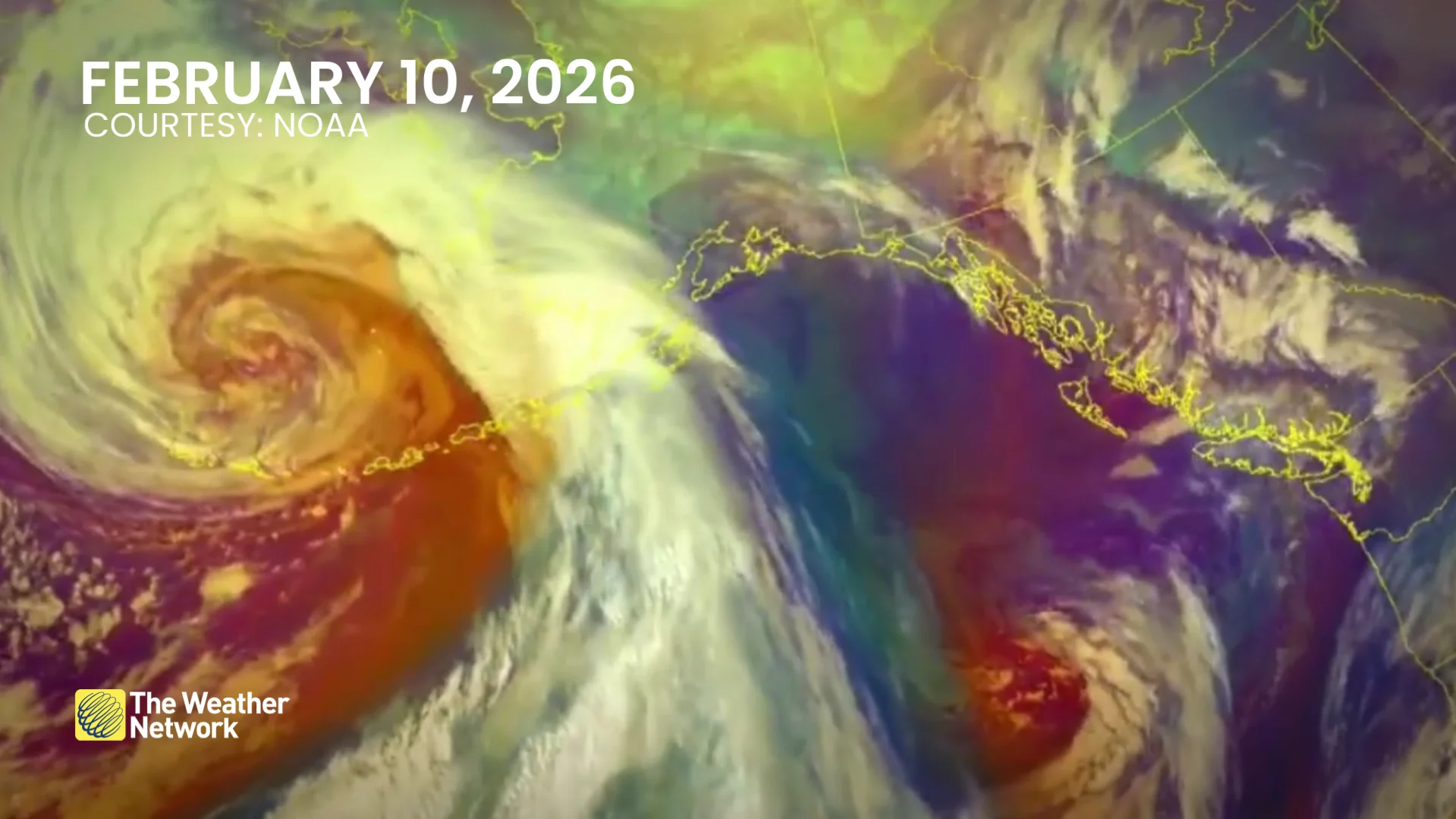
(NOAA)
At its peak, the low was lower than any sea-level pressure reading on the planet, including Tropical Cyclone Genzani, which briefly reached Category 3 intensity before making landfall in Madagascar on Tuesday.
The fuel
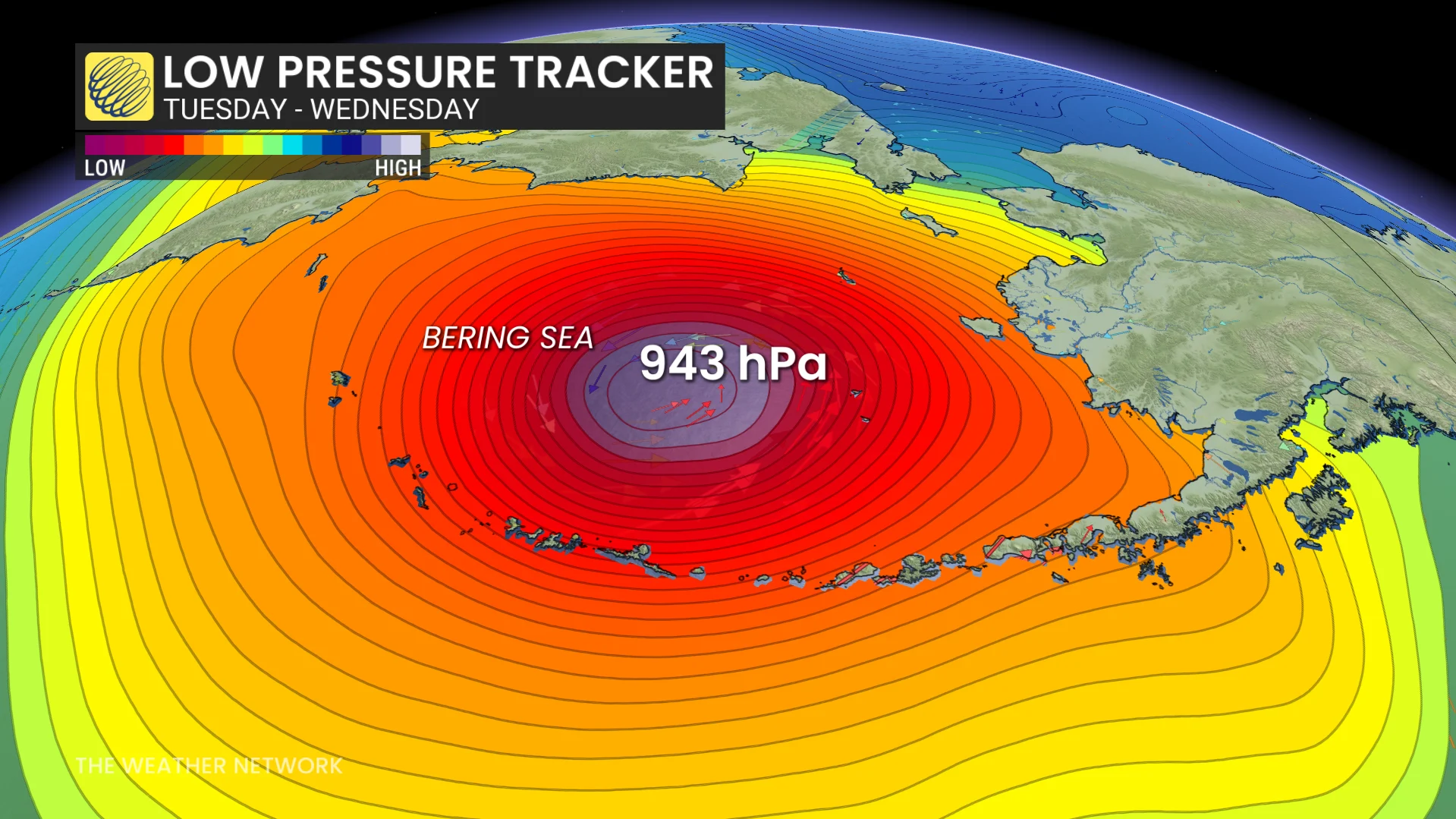
The storm developed in a near-perfect environment for explosive cyclogenesis. Frequent intrusions of Siberian air have been the theme this winter across Japan, and this past weekend was no exception.
Once that cool air interacted with a warm, moisture-rich, tropical air mass to the south, the match was lit.
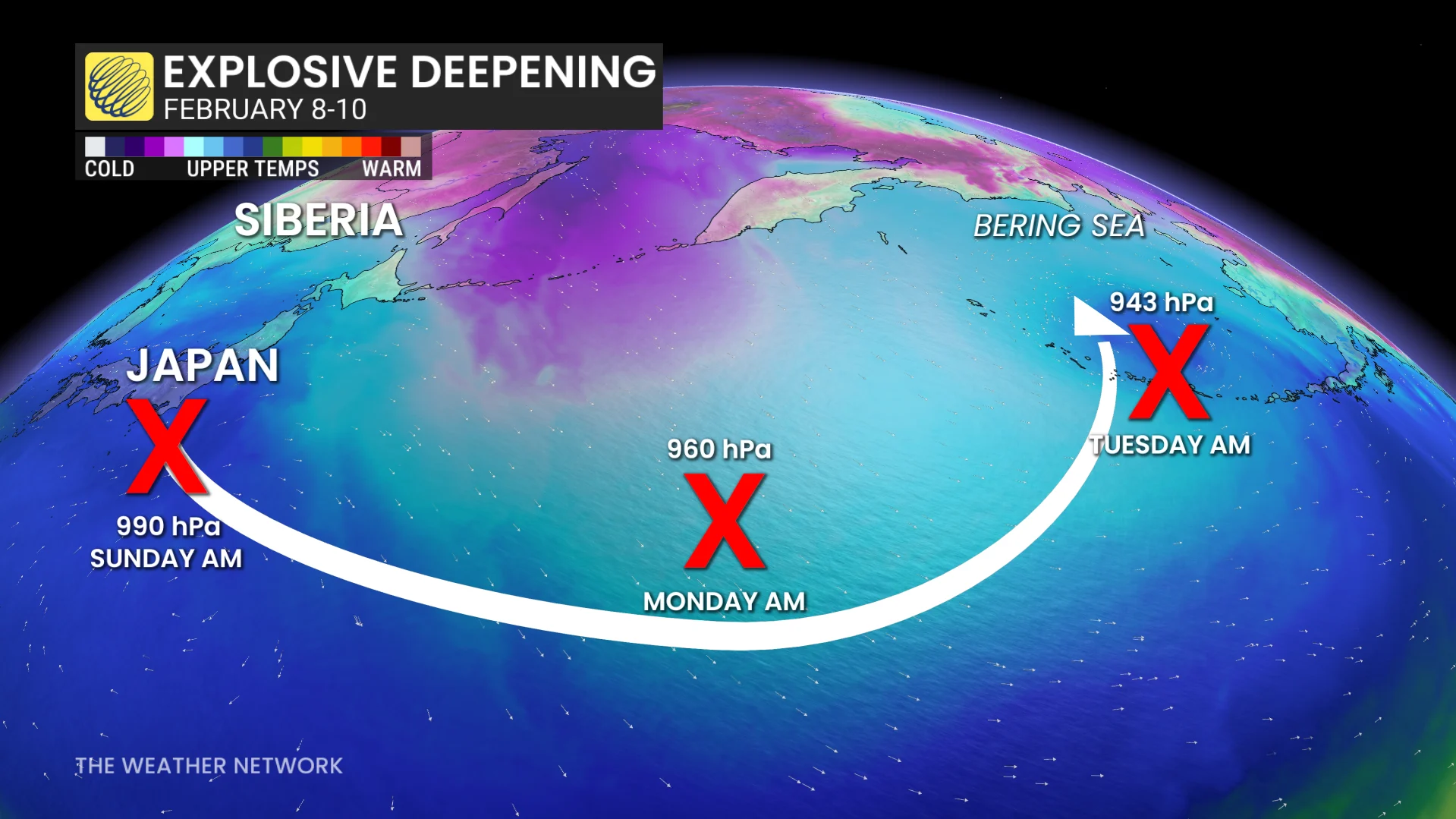
Siberian air swept across the Sea of Japan, and this sharp temperature gradient created an intense baroclinic zone: The primary fuel source for mid-latitude storms. A strong jet stream aloft provided additional support, allowing surface pressure to fall rapidly.
Rapid deepening by the numbers
Sunday morning (east of Japan): ~990 hPa
Monday morning (open Pacific): ~960 hPa
Tuesday morning (Bering Sea): 943 hPa
Extreme wave heights in the North Pacific
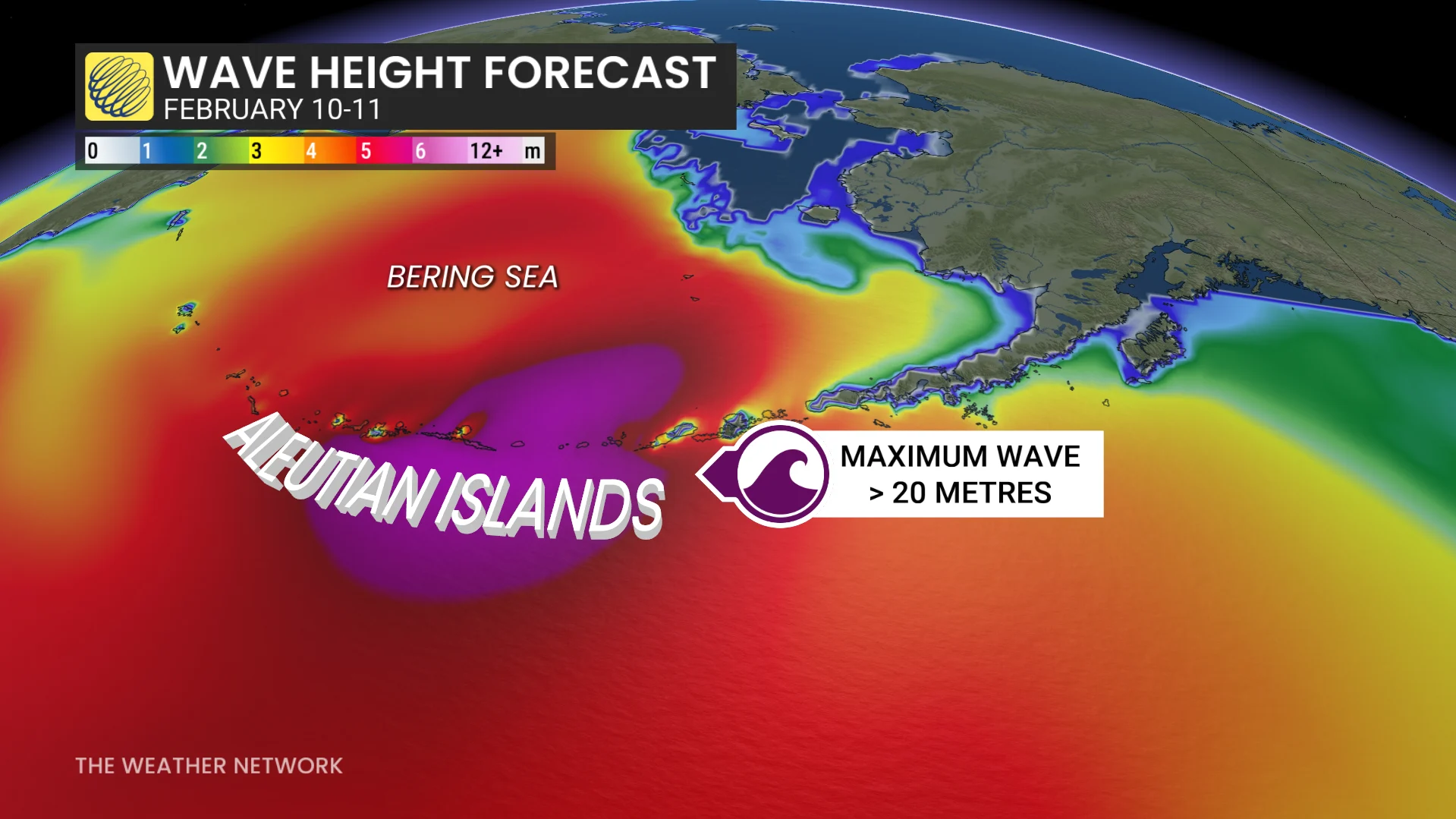
The storm’s massive wind field and extreme pressure gradient generated exceptional wave energy across the Bering Sea, with the maximum, individual wave heights forecast to reach more than 20 metres on Tuesday, with more common, significant waves of above 10 metres.
Impacts across Alaska varied with blizzard conditions, and hurricane-force wind gusts forecast to persist into Wednesday.
All-time record?
While this storm does not surpass the record-breaking Dec. 31, 2020 Bering Sea bomb, it belongs to a similar class of storms: it’s a reminder that this region is capable of generating some of the strongest storms on Earth.
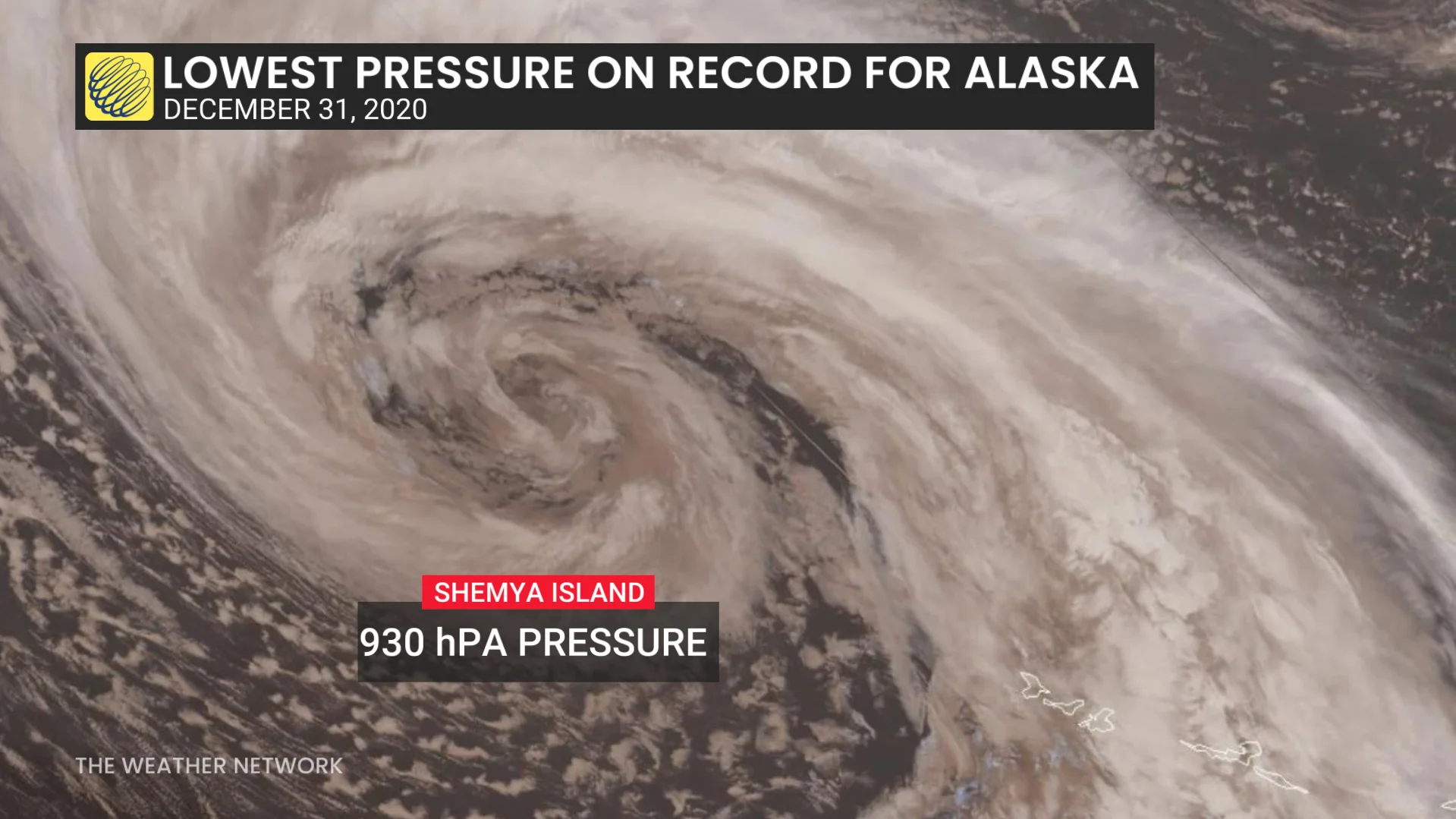
The pressure reached a staggeringly low 921 hPA, setting an all-time, low-pressure reading for the state of Alaska.
Where does it go?
The story doesn’t completely end in the Bering Sea. As the storm weakens, residual energy continues across the Pacific, hitching a ride on an upper trough that dives south across western North America by the weekend.
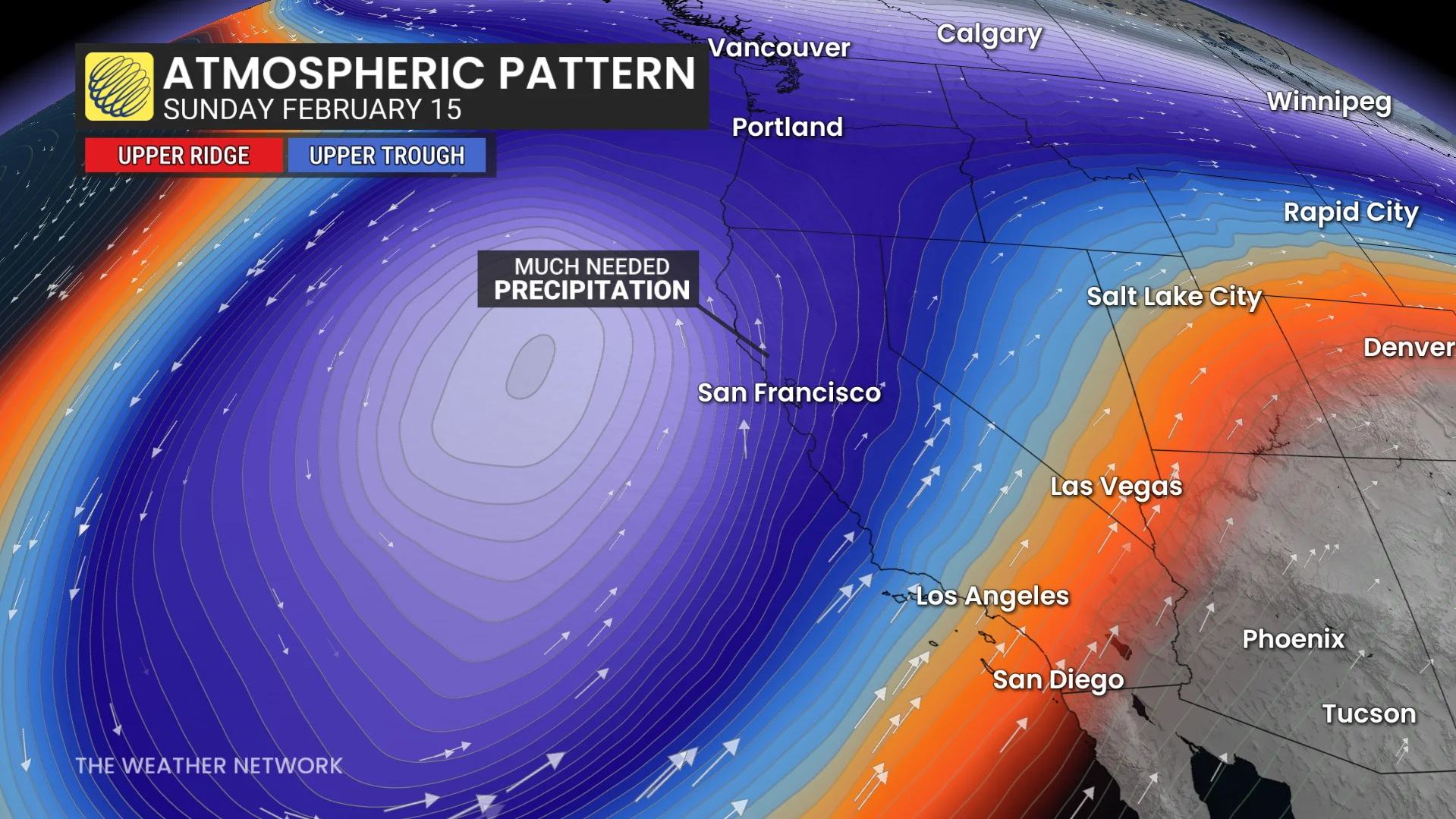
This will resuscitate the Pacific storm track and bring much-needed precipitation for California and the Sierra Nevada.