
B.C.’s bizarre winter and stubborn snow drought explained

An unusually warm and snow-scarce winter has hit British Columbia. Discover how a persistent atmospheric river pattern and a stubborn high-pressure ridge are leading to record-low snowfall in places like Vancouver.
As cherry blossoms begin to bloom at a record early pace, the rest of Canada is facing a formidable polar vortex.
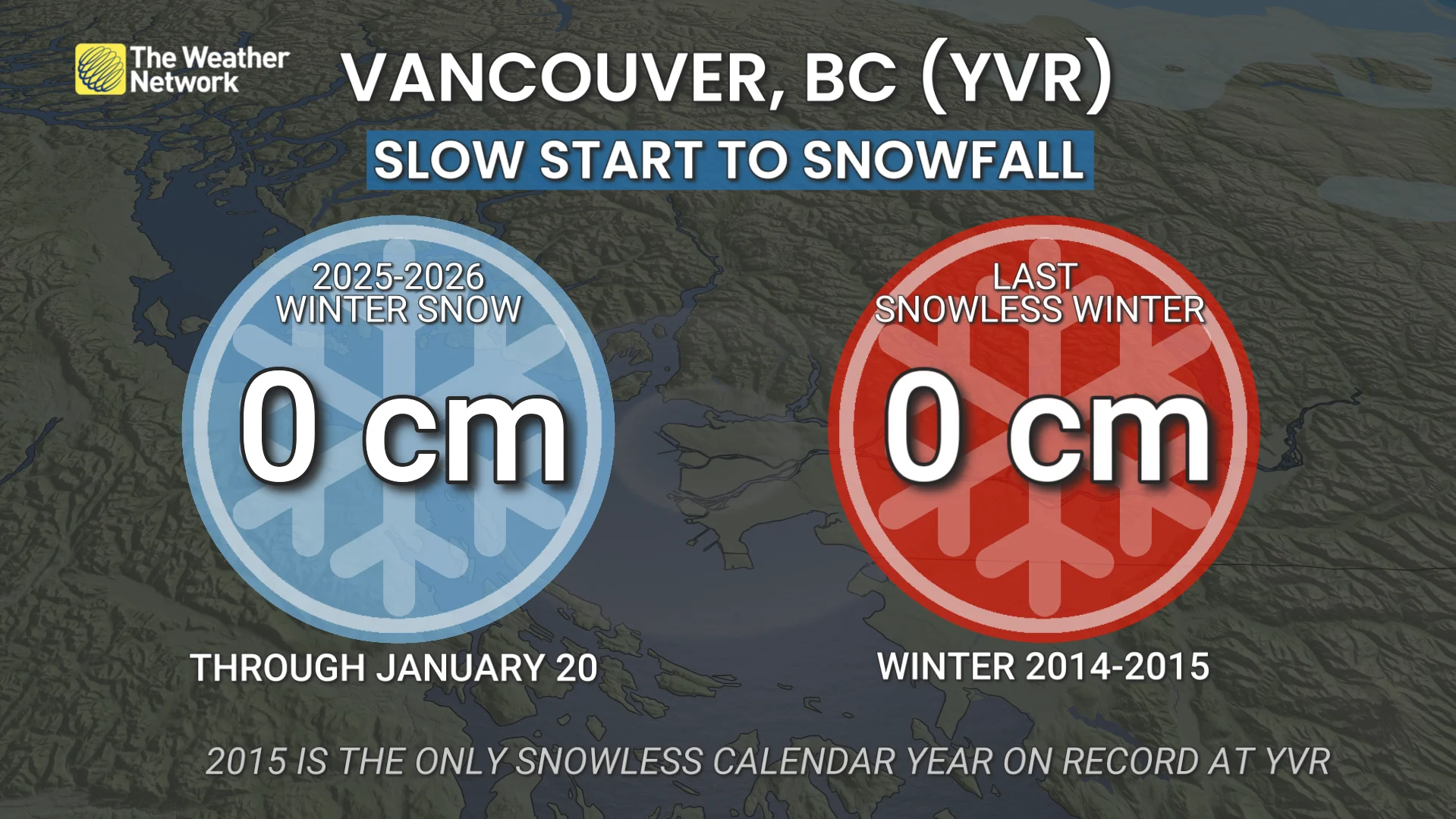
Winter has simply not shown up on the South Coast this year, with no snowfall this winter for Vancouver, Victoria, Comox, and even Abbotsford; Snowfall totals through Jan. 20 are sitting at 0 cm.
That puts the region on the same trajectory as the extraordinary snowless winter of 2014-15, except this time, the Pacific isn’t dealing with an El Niño.
Instead, we’re under a weak La Niña, a setup that more often than not tilts B.C. colder and snowier.
And yet...the snow hasn’t come.
Why?
THE FREEZING LINE WAS A TOTAL GRINCH
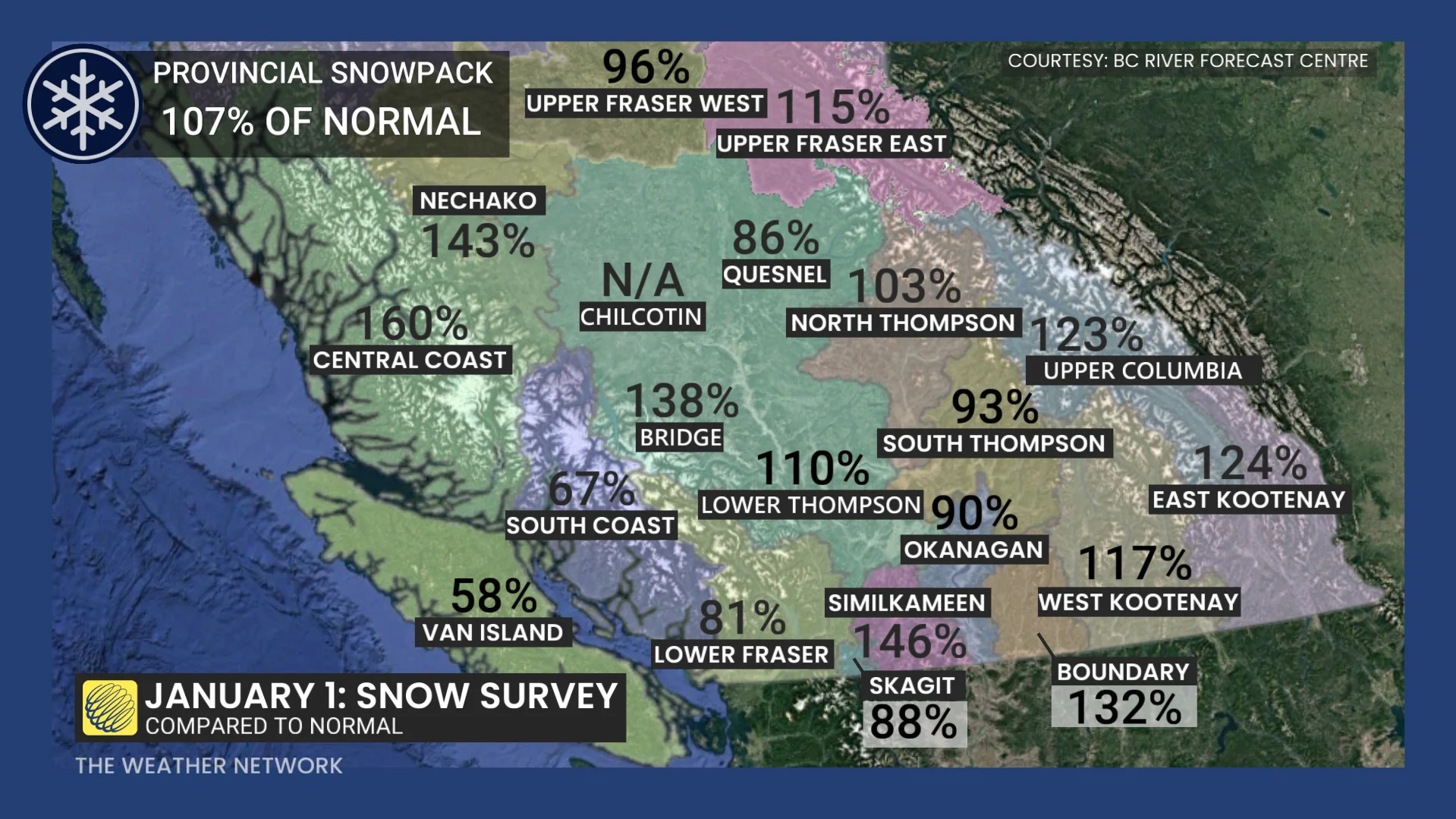
The BC River Forecast Centre’s Jan. 1 snow survey tells the story clearly:
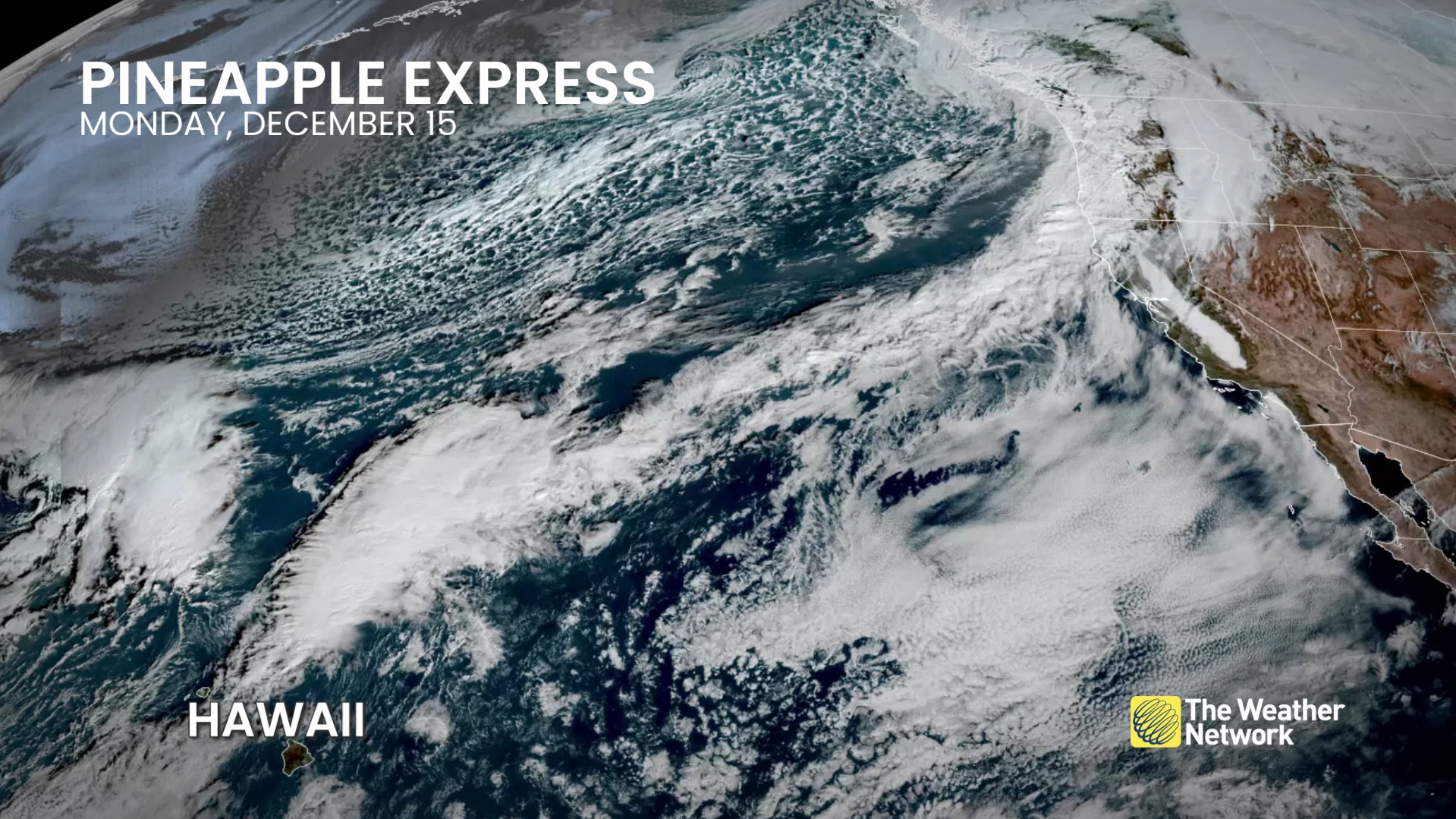
Freezing levels were sky-high through parts of December and January for the South Coast, repeatedly pushed above mountaintop elevation by a relentless sequence of atmospheric rivers and powerful ridging.
Vancouver Island Range: Snowpack at just 58 per cent of normal, among the lowest in the province.
South Coast mountains: Only 67 per cent of normal snowpack by Jan. 1.
Frequent warm atmospheric rivers either delivered rain to mid-mountain elevations or stripped away early accumulations.
A TALE OF TWO PROVINCES
What’s striking is how localized the snow drought is when you look at the province as a whole.
While the coast missed out, the Interior mountains were cold enough at elevation to capture those same storms as snow!
Upper Columbia: 123 per cent
East Kootenay: 124 per cent
Boundary: 132 per cent
Central Coast: 160 per cent
Nechako: 143 per cent
Storms relentlessly hit B.C., but the elevation of cold air determined who got winter snowfall, with coastal ski resorts unfortunately taking the brunt of the warmer air masses.
At the valley bottom, places like Kelowna have seen a serious lack of low-elevation snow, remaining virtually snow-free through the bulk of winter.
HOW'S WHISTLER?
2025–2026 snowfall so far: 482 cm
Seasonal average: 1100 cm
On pace for the worst season since 2014–2015 (671 cm)
Could also rival 2000–2001 (734 cm) and 2008–2009 (889 cm), the only recent below-seasonal years to occur during La Niña-influenced patterns, which makes this pattern particularly rare
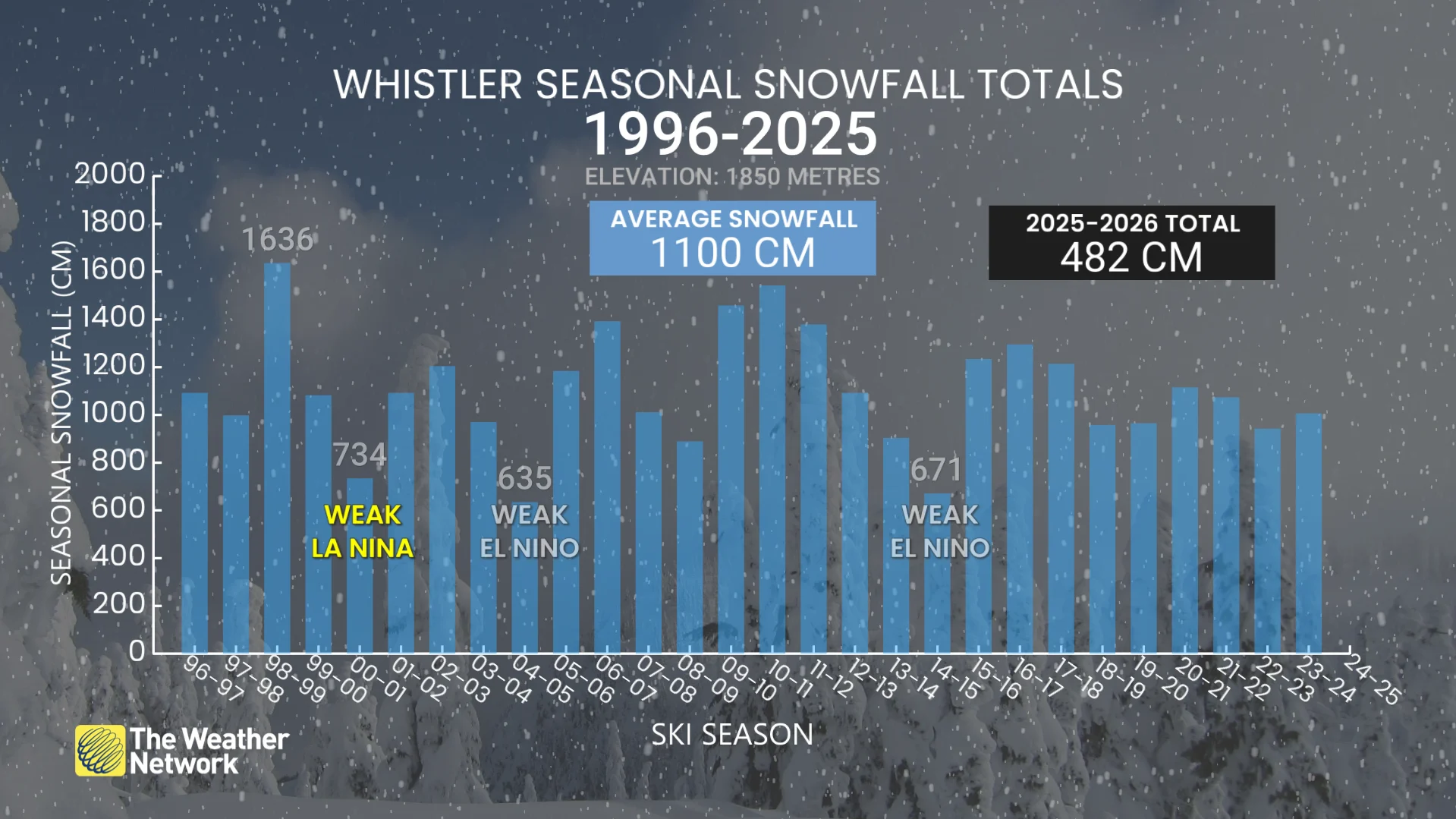
Weak La Niña winters typically boost snowfall in coastal ranges, not squash it.
This year is bucking the ENSO trend.
A WINTER THAT FEELS LIKE SPRING
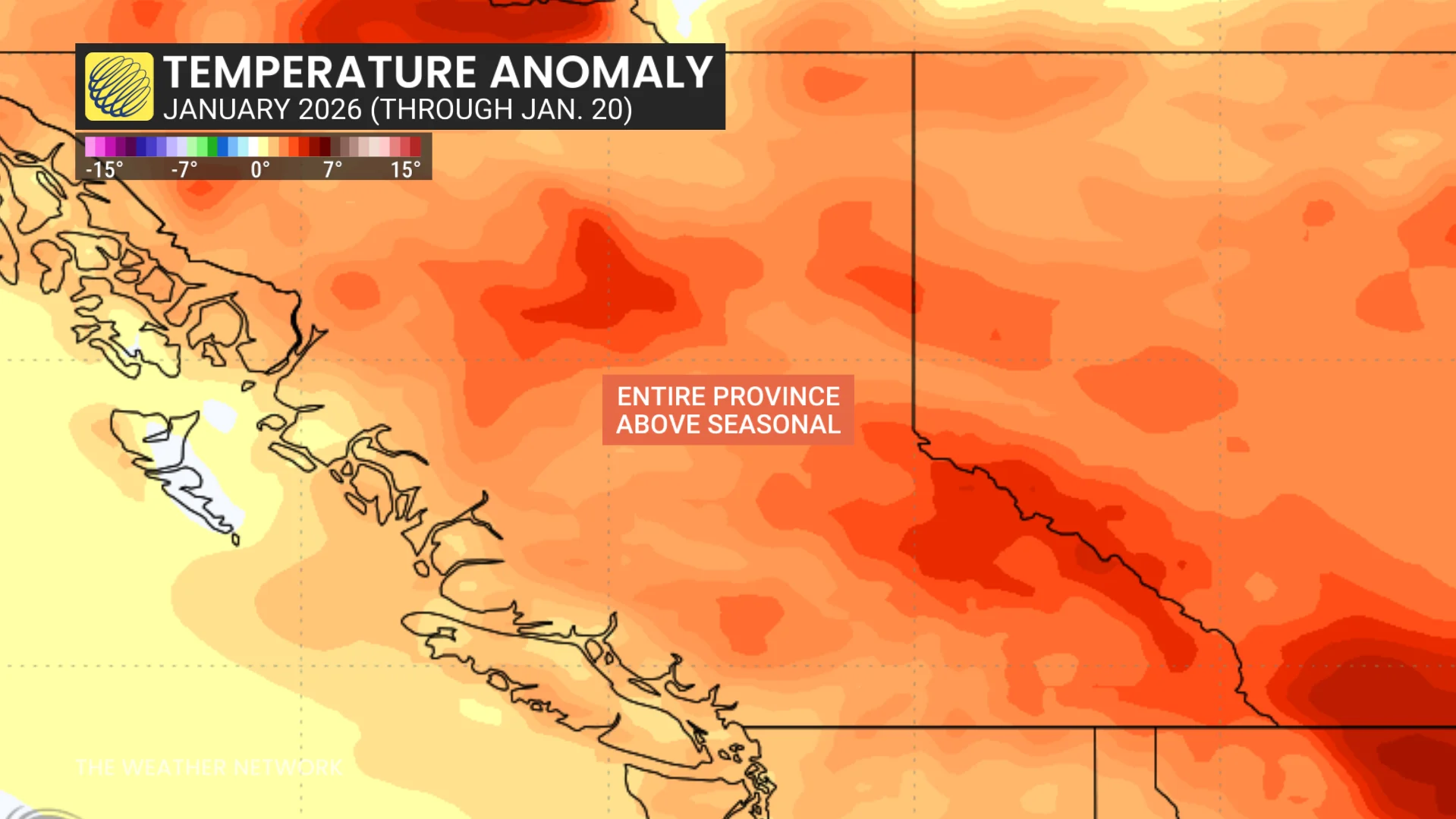
South Coast temperatures have consistently run above seasonal this season, and it’s showing up in some unmistakable ways:
Cherry blossoms are blooming in Victoria and Vancouver, weeks early, in some cases more than a month ahead of schedule.
Typically, blossoms begin peeking out in February.
Meanwhile, the rest of Canada is battling a dislodged polar vortex, diving temperatures, and extreme cold.
THE BIG PICTURE
The Jan. 1 snow survey pegs provincial snowpack at 107 per cent of normal, but that number hides a critical split:
Interior: Near or above normal thanks to cold air preserved in the Interior locations when the big storms showed up.
Coast and Vancouver Island: Dramatically below normal due to warm storms and persistent ridging.
This is a winter shaped not by lack of storms, but by the placement of the freezing line.
The recent ridge of high pressure that’s established itself across the South Coast isn’t helping matters, essentially choking off the storm track to the very mountains that need it the most.
There’s still lots of time to accumulate some much-needed snow as we shift gears into February, so we’ll be on the lookout for a pattern change.