Yukon U-turn underway after one of longest cold snaps on record

Dangerously cold temperatures in the Yukon are finally loosening their grip after breaking records throughout the region
Temperatures in the Yukon Territory are no picnic during the winter months. Home to some of the world’s most frigid air, the atmosphere has to put in some effort to break records here.
But that’s exactly what’s happened over the past couple of weeks amid one of the region’s longest and most extreme cold snaps on record.
DON’T MISS: Canada just recorded its coldest December temperature in 50 years
Winter cold wave breaks records in the frosty Yukon
December’s mean temperature in Whitehorse came in at -26.1°C, marking the city’s third-coldest December on record.
Mean temperatures for the month registered at a bone-chilling -34.9°C in Dawson City, while Faro ended the month with a mean reading of -32.3°C, where this was the second-coldest December in the books.
This past month saw generational cold spill across the region. The community of Braeburn saw a low temperature of -55.7°C on Dec. 22, marking Canada’s coldest December temperature in more than 50 years, and the country’s lowest reading since January 1999.
Dawson City and Mayo each saw nineteen consecutive days with low temperatures at or below -40°C. The mercury in Dawson City fell below -23°C on Dec. 5 and didn’t rise above that mark until Jan. 1, when the day’s high reached a relatively balmy -22.7°C.
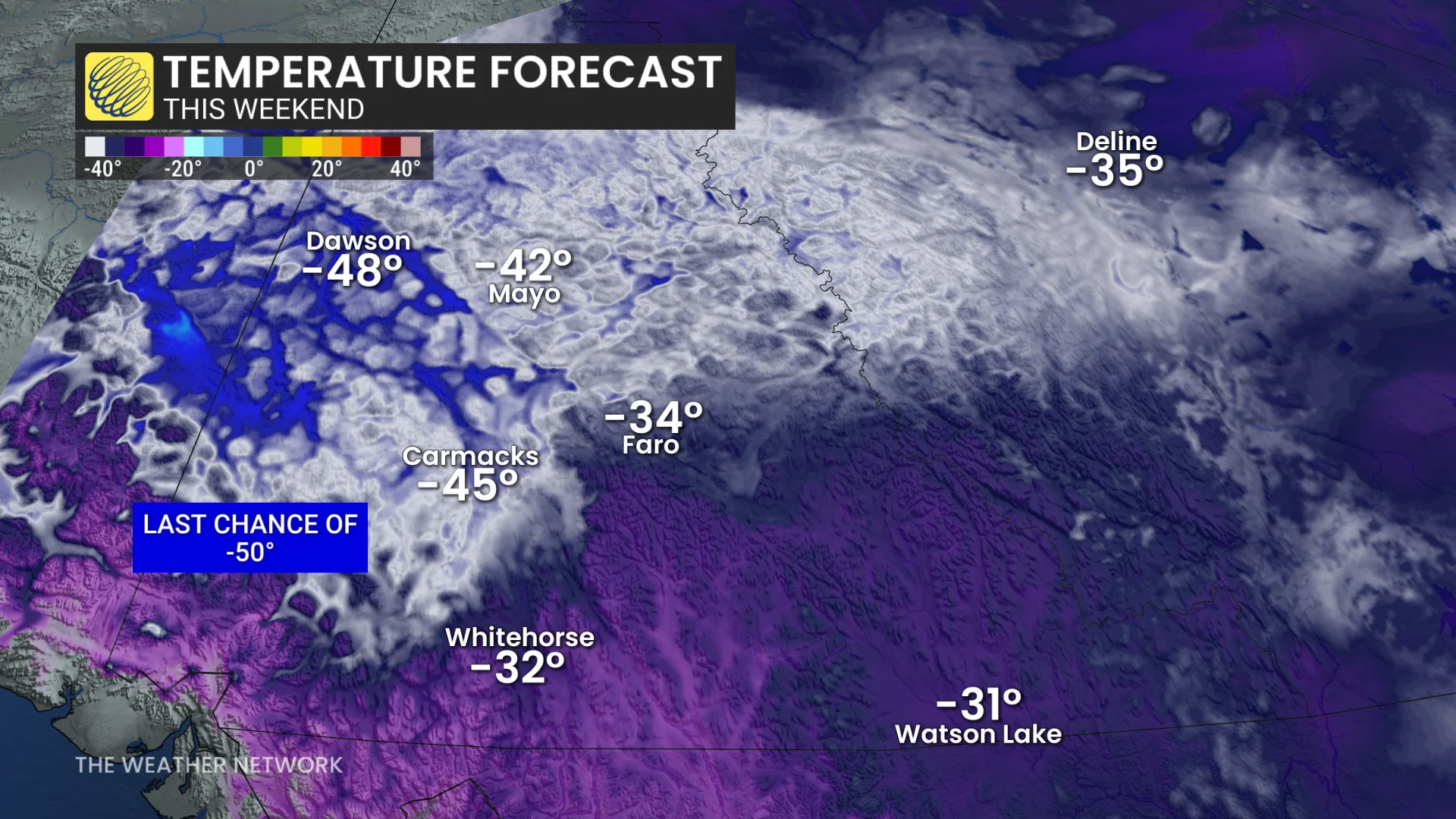
This weekend could be the territory's last opportunity to reach -50°C for a while.
Weekslong cold snap finally on its way out
A significant change will take place heading into the second week of January, with the region’s coldest air shifting west and settling over Alaska instead.
This pattern shift will see a series of major Pacific storms targeting the West Coast. Strong winds associated with these systems will finally flush out the stubborn frigid air that’s spent weeks settled in the valleys of the northern Rockies.
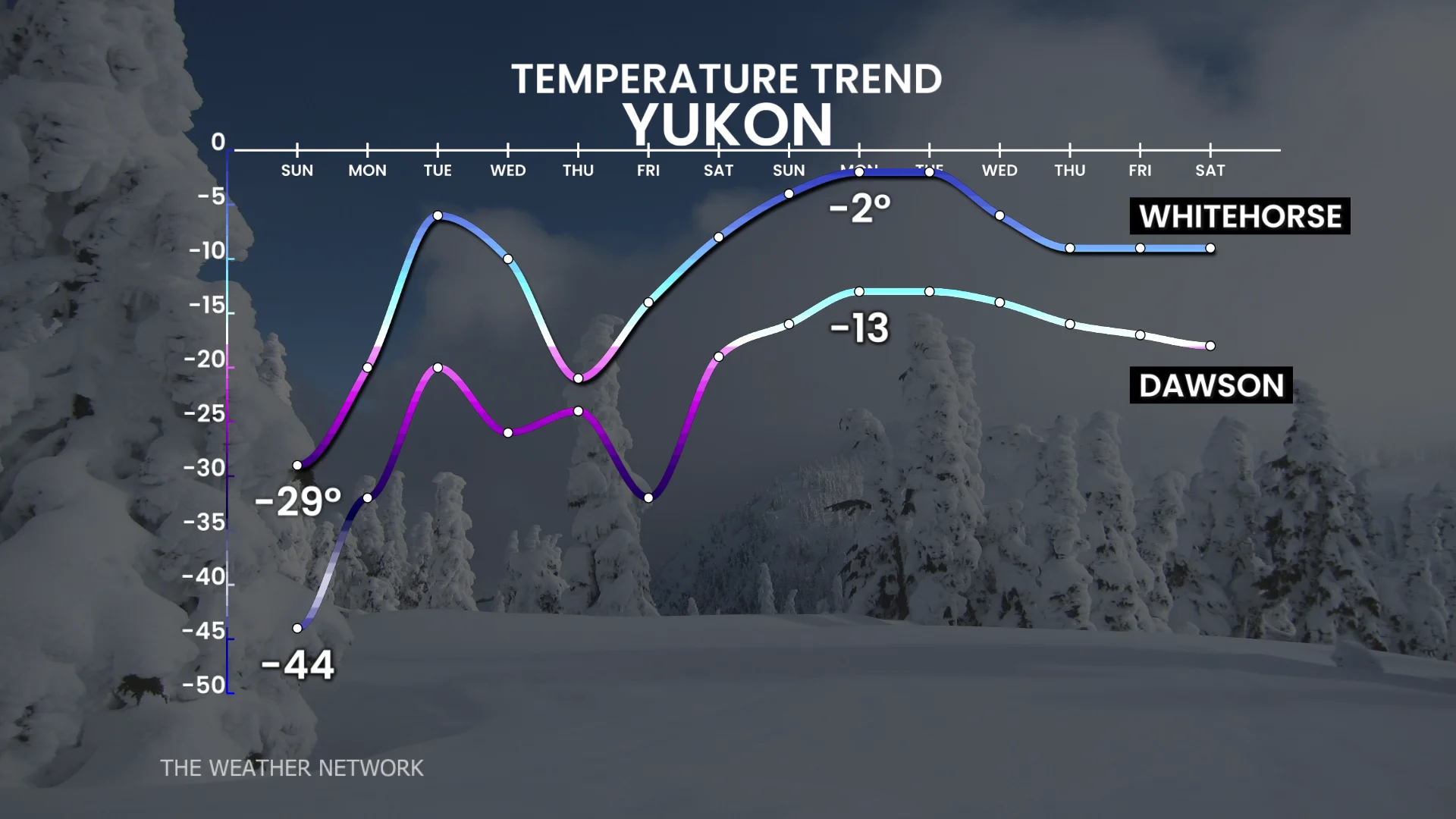
Whitehorse and Dawson City are on track to see daytime high temperatures climb as much as 30 degrees or more over the next seven days. Dawson City’s high of -44°C on Sunday is forecast to rise to -13°C by Monday, Jan. 12.
Header image created using graphics and imagery from Canva.