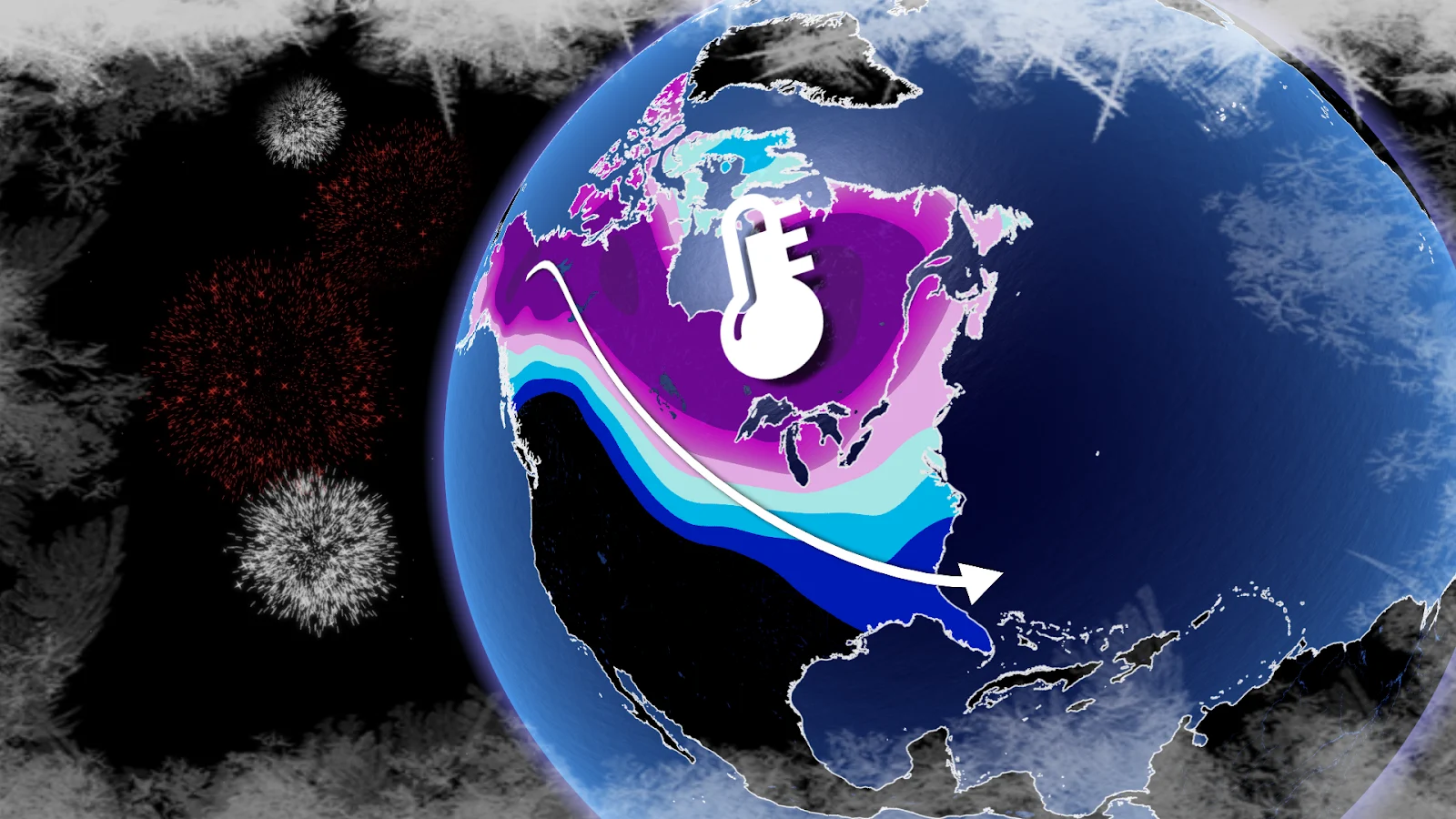
Coldest New Year's Day in over a decade expected in parts of Canada

A blip of Arctic air has set the tone for 2026, bringing some of the coldest New Year's Day temperatures in years to Central and Eastern Canada, with the chill spreading far beyond the border.
Canada could ring in 2026 with one of the coldest New Year's Day temperatures in more than a decade, particularly in Ontario and Quebec, as widespread Arctic air passes over much of the country.
While Western Canada avoids a deep freeze, much of Central and Eastern Canada will begin the year cold, with daytime highs far below seasonal averages. For some cities, Jan. 1 could be among the coldest days on record.
New Year's Day is anticipated to be dry but milder across most of B.C. and southern Alberta, with daytime highs in the single digits. Farther east, however, the story shifts as cold air flows south from the Arctic, through the Prairies and into Central Canada.
CHECK OUT: What is a flash freeze? Winter's spontaneous danger explained
Ontario and Quebec brace for rare New Year's chill
Daytime highs in Ontario and Quebec are projected to be 5 to 10 degrees below normal on Jan. 1, making this one of the coldest starts to the year in recent memory.
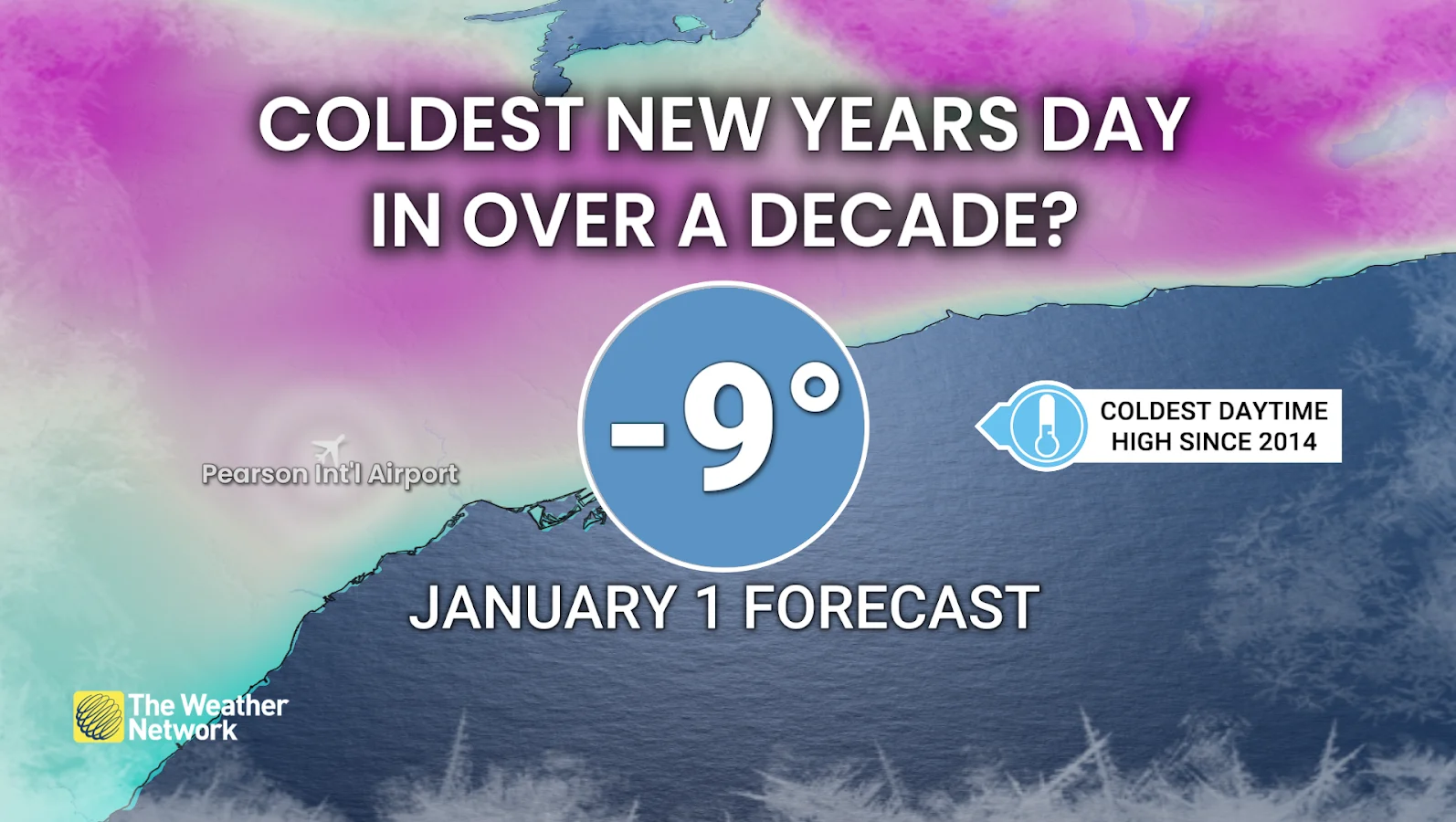
Toronto's Pearson International Airport is anticipated to reach a high of around -9°C, the city's coldest New Year's Day since 2014 and one of the five coldest on record. To break the all-time record, temperatures would have to drop below -10.6°C, which was set in 1968.
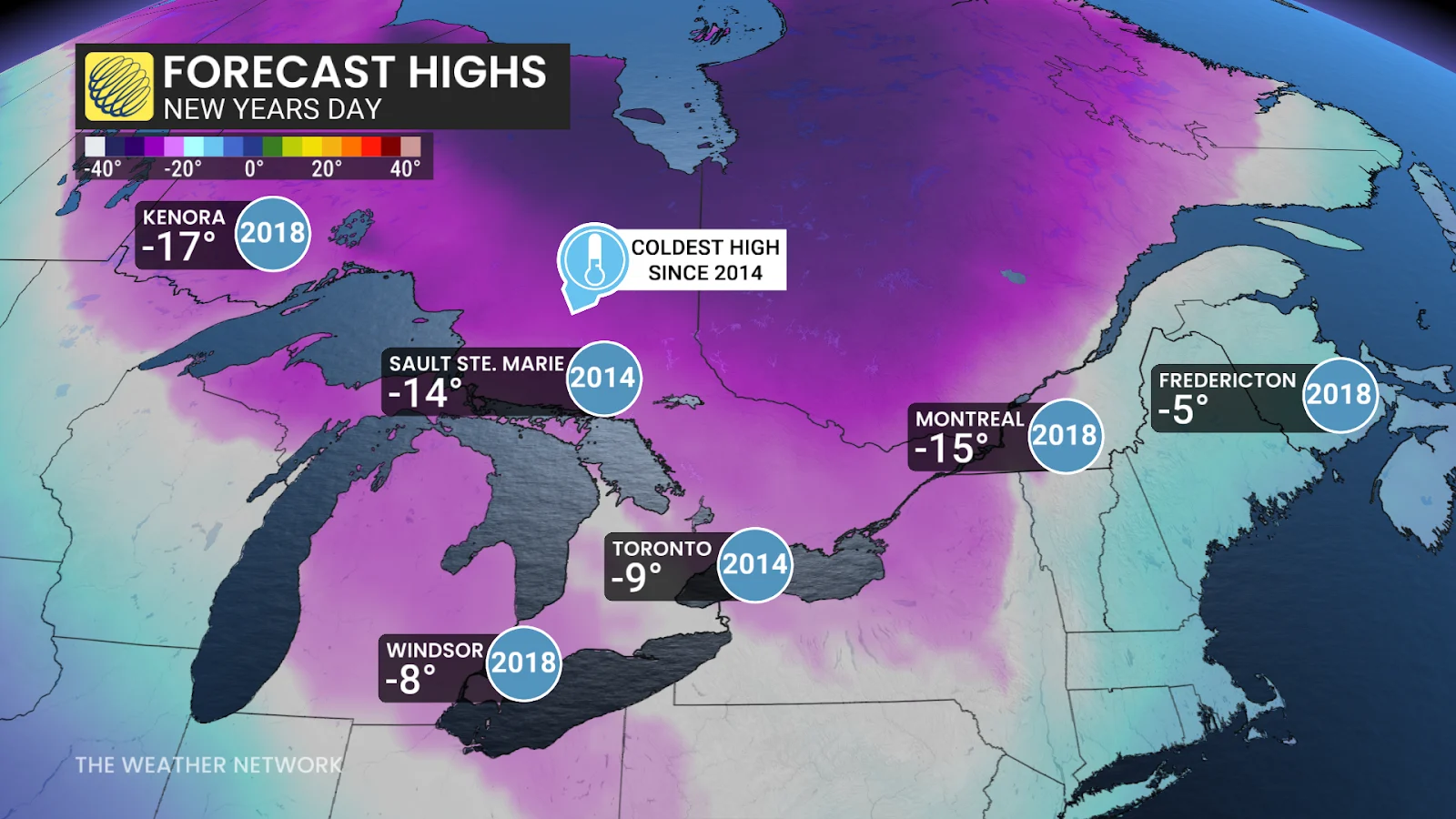
Ottawa and Montreal are expected to reach temperatures of around -15°C on New Year's Day, making it the coldest since 2018. Sault Ste. Marie will be projected to reach -14°C, its coldest temperature also since 2014.
The cold weather extends beyond Central Canada. Fredericton is expected to reach -5°C, Windsor near -8°C and Kenora near -17°C, with several locations possibly ranking in the top five for coldest New Year's Day temperatures.
The spread of the cold shows the strength of the Arctic air mass, which will likely run from Yukon eastward through Manitoba and into Atlantic Canada.
SEE ALSO: 2025 in Review: The best Space and Astronomy stories of the year
Cold air doesn't stop at the border
For those seeking to escape south for warmth, the weather forecast provides little comfort.
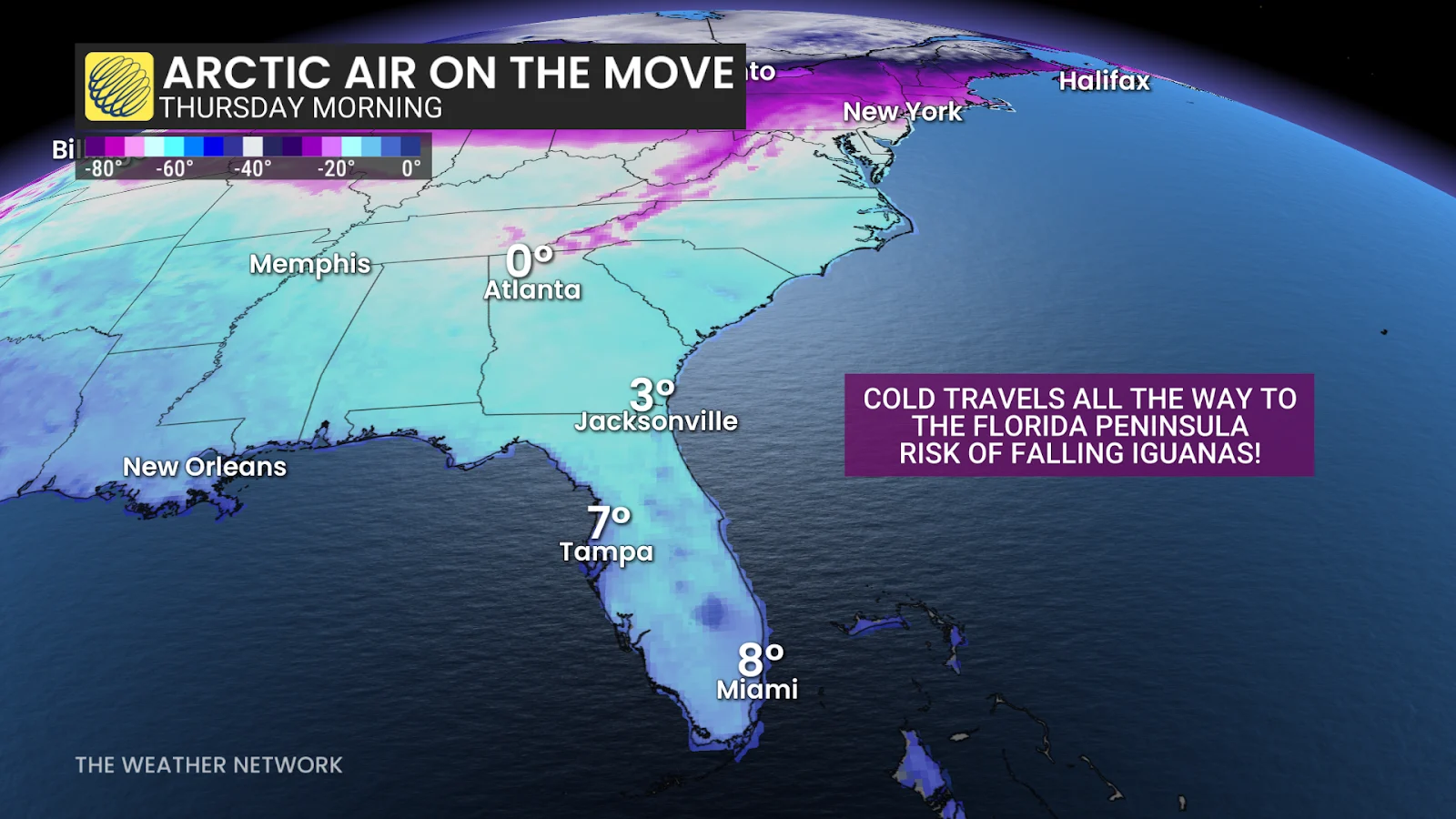
A strong Arctic cold front has swept across the southern U.S. and is expected to clear Florida's peninsula by New Year's Day. Morning temperatures across the state are expected to drop into the single digits Celsius, marking an unusually cold start for the region.
That chill also increases the risk of falling iguanas in Florida, as the reptiles become immobile when temperatures drop, a common but still startling side effect of Arctic outbreaks in the Sunshine State.
December has largely met winter expectations across Canada and early indications reveal the pattern will not change anytime soon.
Looking ahead to the first week of January, Arctic air will likely settle over Hudson Bay, periodically heading south through Eastern Canada. A multi-wave cold pattern may extend the chill well into the first days of 2026.
Meanwhile, Western Canada should continue to experience seasonal to slightly above-seasonal temperatures in B.C. and southern Alberta. Unrest is expected to return to the south coast late Friday and last through the weekend as a strong low moves through northern Vancouver Island.
Stay with The Weather Network for the latest updates on your forecast.