
Winter weather to make numerous appearances on B.C.'s South Coast

On Monday, bursts of snowfall were reported across Metro Vancouver, including in Coquitlam, but a greater threat of snowfall is brewing on Tuesday
A rare pattern that is bringing widespread snowfall across the Gulf of Alaska over the Pacific Ocean will also threaten lower-elevation snow along the British Columbia coast this week.
Typically, lower elevations don’t see wet snow with an onshore flow and active Pacific jet stream, but there’s enough cold air to make things interesting on Tuesday and late-Thursday.
RELATED: Five avalanche deaths in B.C. this season. Will we see more in March?
It’s now been over a year since Vancouver airport (YVR) recorded accumulating snowfall, dating back to Feb. 8, 2025.
On Monday, bursts of snowfall were reported across Metro Vancouver, including in Coquitlam, but a greater threat of snowfall is brewing on Tuesday.
An anomalously cold air mass over eastern Siberia and Alaska has begun to migrate across the Gulf of Alaska, and this cold air will continue to interact with Pacific moisture over the days ahead.
In fact, the Cascade and Olympic Mountains in Washington state are under a blizzard warning for the Wednesday system, with the U.S. National Weather Service (NWS) forecasting up to 120 cm through Friday.
Tuesday
This is where things get more interesting for the South Coast.
The same weak low continues to swirl northwest of Haida Gwaii, but temperatures aloft continue to gradually cool just a few hundred metres above sea level. Due to the convective nature of the forecast precipitation, it’s hard to predict precise locations for snowfall.
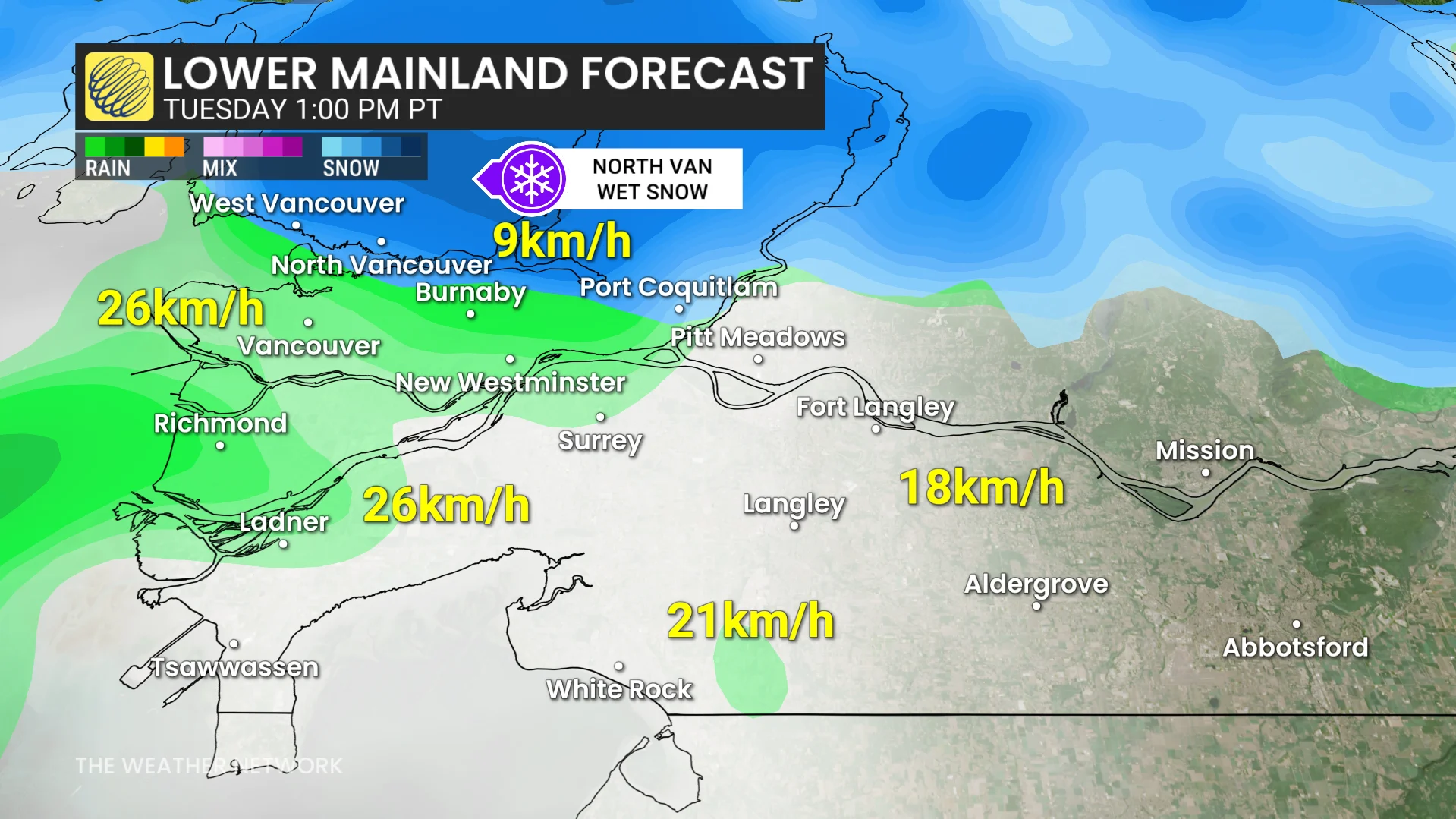
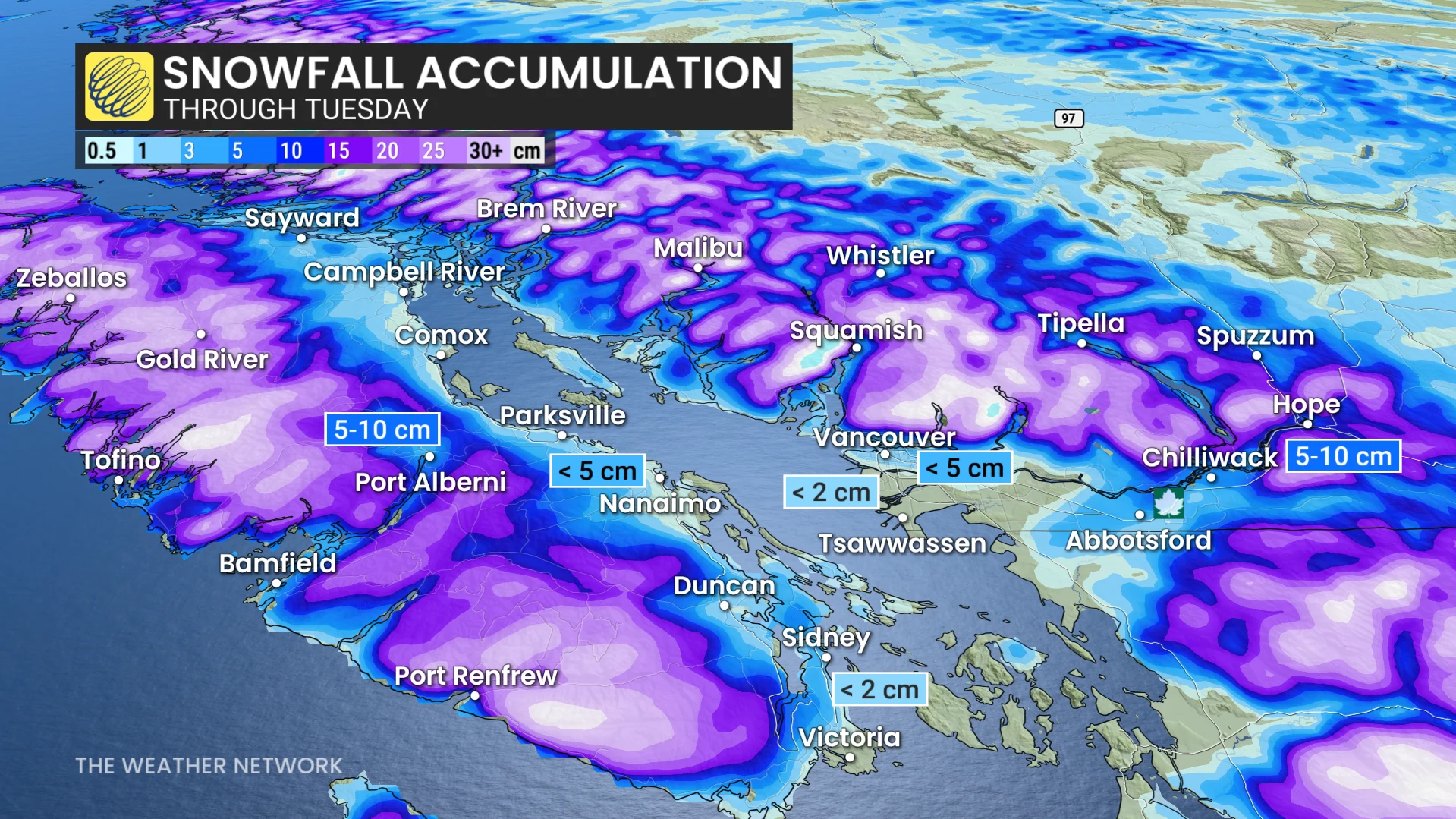
Higher elevations of Metro Vancouver can expect 5+cm of snowfall above 200 metres in elevation, including inland sections of Vancouver Island (Highway 4), and the Sunshine Coast. Regions in the Fraser Valley can also expect accumulating snowfall.
Greater Victoria is even subject to some wet snow through Tuesday, away from downtown and across higher terrain farther west.
Computer models also highlight Tofino as receiving snowfall as well, which is a rarity at any time of year, and particularly noteworthy in March.
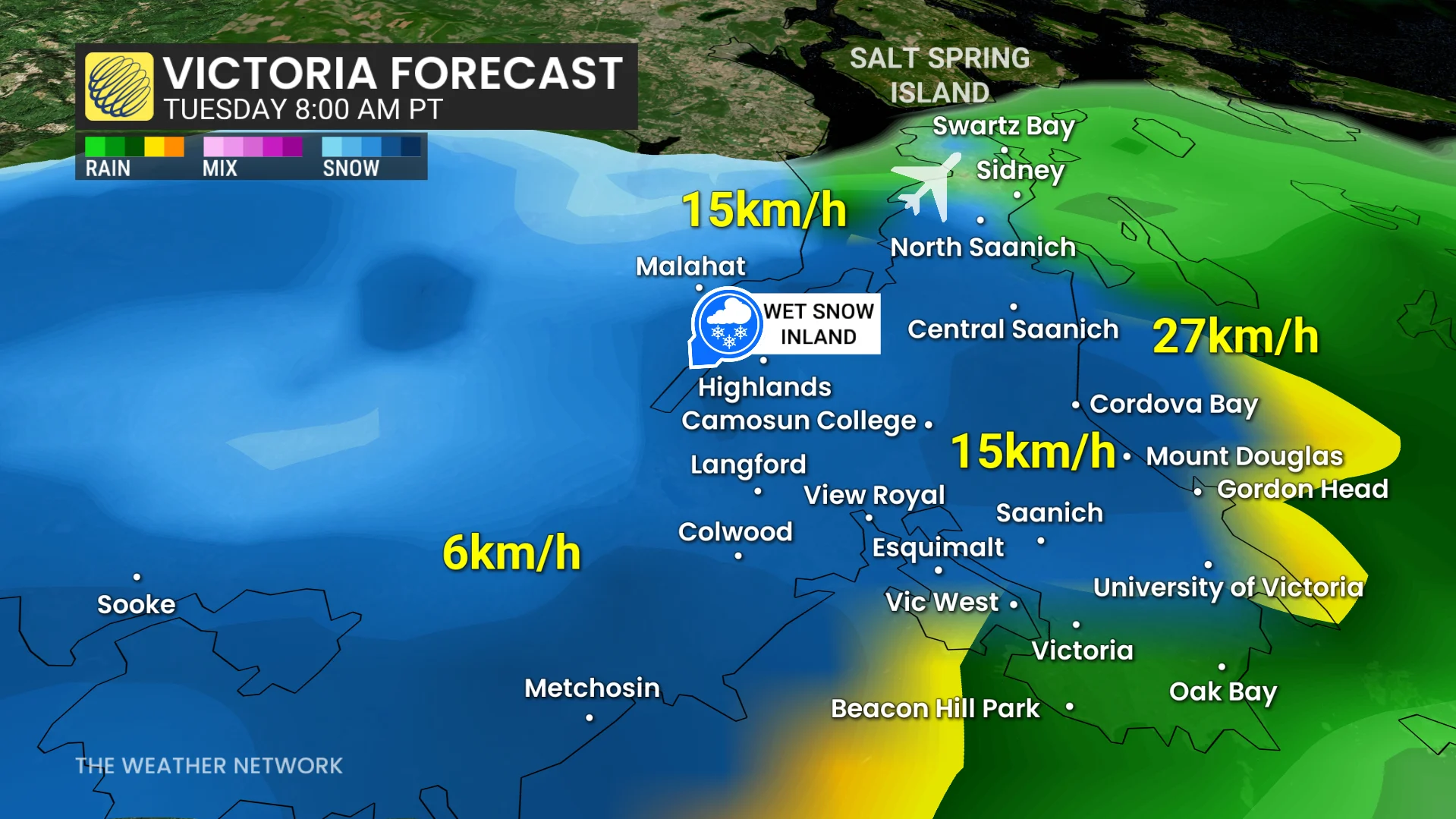
Snowfall amounts will be highly localized, with some locations receiving little-to-no snowfall, but heavier convective bursts of snow could lead to accumulations close to 10 cm.
As this is a marginal snow event, even 100-150 metres of elevation can be the difference between fluffy rain and accumulating snowfall.
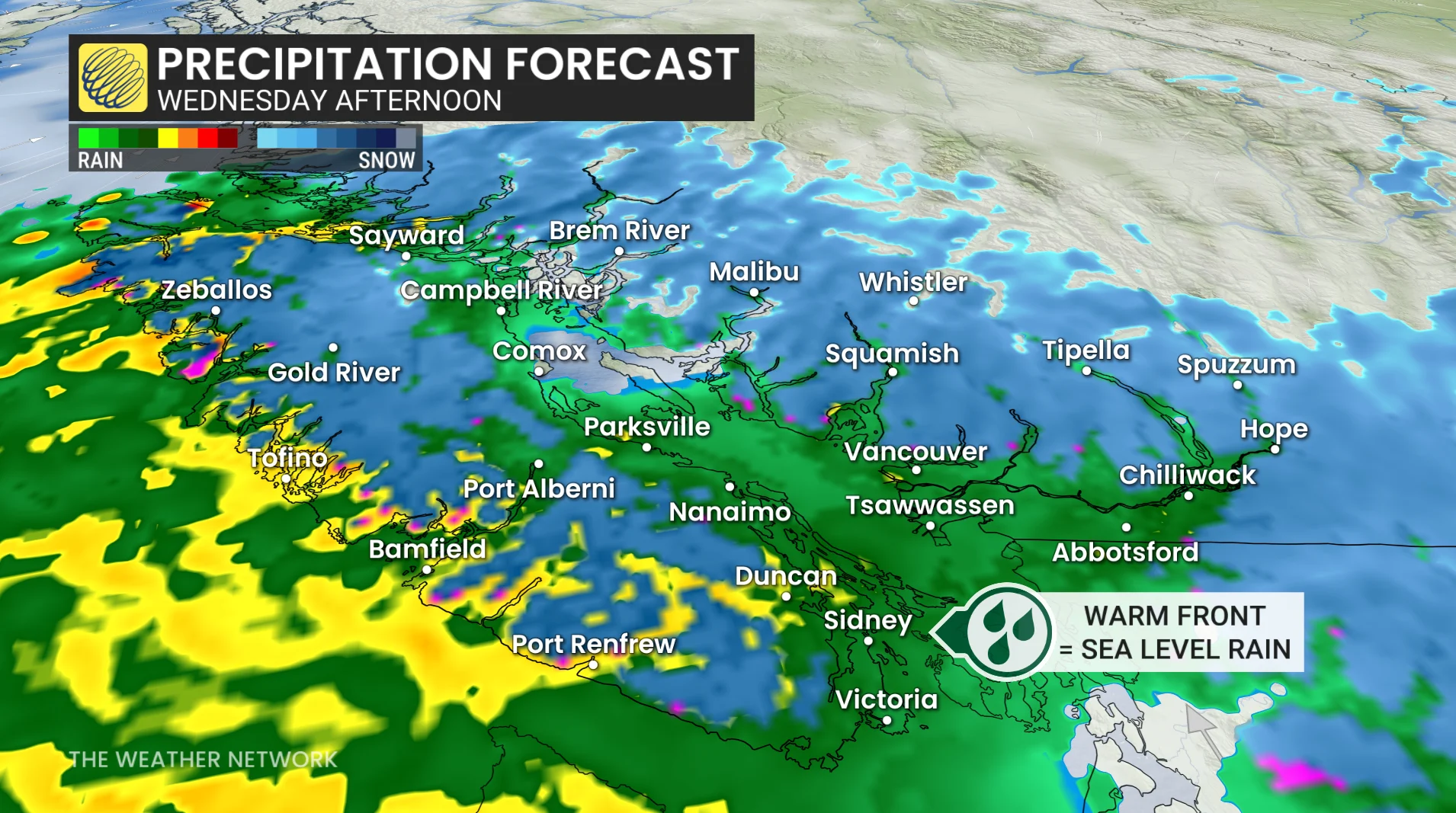
By Wednesday, temperatures warm aloft across the South Coast, nudging the freezing level back to around 600 metres above sea level.
Another chance?
Yes, cold air aloft, thanks to the Gulf of Alaska, is providing just enough chill to produce another marginal, wet snowfall event through Thursday night.
Cold air aloft sweeps in from the northwest, so northern Vancouver Island will likely see periods of wet snow at times.
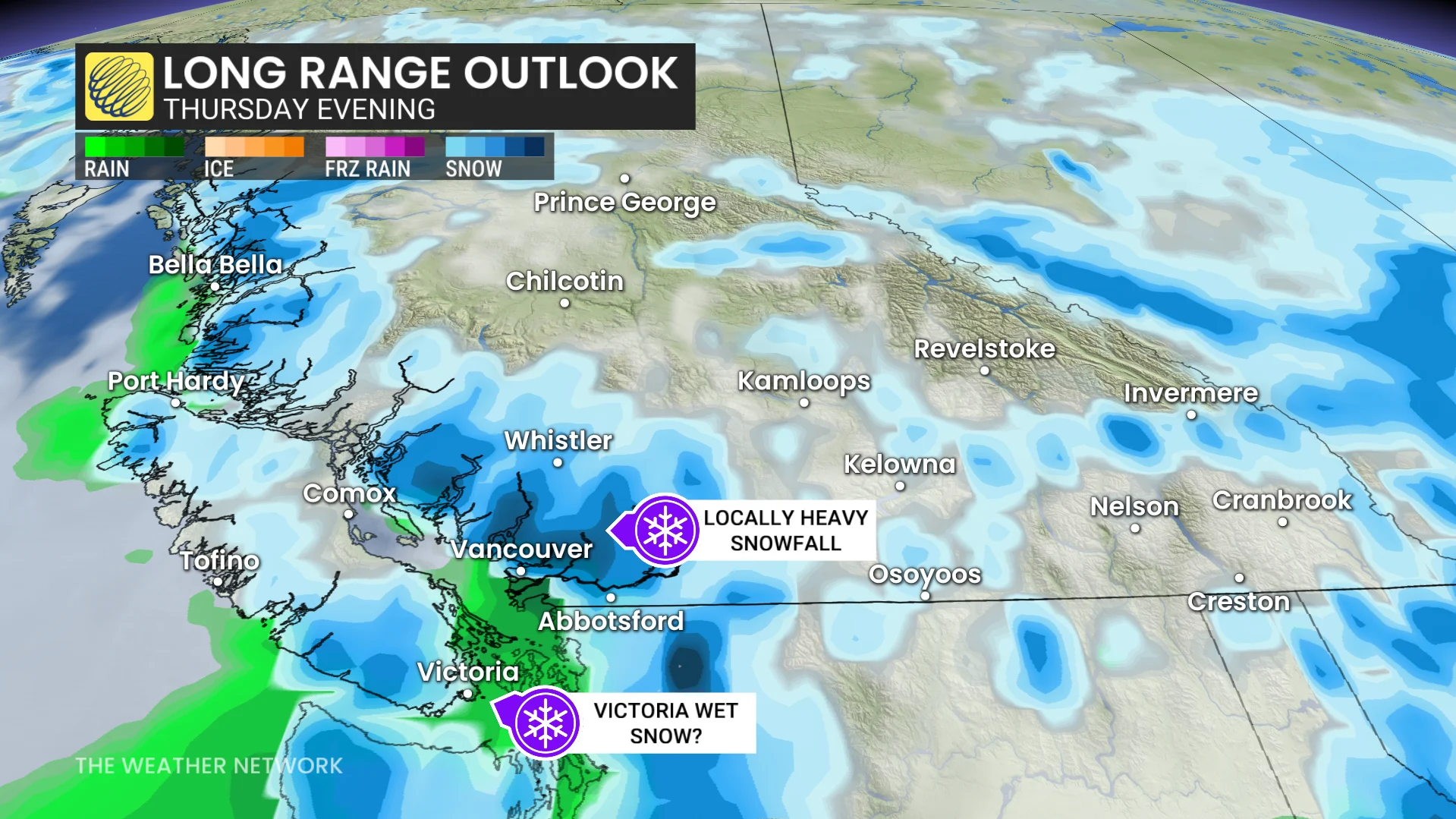
More chilly below seasonal air makes its way across the South Coast by Thursday night into Friday, meaning another brush of lower-elevation snow will be once again possible.
Mountain totals equal massive
Over the course of the week, forecasting snowfall across Vancouver Island and the Coast Mountains will be more than 100 cm in some cases.
Avalanche risk will fluctuate, but considerable to high will be the norm over the next week.
The North Shore ski resorts are looking at roughly 60-80 cm of snow this week.
Stay tuned to The Weather Network for the latest forecast updates for B.C.