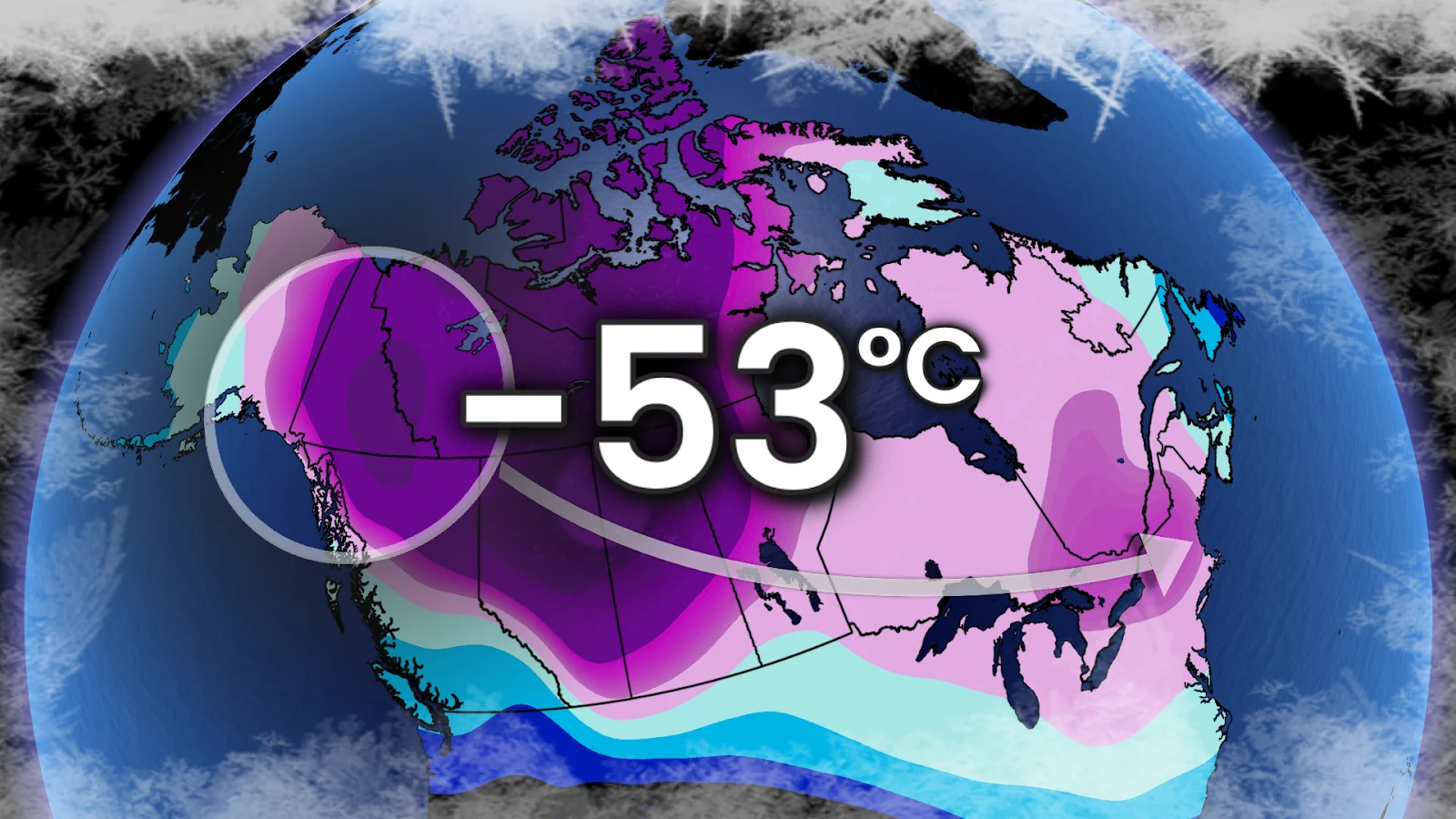
Extreme cold on the move after Canada notches -50C reading

Wednesday’s -53°C reading in the Yukon was the earliest in the year Canada has seen a temperature that cold in 30 years
Expect temperatures to plummet as a reserve of exceptionally cold Arctic air begins to move south in the days ahead.
Frigid air will make its first stop on the Prairies on Friday before moving toward Ontario and Quebec into the day Sunday. The cold air may play a crucial role in developing a strong winter storm for Atlantic Canada by Monday.
DON'T MISS: What is the polar vortex? How it’s responsible for dangerous cold
Unusually cold temperatures for this point in the season
Extreme cold crossed over from Siberia to the Yukon this week, sending temperatures into rare territory for this early in the year.

Braeburn, Yukon, recorded a -53°C reading on Wednesday, which is the coldest it’s been this early in the year since Ross River, Yukon, registered that same temperature on Dec. 5, 1995. Whitehorse also experienced their earliest -40°C temperature since 2006.
This slug of Arctic air is dislodged and on the move to round out the week, which will send temperatures plummeting throughout much of the country.
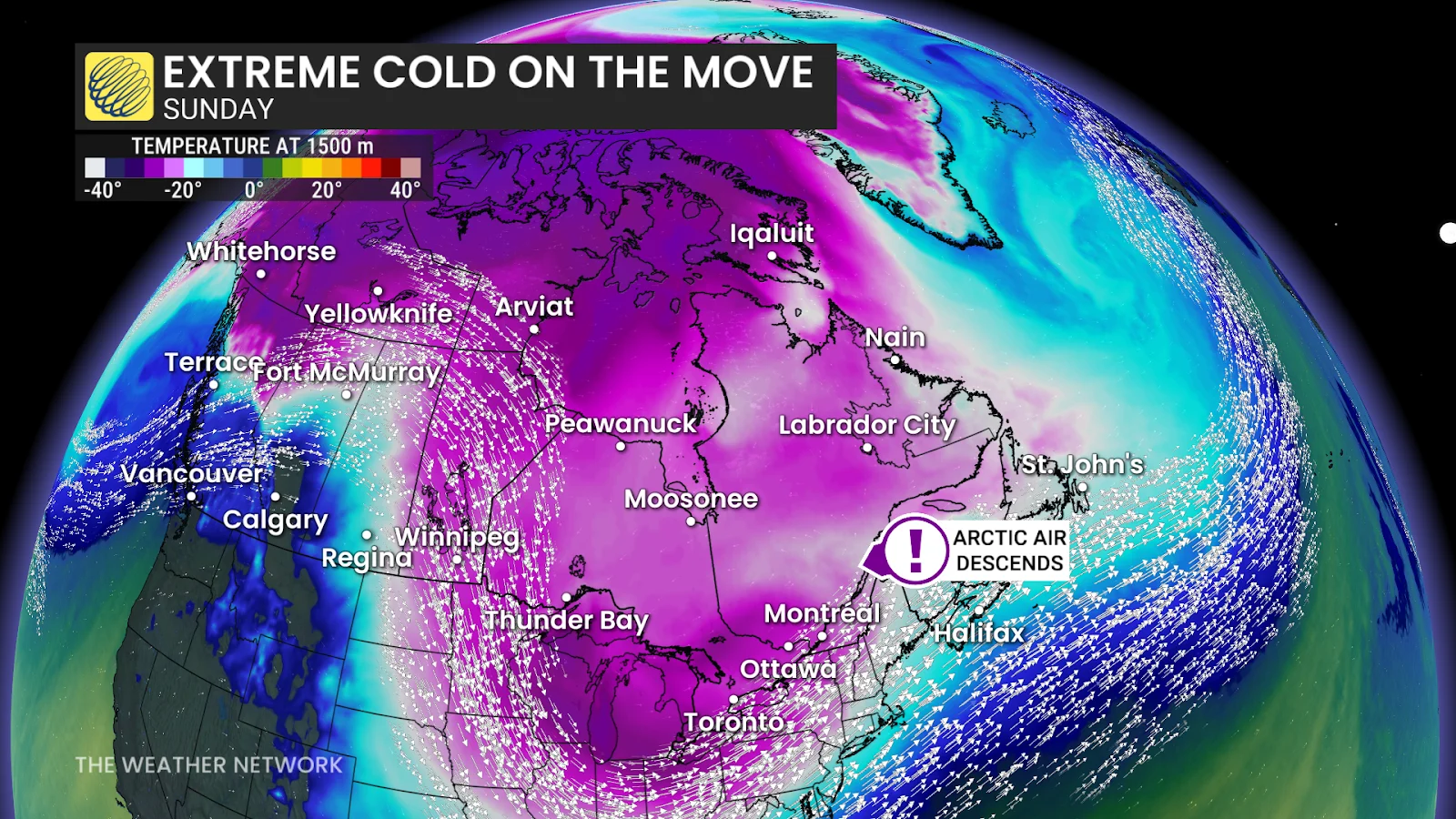
Even though readings won’t be quite as cold as we saw across the territories, conditions will still be very cold with temperatures well below seasonal for the middle of December.
Folks across the Prairies would be wise to stay inside on Friday if possible, as widespread wind chills in the -30s and -40s will be common across all three provinces.
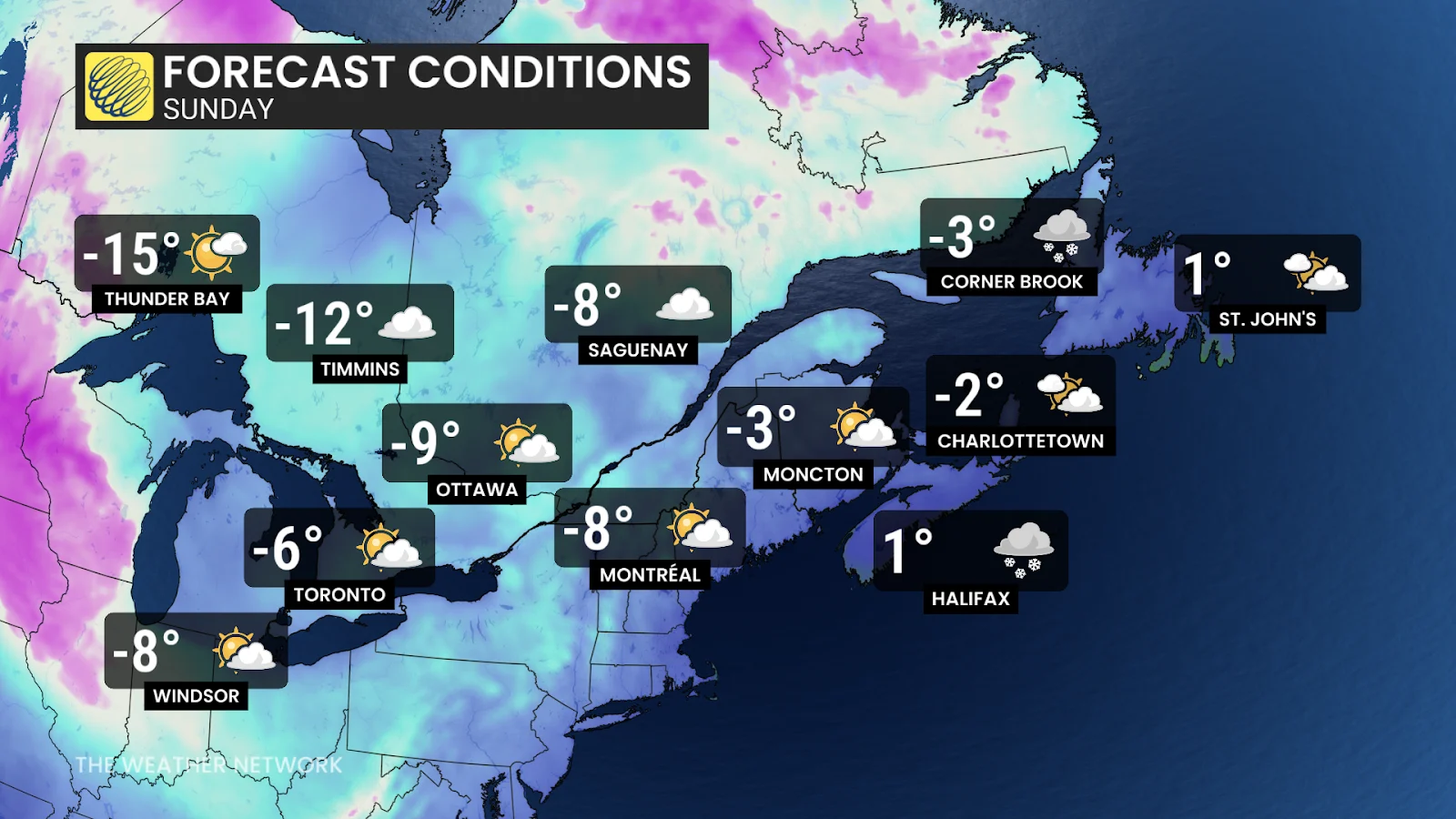
The frosty air will move into Ontario and Quebec by Sunday, with forecast daytime high temperatures of -6°C in Toronto, -8°C in Montreal, and -9°C in Ottawa.
While the heart of the cold air will fall apart as it interacts with the warmer waters of the Great Lakes, we’ll still see below-seasonal air head toward Atlantic Canada to start the next workweek. This could even help to kick off our next winter storm for portions of the region.