
El Niño possible later this year as La Niña fades

El Niño could start to build later this summer
La Niña is expected to fade away in the weeks ahead, ending a pattern that’s mildly influenced global weather conditions since last autumn.
The latest update from U.S. forecasters called for a return to neutral conditions by this spring, potentially followed by El Niño conditions building later this year.
DON’T MISS: Climate change forces experts to alter how we measure El Niño and La Niña
La Niña transitioning to neutral conditions
La Niña persisted into the month of February, according to the U.S. Climate Prediction Center (CPC), with cooler-than-normal sea surface temperatures in the eastern Pacific Ocean continuing to influence the atmosphere.
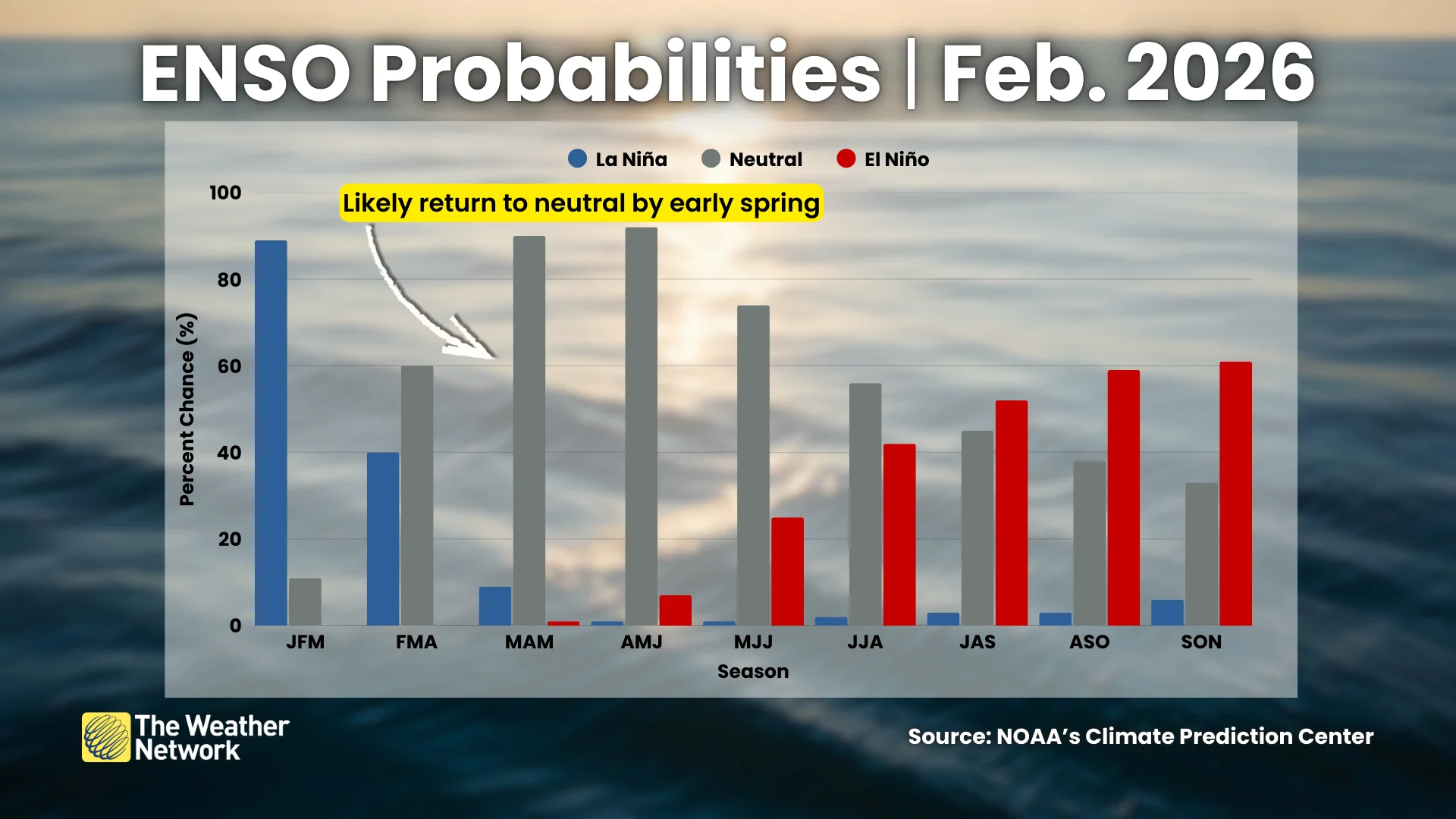
Experts anticipate that this La Niña event will fade away by the early spring, leading to ENSO-Neutral conditions in which neither La Niña nor El Niño is present.
Signs of possible El Niño development
Neutral conditions don’t influence global weather patterns either way, allowing other factors to more strongly dictate local and regional conditions.
The highly anticipated monthly CPC outlook indicates that neutral conditions will likely stick around into the summer months.
Forecasters also see early signs that El Niño conditions may develop just in time for the peak of hurricane season by the late summer or early autumn.
El Niño may impact hurricane season
El Niño affects Atlantic hurricane activity by increasing wind shear that blows over the basin, which can stifle any disturbances that attempt to develop into full-fledged tropical cyclones.
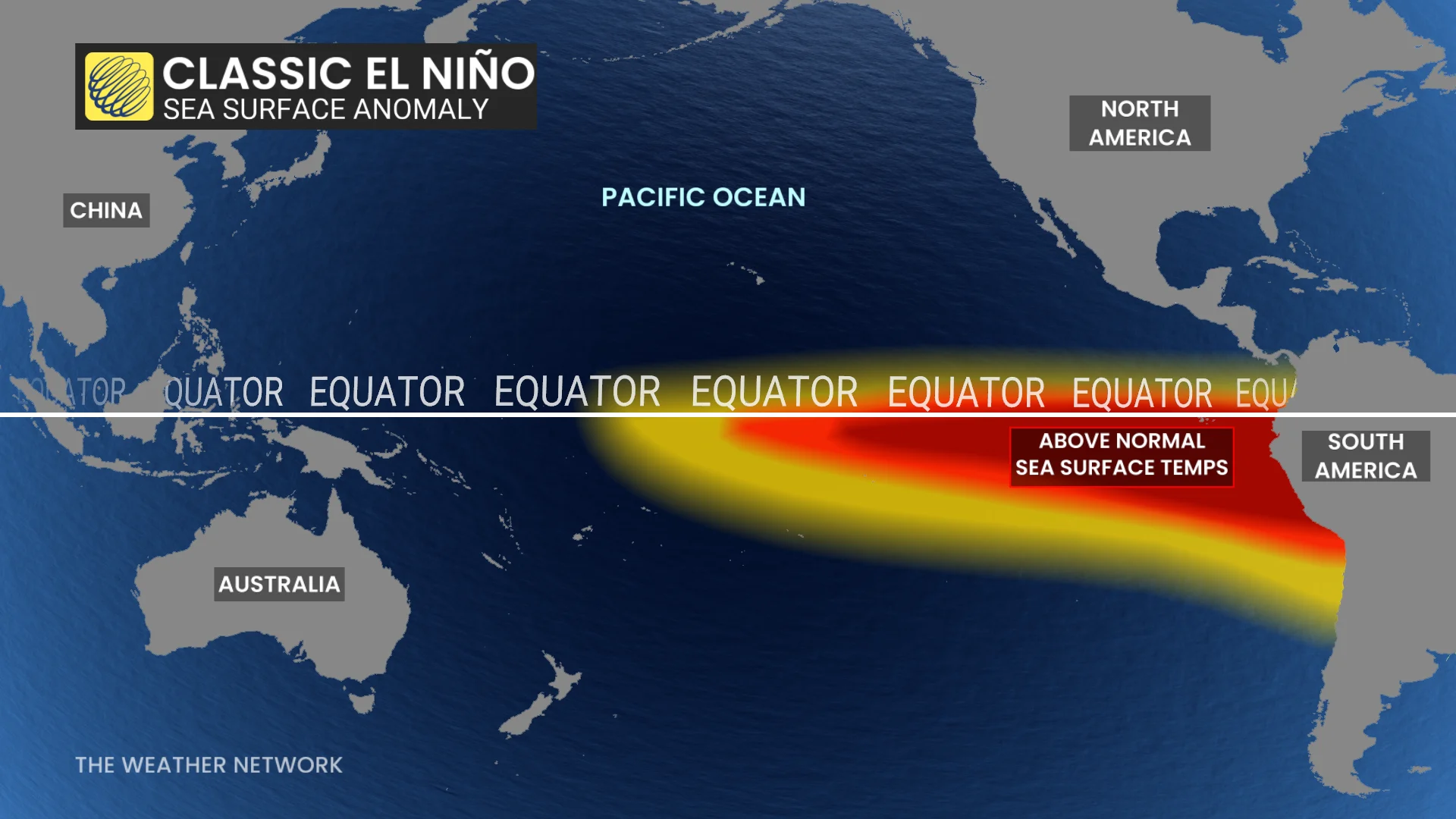
However, those effects aren't always a sure thing. The 2023 Atlantic hurricane season saw above-average activity in spite of El Niño in large part due to very warm sea surface temperatures throughout the Atlantic basin.
Atlantic hurricane season begins on June 1 and runs through the end of November.
This is the first monthly update since experts switched how they monitor water temperatures for El Niño and La Niña.
The switch was necessary to account for the effects of climate change; otherwise, the old system of measurement could make El Niños look more common, and La Niñas less common, than they really are.
Header image created using graphics and imagery from Canva.