
Locked in the freezer: Northern Canada saw its coldest March in 50 years

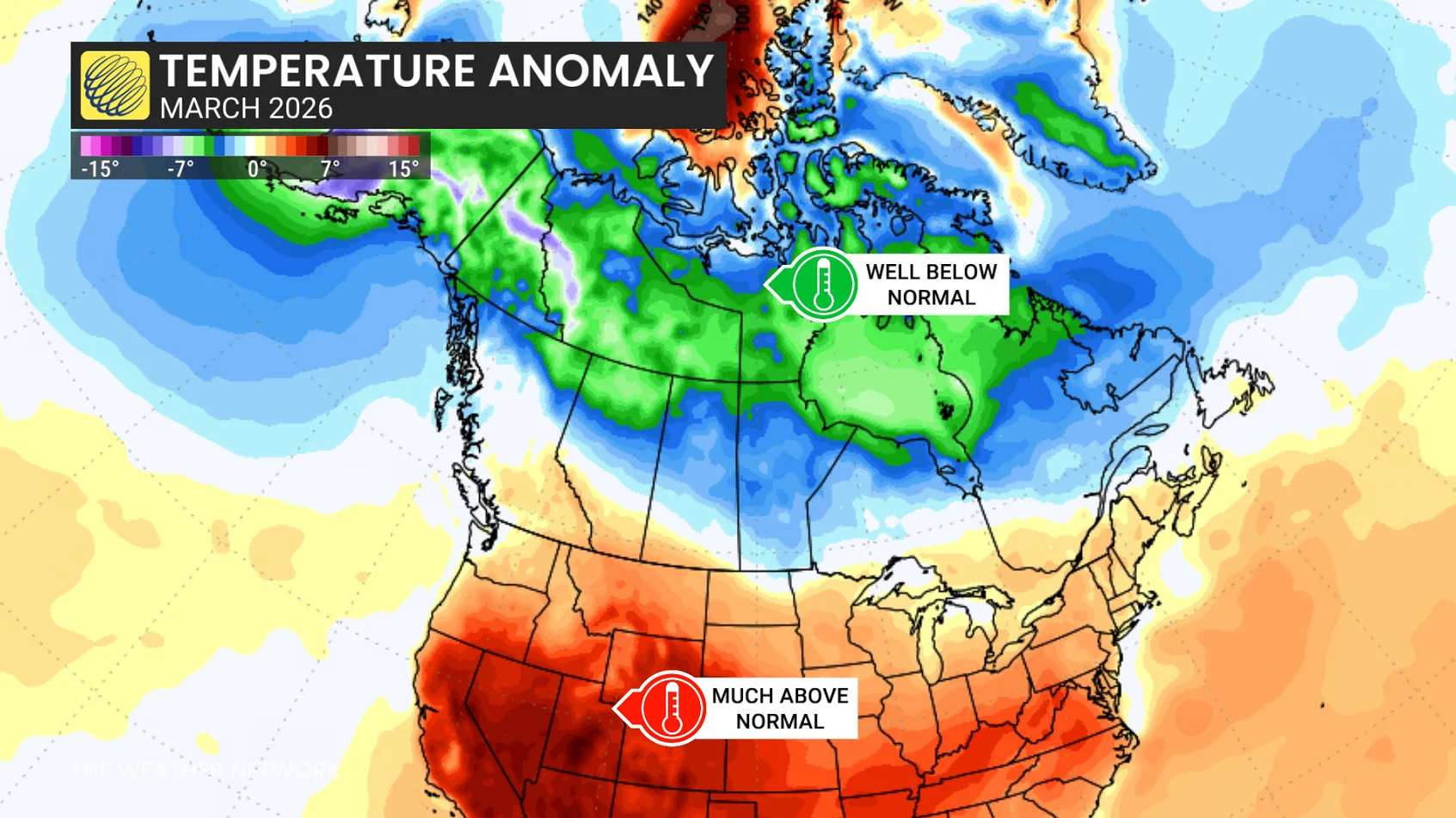
While extreme heat disproportionately impacted the globe this month, Northern Canada was a significant outlier with extremely cold temperatures recorded
As March winds down, we can look back at a remarkable temperature pattern that unfolded across North America.
Many locations across the Yukon, Northwest Territories, and western Nunavut reported temperatures 8–12°C below normal through March 27.
Northern Canada chill
The cause: The coldest air relative to normal across the Northern Hemisphere largely swirled over Alaska and Northern Canada, as a still-intense polar vortex remained locked over Nunavut and the Arctic.
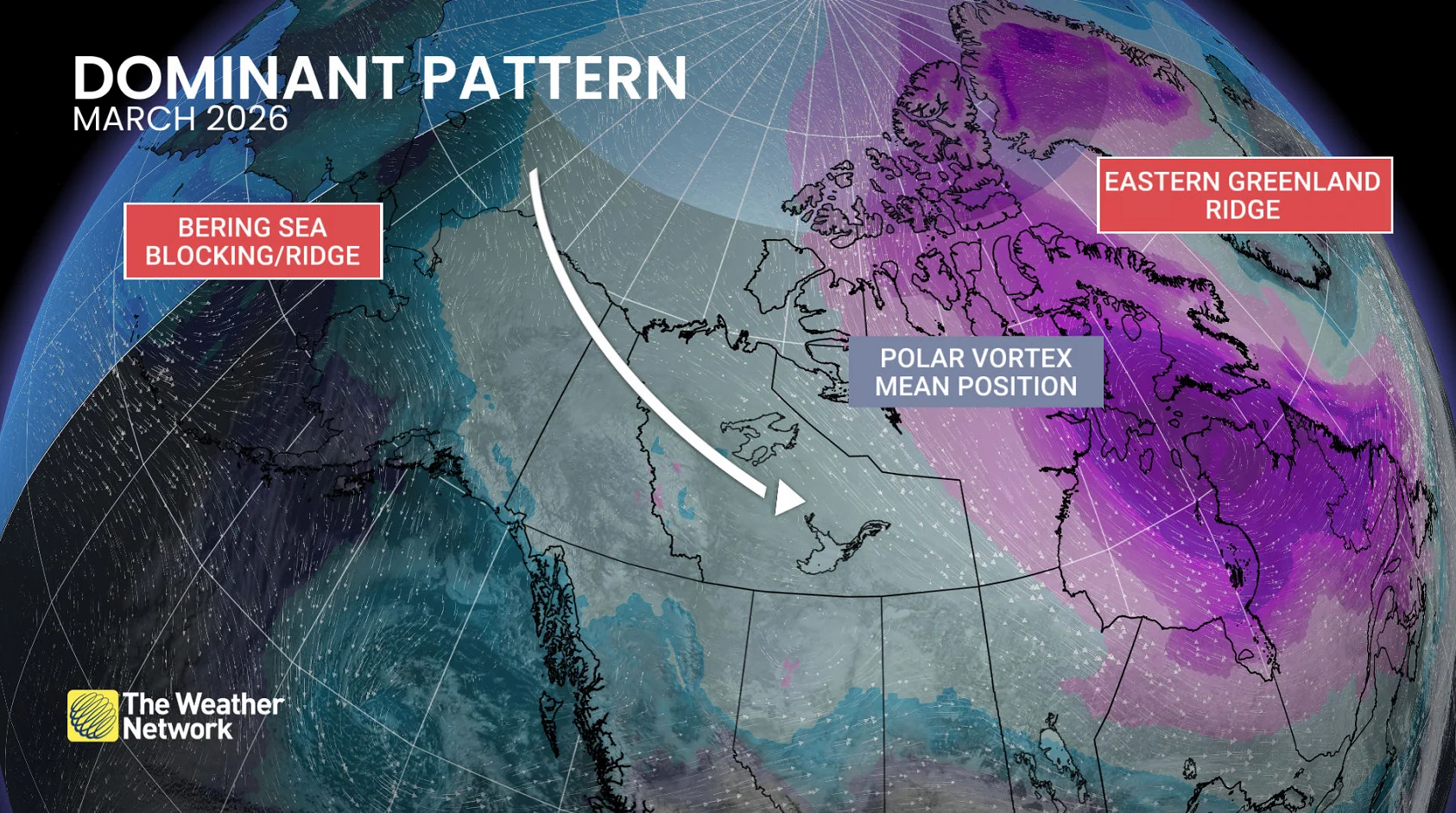
Multiple disruptions to the polar vortex occurred this winter, pushing the core of the coldest air across a large portion of Canada rather than keeping it confined over the North Pole.
Several sudden stratospheric warming (SSW) events weakened the polar vortex, stretching and displacing the cold air farther south.
A blocking pattern in the Bering Sea then helped lock that cold air in place, increasing the liklihood for prolonged cold to remain in place downstream.
Yukon (mean March temperature)
Whitehorse: -16°C (9°C below normal)
Coldest on record: 1907: -15.8°C
Mayo: -21°C (11 °C below normal)
Coldest on record: 1964: -19.6
Haines Junction: -16°C (8° below normal)
Coldest on record: 1964: -15.3°C
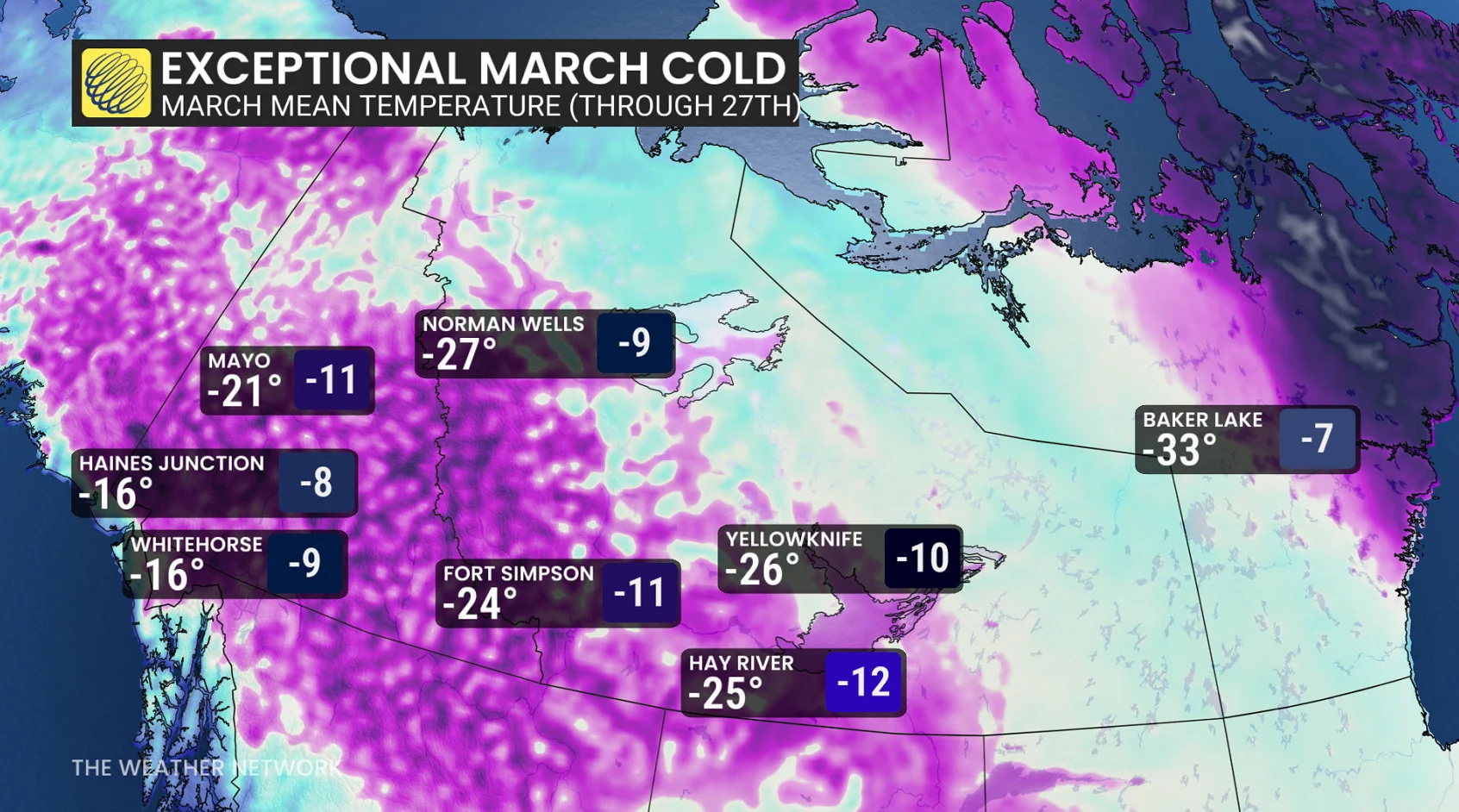
Northwest Territories (mean March temperature)
Yellowknife: -26°C (10° below normal)
Coldest since 1964: -27.6°C
Norman Wells: -27°C (9°C below normal)
Coldest on record: 1964: -26.4°C
Hay River: -25°C (12°C below normal)
Coldest since: 1908 (-26°C)
Fort Simpson: -24°C (11°C below normal)
Coldest on record: 1964: -23.1°C
Nunavut
Baker Lake: -33°C (7°C below normal)
Coldest since: 1964: -33.7°C
The global perspective
Northern Canada stood out as significant global outlier. While the north shivered, extreme heat dominated the globe, with major heat waves and records reported in 100+ countries. Here are several highlights:
U.S.: 17 states recorded their warmest March day on record
Mexico: Temperatures up to 45°C, record-warm nights shattered by large margins
Asia and Oceania: Numerous monthly heat records
Africa: Widespread heat across the Sahel and South Africa
Middle East: Intense and prolonged heat
Northern Europe and Russia: Record warmth observed
Cold records can still be broken on a warming planet. On March 24, the temperature at Vostok reached -76.4°C, marking the lowest March temperature recorded in Antarctica.