
Outages and dangerous travel as major cross-country storm hits Western Canada

A strong cross-country storm hits B.C. with damaging winds, and dangerous travel in Alberta
A powerful storm system is moving across Canada this week, beginning with significant impacts in British Columbia and Alberta.
The Pacific low brought strong winds and heavy alpine snow to B.C.’s coast and the Interior on Tuesday evening.
B.C. Hydro reported over 53,000 customers without power on Vancouver Island by 6 p.m. PT. Strong winds, with gusts reaching up to 100 km/h in some areas, caused the outages.
The Lower Mainland was forecast to receive 30-40 mm of rain, while up to 50 cm of alpine snow will benefit ski destinations like Whistler Blackcomb.
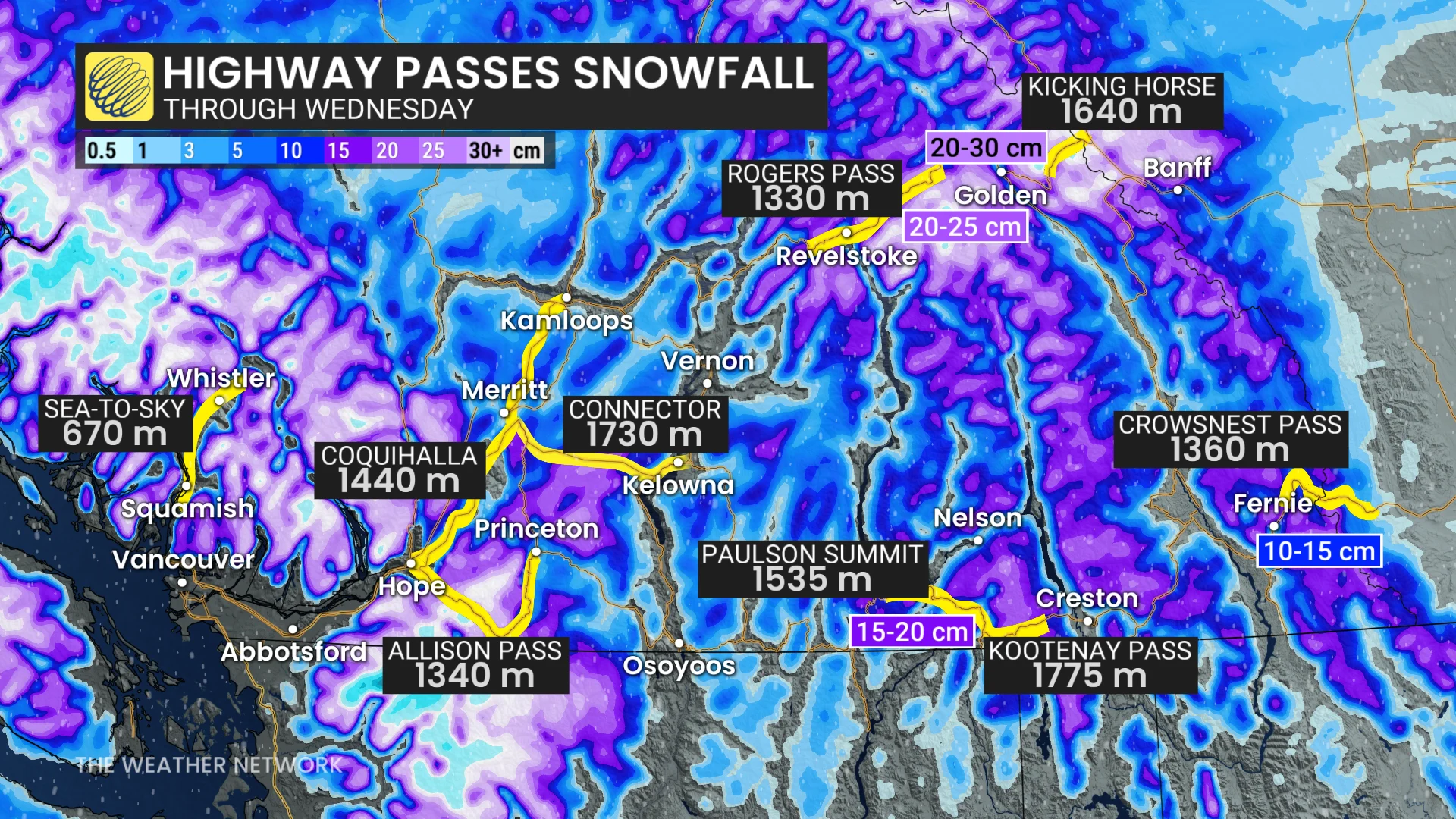
Kootenay, Rogers, and Kicking Horse passes in B.C. were expected to see 15-30 cm of snow with this system, while Alberta’s Rockies could receive an additional 20-30 cm, keeping the Icefields Parkway closed due to avalanche concerns.

Farther east, a developing clipper will draw snow into central Alberta along the Yellowhead Highway, with totals of 10 cm possible from Edmonton to west-central Saskatchewan through Wednesday.
Snow and freezing rain caused rapidly deteriorating road conditions in the Calgary area Wednesday morning, creating challenging travel conditions.
"Roads, walkways, and other surfaces will likely become icy and slippery," said Environment and Climate Change Canada (ECCC) in a freezing drizzle advisory issued for central and southern Alberta. "Be very careful if walking or driving."
Keep updated on local conditions and use caution if travel is necessary.
By Thursday, the storm will move east, delivering a triple whammy of snow, thunderstorms, and a temperature swing to Ontario.