Prepare for an active wildfire season in British Columbia

Warning signs are building up as we approach the beginning of wildfire season in British Columbia
Conditions appear favourable for an active wildfire season across British Columbia as we head into the warmer months.
Forecasters are increasingly worried that the combination of a growing El Niño and dry conditions this spring could lead to dangerous fire conditions this season.
DON’T MISS: El Niño may split Canada’s summer in two
Several significant fires already this season
We’ve already seen more than 1,500 hectares of land burn across B.C. so far this year, including 838 hectares in the Kamloops Fire Centre and 563 hectares in the Cariboo Fire Centre.
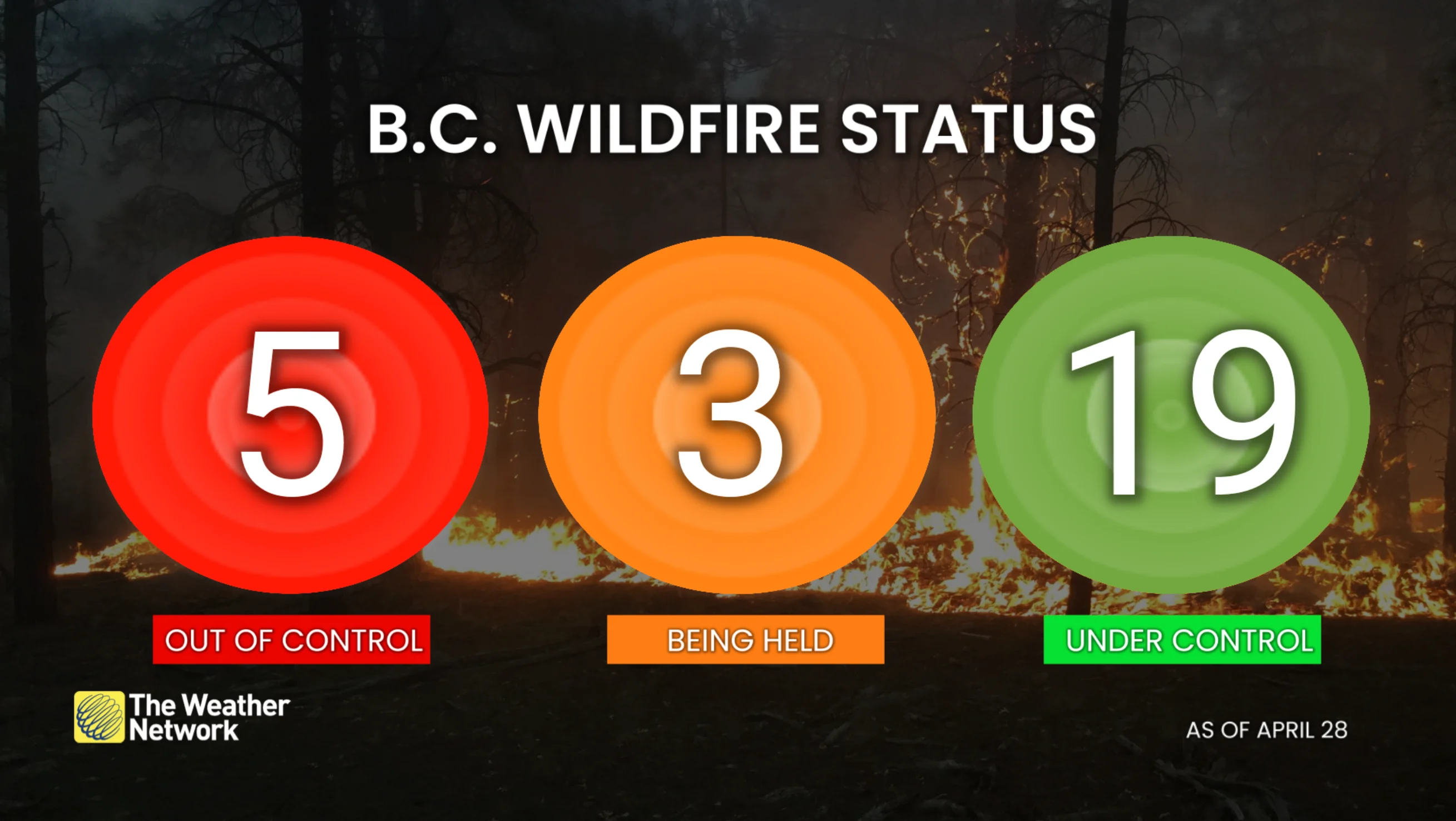
As of April 25, four fires were burning out of control, six were being held, and 14 more were considered under control. Almost all of this year’s blazes were started by human activities.
Ongoing drought across the B.C. Interior
We’ve already had an extended period of dry weather across the province.
RELATED: Essential items for your emergency "grab-and-go" kit
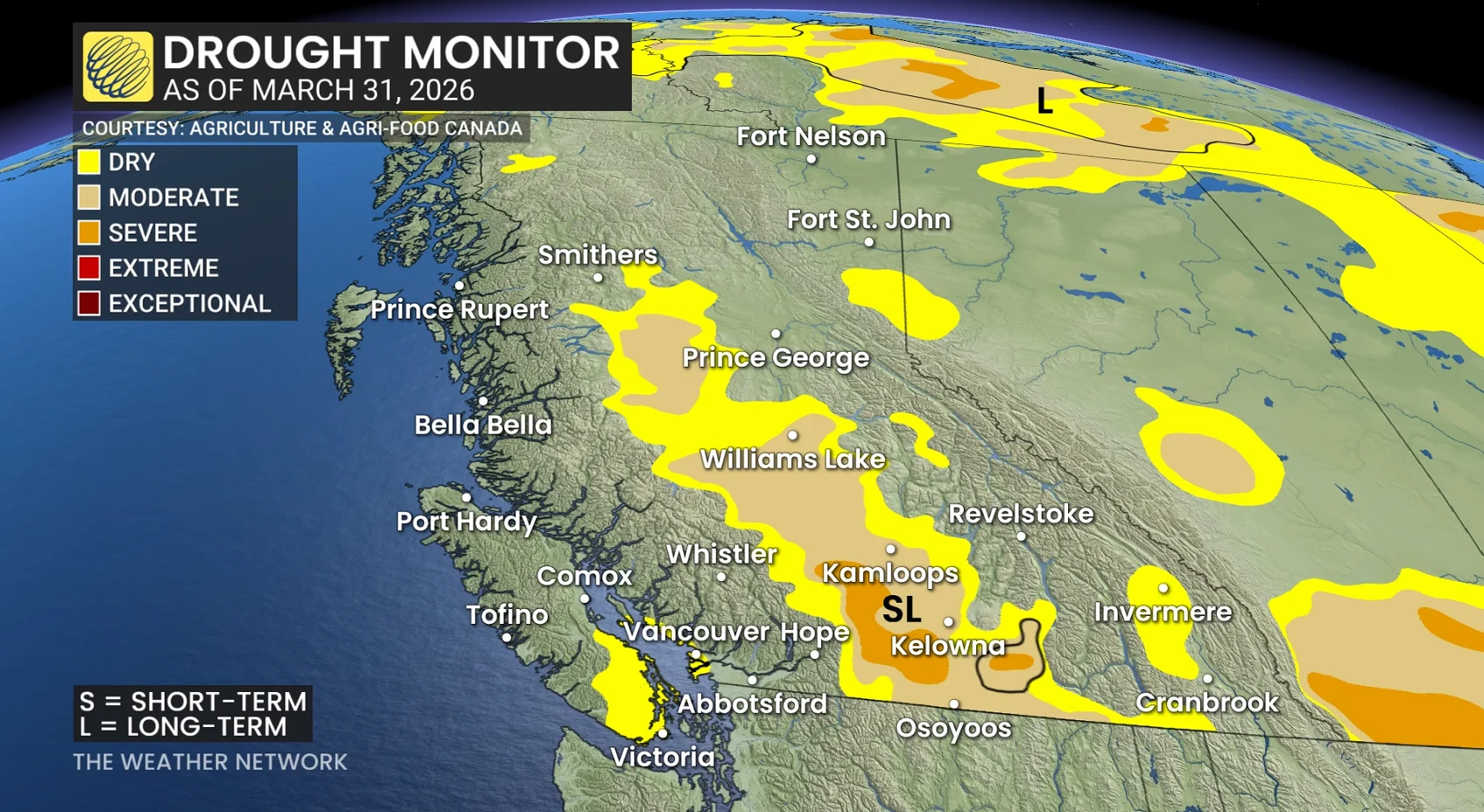
The vast majority of B.C.’s drought conditions were confined to the Interior as we kicked off April, with some abnormally dry conditions showing up on southern Vancouver Island and portions of the Lower Mainland.
El Niño will likely arrive this summer
El Niño’s impending arrival casts a long, dark shadow over this year’s wildfire season.
RELATED: Wildfires coast-to-coast: Your quick resource guide
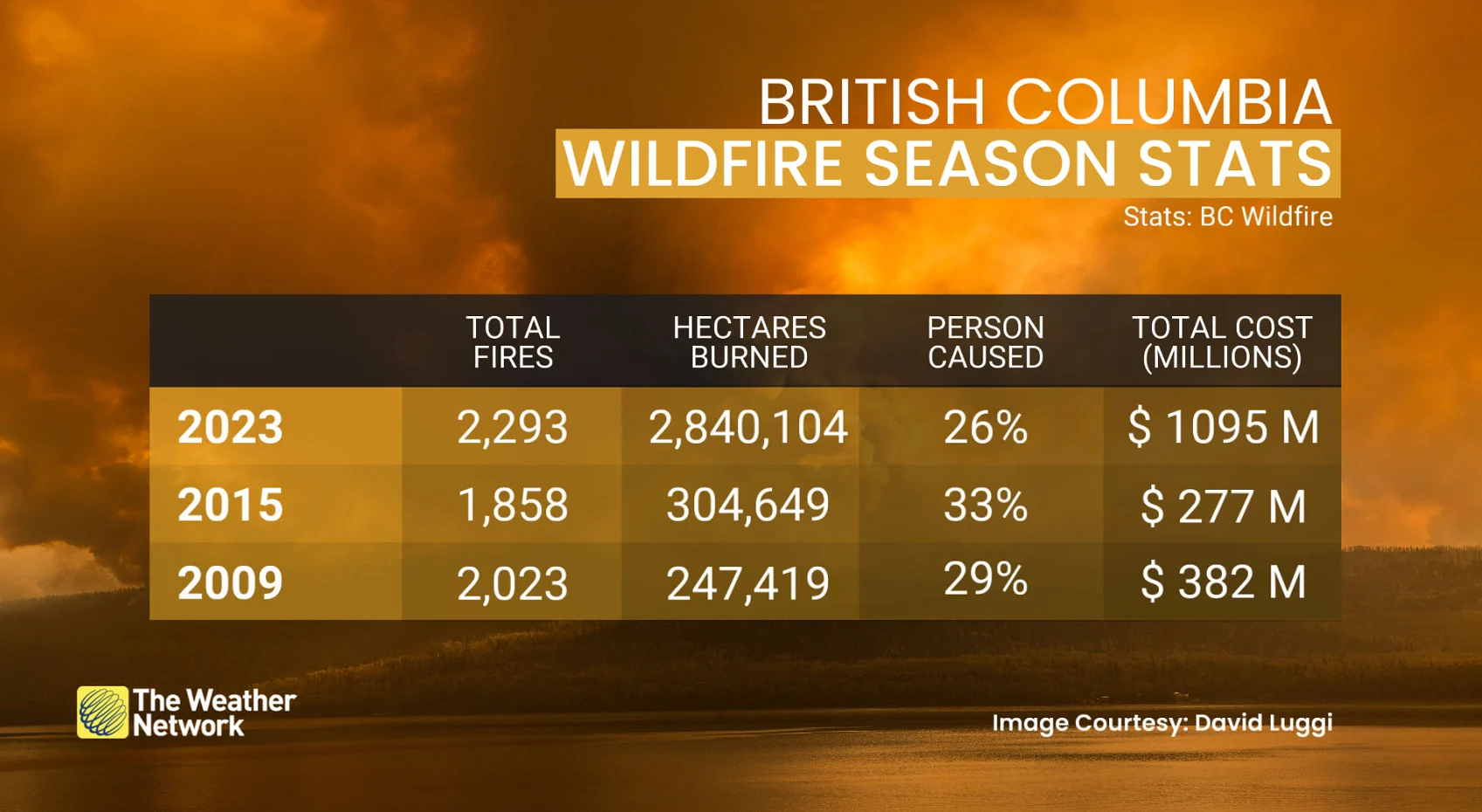
Previous years that saw La Niña rapidly flip to El Niño experienced active wildfire seasons, including 2023, which was the most destructive in provincial history.
Moisture in the spring months is crucial for the beginning of wildfire season.

The Interior is already dry when comparing precipitation from the impactful 2023 wildfire season and what we’ve experienced so far this spring, with less precipitation falling in Vancouver, Victoria, Kamloops, and Kelowna this year compared to 2023.
Forecasters expect a warmer-than-normal pattern to develop over Western Canada as we round the corner toward late spring and early summer.
The ridging responsible for warmer temperatures would also likely bring drier conditions to the region, enhancing the risk for wildfires in the weeks and months ahead.
Header image created using graphics and imagery from Canva.