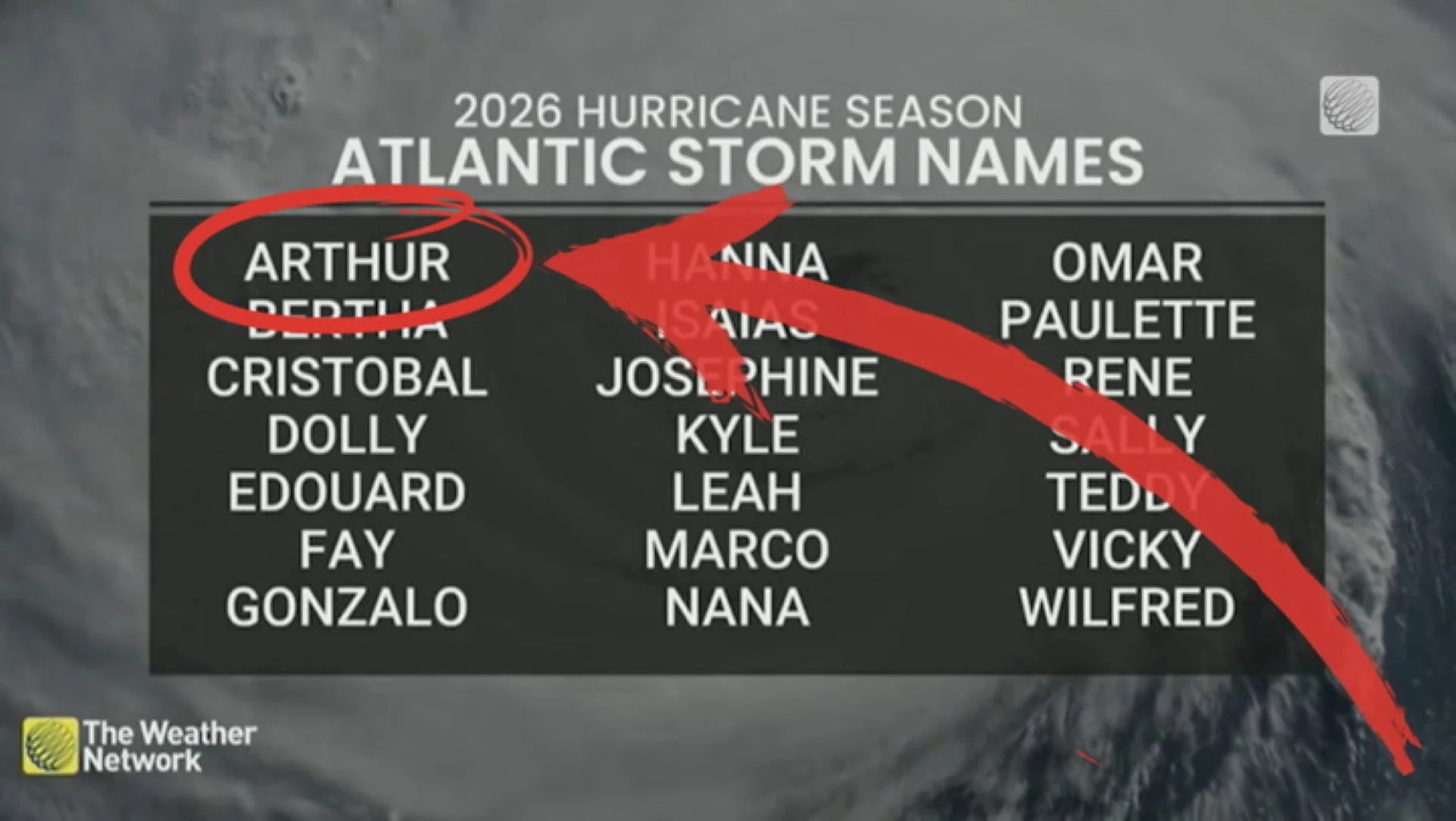
Why some hurricane names like Arthur resurface

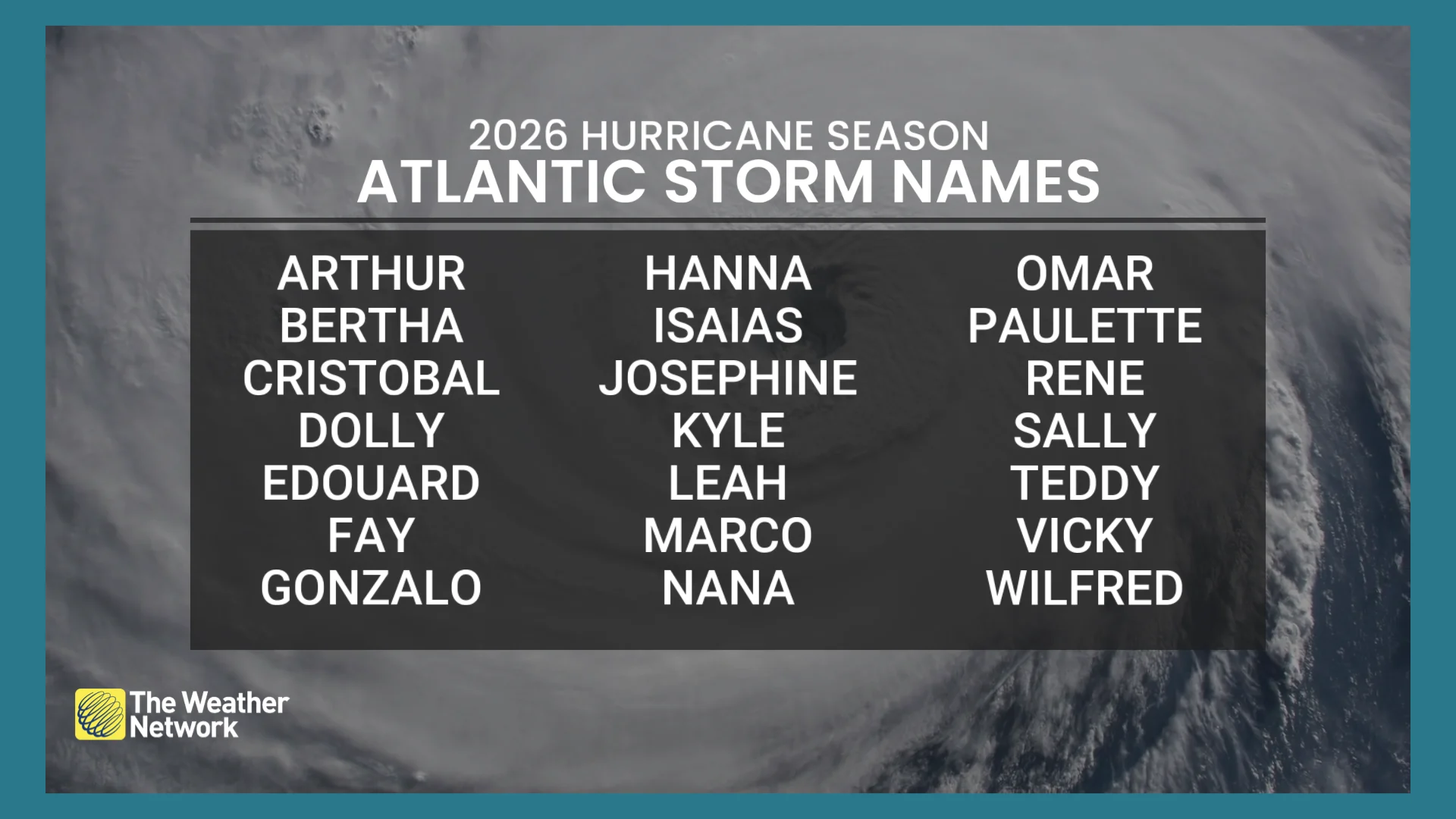
Arthur has been placed back on the Atlantic hurricane name list for 2026. The Weather Network takes a look back at the fury of Hurricane Arthur in 2014, which, despite not being retired, left a trail of uprooted trees, damaged homes, and widespread power outages in Atlantic Canada.
The Atlantic hurricane season begins in June and runs through the end of November. And every hurricane gets its own name.
That makes it easier to keep track of if you have multiple hurricanes spinning towards you at the same time. A name gets retired if it’s historically catastrophic.
This year, Arthur is back. While many New Brunswickers will certainly remember the impacts of the powerful storm, it was post-tropical when it hit and the damage didn’t send Arthur into retirement.
One-thousand trees were damaged in Fredericton with winds recorded at 100 km/h at the Fredericton airport, coupled with 120 mm to 145 mm of rainfall. 140,000 NB power customers lost electricity as a result, and some had to wait 18 days before it was restored.
Hurricanes run on warm water, and while ocean heat content isn’t maximized in early July, The Weather Network meteorologist, Tyler Hamilton, says there’s still a lot of hostility in the Atlantic Ocean at that time.
“The trouble zone in and around the Gulf Stream and the Western Atlantic, these little, short-track, coastal storms can run up, be steered by the Bermuda high. That’s the sweet spot in July that occurred during Hurricane Arthur," said Hamilton.
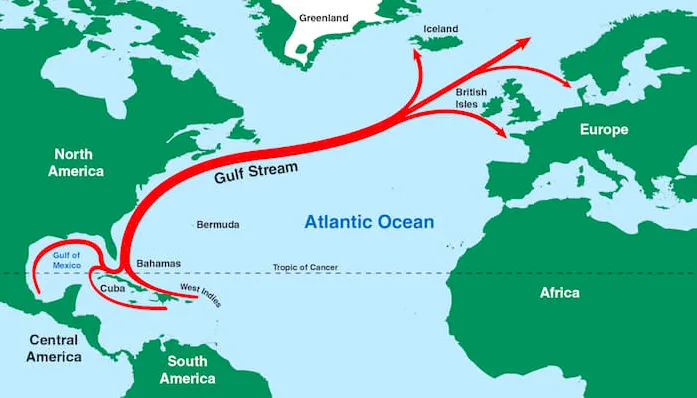
(NOAA)
Peak hurricane season occurs in September, but Arthur serves as a good reminder to Maritimers that anything can happen, even during an early-season A storm.