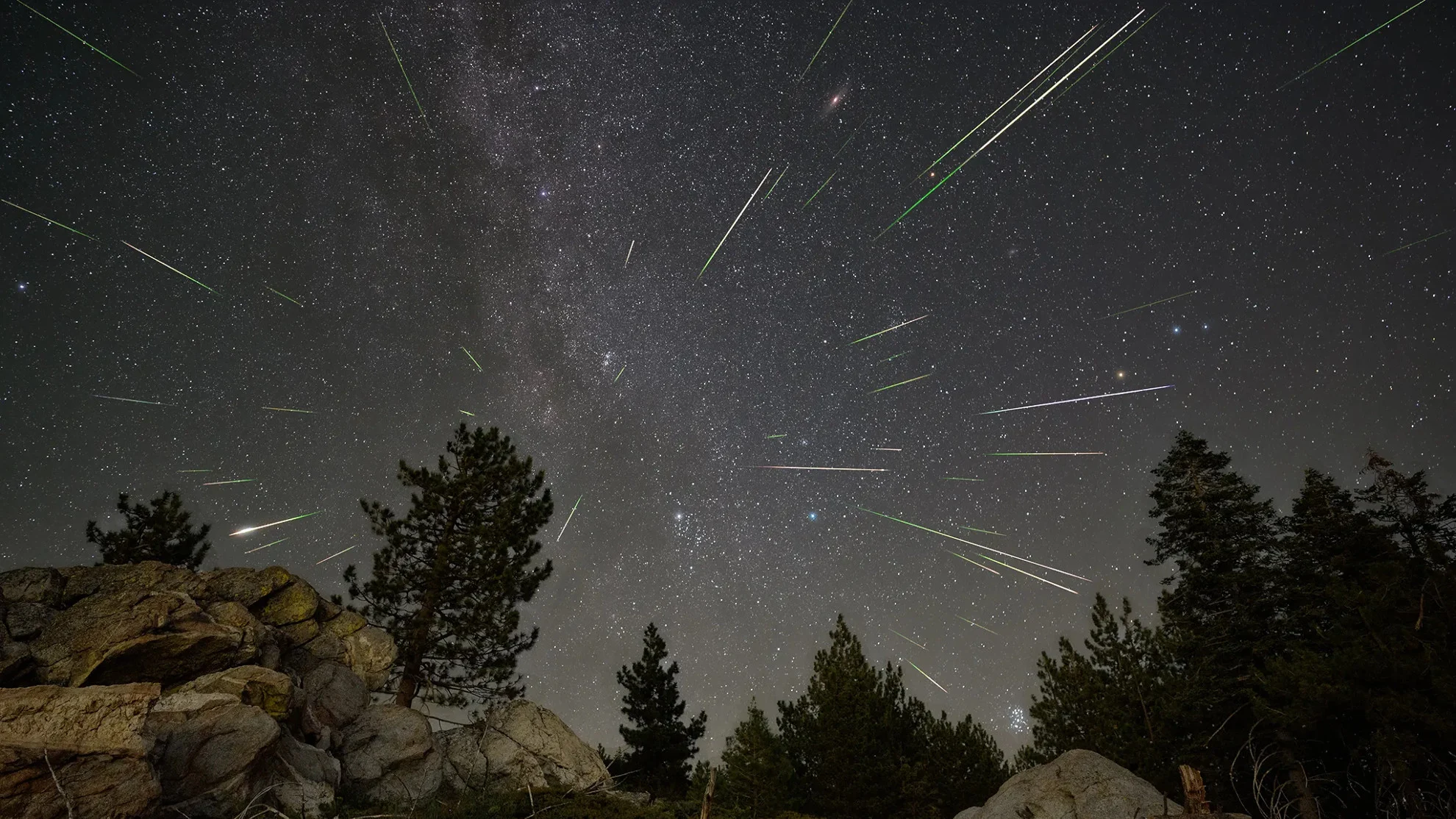
Fall 2026: Meteor shower season is about to begin!

From early October through to the end of Fall, every night there is at least one meteor shower sending streaks of light across our night sky.
As the nights grow longer and cooler throughout Autumn, it is an excellent time of year for stargazing, and for spotting meteors flashing across the sky almost every night of the season.
Here are the astronomical events of Fall 2026:
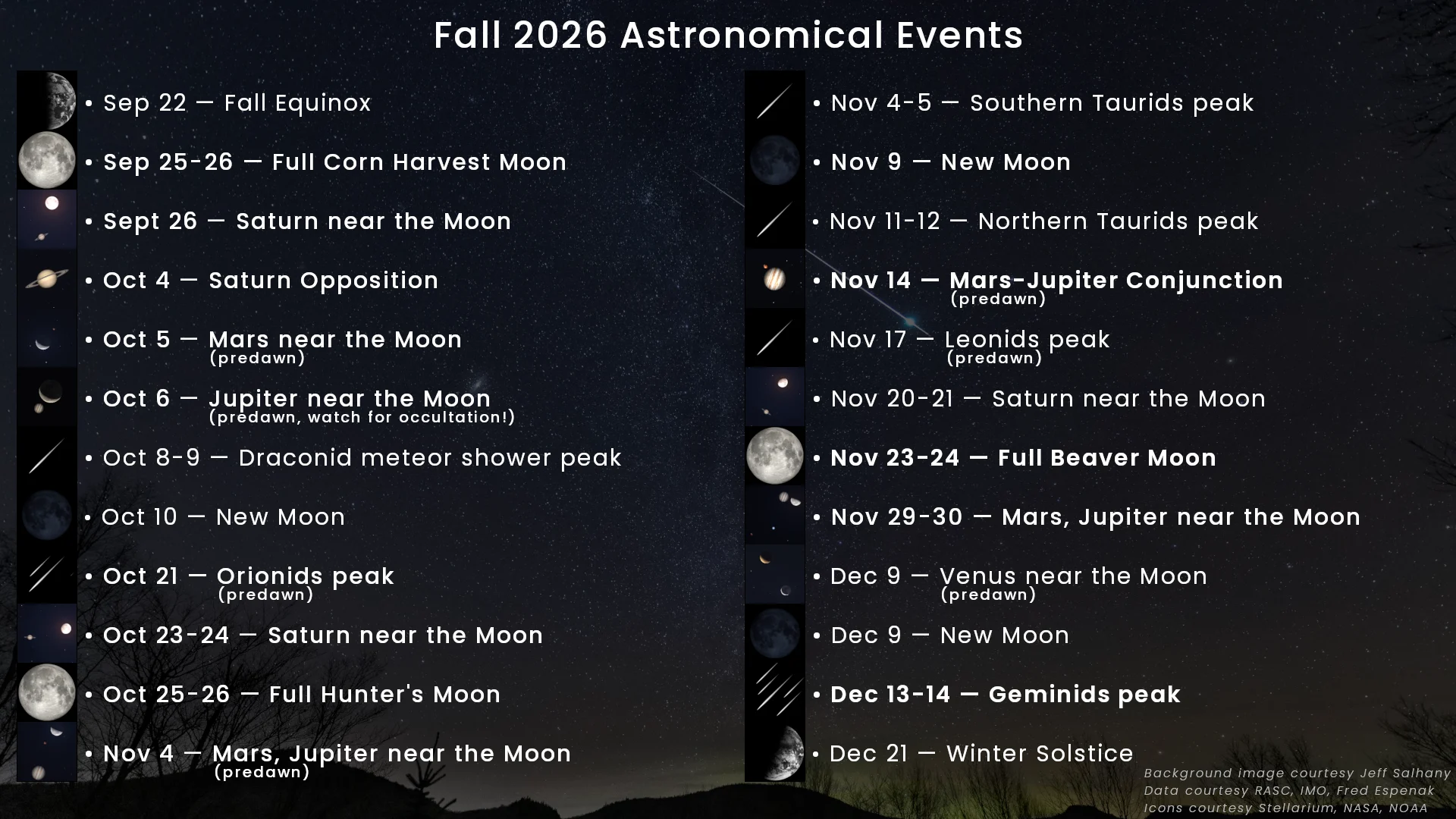
Visit our Complete Guide to Fall 2025 for an in depth look at the Fall Forecast, tips to plan for it and much more!
Fall Equinox
On the night of September 22, at exactly 7:05 p.m. EDT, the Sun will appear directly above the equator, as it transitions from the northern to the southern sky. This moment marks the Autumnal Equinox and the start of astronomical fall for the northern hemisphere. Meanwhile, in the southern hemisphere, it will be the Vernal Equinox and the start of astronomical spring.
So, what does it mean for the Sun to appear directly above the equator? Due to the tilt of our planet's axis, for nearly the entire year, the position that's directly under the Sun — known as the 'subsolar point' — is either north or south of the equator.
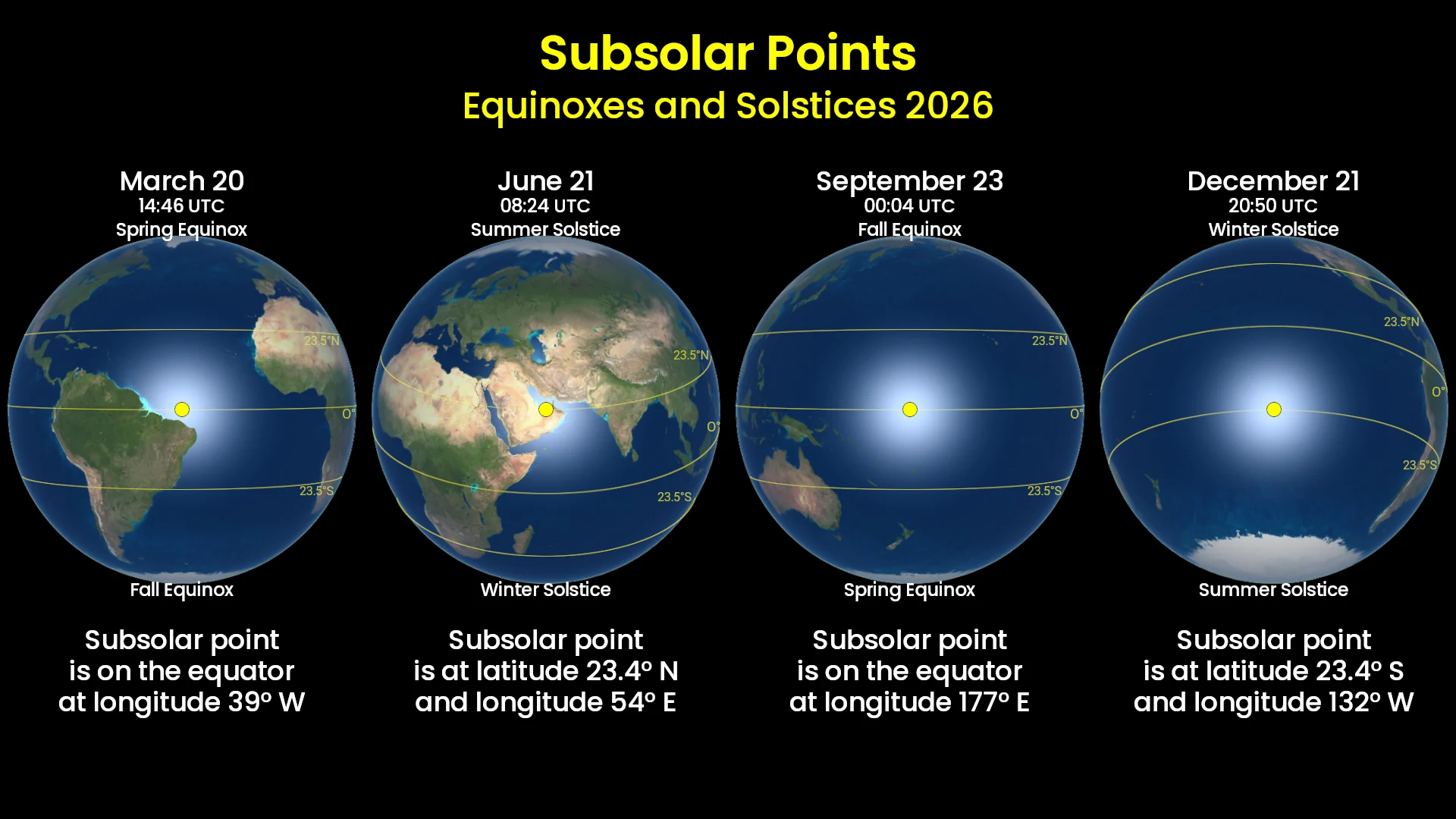
The locations of the subsolar points on the Equinoxes and Solstices for 2026 shows where the Sun's rays shine directly down onto the planet at those dates and times. (Celestia/Scott Sutherland)
When the subsolar point is north of the equator, the northern hemisphere experiences spring and summer, while the southern hemisphere has fall and winter. When it is south of the equator, the seasons are reversed, with fall and winter in the north, and spring and summer in the south.
There are two points of the year — two exact moments, to be more precise — that the subsolar point appears directly on the equator. They are the equinoxes, one in March and the other in September, when Earth's surface is lit equally by the Sun's rays.
Now, the word 'equinox' technically means "equal night". However, due to the way we track sunrise and sunset, we never see equal day and night on the equinoxes. That day, known as equilux, occurs before the equinox in spring and after the equinox in fall.
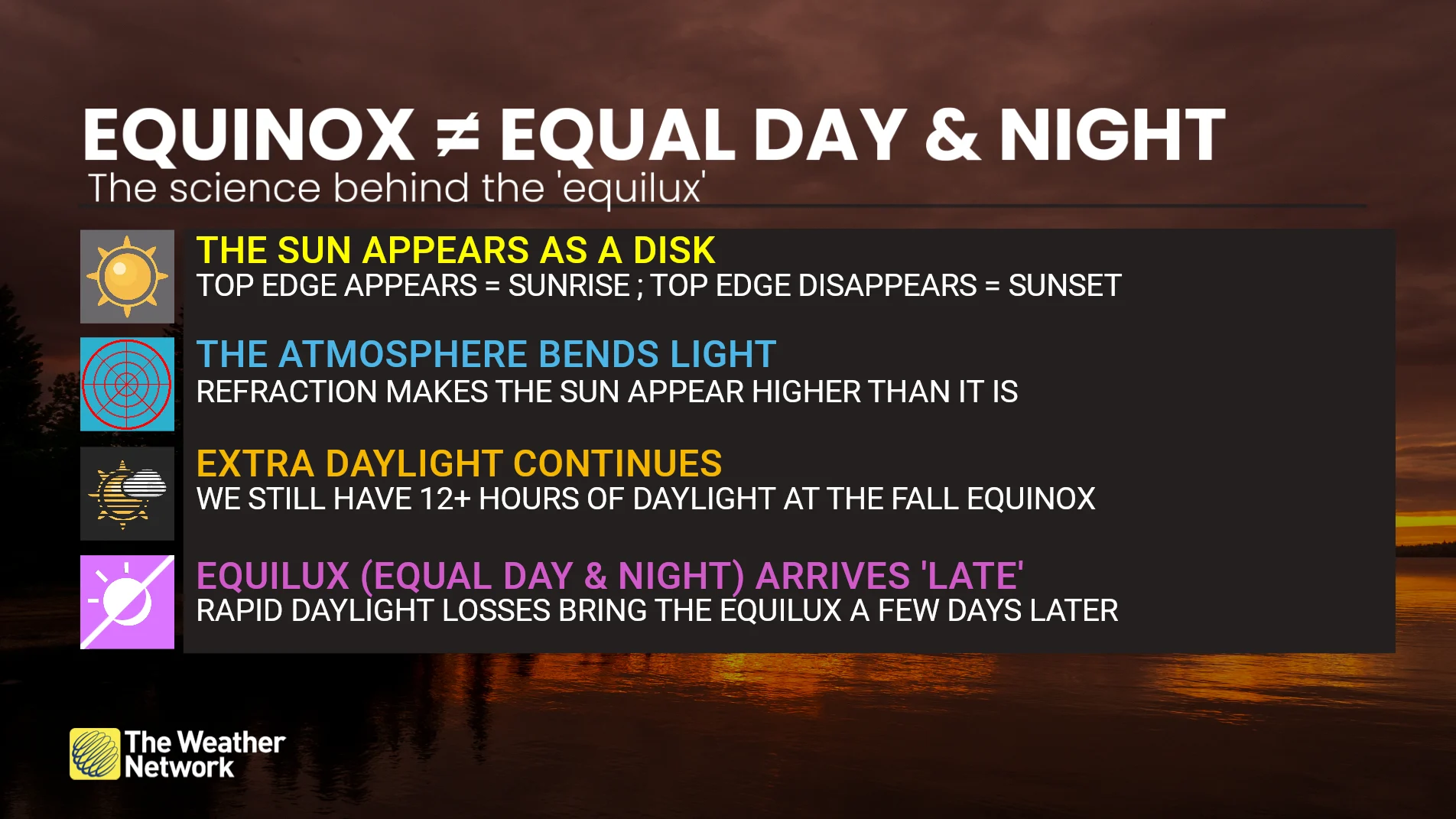
It's science: Why September 1st is the start of meteorological fall
The Moon
Three Full Moons will shine in the sky during the fall season in 2026.
We start with an 'average' Full Moon — as September's Corn Moon, on the night of the 25th-26th, is very close to one lunar distance away from Earth at that time. One lunar distance is the average distance of the Moon, over time, which is equal to 384,400 kilometres.
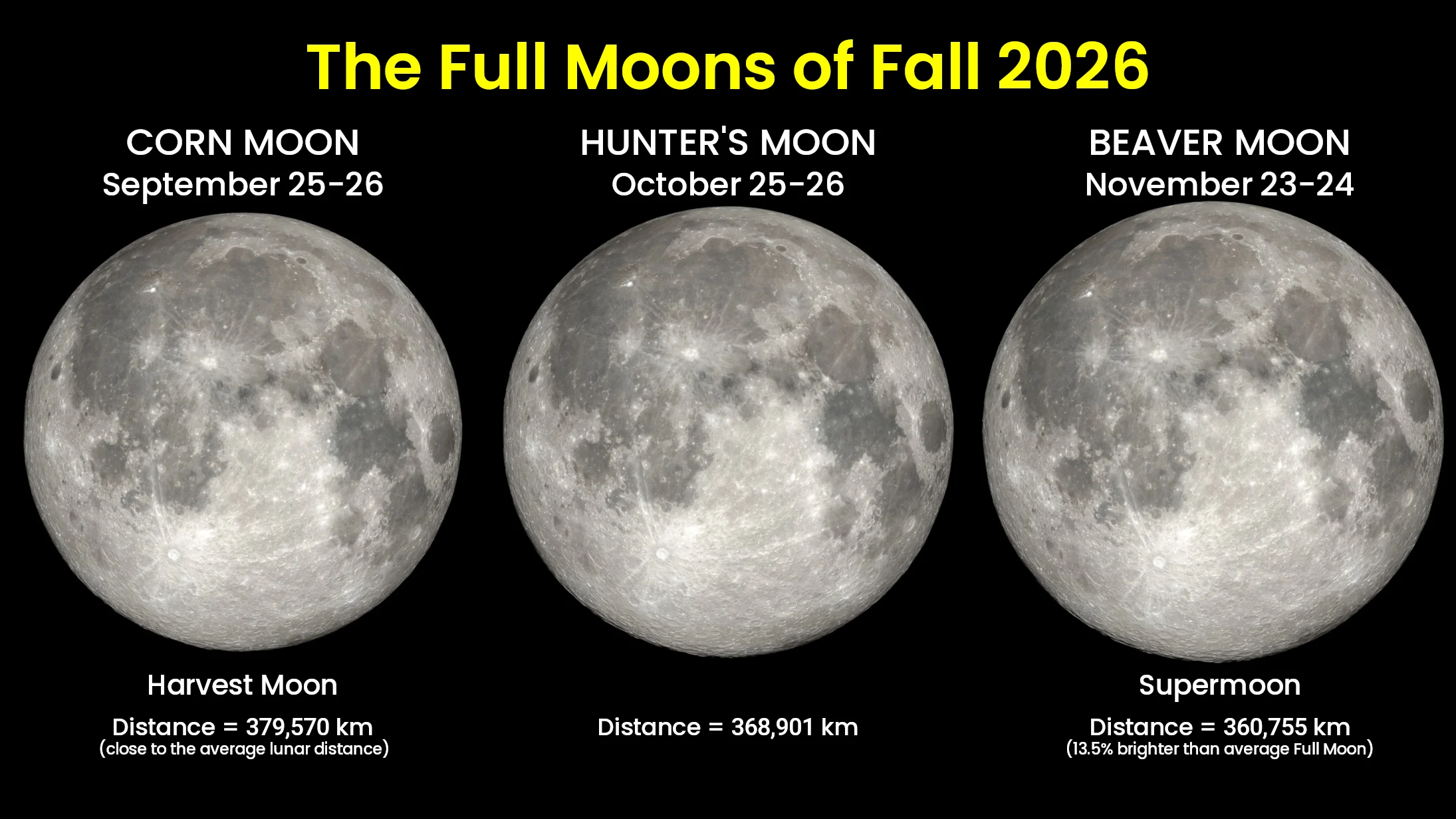
(NASA SVS/Fred Espanak/Scott Sutherland)
The September Full Moon is also this year's Harvest moon — the Full Moon closest to the Fall Equinox — as it provides a few nights of bright moonlight to aid farmers in harvesting their crops.
The Hunter's Moon occurs on the night of October 25-26. Although closer, bigger, and brighter than the September Full Moon, it is not close or bright enough to qualify as a supermoon.
November's Beaver Moon, on the 23rd to 24th, is the next supermoon that will brighten our skies.
It's quite challenging to notice the size difference of a supermoon without tracking Full Moons very closely, month to month. Most of the size difference we see is actually an optical illusion produced by our own brain, known as the Moon Illusion. However, the brightness of a supermoon is much more apparent. This particular supermoon will be a little over 13 per cent brighter than September's 'average' Full Moon.
READ MORE: Why are supermoons so compelling to us?
The Planets
Right off the top of the season, there are four planets that are reasonably easy to spot in the sky.
Look for Venus, right above the southwestern horizon after the Sun sets. It might be difficult to spot in twilight, just after the Sun's disk disappears beyond the horizon. However, there's a roughly 15-20 minute window, just before 8 p.m. local time, when the sky will be dark enough, and the planet should be bright enough to see it.
Mercury will be close by, just off to the west, but it will be more difficult to see, and it will set fairly soon after the sky grows dark enough to spot it.
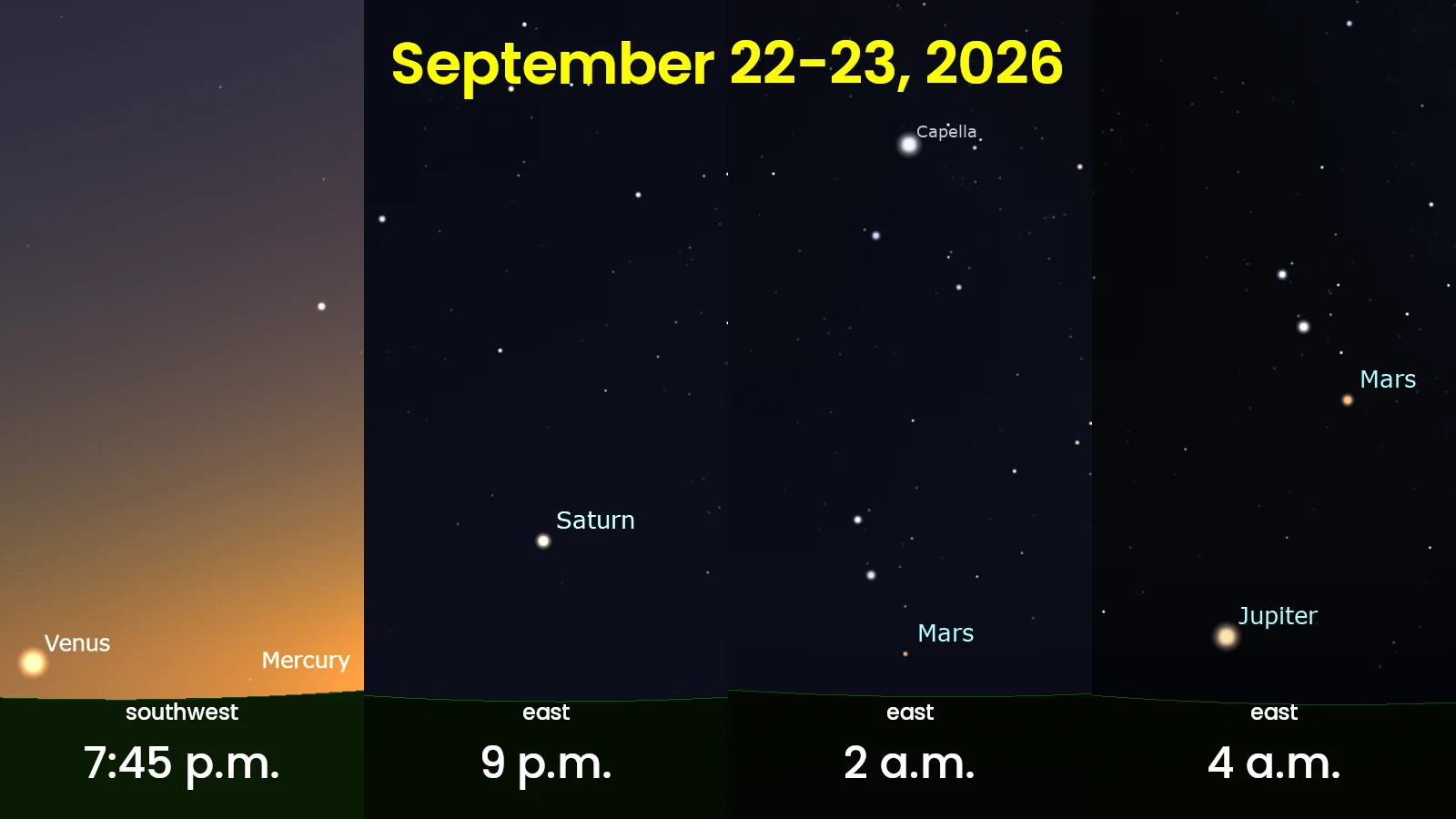
The planets, as they start off the Fall season in our night sky. (Stellarium/Scott Sutherland)
Meanwhile, Saturn will rise in the east as Venus and Mercury are setting in the west, and the ringed planet will be up all night long.
In the hours after midnight, the planet Mars will rise just after 1:30 a.m., local time. Jupiter will follow along about two hours later.
Throughout the season, these planets will all rise earlier and set earlier. Thus, looking for them at the same time each night will find each shifted farther to the west.
For Venus and Mercury, this means we will lose them from the evening sky fairly quickly, as they will set along with the Sun. However, both planets will reappear in the predawn sky later in the season — Venus in late October and Mercury in early November.
This is a special time of the year for Saturn. Watch as it reaches Opposition on the night of October 4.
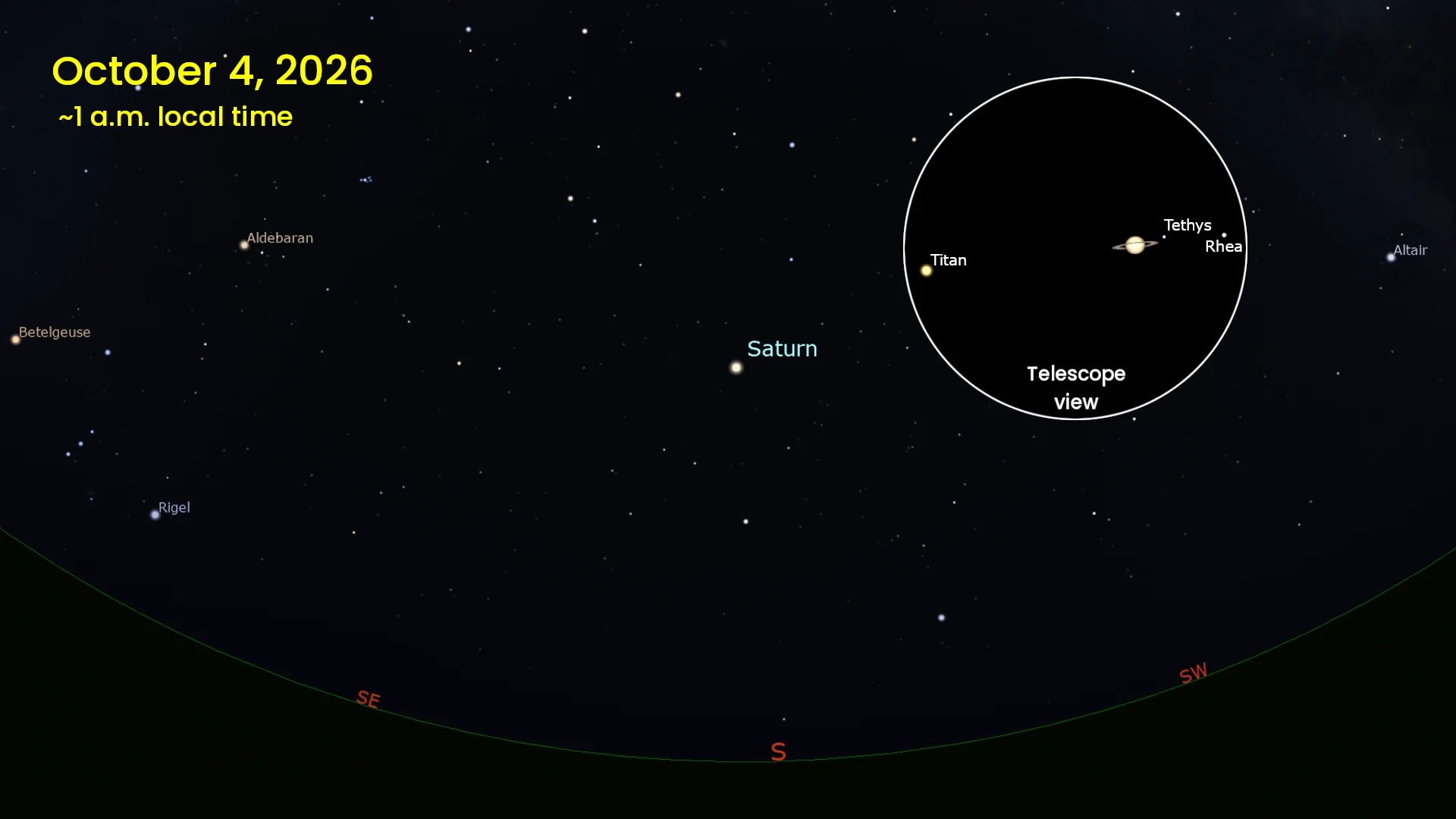
Saturn is in the southern sky just after midnight on October 3-4, 2026, as it reaches Opposition. Inset: a telescopic view shows the planet, its rings, and three of its brightest moons. (Stellarium/Scott Sutherland)
That night is simultaneously its closest distance to Earth (and thus its brightest for the year), and the time when Saturn is on the exact opposite side of Earth from the Sun.
Also, keep an eye on Mars and Jupiter throughout the season. As they rise earlier, and become easier to spot earlier in the night, they will also be drawing closer together, night by night.
Mars will lead the way to start, up until the night of November 14. On that night, the two planets will go through 'conjunction', where they are very close together in the sky. Afterwards, the two will switch places from where they were, with Jupiter then leading the way each night as they draw farther away from each other.
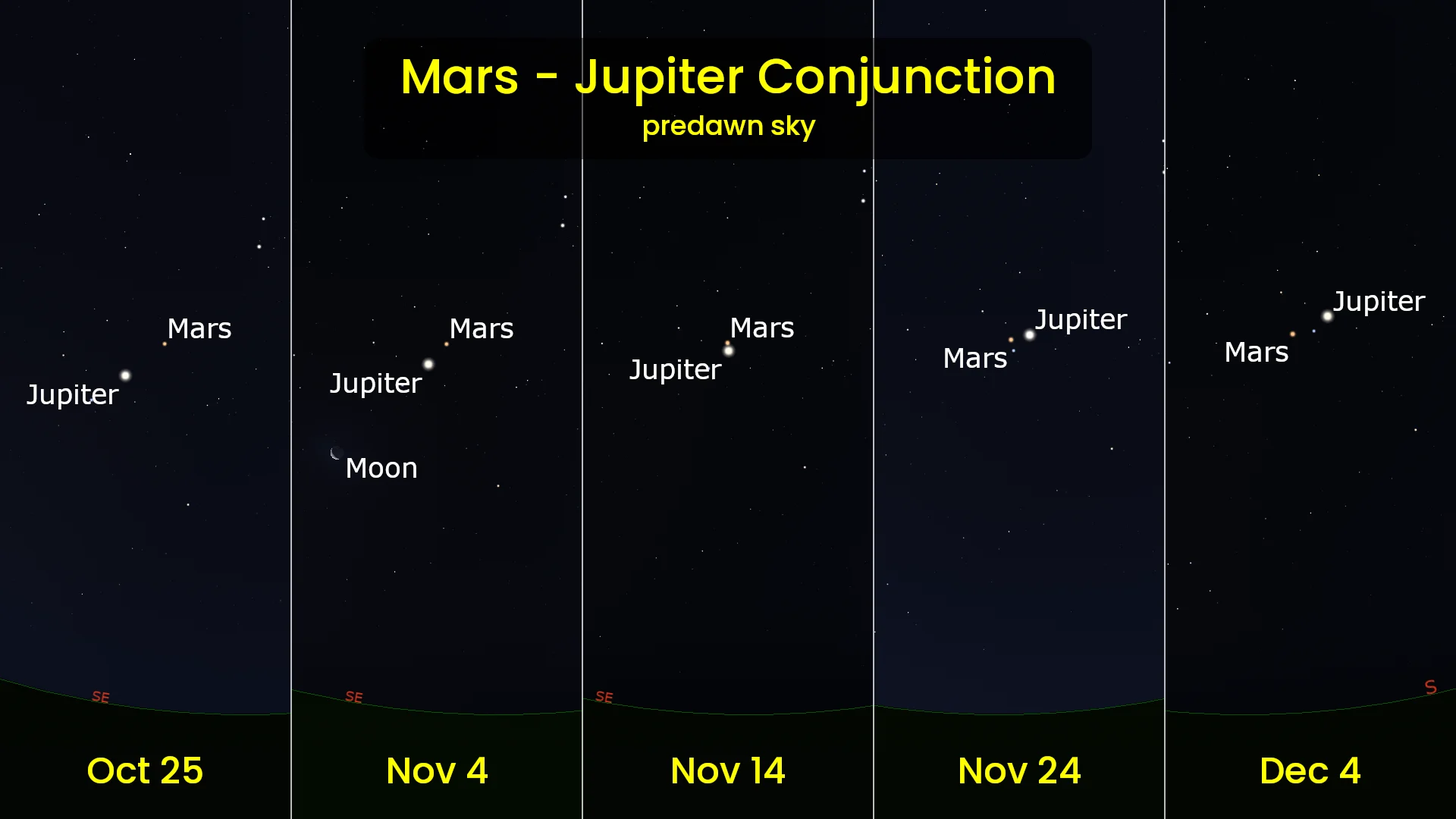
Mars and Jupiter draw closer, experience a conjunction on November 14, then pull away from each other again, but with Jupiter 'in the lead'. (Stellarium/Scott Sutherland)
Plus, watch for the Moon to 'team up' with various planets during the fall season:
Sep 25-27: Saturn near the Full and Waning Gibbous Moon
Oct 5, predawn: Mars near the Waning Crescent Moon
Oct 6, predawn: Jupiter near the Waning Crescent Moon
Oct 23-24: Saturn near the Waxing Gibbous Moon
Nov 4, predawn: Mars and Jupiter near the Waning Crescent Moon
Nov 20-21: Saturn near the Waxing Gibbous Moon
Nov 29-30: Mars and Jupiter near the Last Quarter and Waxing Crescent Moon
Dec 9, predawn: Waning Crescent Moon near Venus
READ MORE: The planets visit with the Moon throughout the month of September
The Season of Meteor Showers
Look up on any night of the year and you might be lucky enough to spot a meteor flashing by overhead. Meteors are caused by dust particles or tiny pieces of rock from space, as they are swept up by Earth’s atmosphere and produce a streak of light across the sky. At certain times of the year, though, we can witness dozens and sometimes hundreds of meteors, all seeming to emerge from a specific point in the night sky.
These events are known as meteor showers, with each named after the constellation that is closest to its radiant, which is what astronomers call a meteor shower's point of origin in the sky.
Of the three dozen meteor showers that occur throughout the year, roughly one dozen are significant enough to warrant taking time off to see. Each occurs over a number of days, as Earth passes through different streams of meteoroids in space. These streams originate from comets and asteroids that cross Earth's path as they orbit around the Sun. Each also has one night of the year where it peaks, delivering the greatest number of meteors from that stream, from just a handful per hour for some showers, up to over a hundred per hour for others.
Fall stands out as the best time of year for meteors. This is because half of the major meteor showers occur in just this one season, and every night of the season there is at least one meteor shower going on in the sky above.
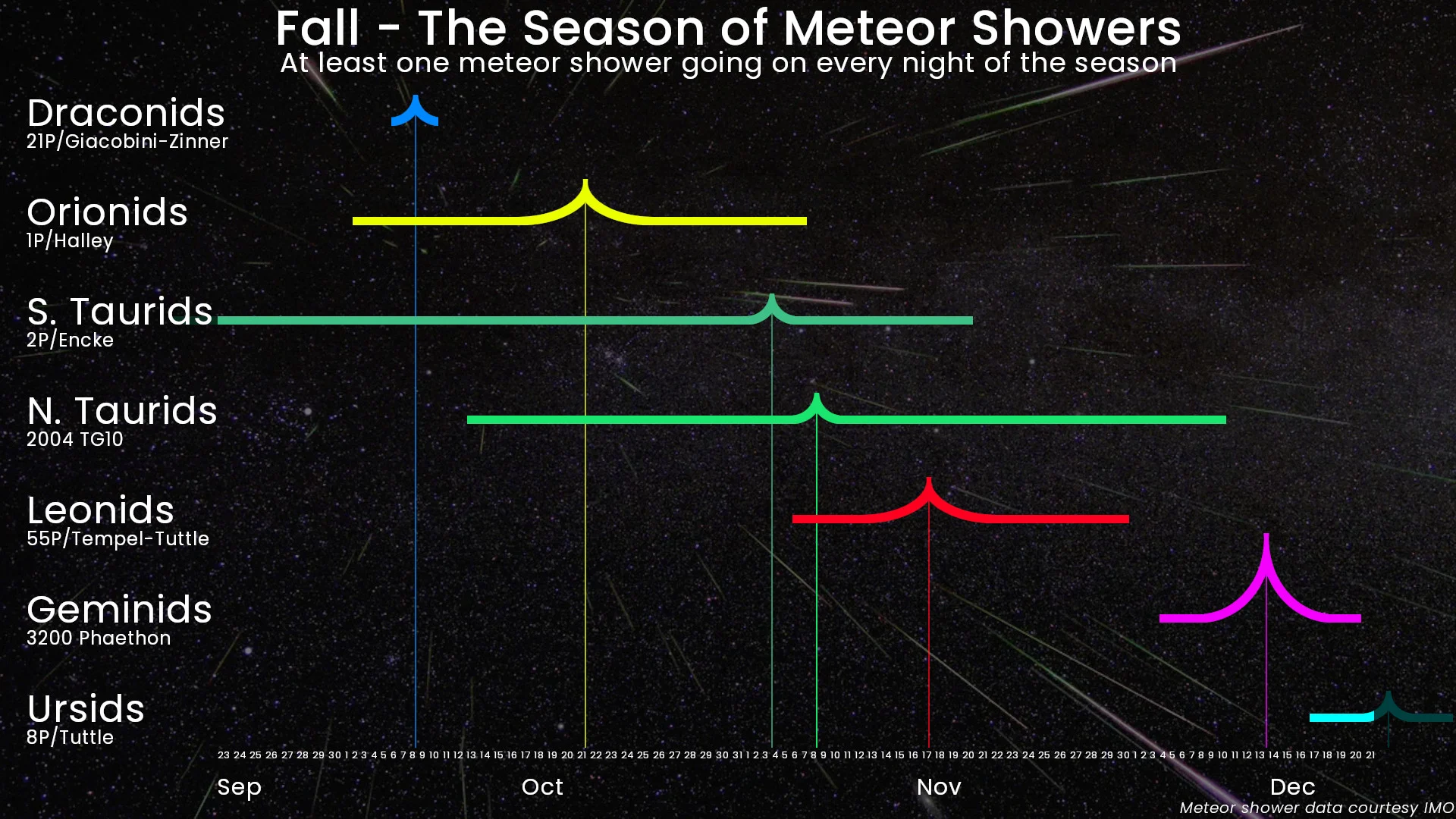
Here are the six fall meteor showers, in order of when they peak throughout the season:
The Draconids
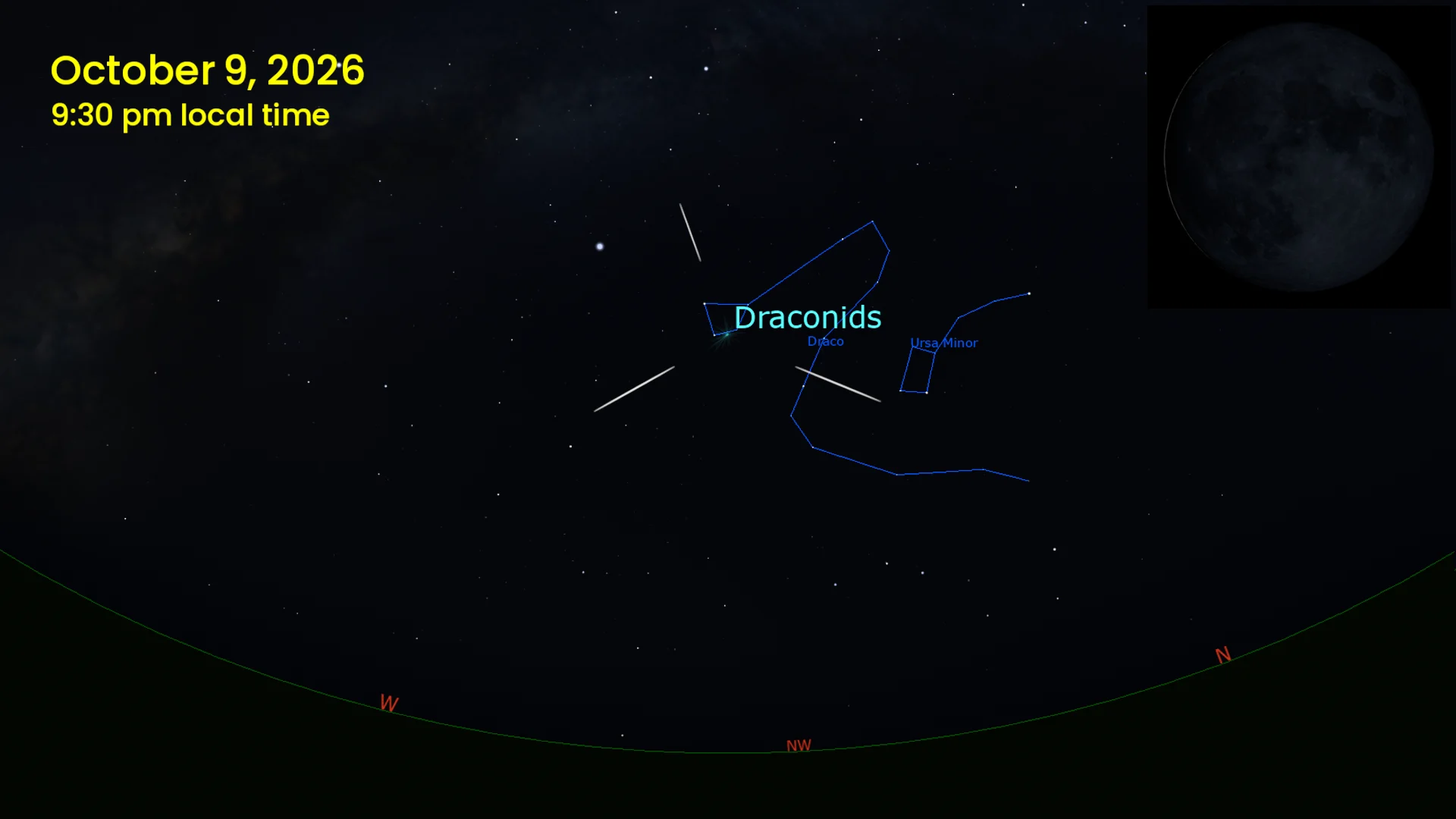
The radiant of the Draconid meteor shower in the northern constellation Draco, on October 8-9, 2026. (Stellarium/Scott Sutherland)
The Draconids are the first to peak, with meteors streaming out of the constellation Draco, in the northern sky. This is the shortest of the 'major' meteor showers, lasting just 5 nights, from October 6-10. It only delivers a handful of meteors each night, except during its peaks on the night of Oct. 8, when it typically produces around 5 per hour.
The Orionids
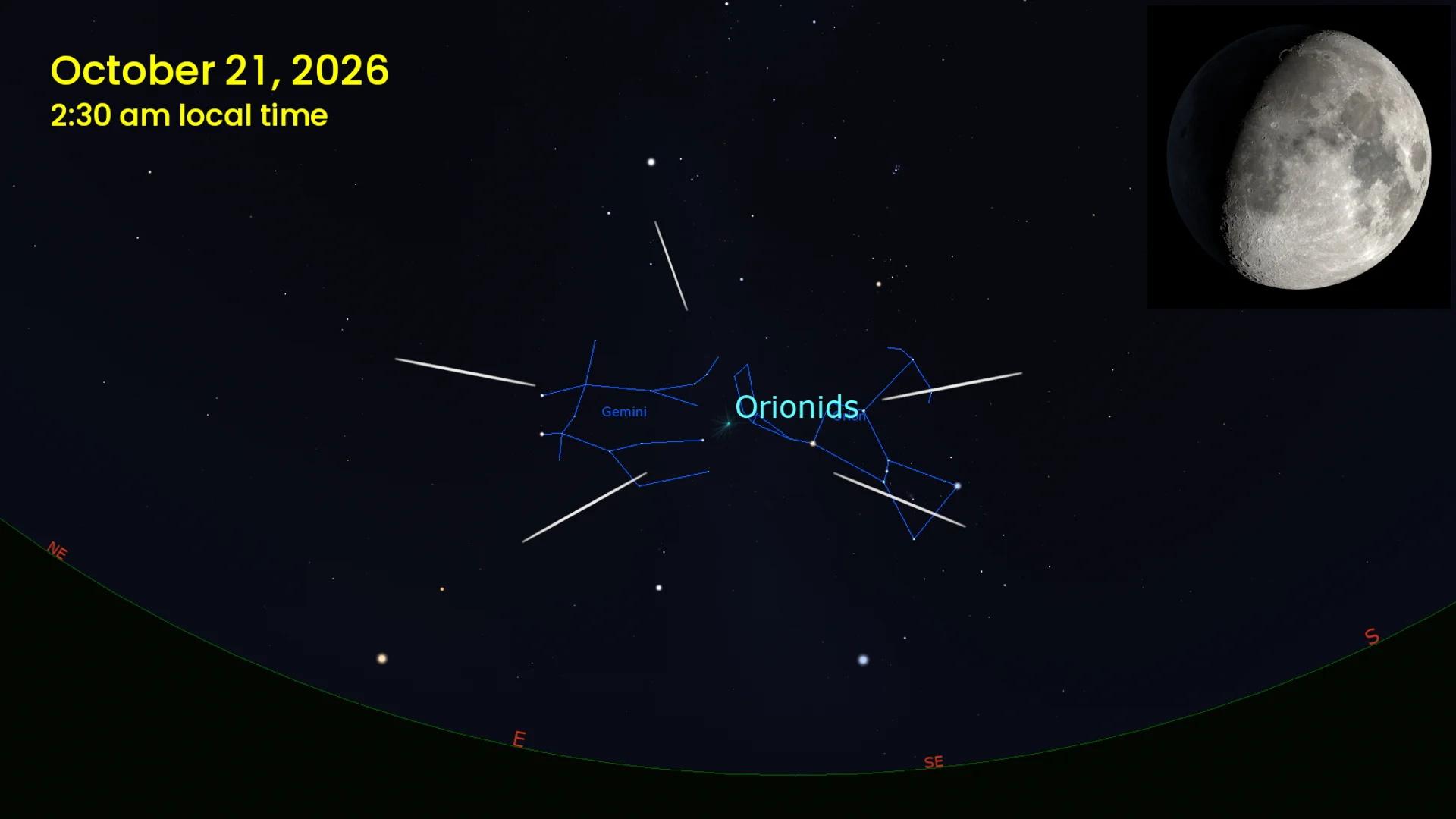
The best viewing for the Orionid meteor shower will be in the hours before sunrise on Oct 21, 2026. (Stellarium/Scott Sutherland)
Next up are the Orionids. This is the second of two meteor showers produced each year by the debris stream left behind by Halley's Comet.
We take a long time to traverse this part of Halley's debris stream, and thus the Orionids last for over a month, from October 2 through November 12. Through most of those nights, it delivers only one or two meteors per hour. During its peak, though, in the predawn hours of October 21, it typically produces around 20 meteors per hour.
Around 10:00 p.m., local time, is the best time to start watching for Orionid meteors, but the best viewing is in the hours before sunrise.
The Taurids
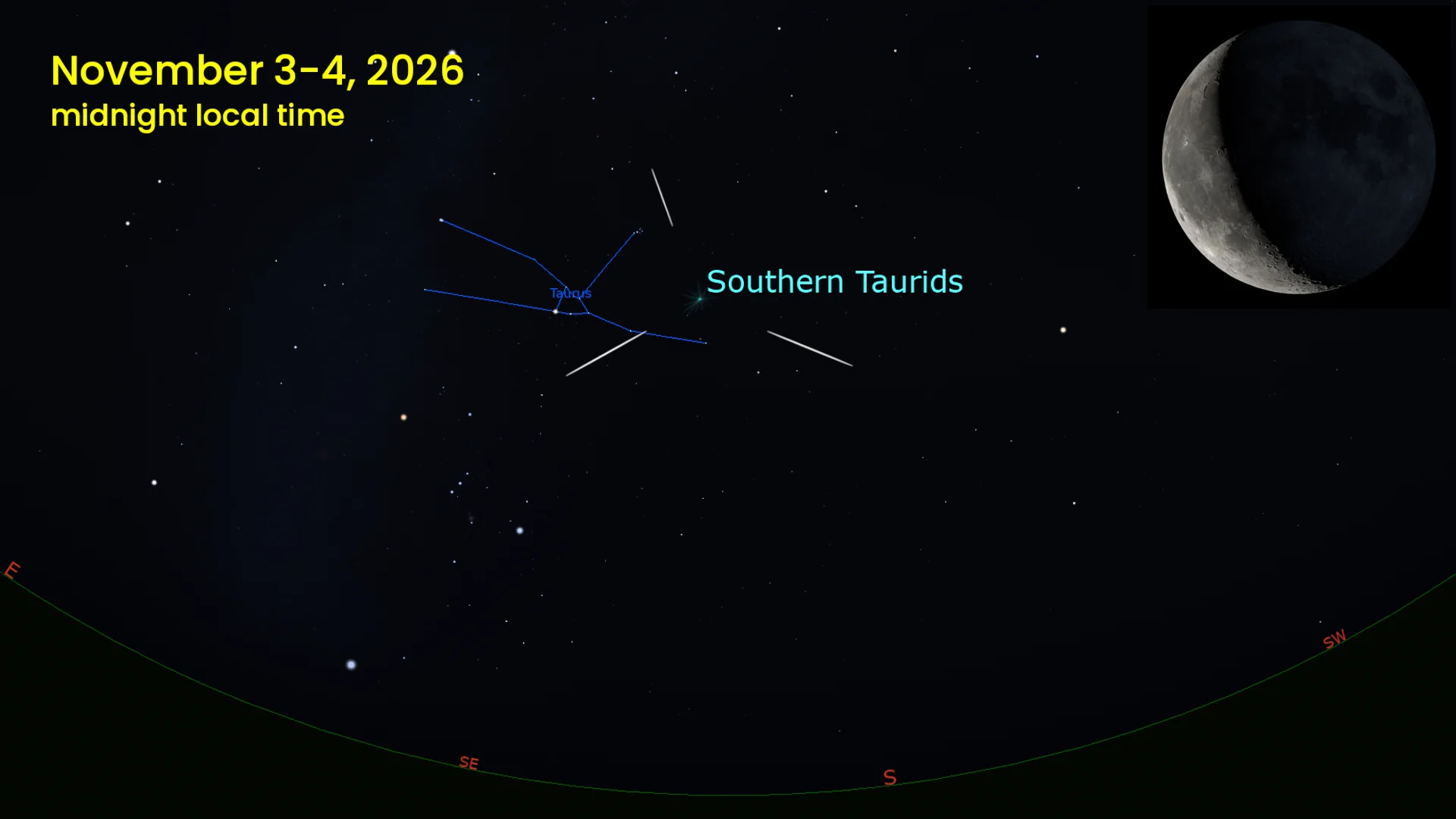
The radiant of the Southern Taurid meteor shower in the southern sky on November 3-4, 2026. (Stellarium/Scott Sutherland)
The twin meteor showers — the Southern Taurids and Northern Taurids — are the next to peak.
The Taurids originate from one of the most complicated meteor streams currently known, as they originate from a pair of overlapping debris streams, each of which has been traced back to a different object — comet 2P/Encke for the Southern Taurids, and asteroid 2004 TG10 for the Northern Taurids. Careful study of these two have linked them together, though, and both appear to have been part of the same larger comet that broke apart, long ago.
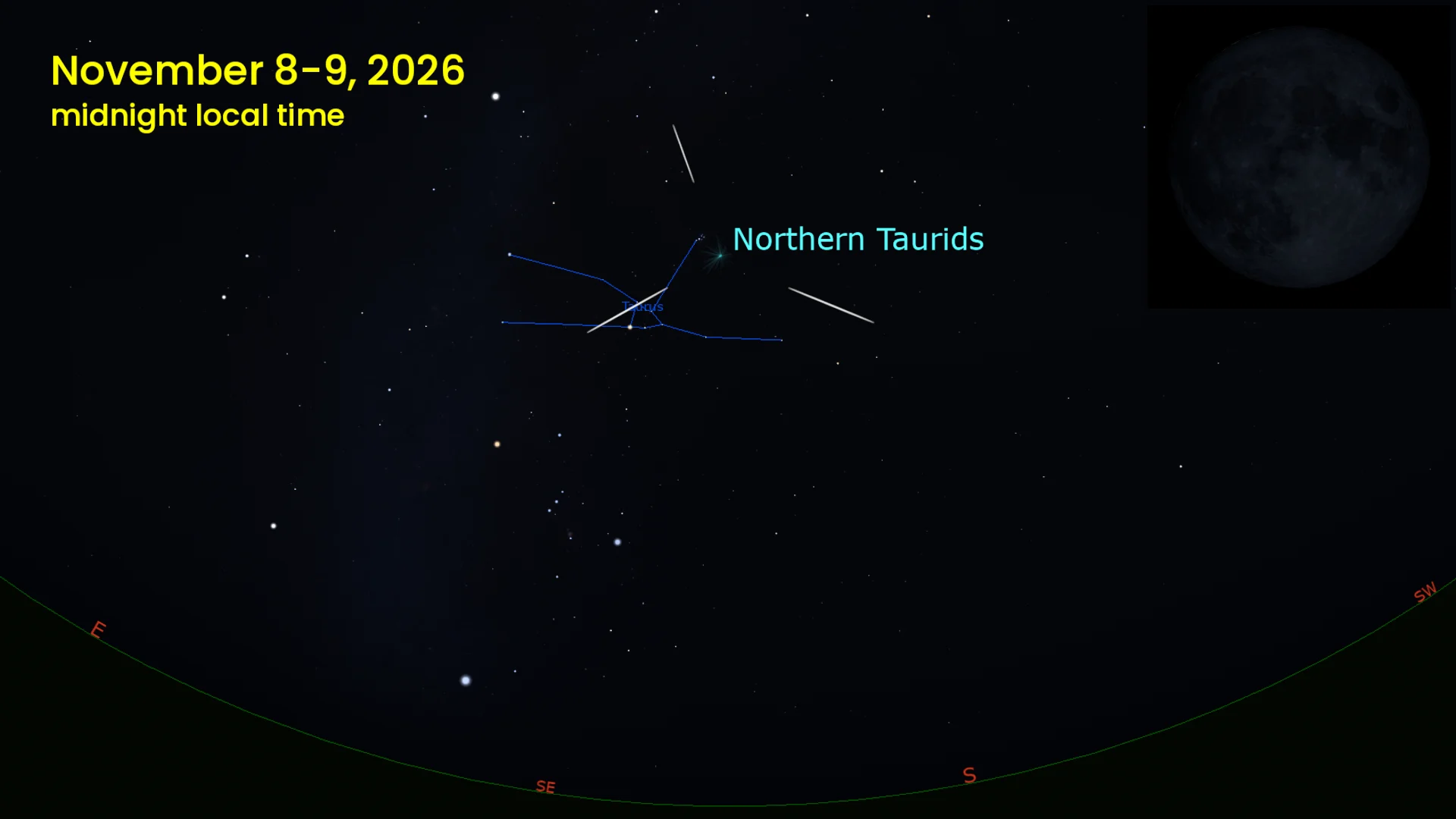
The radiant of the Northern Taurid meteor shower in the southern sky on November 8-9, 2026. (Stellarium/Scott Sutherland)
According to the International Meteor Organization (IMO), the Southern Taurids are expected to peak on November 4-5, and the Northern Taurids should reach their peak on November 8-9. Both are fairly weak, only producing a handful of meteors per hour on their peak nights.
The Leonids
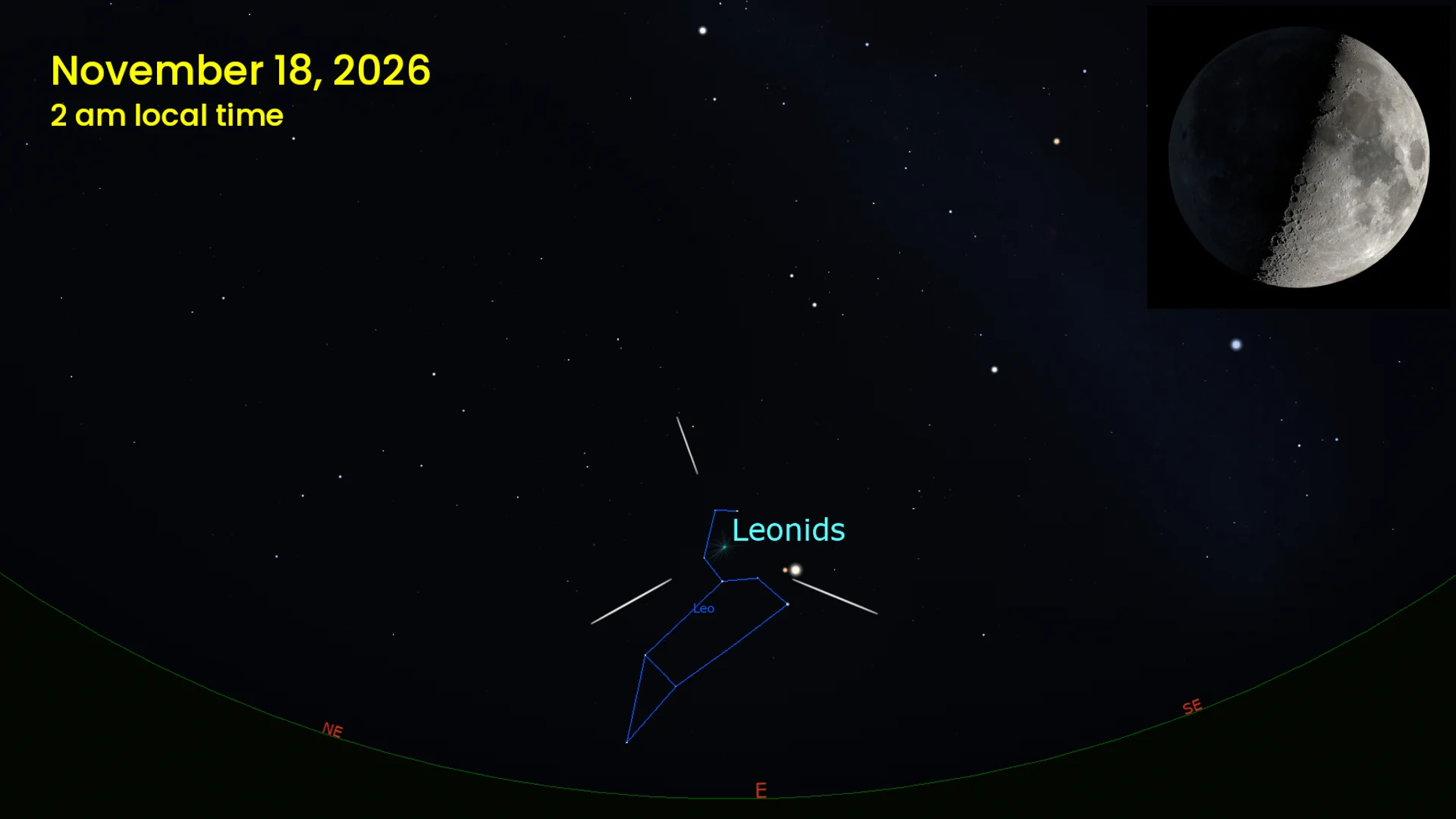
Leonid meteors appear to radiate outward from within the constellation Leo during the November 16-17 peak. (Stellarium/Scott Sutherland)
The Leonid meteor shower is another fairly weak one, which is active from November 6-30 and reaches its peak in the hours after midnight on the night of November 16-17.
During the Leonids peak, we will likely see around 10 meteors per hour.
The Geminids
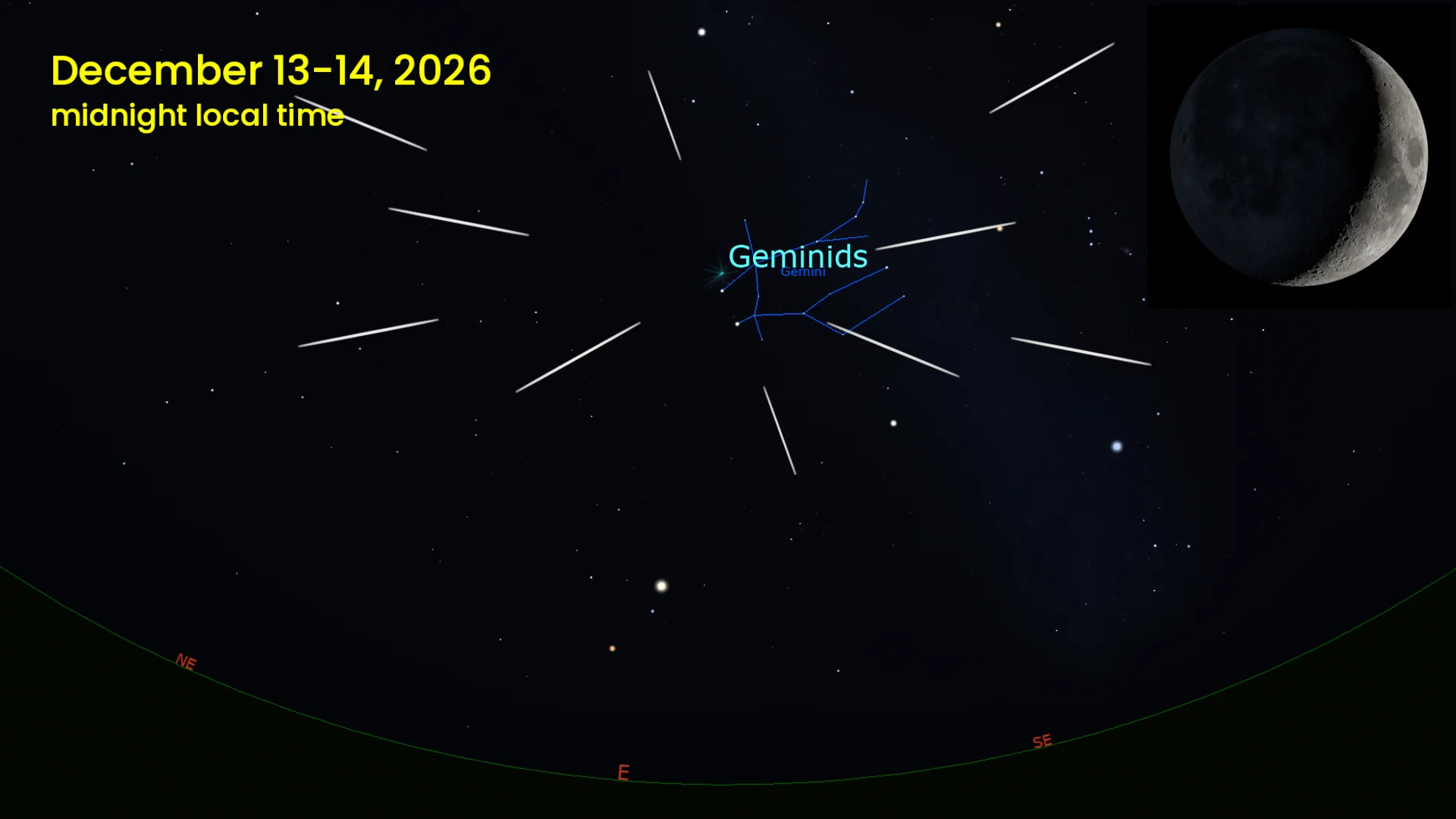
The radiant of the Geminid meteor shower is in the eastern sky during its peak on the night of Dec. 13-14, 2026. (Stellarium/Scott Sutherland)
Last, but certainly not least, is the Geminids — one of the best meteor showers of the entire year.
The Geminid meteor shower originates from 3200 Phaethon, an asteroid with an odd, comet-like orbit. The shower runs from December 4-20, and reaches its peak on the night of the 13th to the 14th.
On that night, the Geminids deliver a fairly consistent show, year after year, with roughly 100 meteors per hour flashing by overhead. Due to the rocky source of this meteor shower, it even produces reasonably bright and sometimes multicoloured meteors.
Plus, with the peak timed just a few days after December's New Moon, moonlight shouldn't cause any significant hindrance to the display it puts on in the sky.
ESSENTIAL READING: How to get the most out of meteor showers and other night sky events
Winter Solstice
At 4:50 p.m. EST, on December 21, the Sun will reach its lowest point in the northern sky, pausing for a moment to mark the Winter Solstice.
This ends the fall season and signals the beginning of astronomical winter for the northern hemisphere.
With files from The Weather Network