Permanent DST could make your morning commute more dangerous

The morning commute could grow hazardous across much of Canada this winter as provinces shift away from “falling back”
Many provinces and regions across Canada moved away from “falling back” in 2026, permanently fixing their clocks in summer mode.
This large-scale shift to year-round Daylight Saving Time (DST) will have plenty of impacts, both good and bad, on folks from British Columbia to northwestern Ontario.
One of the major (and perhaps overlooked) drawbacks is the impact of darkness and winter weather on the morning commute.
DON'T MISS: Sleep experts say Manitoba should reconsider daylight time over standard time
The time shift means later sunrises
We can’t alter the length of those short winter days, of course. But we can change how we interact with both daylight and darkness. This global debate continues to rage across Canada, the U.S., and throughout the European Union.
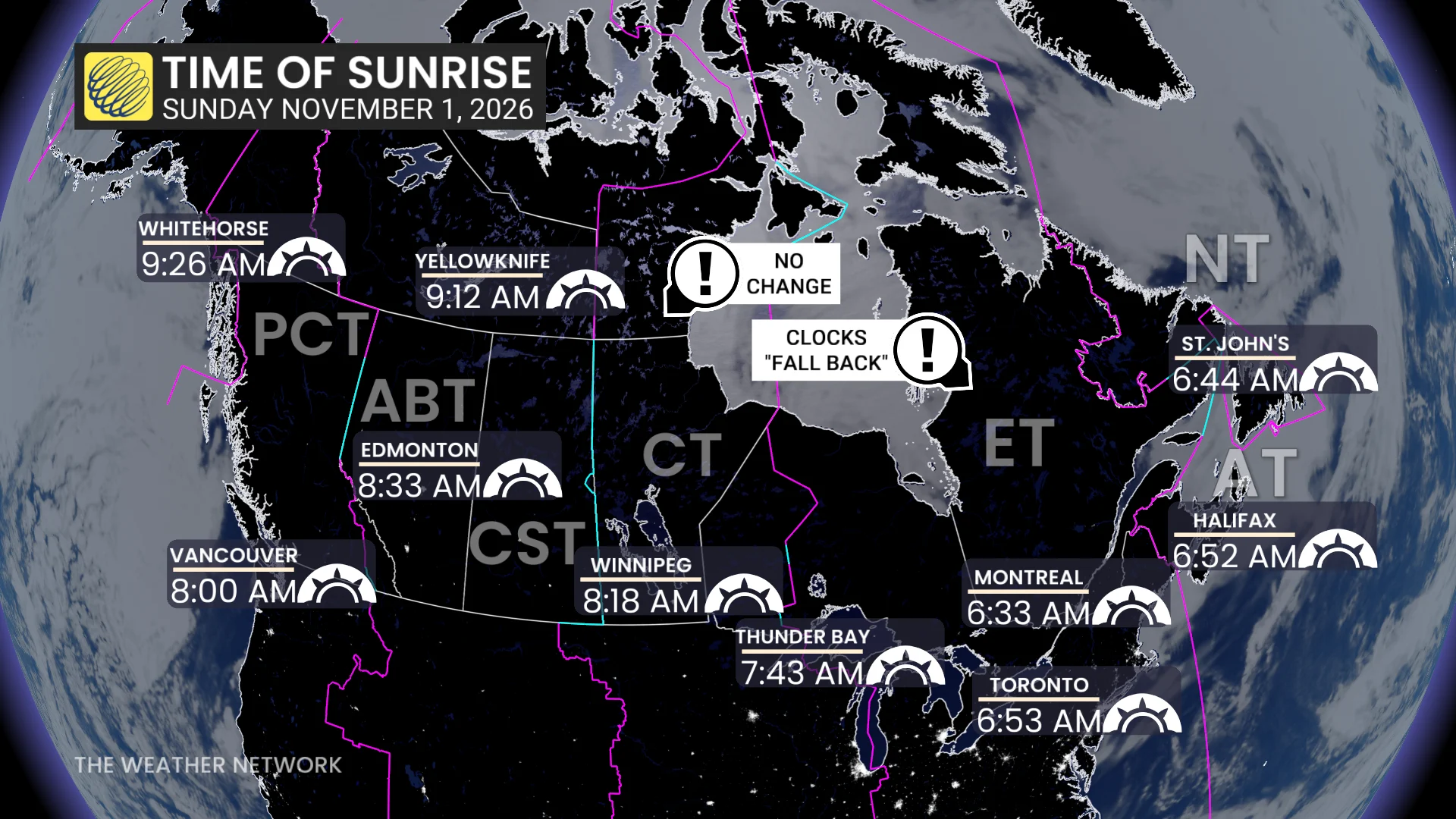
British Columbia, Alberta, Manitoba, the Northwest Territories, and parts of northwestern Ontario decided to put a stop to the twice-annual time shift in 2026, opting to keep their respective regions on permanent summer time.
This long-sought change aims to end the disruption of changing the clocks -- and schedules, and sleep patterns -- in both March and November.
As a result, the sun will set an hour later during the cooler months, providing residents the opportunity to enjoy some sunlight after work and school.
But that extra hour of daylight has to come from somewhere.
Adding risk to the morning commute
This change will push the sunrise one hour later into the morning commute. Many of the regions that ended the time shifts will now experience the sunrise at or after 9:00 a.m. during the heart of winter. The sun won’t rise in Edmonton until 9:50 a.m. on Jan. 1.
RELATED: Snow paradox: Why 2 cm of snow can actually be worse than 25 cm
Some experts say that permanent DST may lead to unintended health effects. "Morning light realigns our biological clock and optimizes how we feel," according to a sleep researcher interviewed by the CBC after Manitoba finalized their time decision.
But these changes will also have immediate effects on physical safety.
Most kids across Western Canada will now wait for the bus or walk to school in complete darkness. This fact in particular prompted lawmakers in the U.S. to end permanent DST after just one year in the mid-1970s.
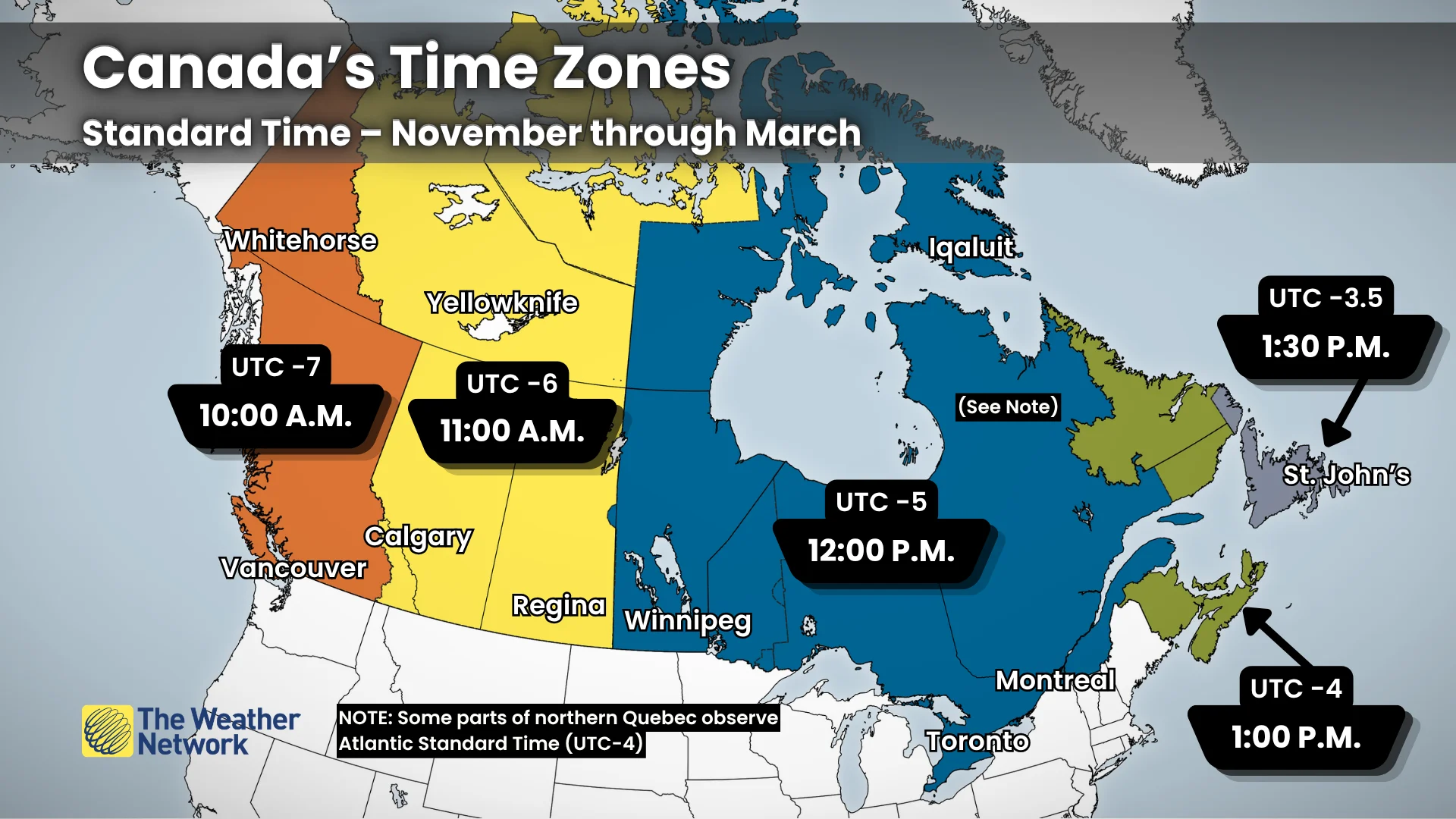
Winter weather impacts will shift one hour deeper into the morning commute as a result of this change.
Exceptionally frigid temperatures or dangerous driving conditions that used to occur at 7:00 a.m., for example, will now occur at 8:00 a.m. instead. One- or two-hour delays may not be enough time for school systems or businesses to avoid icy roads or poor visibility.
Motorists may also have to battle extra drowsiness due to the darkness. Driving while tired can both impair reaction time and worsen a driver’s judgement, leading to a greater risk for otherwise avoidable accidents.
How to avoid the increased commute dangers
Road safety starts with defensive drivers.
Speed limits, safe following distances, proper lights and turn signals, and monitoring surroundings all go a long way toward preventing avoidable accidents. Distracted driving can be as dangerous as impaired or drowsy driving.
Pedestrians should also pay attention to their surroundings, avoiding headphones, earbuds, or staring at phones while walking or waiting in the dark. High-visibility clothing can also improve safety.
Motorists should also keep proper safety equipment in their vehicles for commuting in winter weather conditions.
Header image created using graphics and imagery from Canva.