
The ‘Super Outbreak’ was the strongest tornado outbreak on record

The outbreak produced the most F5 tornadoes ever observed in one day
The most intense tornado outbreak on record hit 13 states and southern Ontario in the opening days of April 1974, solidifying its spot in history as the 'Super Outbreak' against which all future outbreaks would be measured.
Experts confirmed nearly 150 twisters over the course of 24 hours, many of which produced violent, high-end winds.
The outbreak proved to be a formative moment in meteorology, proving the worth of advanced warnings while advancing the field of tornado science.
DON'T MISS: The most prolific tornado outbreak tore grass out of the ground
A perfect setup leads to dozens of intense twisters
Tornadoes are rare for a reason. A thunderstorm needs the right mixture of instability, moisture, and wind shear in order to spawn a twister.
Even then, scientists are still working to figure out why one thunderstorm can produce a tornado while a seemingly identical storm doesn’t. This rarity makes full-blown tornado outbreaks all the more terrifying.
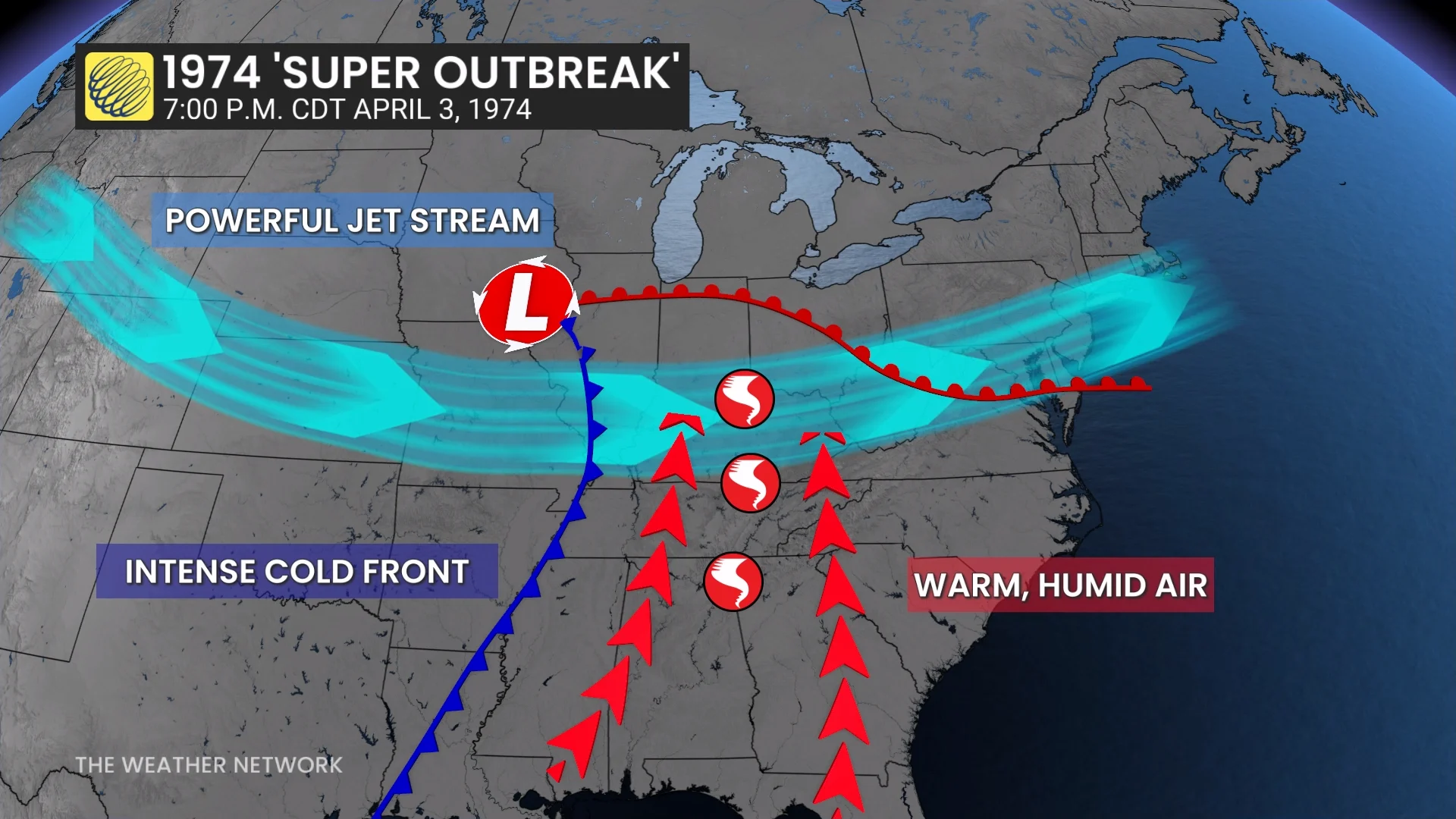
A perfect setup of ingredients came together on April 3, 1974, as a low-pressure system lifted toward the Great Lakes.

Swarms of severe thunderstorms bubbled up from Alabama to southern Ontario. Powerful wind shear in the atmosphere forced most of these storms to spin into supercells that produced high winds, huge hail, and intense tornadoes.
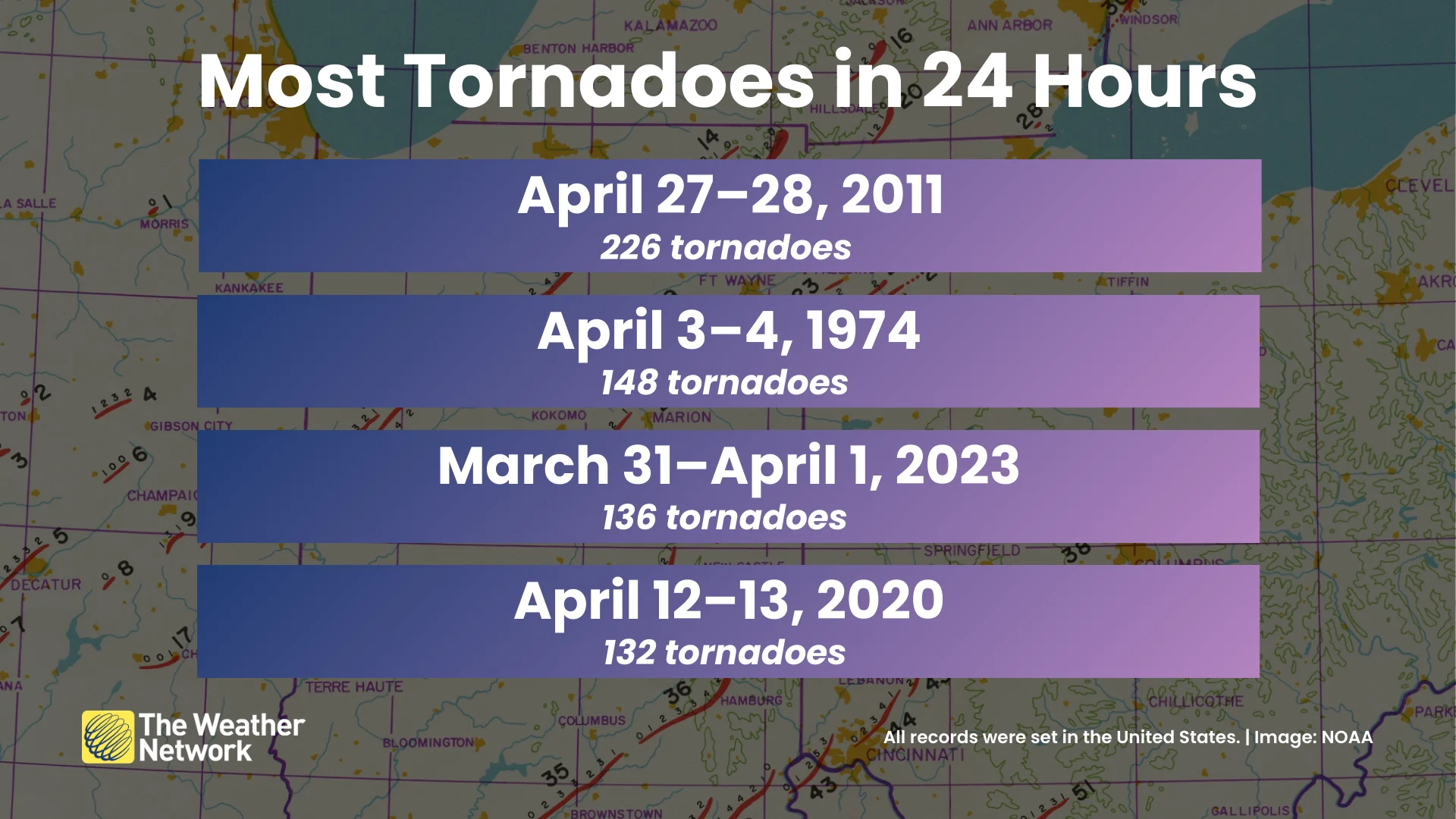
One of the worst tornado outbreaks in recorded history unfolded over the next 24 hours. Officials confirmed 148 touchdowns across 13 states and Ontario.
MUST SEE: How Doppler radar revolutionized weather and saves lives
All of those twisters occurred within a 24-hour period. This held the record as the all-time one-day tornado count until the April 2011 outbreak eclipsed the former recordholder.
More than 60 per cent of those tornadoes caused significant damage along their paths. Seven tornadoes received scale-topping F5 ratings, while 23 more were rated F4, an unprecedented count that still stands to this day.
The twisters killed more than 330 people, including nine fatalities at a sporting venue in Windsor, Ont. This count may have been much higher if not for the relatively new warning network in place when the outbreak occurred.
Forecasters used radar technology to identify storms capable of producing tornadoes. Subsequent warnings were sent over television and radio using the Emergency Broadcast System.
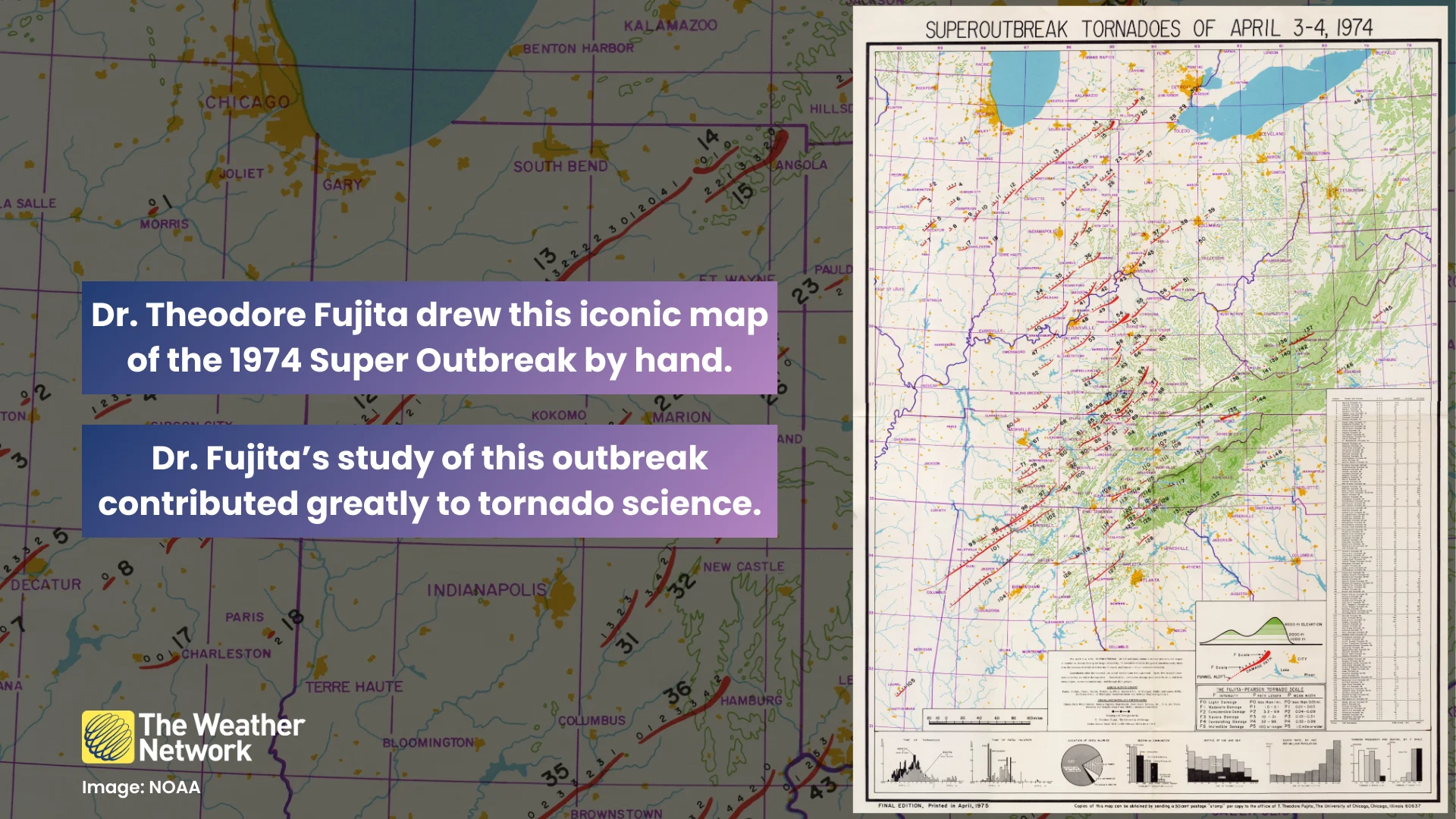
Dr. Theodore Fujita extensively studied this outbreak in the months and years following the storms. His findings helped advance the understanding of the physics and processes behind tornadoes. The extensive research also helped Fujita refine his eponymous tornado rating scale.