Calgary water main work, restrictions to stretch into next week

Calgary has several days' more worth of work to fully restore the city's water system, as officials detailed on Thursday the repairs and testing that will to stretch into next week to recover from the ruptured Bearspaw feeder main.
But the city said it is too soon to say when water restrictions could be lifted.
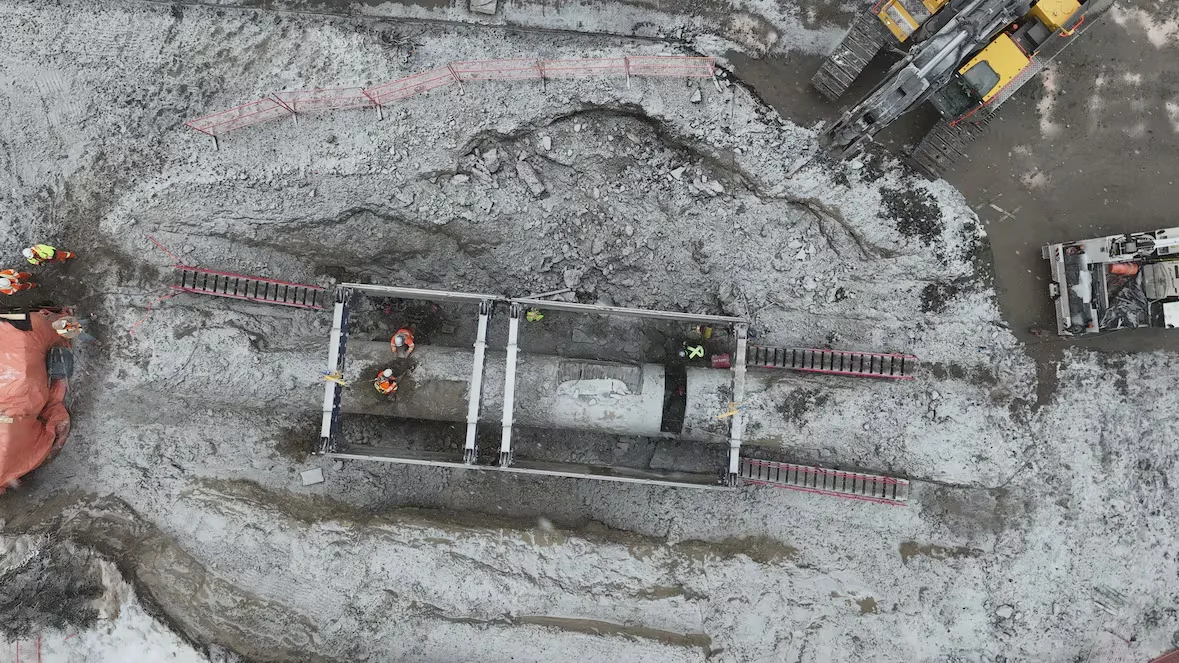
The replacement pipe has been installed, and crews are now backfilling the hole, said Michael Thompson, the general manager of Infrastructure Services.
RELATED: No drop in Calgarians' water usage despite water main break
Next, crews will begin to repave the broken stretch of 16th Ave. N.W. above the feeder main.
After that, there are four steps to restore the feeder main to service, Thompson said. He says workers will need to move carefully through each stage.
“This is delicate work. Each one of these steps carries risk and it is likely that we could have setbacks along the way,” said Thompson.
The city had previously set a goal to have repairs completed two weeks from when the pipe burst on Dec. 30. However, it's unclear all this work can by done by next Tuesday, Jan 13.
Timeline for restoring main to service
It will take about 48 hours to fill the replaced pipe with 22 million litres of water from the Bearspaw water treatment plant. There will be an increase in pressure as that happens, which increases the risk of another rupture, Thompson said.
Once its filled, the water will need to be tested to ensure it is clean and safe. Water samples will be taken and sent for analysis, a process that takes another 24 hours to monitor for any bacteria growth.
If there are any issues with the water quality, the water in the pipe will need to be replaced and retested.
Then the water system's pressure needs to be stabilized, a process that takes another 48 hours, and comes with the highest level of risk, Thompson said.
Only after all those steps can water conservation measures end. That will happen in stages, Thompson said, with a timeline still to come.
Calgary's new flood mitigation
In the meantime, the city will be taking some mitigation actions to reduce the risk of more flooding if another water main break happens.
That includes removing two sections of the Bow River flood barrier along Montgomery Blvd. N.W. across from Bow View Manor, said Sue Henry, chief of Calgary Emergency Management Agency.
While it might seem counterintuitive to remove a flood barrier to prevent a flood, Henry says it's a necessary step to allow water to run off into the river in the event of a break.
"This flood barrier is meant to keep river water out of the community, but if there is a break in the pipe, it would also trap water in the community," she said.
Henry said officials are actively working on a backup plan to replace the sections if needed during flood season.
The city will also clear catch basins and change some manhole covers to allow water to drain more quickly if needed.

Water use straining system
“We are turning a corner, but I want to be very clear: we are not in the clear yet,” Mayor Jeromy Farkas told the briefing.
Henry stressed that water usage continues to strain the system, which could leave it unable to absorb sudden increases in demand in the event of an emergencies like firefighting.
On Wednesday, the city and its neigbhours used 507 million litres of water from the system, higher than the target sustainable level of 485 million litres, according to city statistics.
If every individual reduces their daily use by 30 litres, that will get the city to target levels to ensure adequate water supplies, Henry said.
“Think of the storage locations around the city like your cellphone’s battery,” she said, where water is used throughout the day before reserves are replenished at night.
“If water use pushes us beyond that, it's like draining your phone battery too far,” said Henry.
Residents are asked to take showers of three minutes or less, reduce flushes and run dishwashers and washing machines only when loads are full.
To further demonstrate the point, Henry showed off an empty 20-litre water jug.
“When you look at it in this perspective, this is not a lot of water,” she said, adding that even just skipping a few flushes a day gets someone closer to the target 30-litre daily reduction.
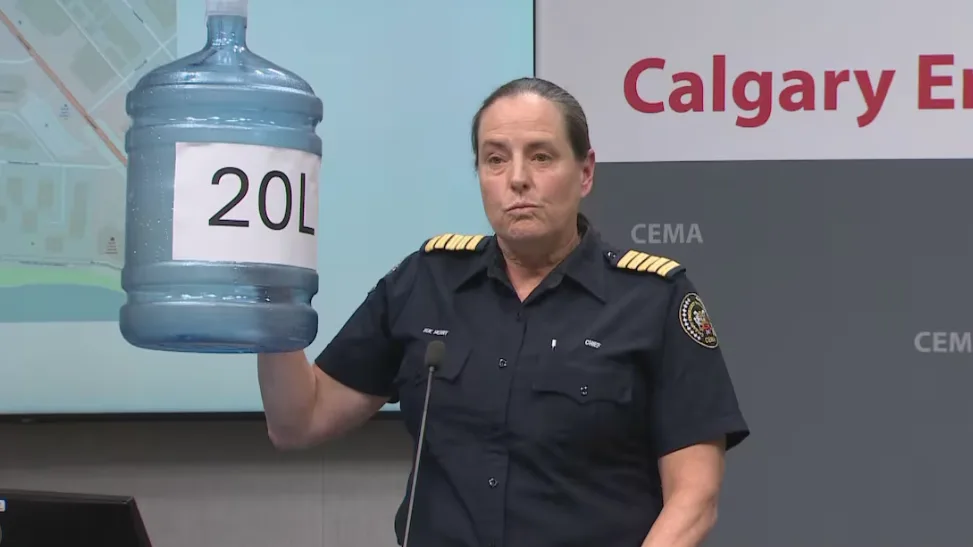
The city is asking residents to reduce their water usage by 30 litres daily, a bit more than this water jug displayed by Calgary Emergency Management Agency chief Sue Henry (CBC)
City officials were asked whether they were considering limits on car-wash businesses.
Thompson said car washes are not high offenders for water use, because 85 per cent of the water they use is recycled.
“But we're asking Calgarians: if you don't need to wash your car at this time, please don't,” he said.
On Wednesday, the City of Calgary issued a water supply alert through the Alberta Emergency Alert, asking residents to conserve water intake.
The message was broadcast across social media.
It wasn't a critical alert that gets sent directly to cellphones and interrupts media broadcasts, because those can only be sent when there is an immediate threat to life, according to a message this week from the Alberta Emergency Alert's social media channel.
Henry said a critical alert is not necessary at this time, but the city is ready to send one if it comes to it.
"We only get one shot at that through an event like this. We need to save that shot for when we absolutely need citizens to take an action and take an action now," Henry said.
Thumbnail courtesy of City of Calgary via CBC.
The story was originally written and published for CBC News.