
Extreme cold prompts 'exploding tree' warnings

Frigid temperatures have taken hold of the U.S. Midwest, with the thermometer hovering around the -30°C mark in some places.
The extreme conditions are enough for local meteorologists and newscasters to take to social media to warn of an ‘exploding tree’ risk:
This sounds like a lot, and it can be for the tree, but we do not live inside a Michael Bay film. The trees don't explode into a fiery ball, but an event like this can be quite loud.
What causes trees to 'explode' in the cold?
This relatively rare phenomenon can occur when it cools down enough for the sap inside a tree to freeze, which then expands due to its high water content. In some circumstances, that creates enough pressure to tear open the bark, accompanied by a loud noise.
Generally speaking, native plants are equipped to handle the cold. Bark provides insulation, and cold tolerance builds throughout the season. But if the temperature drops outside of the norm, or if the air chills before a tree has time to acclimatize, it can cause an 'explosion,' which is also referred to as a 'frost crack,' the National Forest Foundation says on its website.
Frost cracks are also common in spring, due to fluctuating temperatures.
While a frost crack can permanently damage a tree, it likely won’t kill it, the Government of Manitoba says. Cracks typically heal over the summer, but can reopen in the winter. Repeated cracks, followed by healing cycles, can cause the formation of a permanent scar called a “frost rib.”
The cracks can also leave the tree more vulnerable to wood decay organisms.
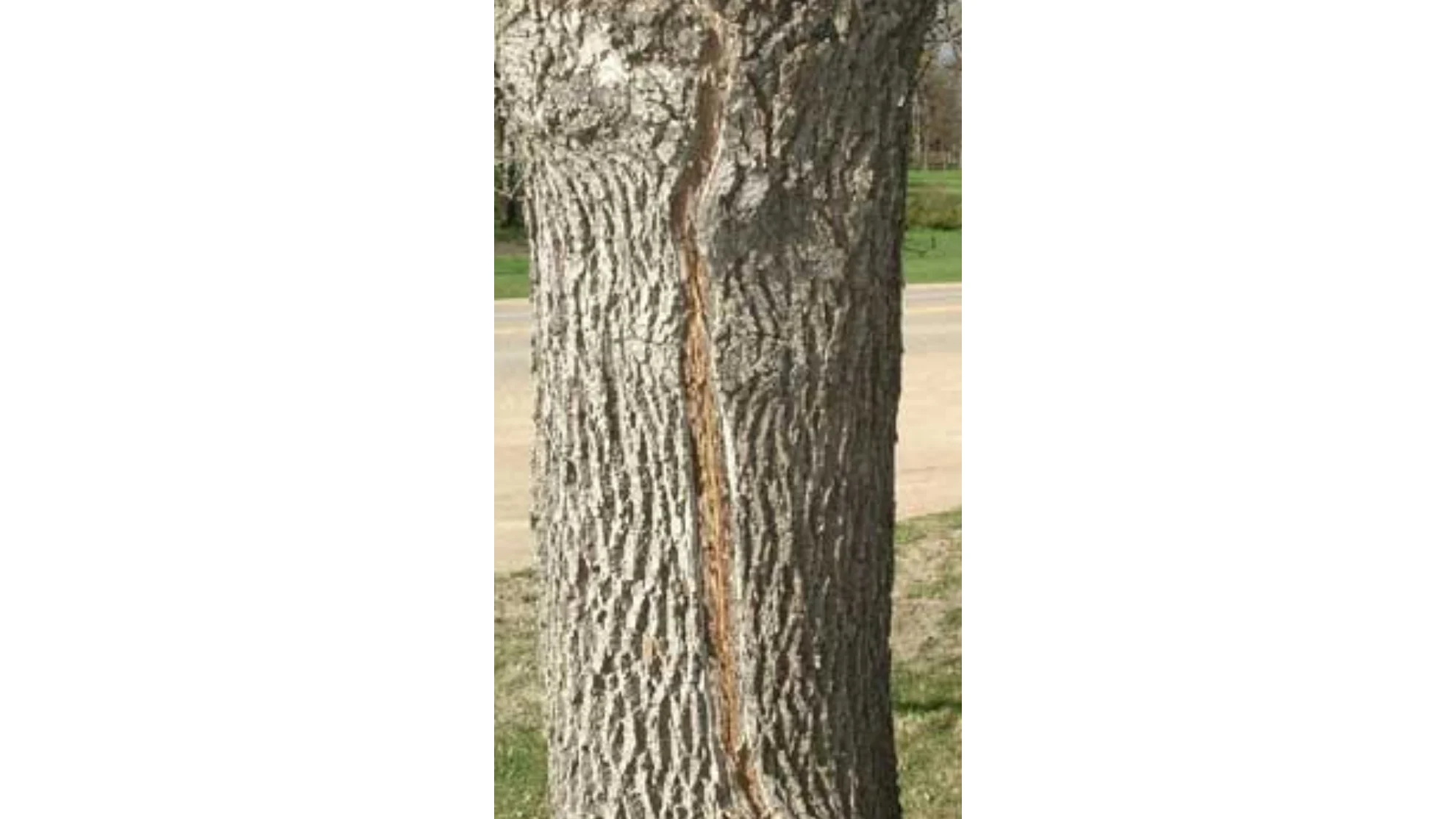
Example of a frost rib on a green ash tree. Damage apparently occurred years before the photo was taken. (Government of Manitoba)
Extreme cold warnings remain in place across the U.S. Midwest, with frigid temperatures expected to remain in place until next week.
Header image: File photo via Canva Pro.