The blizzard that caused an avalanche in St. John’s, Nfld.

Five people died when a deep snowpack gave way at the top of a hill in a steep St. John’s neighbourhood
A powerful and memorable blizzard struck St. John’s, Newfoundland, in the middle of February 1959, triggering two avalanches that killed several people on the shores of St. John’s Harbour.
The core of the winter storm grazed the Avalon Peninsula along just the right track that brought intense snowfall and high winds to St. John’s.
RELATED: What turns a snowstorm into a raging blizzard?
Snow began falling in the city around noon on Feb. 15, building in intensity through the day. St. John’s wound up with 54.9 cm of snow from the system, a whopping total that stands today as the city’s ninth-snowiest day on record.
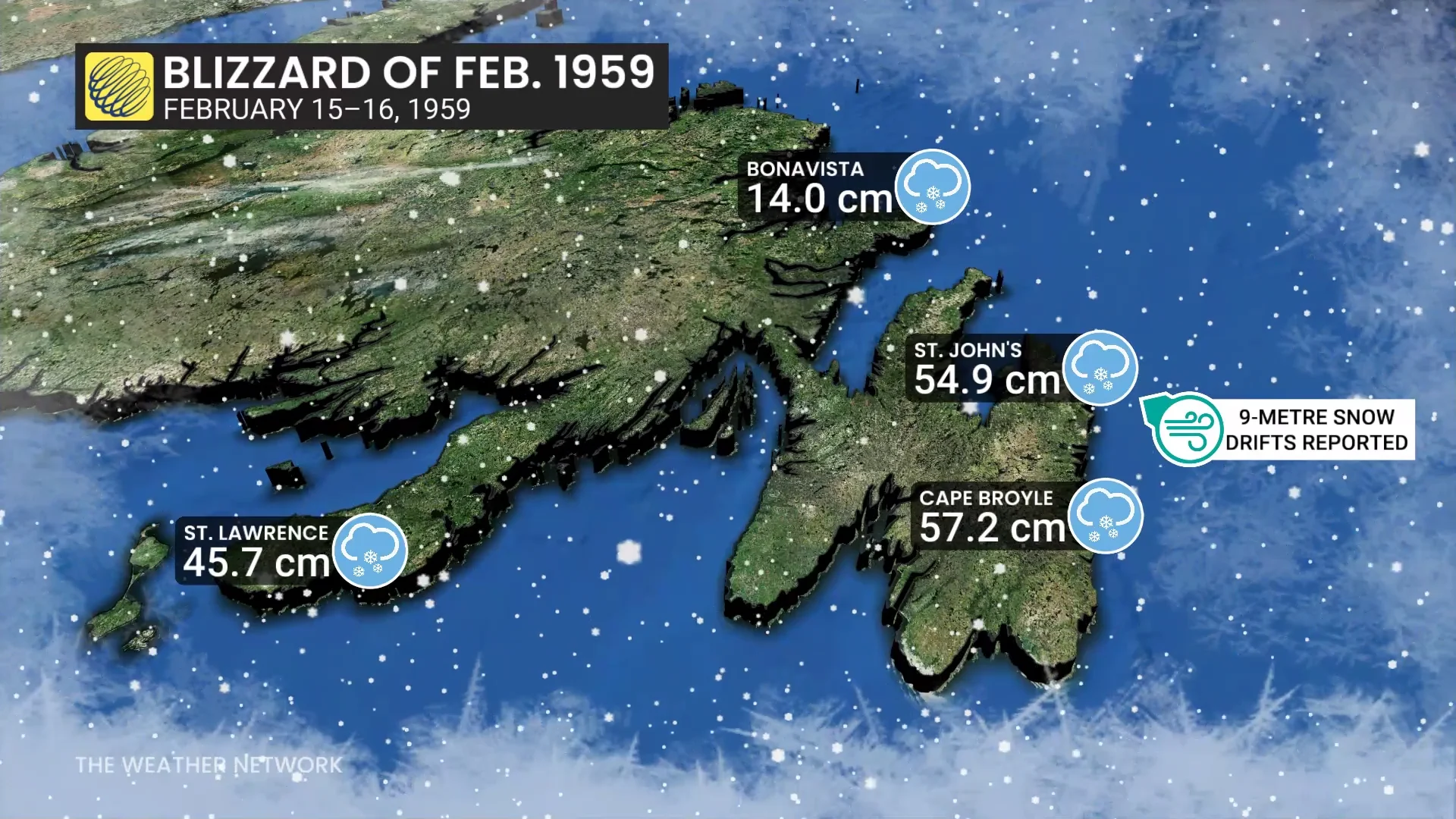
Wind gusts higher than 200 km/h were reported in spots at the height of the storm, whipping the snow into enormous drifts.
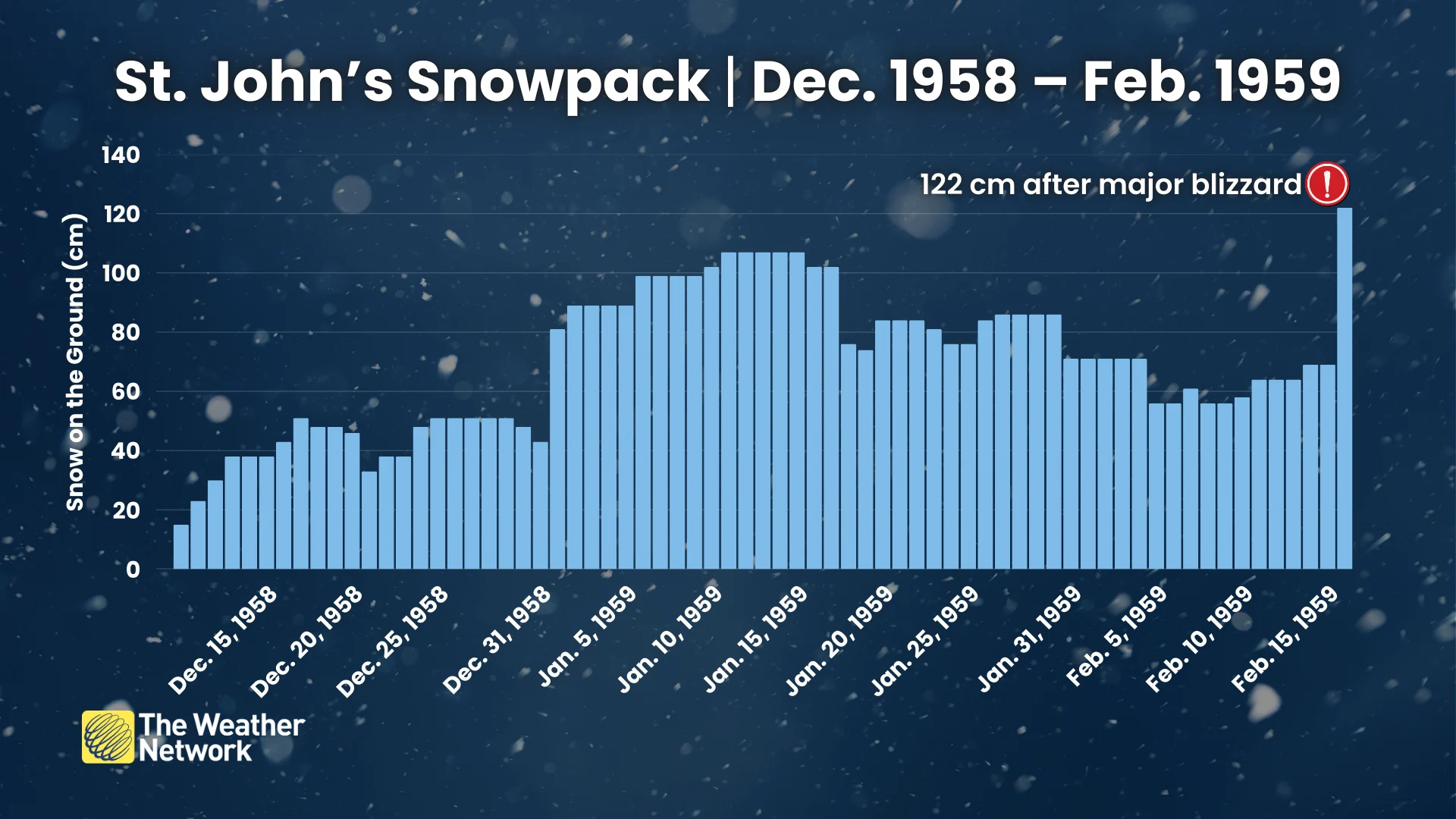
The winter of 1958-59 had already been a snowy one for St. John’s. Observers at the airport reported 69 cm of snow on the ground the day before the big blizzard arrived, ballooning the total snow on the ground to 122 cm.
“The storm isolated the island capital for more than twelve hours,” the New York Times reported the following day. “Snowdrifts as high as thirty feet [9.1 m] in the one section of the city forced residents to use second-story windows as exits.”
Tragedy struck in the wake of the blizzard when an avalanche destroyed several homes in The Battery, a steep neighbourhood on the slopes of Signal Hill at the northern mouth of St. John’s Harbour. Five people reportedly died in the incident.
A summary from Public Safety Canada documented the harrowing event.
“An avalanche struck two houses and swept them down the slope, hitting two other houses. Over 50 rescue workers and residents worked for 12 hours, digging through the snow and the debris to free trapped residents.”
Newfoundland’s rocky, rugged terrain makes certain parts of the island susceptible to avalanches after a particularly snowy stretch of winter weather.
The provincial government has recorded more than 40 noteworthy avalanches since the late 1700s, many of which resulted in fatalities.
Header image created using graphics and imagery from NASA and Canva.