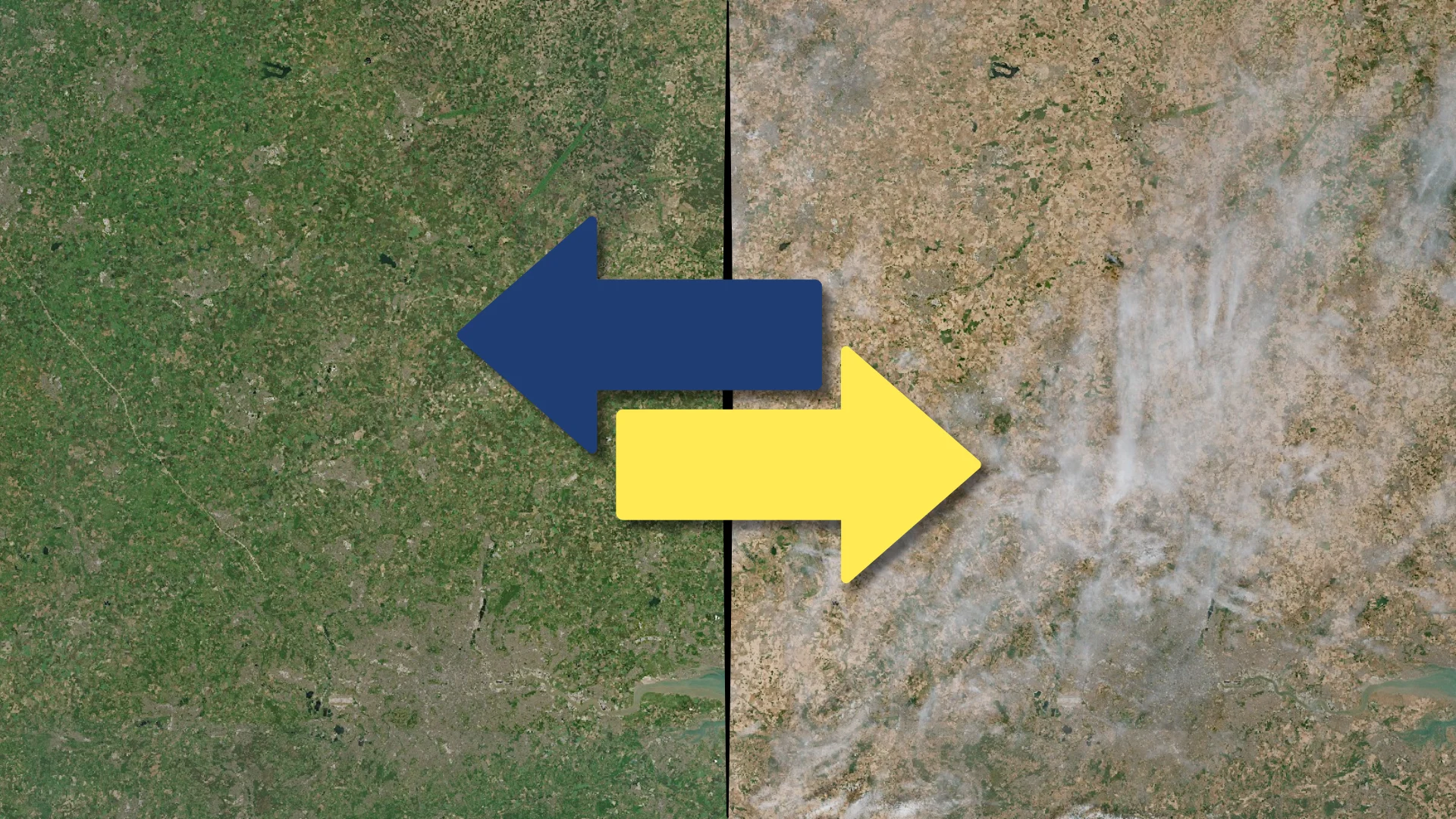
Historic dry spell makes England look brown from space

The lush greenery that blankets England’s landscape during the warm season is uncharacteristically brown due to a record-dry July
The United Kingdom is visibly suffering from extended spells of high heat and minimal precipitation this summer.
A quick glance from space reveals vast swaths of brown, desiccated vegetation that appeared green just a few short months ago.
As a result of those heat ridges, the U.K. Met Office just announced that England and Wales just endured both their driest and sunniest July on record.
DON’T MISS: Why extreme heat is one of the world’s deadliest weather disasters
Extreme weather isn’t always hurricanes and tornadoes. Sometimes, the lack of eventful weather is a disruptive and destructive extreme.
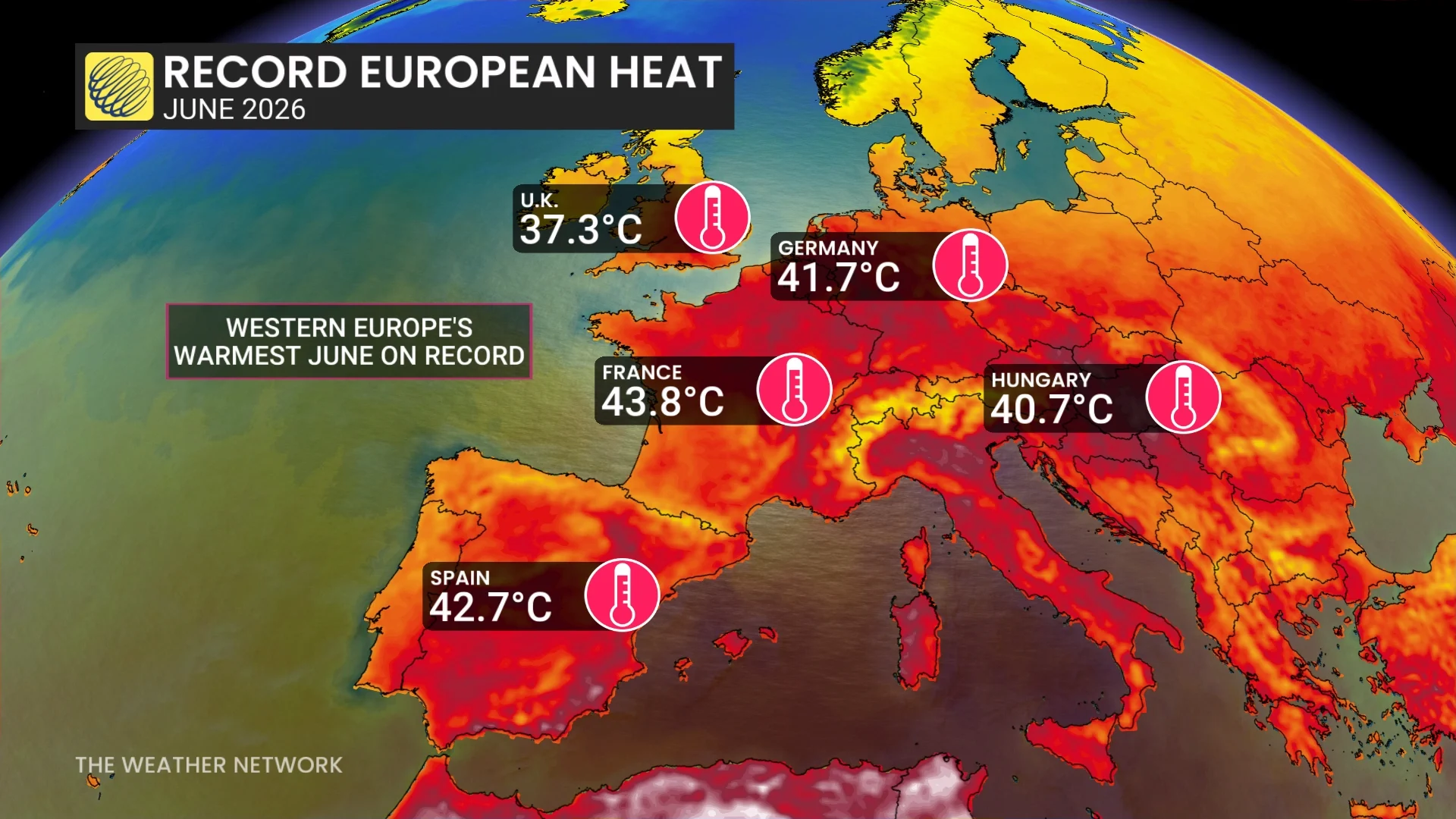
Persistent ridges of high pressure over western Europe this summer have sent temperatures soaring to historic heights on several occasions. Tens of thousands of people may have died in a late-June heat wave that smothered the region.
Raging wildfires across the European Union consumed nearly 465,000 hectares of land through July 29, with France, Spain, and Italy hit the hardest.
The United Kingdom’s Met Office announced on Monday that this summer’s brutal pattern over western Europe resulted in the driest July on record for England and Wales. Conditions were so bad that it was the driest month on record for some sections of southern England.

Overall, an average of just 6.5 mm of rain fell across England during this past July, representing just 10 per cent of its normal rainfall for the month. The month’s overall rainfall in neighbouring Wales was just 9 per cent of average for July.
The Met Office said that nineteen counties across England recorded 1 mm or less of rainfall, including Greater London.
Unsurprisingly, weather stations throughout the region observed record levels of sunshine for the month. England averaged around 306 hours of sunshine during July, which the Met Office says is 156 per cent higher than average.
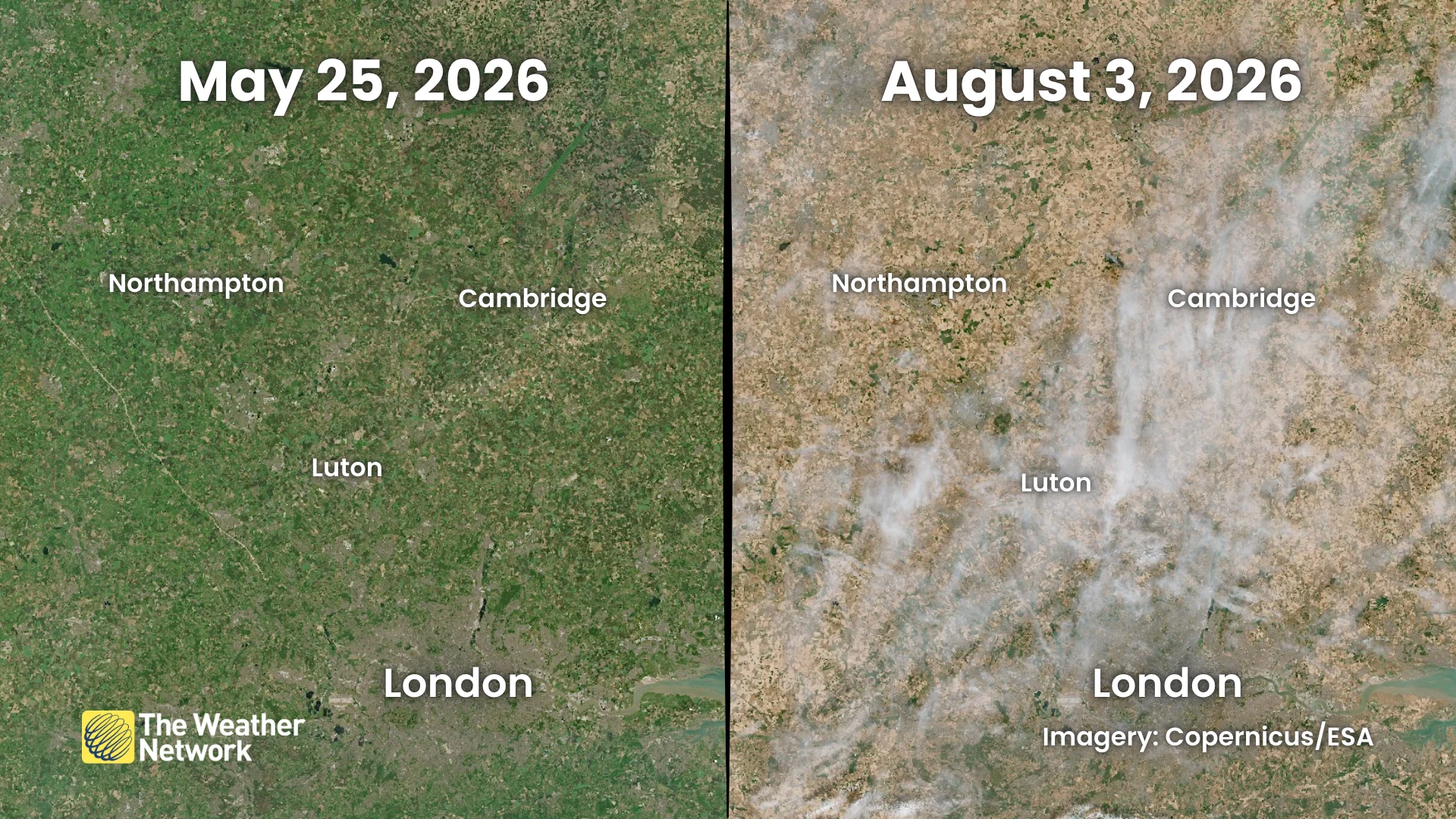
Even without raw data, we can see the effects of the heat waves and flash drought from space. Visible satellite imagery shows a rapid and dramatic decrease in greenery across England and Wales between the end of May and early August.
Satellite views of southeastern England are particularly bleak.
The vibrant fields, lawns, and crops that blanketed the region in late May had almost entirely turned brown by the beginning of August as vegetation rapidly dried out amid lack of rain, high temperatures, and punishing sunshine.