
Invasive grasses could spark new fires in B.C.’s already-burned forests

Burned landscapes are susceptible to invasion from non-native grasses, the study's authors say.
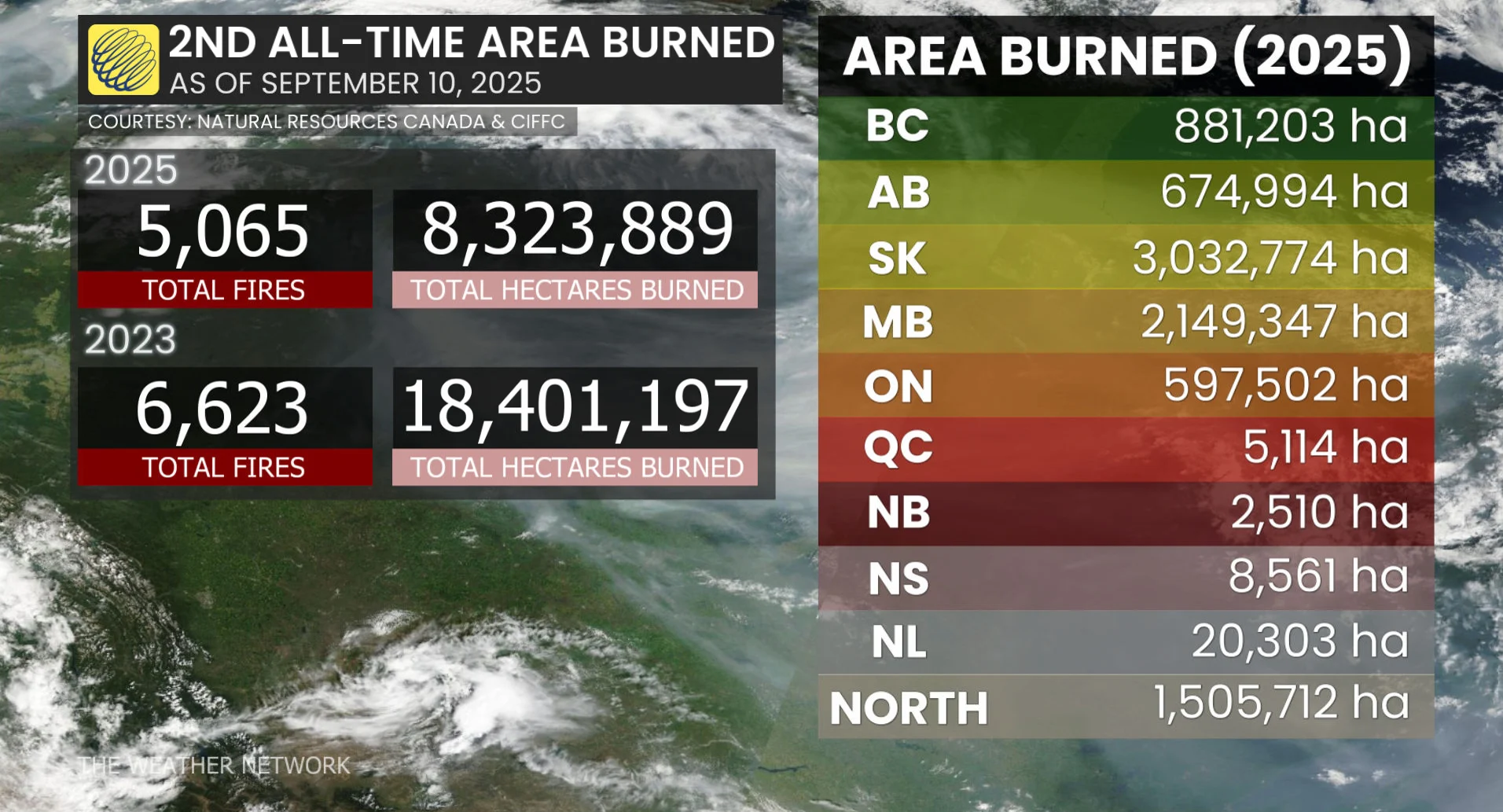
Canada has just experienced its second-worst wildfire season on record. Between May 2025 and November 2025, over 6,000 wildfires and 8.3 million hectares burnt across the country.
It's too early to tell what the 2026 season will bring, but Environment and Climate Change Canada (ECCC) is predicting that 2026 will be among the hottest on record, which can elevate wildfire risk.
Now, new research from the University of British Columbia Forestry & Environmental Stewardship (UBC) suggests burned landscapes can remain vulnerable to additional wildfires for years.
Part of the problem is that the charred land is at risk of invasion from fire-prone, non-native grass varieties.
The study, which UBC calls “one of the largest vegetation trajectory studies in the world,” examined vegetation recovery for two years at the 46,000-hectare McKay Creek wildfire in interior B.C., working in partnership with six Northern St’át’imc communities, who were affected by the disaster.
Once you see it, it may be too late
While some native plants returned to the site, re-growth was slower than expected.
“One of the most pressing concerns is invasive grasses, which germinate early in spring, dry out during the hottest months, and act as dry runways that spread flames at highway speed—a dynamic that contributed to the 2023 Lahaina fire in Maui and is increasingly likely in B.C.’s Interior,” reads a statement on the UBC website.
“Areas that looked like post-apocalyptic ground right after the fire are now blanketed in [invasive] cheatgrass. Once you can see the invasion, the opportunity for rapid response may already be gone,” Dr. Jennifer Grenz, senior author and assistant professor in the Department of Forest Resources Management and a member of Lytton First Nation, adds.
Elevation matters
Landscapes situated at lower elevations, where conditions tend to be hotter, drier, and more prone to experiencing human activity, seem to be more susceptible to invasive plant species.
“Heavy traffic from hikers, ATVs, hunters, and road maintenance equipment continually introduces new seeds, giving invaders like cheatgrass little competition in the valley bottoms,” UBC writes.
Higher up, relatively cooler temperatures and lingering moisture appear to be less favourable to invasive species, although recovery remains slow.
UBC says its team will continue to monitor wildfire recovery so it can help communities plan ahead.
Canada’s wildfires impact the entire planet
A new report by IQAir finds that Canada’s 2025 wildfire season was extreme enough for the country’s air quality to fall below the United States.
Canada doesn’t have the worst air quality in North America: That designation goes to Mexico, which landed at 50 on IQAir’s 2025 list of most polluted countries and regions. Wildfires pushed Canada to 117 in 2025, with the United States taking the 120th spot.
Canada’s fires impacted air quality in the United States and were large enough to affect conditions in Europe as smoke crossed the Atlantic Ocean, IQAir says.
The report analyzed pollution data from more than 9,400 cities around the world and found that only 13 of 143 countries met the World Health Organization’s recommended limits (WHO).
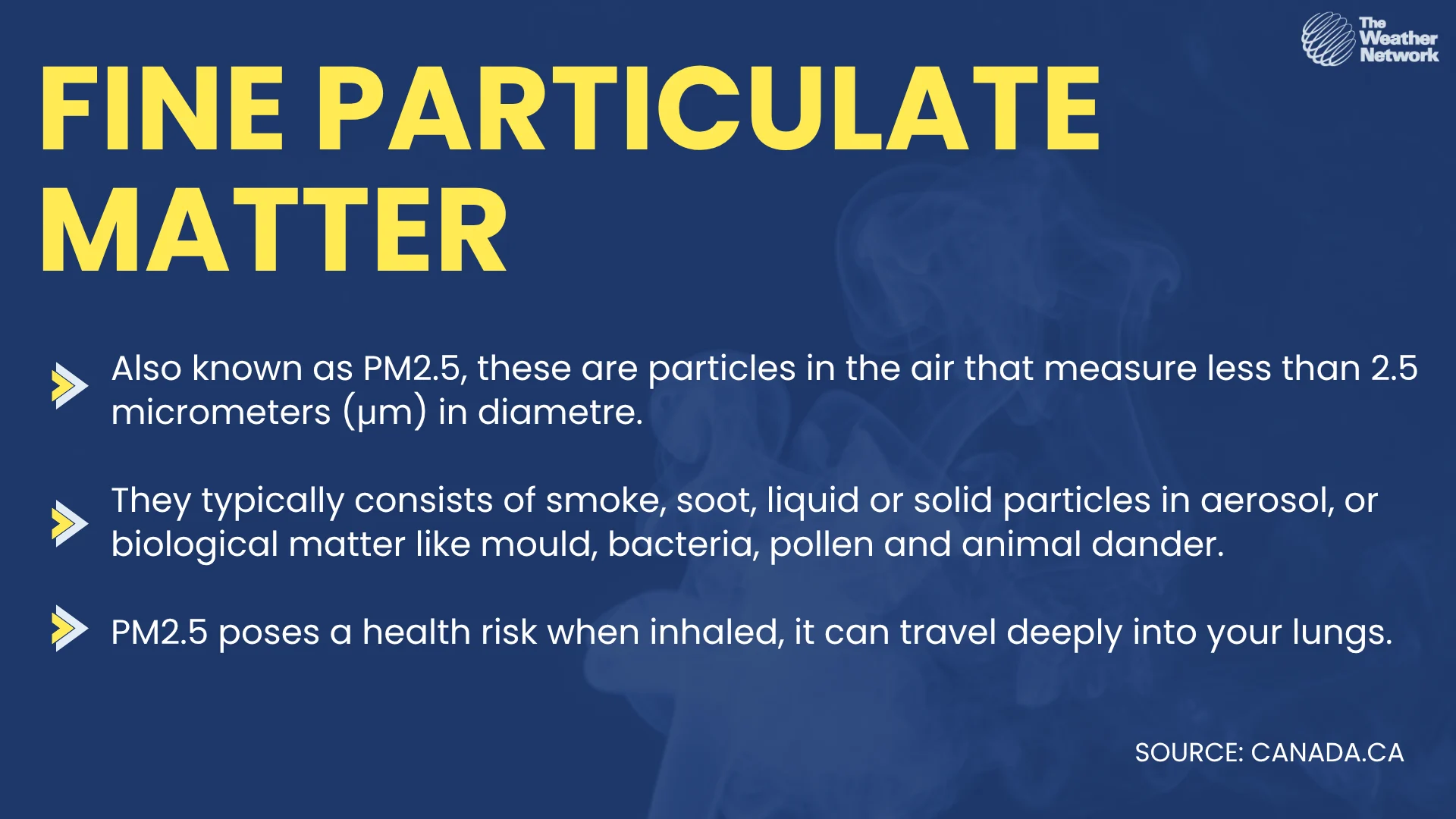
Canada was among the countries that did not meet WHO guidelines. Worsening air quality, driven mostly by wildfires, caused the annual average fine particulate matter concentration to exceed the recommended limit by 1 to 2 times.
Wildfires contributed to worsening air quality across Europe in 2025 as well, with fires incinerating 1.03 million hectares of forest across the European Union in 2025, amounting to the most area burned since record-keeping began.
The combined emissions from Canada and Europe’s wildfires contributed to roughly 1,380 megatons of carbon globally in 2025.
Header image: file photo of the Port Alberni wildfires in B.C. on Aug. 11 2025 (BC Wildfire Service)