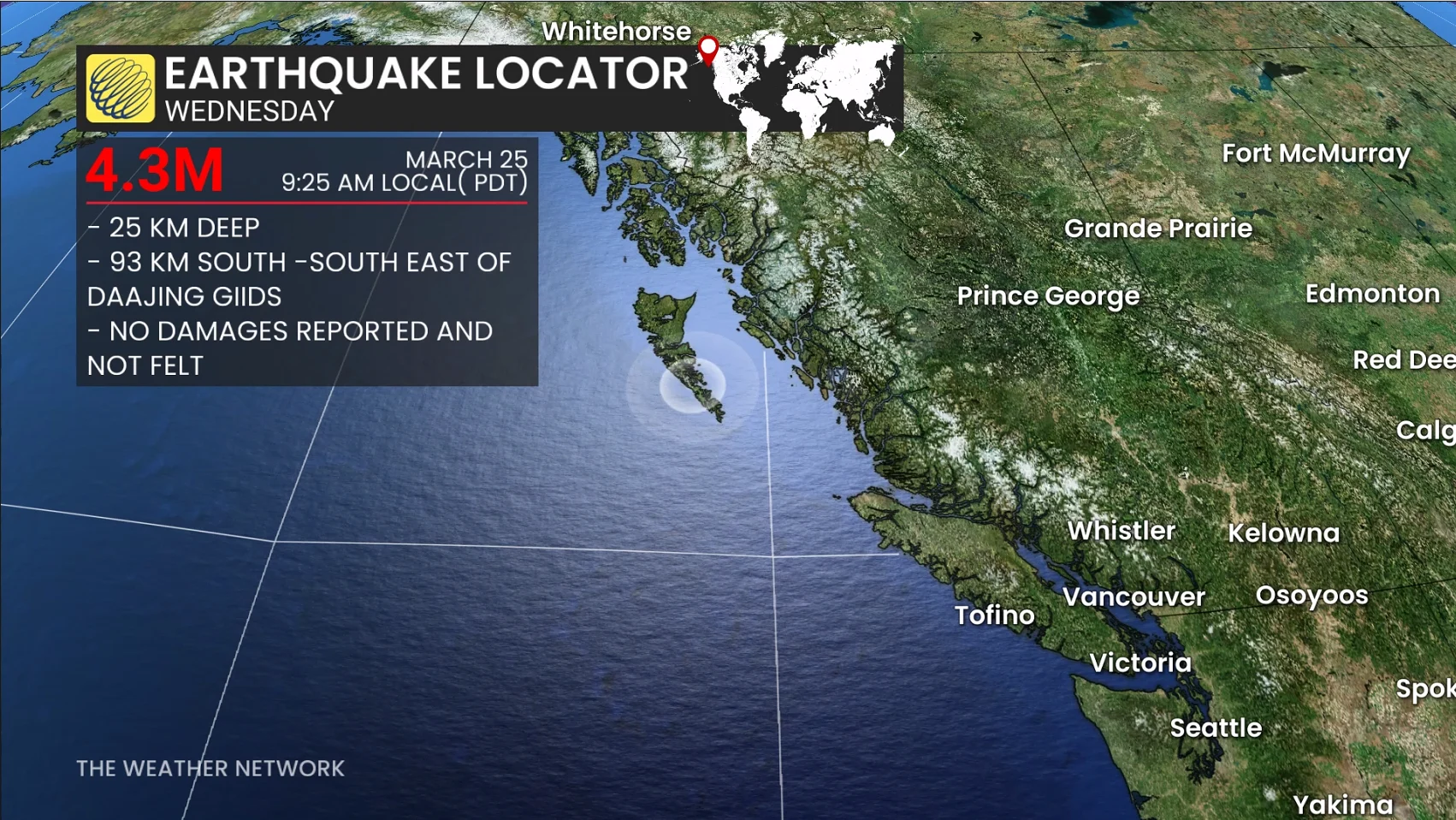
Magnitude 4.3 earthquake strikes off northern British Columbia coast

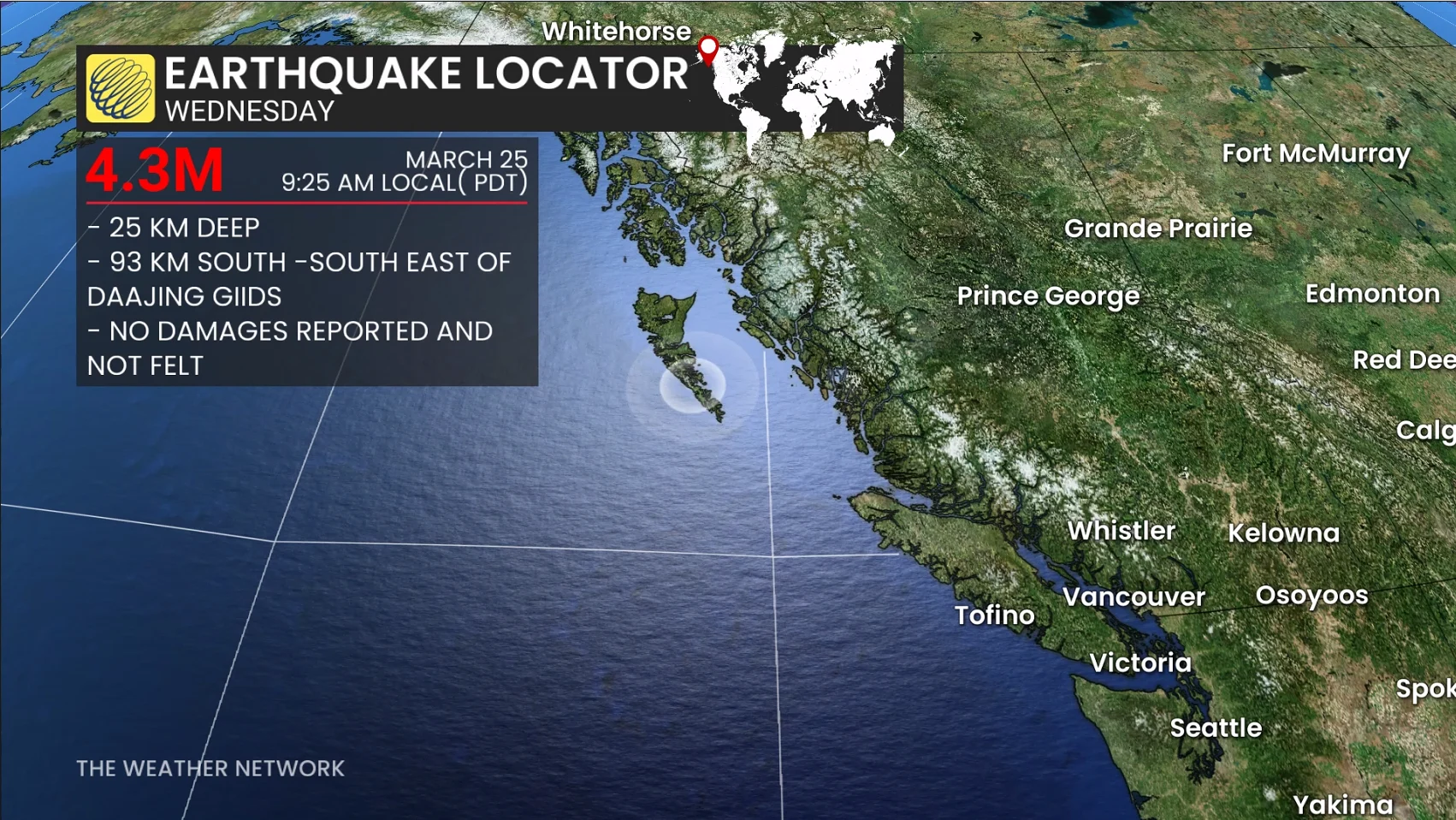
A minor earthquake occurred Wednesday morning approximately 93 kilometres south-southeast of Daajing Giids, a small municipality located on the archipelago of Haida Gwaii, B.C.
According to Earthquakes Canada, the magnitude 4.3 tremor was recorded at 9:25 a.m. local time, and registered a depth of 25 kilometres.
DON'T MISS: Earthquakes are a risk in Canada. Here’s how to stay safe
There are no reports of damage, and none are expected, according to officials.
B.C. is prone to earthquakes, a reminder to be prepared
While this earthquake was minor, it serves as a reminder for British Columbians to be prepared for emergency situations. The Pacific Coast is the most earthquake-prone region of Canada, and seismologists with the Geological Survey of Canada record and locate more than 1000 earthquakes in western Canada each year.
While technological advances make it easier to detect the size or location of a potential earthquake, it's still unclear when the next 'big one' will arrive.
What to do in an earthquake?
In a previous interview with The Weather Network, Naomi Yamamoto, president of the B.C. Earthquake Alliance said the first thing a person should do if they are indoors during an earthquake is to drop, cover their head while taking shelter under a sturdy piece of furniture, and hold on.
It's also important to stay away from exterior walls where there are windows that can shatter, she said.
Despite what many have said in the past, Yamamoto said it is not safe to be under a door frame during an earthquake.
"That's really important that we dispel that myth that you are safe in the door frame," she said.
WATCH: How to safely react when an earthquake strikes
MUST SEE: How Metro Vancouver is earthquake-proofing its reservoirs for the 'Big One'
How to prepare ahead of time?
Importantly, Yamamoto said people should have an earthquake kit in their home and a grab-and-go bag ready.
An at home earthquake kit should have a supply of water and food for 1-2 weeks.
A grab-and-go bag is something smaller that shouldn't be too heavy. Yamamoto said it should include items such as protein bars, water, batteries, a hand crank flashlight, a small first aid kit, and cash.
Additionally, households should develop a plan ahead of time that includes a post-quake meeting point, officials advise.
More information on how to prepare for an earthquake is available on the Prepared B.C. website.