Millions of hectares burned on the day Chicago caught fire

The Great Chicago Fire of 1871 was one of many intense wildfires that raged throughout the U.S. Midwest that week
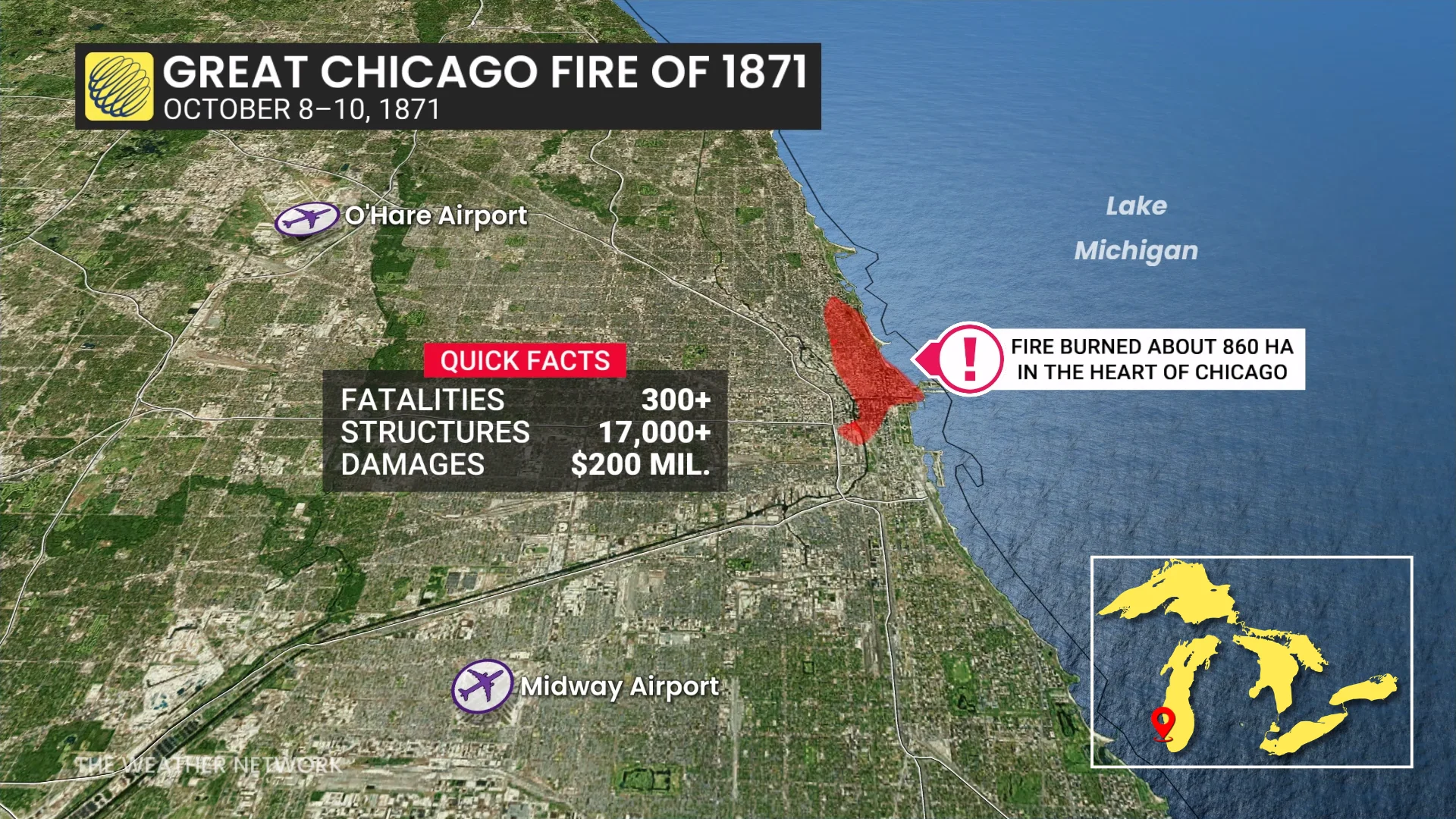
A small blaze broke out at 137 DeKoven Street in central Chicago on the evening of Oct. 8, 1871.
Gusty winds spread the fire from a barn to neighbouring buildings, kickstarting a chain reaction that eventually ended in 300 fatalities and left more than one-quarter of the city’s residents homeless.
But the Great Chicago Fire was relatively small compared to the mammoth firestorms that raged throughout the U.S. Midwest that week.
RELATED: From flames to forecasts: How wildfire smoke affects your weather
A perfect storm of ingredients came together in October 1871 to make fertile ground for blazes from Chicago to Ottawa.
Exceptionally dry conditions covered the U.S. Midwest through the end of summer and early autumn. Chicago recorded just 90 mm of rain between early July and early October, according to the U.S. National Weather Service, with only three days of measurable precipitation recorded in September.
A strong low-pressure system east of the Rockies whipped up intense southwesterly winds on Oct. 8, ushering in unseasonably hot and dry conditions throughout the region. Wind gusts as high as 75 km/h fanned the flames across the city.
The fires raged through Oct. 9 before a cold front and some much-needed rain helped to extinguish the blazes the following day.
RELATED: Wildfires coast-to-coast: Your quick resource guide
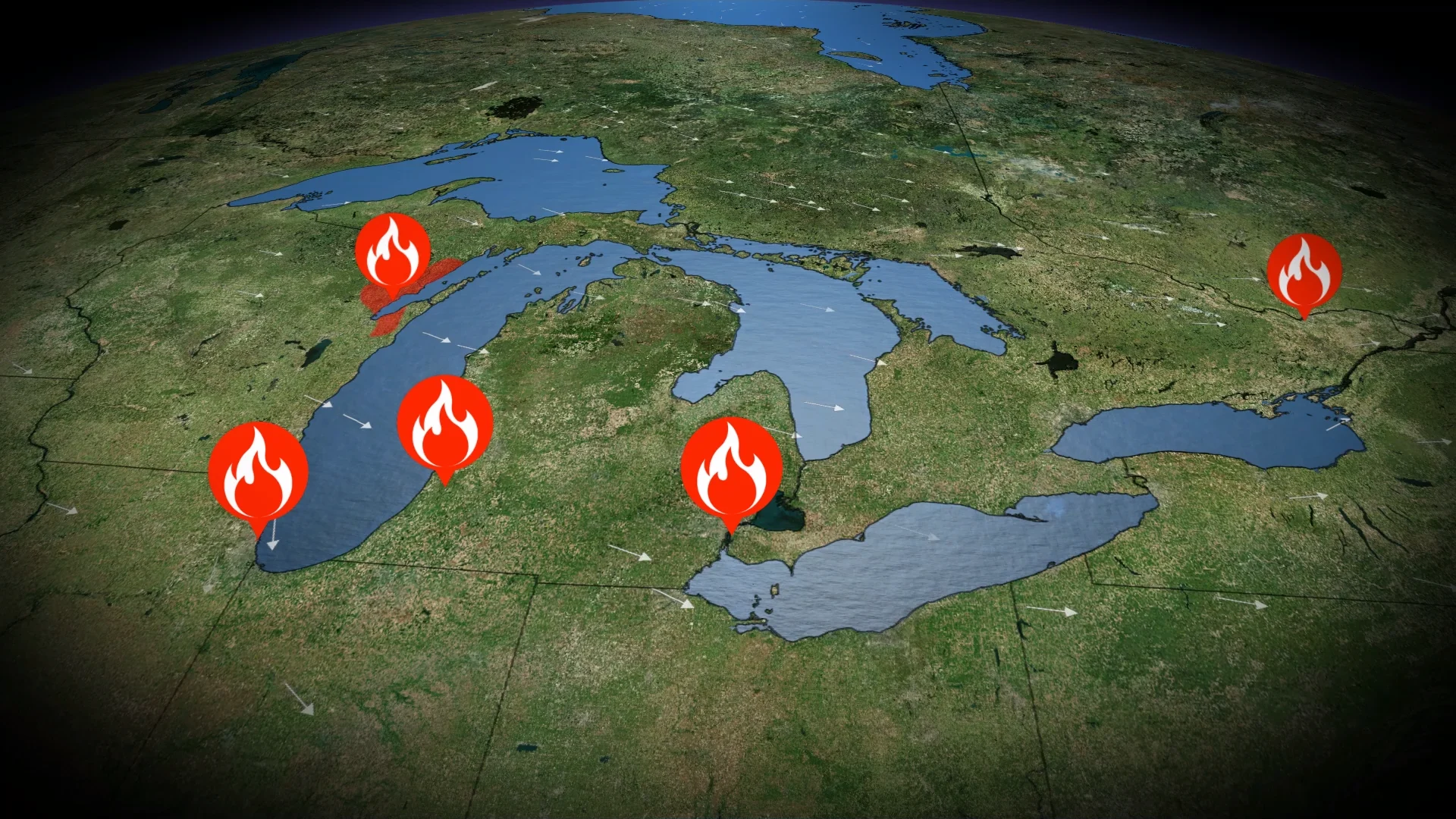
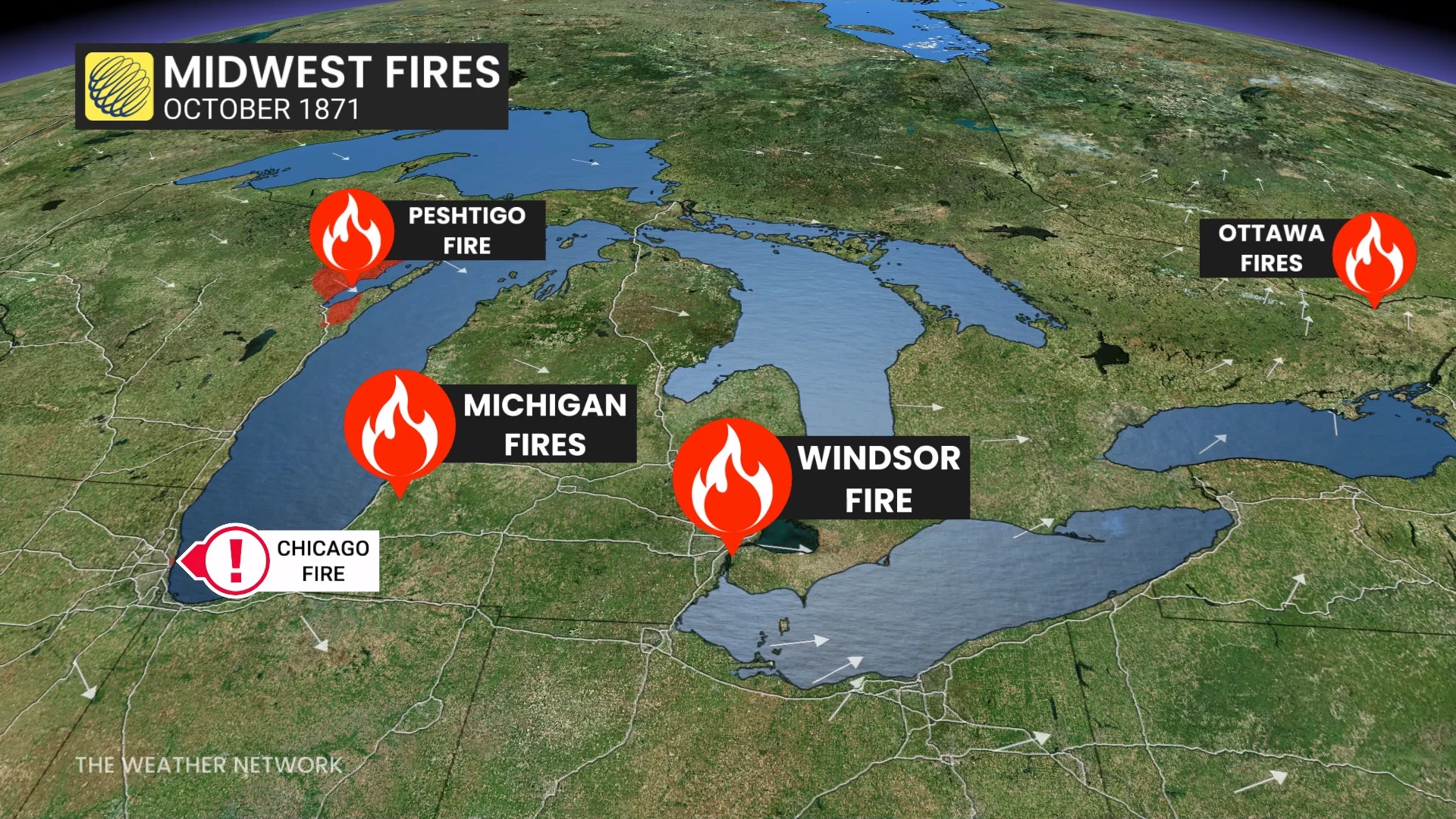
Numerous larger fires ignited around the same time as the one that consumed Chicago.
Michigan officials estimate that blazes in the state burned more than 1,000,000 hectares of forests, while the Peshtigo Fire near Green Bay, Wisconsin, charred more than 600,000 hectares of land. The latter fire reportedly killed more than 1,000 people, making it the deadliest wildfire in U.S. history.
Additional wildfires were reported throughout the region, including one that severely damaged Windsor, Ont., as well as several around Ottawa and Gatineau.
Historians have long absolved Mrs. O’Leary and her cow of responsibility for igniting Chicago that night, chalking the stubborn legend up to an ugly case of scapegoating. The precise cause of the fire remains unknown.