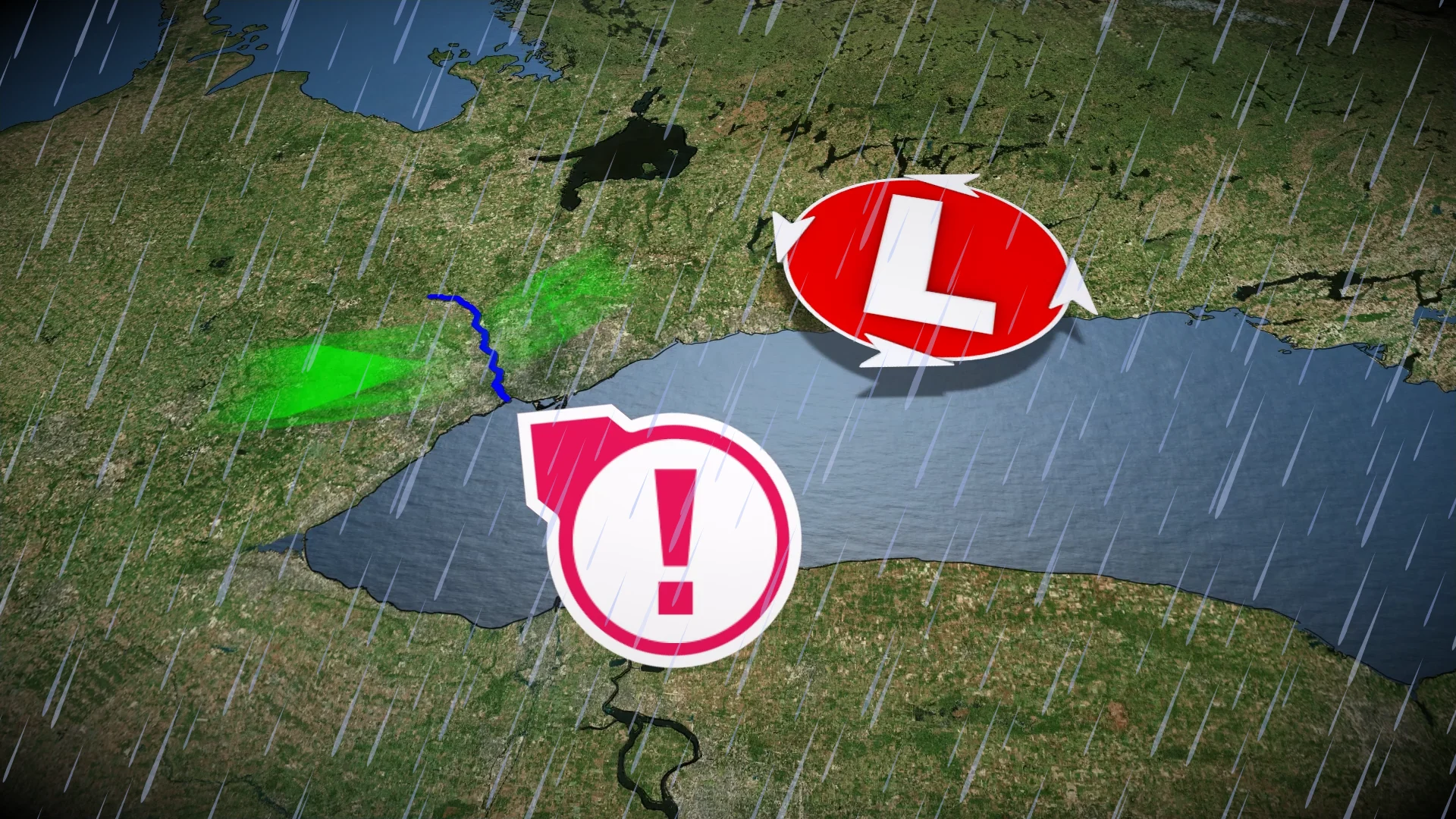
Hurricane Hazel was one of Ontario’s worst modern-day disasters

The storm’s remnants brought high winds and intense flooding to the Greater Toronto Area
Hurricane Hazel grew into one of Ontario’s most destructive storms in modern history--and the storm made landfall more than 1,000 kilometres away.
Dozens of people died when the storm’s drenching rains unleashed flash floods throughout portions of the Greater Toronto Area. Gusty winds caused additional damage and power outages.
DON’T MISS: Hurricane remnants can bring dangerous weather deep into Canada
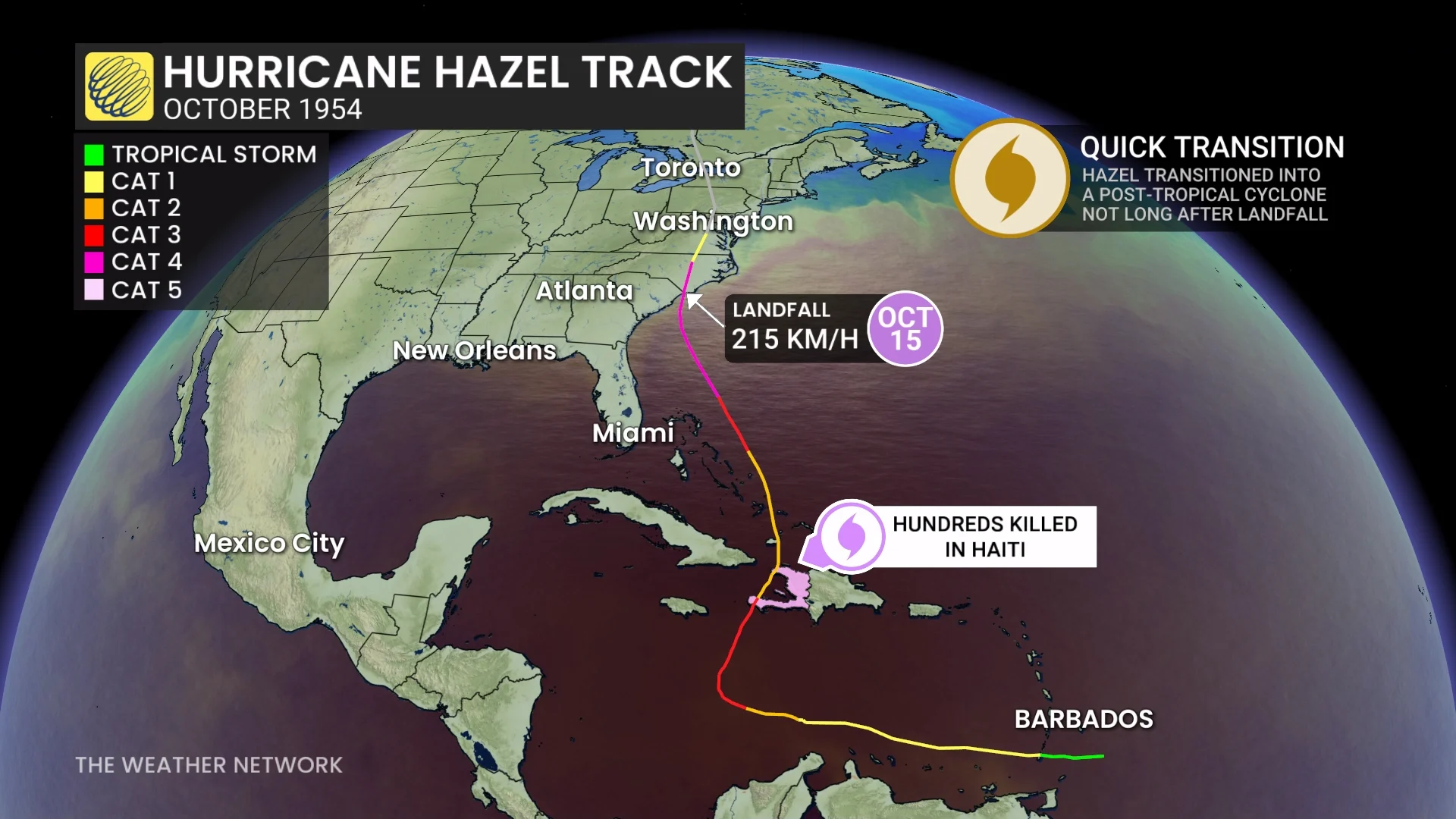
Hazel began as a tropical storm near Barbados on the morning of Oct. 5, gaining major hurricane status five days later as it turned toward Haiti. The hurricane's destructive winds and flooding rains killed hundreds of people in the country.
The storm strengthened further as it accelerated toward the U.S. East Coast, making landfall near Myrtle Beach, South Carolina, as a Category 4 hurricane. Hazel produced wind gusts as high as 225 km/h and a storm surge of 5.5 metres above ground level where it came ashore.
A few hours after landfall, Hazel underwent an extratropical transition in a process very similar to what we saw during Sandy in 2012 and Fiona in 2022. The system, now akin to an exceptionally strong nor’easter, raced toward Ontario.
High winds spilled across the border as the storm arrived on Oct. 15, causing widespread power outages and major damage along the lakeshores.
RELATED: Staying safe from flash floods, a serious and deadly hazard
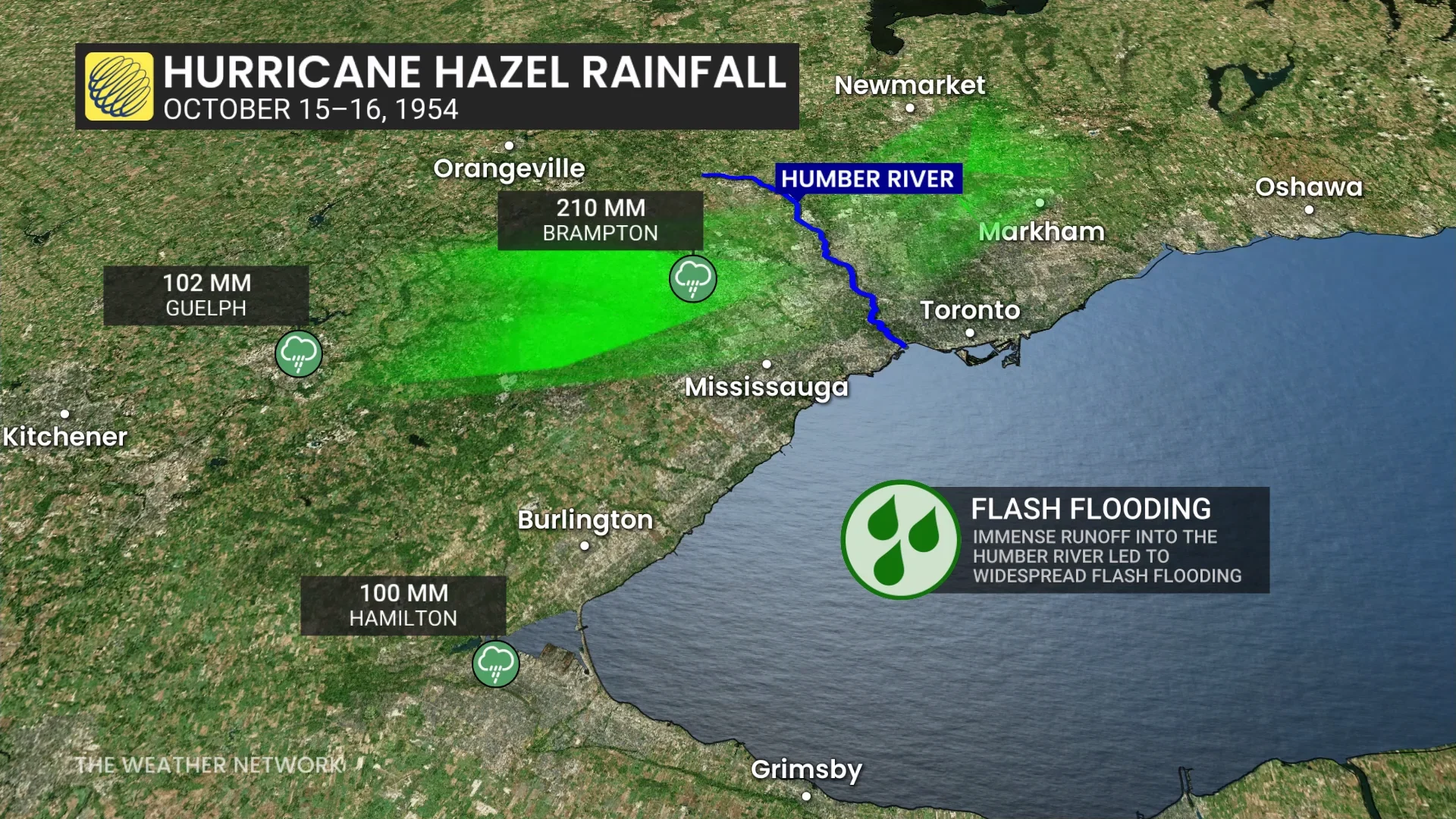
Southern Ontario had already endured several weeks of unusually wet weather before Hazel’s remnants entered the region. Widespread rainfall totals of 100-200 mm fell throughout the Greater Toronto Area between Oct. 15-16, with as much as 210 mm reported in Brampton.
Saturated soils couldn’t handle the excess rainfall. Flash flooding unfolded as creeks and rivers surged out of their banks. The Humber River saw the worst flooding, with water as deep as 9 metres covering some areas.
“It was like dumping a lake the size of Lake Simcoe on the Humber River drainage area and having it all trying to get out by way of the river at once,” Environment Canada quoted the Toronto Star as saying shortly after the disaster.
All told, more than 80 people died across southern Ontario as the remnants of Hurricane Hazel flooded the region. Damages amounted to more than $100 million, which is the equivalent of nearly $1.2 billion today.