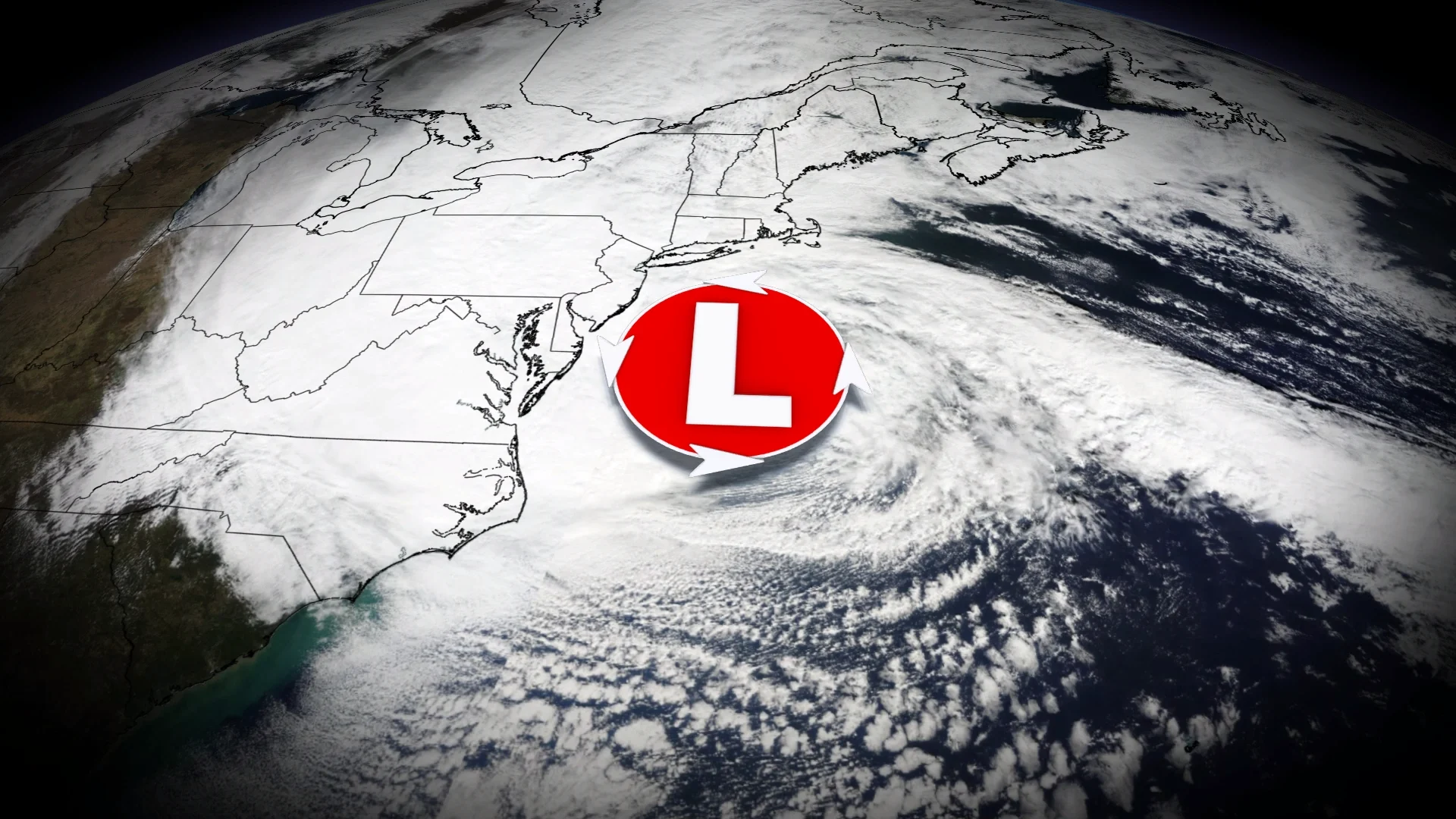
Hurricane Sandy was one of the East Coast’s largest storms on record

The system pushed a destructive storm surge into the eastern seaboard, killing dozens of people
Hurricane Sandy went down in the records as one of the largest and most intense storms to strike the Eastern Seaboard.
A complex storm that straddled the borderline between a hurricane and a nor’easter, Sandy caused more than $50 billion in damages and claimed dozens of lives when it rolled into New Jersey on Oct. 29, 2012.
DON’T MISS: Autumn can still produce intense hurricanes across the Atlantic
The system began as a classic late-season tropical storm in the western Caribbean Sea.
Favourable conditions allowed it to quickly grow into a Category 1 hurricane by landfall in Jamaica on the afternoon of Oct. 24. Sandy quickly re-intensified and struck eastern Cuba as a major hurricane with 185 km/h winds early the next morning.
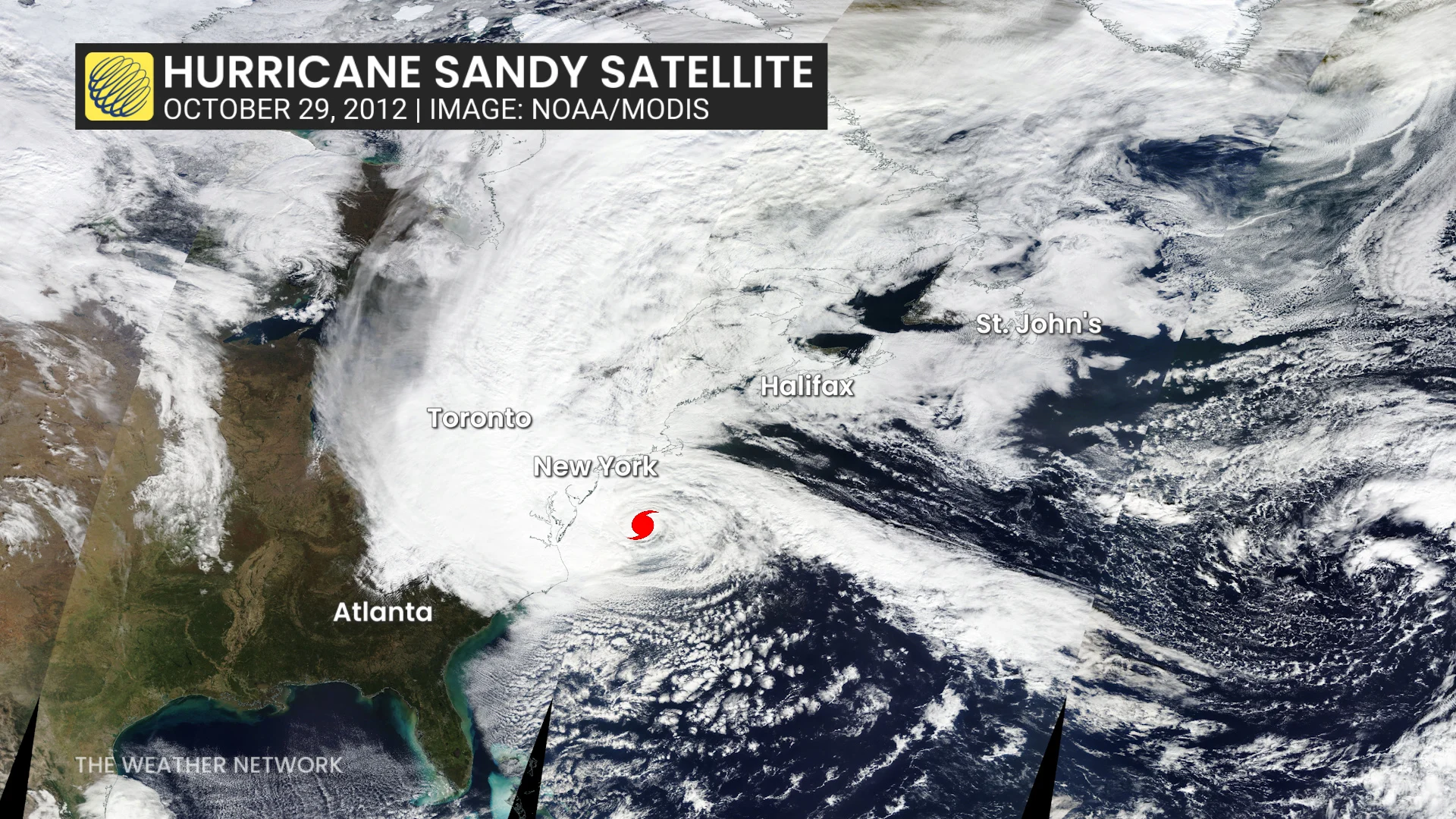
Influenced by a strong upper-level trough over eastern North America, the storm slowly began transitioning from a full-fledged hurricane to one that more closely resembled an intense nor’easter as it passed north of The Bahamas.
This trough abruptly pulled Sandy west toward the U.S. Mid-Atlantic by Oct. 29. Around the same time, the storm finalized its transition from a hurricane to a post-tropical storm just two hours before making landfall that evening near Atlantic City, New Jersey.
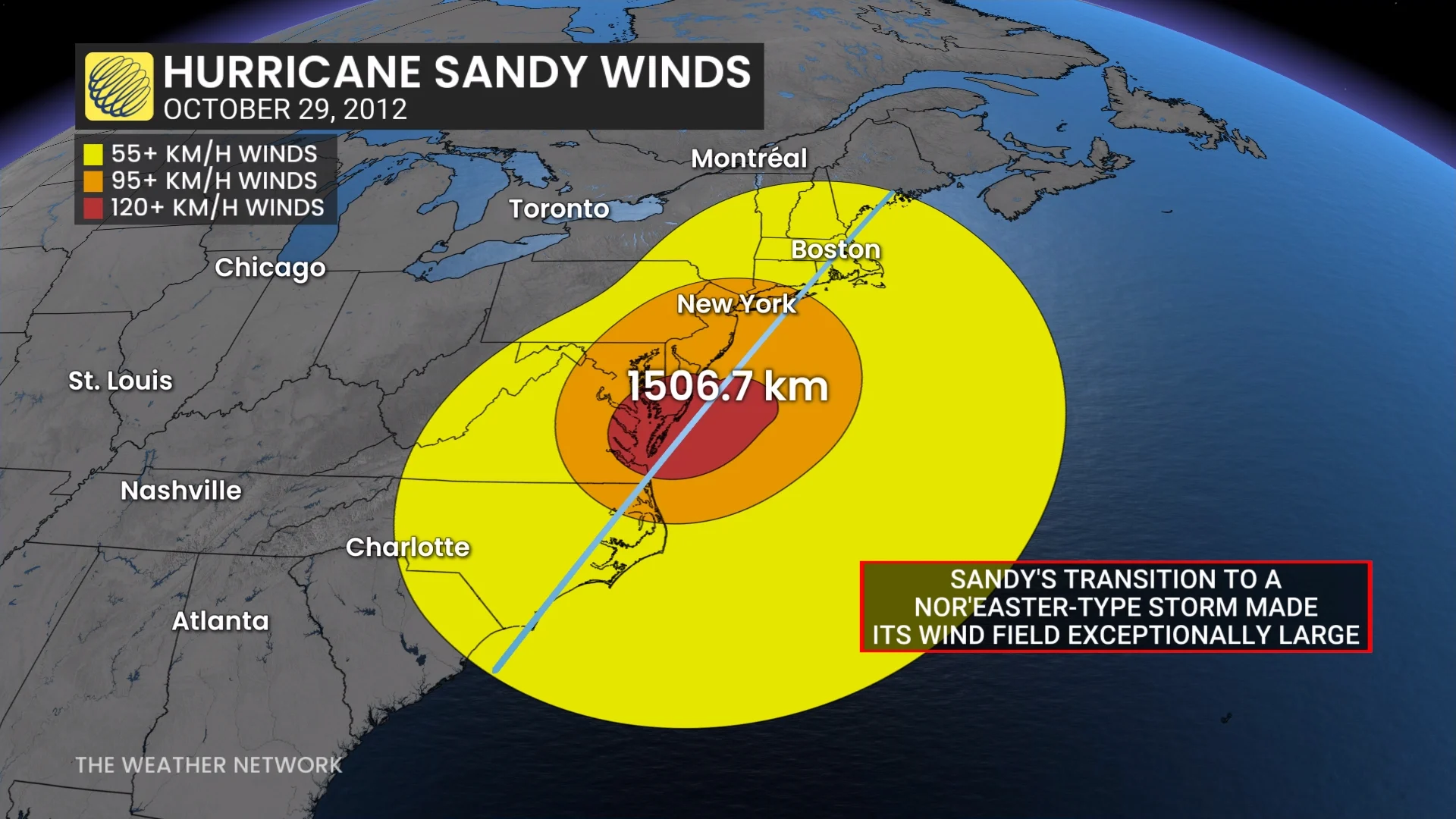
Sandy’s wind field grew tremendously throughout this process. Tropical storm force winds extended more than 1,500 km from North Carolina to Maine, making Sandy one of the largest tropical cyclones on record in the Atlantic basin. Damaging winds even extended into southern Ontario after landfall.
The enormity of Sandy’s wind field contributed to the system’s devastating storm surge. Strong, persistent winds inundated the coast with seawater from Florida to Maine.
Storm surge flooding damaged or destroyed hundreds of thousands of homes along the U.S. coastline, mostly in New Jersey and New York. Flooding caused more than half of the 72 direct fatalities in the U.S., according to the U.S. National Hurricane Center (NHC).
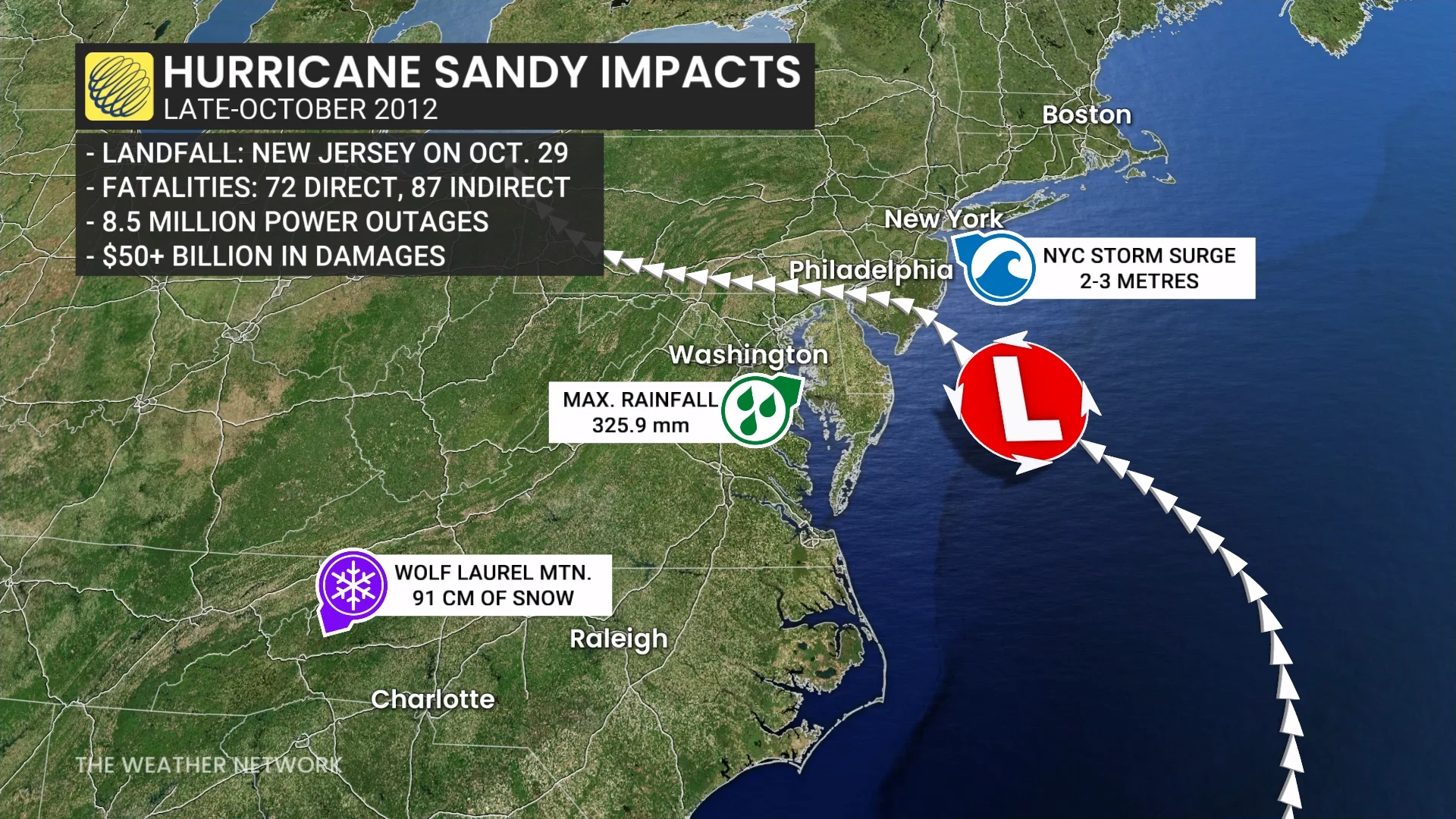
New York, New Jersey, and Connecticut bore the brunt of the storm surge. Water levels climbed as much as 3.86 metres above normal tide level on Long Island. A 2-3 metre surge inundated entire neighbourhoods in New York City, including JFK and LaGuardia Airports.
High winds and storm surge weren’t the only hazards. Widespread rainfall totals of 125-175 mm followed the storm inland, with a town in Maryland recording more than 300 mm of rain.
Cold air meeting tropical moisture led to a true blizzard in and around the Appalachian Mountains. A few spots in West Virginia and North Carolina recorded more than 90 cm of wind-swept snowfall.
The NHC’s final report notes that more than 650,000 homes and businesses sustained damage in the storm, and that high winds knocked out power to more than 8.5 million customers at one point.
All told, the storm directly killed 147 people throughout the Atlantic basin and left behind more than $50 billion in damages, including $100 million worth of damage in Ontario.