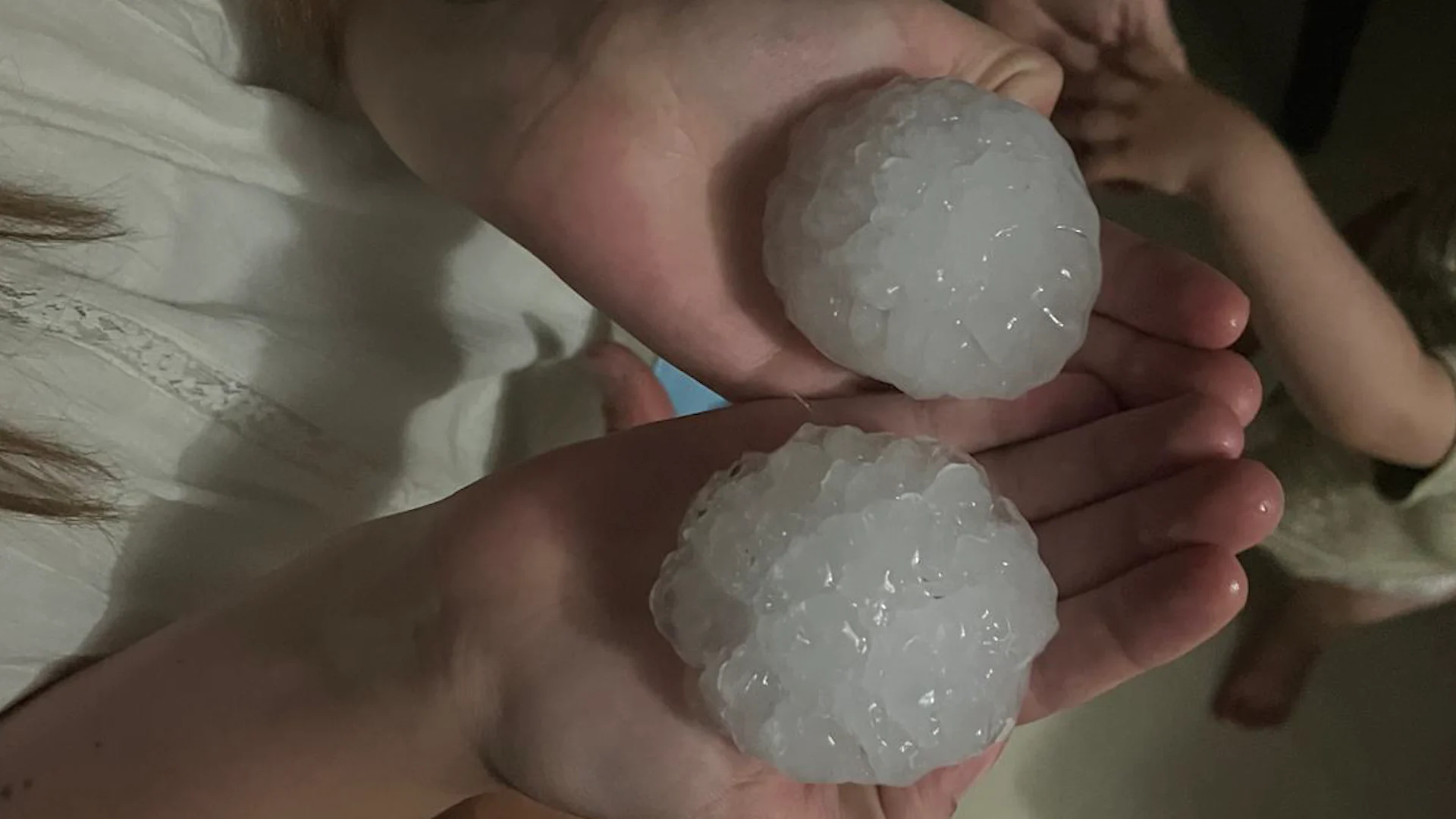
Summer of severe weather: Alberta a 'hot spot' for this year's biggest storms

A powerful storm swept through central Alberta last weekend, bringing hail, rain, lightning, and destructive winds, causing significant damage—particularly in Edmonton, where a Post Malone concert was cancelled—and offering insight into this year's surge in severe Prairie weather from Edmonton to Winnipeg
As central Alberta cleans up from another round of severe weather, experts are piecing together clues to help explain why this season has been so stormy.
Among the indicators: massive hailstones found just west of Edmonton as a destructive supercell passed through the area the evening of July 25.
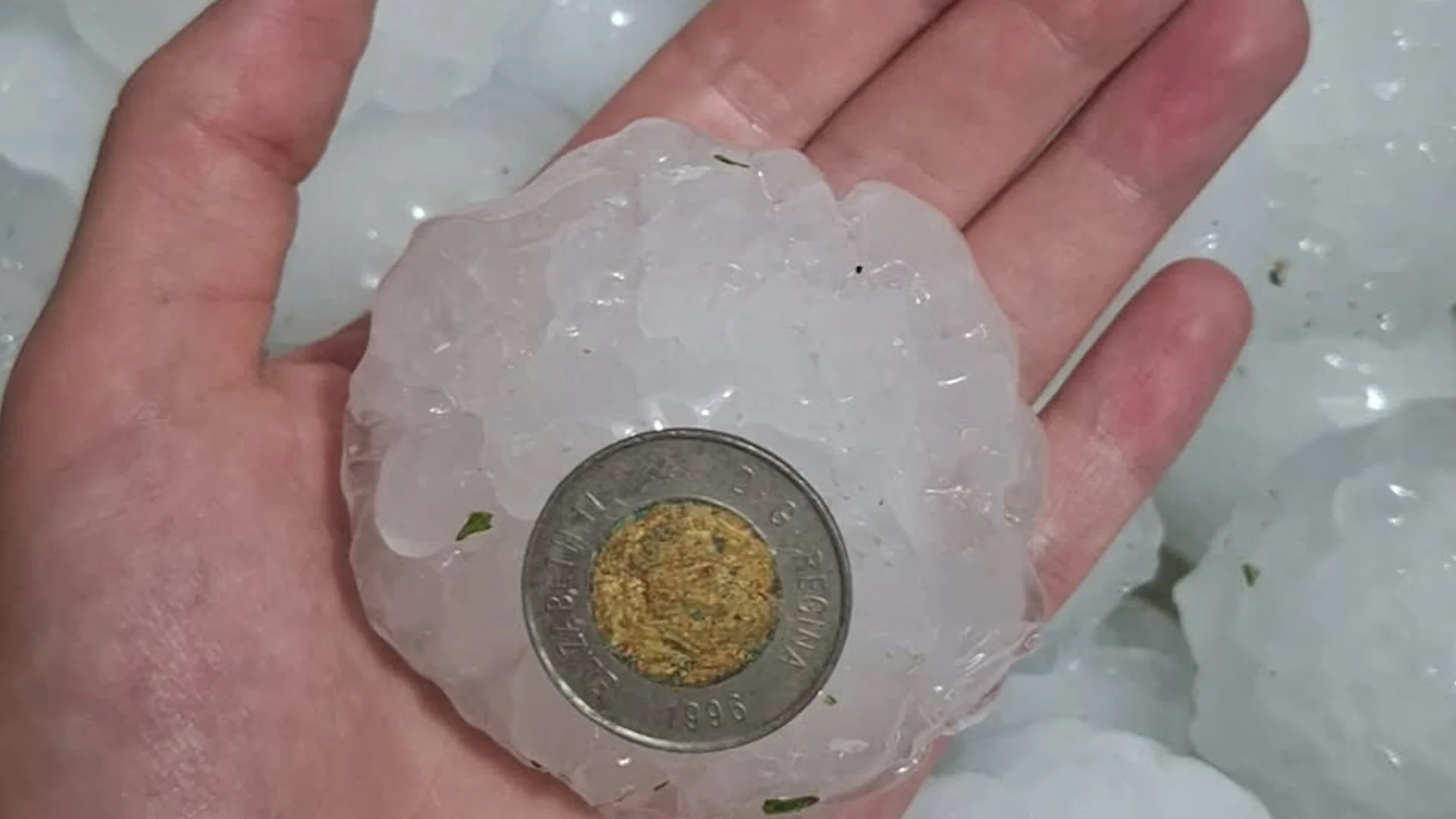
Andrew Vatour | These hailstones found west of Edmonton July 25 feature a lobate composition, suggesting they spent a long time in the storm core, with new lobes freezing onto a single embryo
Parkland County resident Andrew Vatour shared videos and photos with The Weather Network showing tennis ball-sized hail falling near Cougar Creek Golf Course, approximately 50 km west of Edmonton.
DON'T MISS: From nuisance to nightmare: Huge hail is an extreme danger
While the hail storm was brief and isolated, the stones fell with enough force to shatter the windshield of Vatour’s truck.

Andrew Vatour | A direct hit to a truck windshield, along with a few dents in the vehicle’s exterior, were the most significant damages found after the hail storm hit this property west of Edmonton
Simon Eng is a research meteorologist with the Northern Hail Project, which is a section of Western University’s Canadian Severe Storms Laboratory.
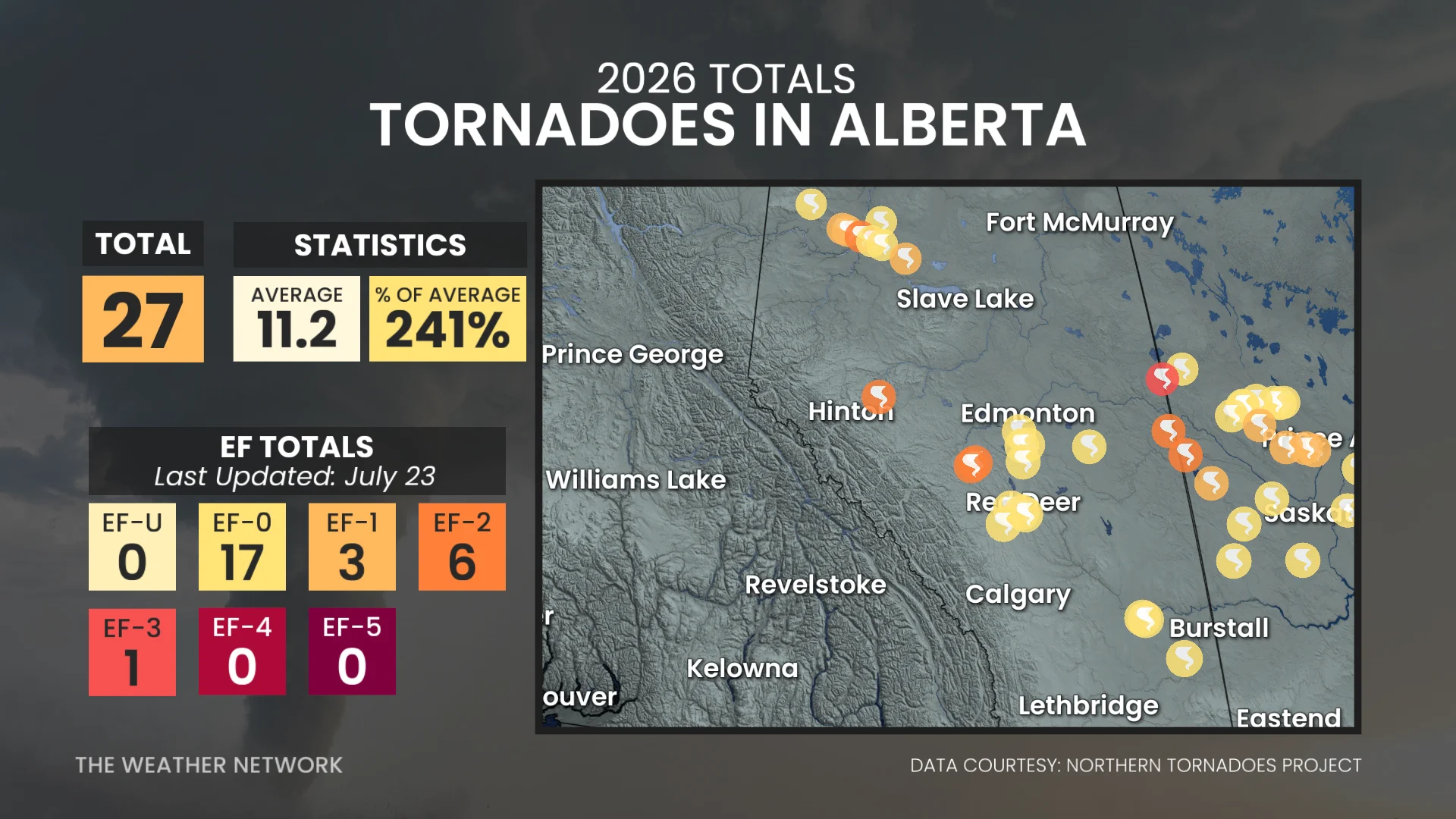
According to Eng, specific conditions are required to produce hail of this magnitude, which helps explain why Alberta has already recorded 27 tornadoes this summer—more than double the annual average of 11.2—and why the Prairies have seen three EF-3 tornadoes, compared to the usual one.
Firstly, for hailstones to grow to such a size, they need to spend a long time suspended in the cold upper reaches of the atmosphere.
"The technical term for the amount of time a hailstone can grow in a storm is called ‘residence time,’" Eng explains.
"Looking at things that maximize residence time, they include how wide the updraft is. And when you have a supercell, you’ve also got rotation, so while hailstones are rising, they’re rotating around like a merry-go-round."
In addition to a supercell structure, hailstorms also need ample moisture to initiate a hail embryo, and to grow it into something larger with further freezing.
They also benefit from strong instability, or local atmospheric differences in air pressure and temperature, which create strong updraft strength allowing larger hailstones to stay suspended for longer periods of time.
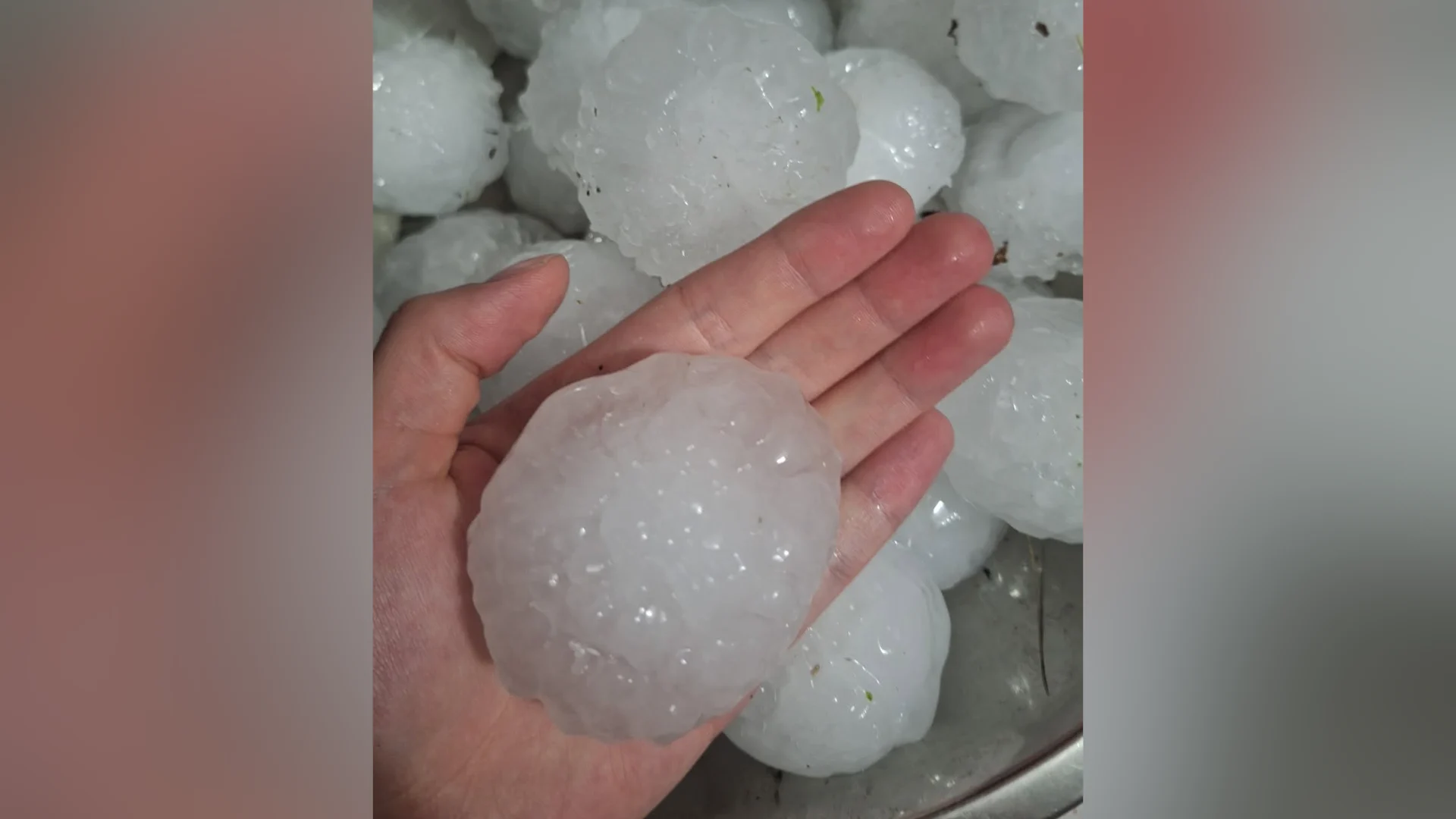
Andrew Vatour | More hailstones collected west of Edmonton July 25
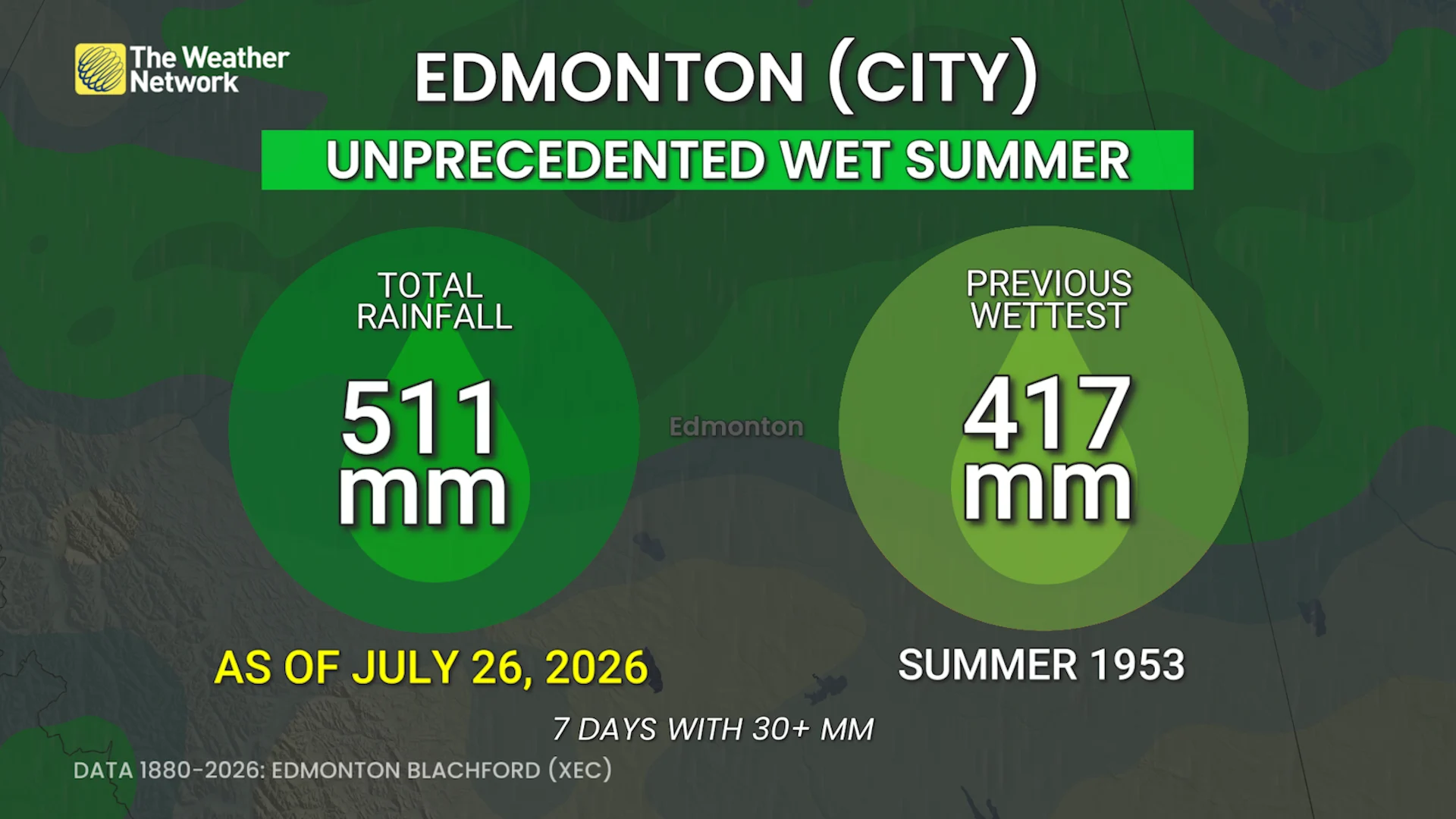
The availability of ample moisture this summer is no surprise to anyone in central Alberta. With more than a month-and-a-half to go, the city of Edmonton is already seeing its wettest month on record.
Other area communities like Stony Plain, St. Albert ,and Leduc have all also struggled with heavy rainfall this summer thanks to storm activity and stalled, moist low pressure weather systems.
All of that moisture is contributing to high instability. The warm summer sun will always produce surface heating on the Prairies, but when that air becomes humid thanks to evaporation it becomes even more buoyant, and more easily rising through colder air aloft.
RELATED: 500+ mm: Edmonton enduring its wettest summer on record
Lastly, supercell thunderstorms need an element of wind shear to develop - that is, a difference in wind speed and direction at different heights. The storm needs to be tilted so that its rain falls in a different location than the storm's updraft to avoid cooling down that rising air.
As Eng explains, the location where we see the highest wind shear tends to be associated with where the jet stream is located. This year, we’re seeing the jet stream parked right over the Prairies, as opposed to further north into the Arctic, or south into the United States.
"The city of Edmonton has been a great example this year of where you can get, in relatively constrained regions, multiple episodes in the same season of severe weather," explains Eng.
"Parts of western Manitoba are also a great example of where we've had conditions that have produced either multiple hazards on the same day or an extreme version of one of the key thunderstorm hazards."
He cautions, though, that hail and storm science is incredibly complex, and that research is still very much a work-in-progress.
"We have to be careful when speculating. When we’re looking at hailstones on the ground, we’re looking at the end point of a very complex process," he says, noting that part of the goal of the Northern Hail Project is to learn how to more accurately forecast severe weather events.
"This is still a very active, intensive area of research to understand what a hailstone’s pathway through a thunderstorm looks like. Trying to explain how such a large, heavy object can stay in a storm for so long is still very much an open area of investigation."
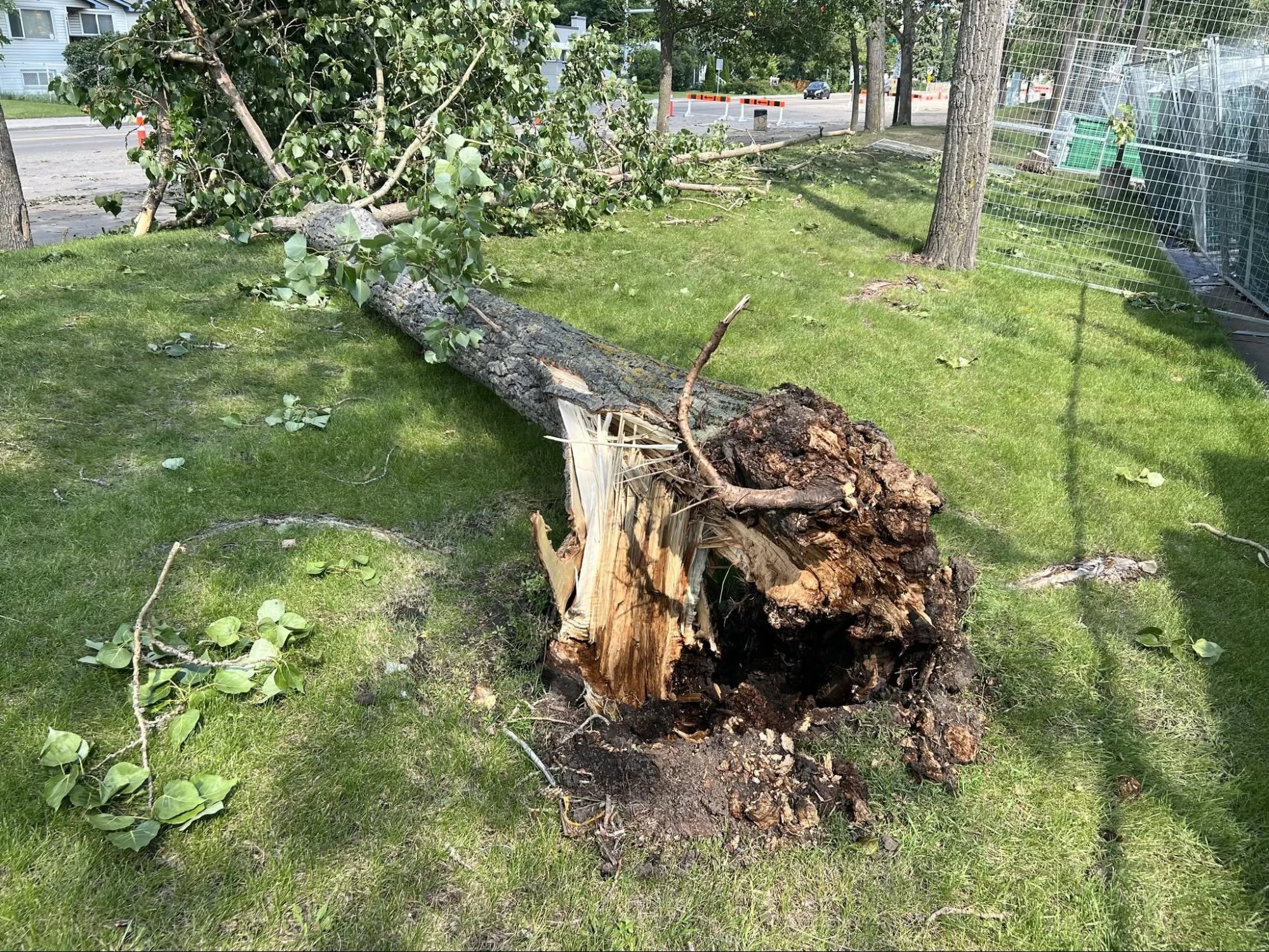
Dave Foley | The July 25 storm toppled trees, caused flash flooding, generated dangerous hail and wind gusts, and cancelled a sold-out concert at Edmonton’s Commonwealth Stadium
Fortunately for those in the city of Edmonton on July 25, the storm began transitioning as it entered the more densely populated area.
"As we progressed through the evening, the storm organized into more of a squall-like system," explains Tyler Hamilton, a meteorologist at The Weather Network.
"The hail threat went down, and the wind threat expanded. We saw gusts over 80 km/h and the storm dumped another 30 mm of rain in two hours. But, the storm lost its supercell characteristics as it tracked further east."
Still, that storm battered the capital region with smaller hail, heavy downpours, and destructive straight line winds that downed trees, damaged homes, and infrastructure and left some residents without power for hours.
Perhaps most notably, the storm abruptly cancelled a sold-out Post Malone concert at Edmonton’s Commonwealth Stadium, forcing thousands of fans to huddle together in the concourse as the storm blew through.
Fortunately for fans, the popular artist has announced refunds will be issued.