
The Great Lakes freezing over is good news for Ontario

The lakes are gradually losing their ability to produce bands of heavy snowfall
The Great Lakes are finally responding to several weeks of bitterly cold temperatures blowing across the region.
A freezing-over of the lake surfaces is good news for communities sick of getting buried under mounds of snow this season. The ice also has some other benefits for the region, as well.
DON’T MISS: Will Lake Ontario freeze over this weekend?
The Great Lakes are freezing over fast
Bone-chilling cold temperatures have spread over the Great Lakes for the past couple of weeks.
Toronto hasn’t seen an above-freezing temperature since 4:00 p.m. on Jan. 17, while Sault Ste. Marie hasn’t climbed above the zero-degree mark since midnight on Jan. 14.
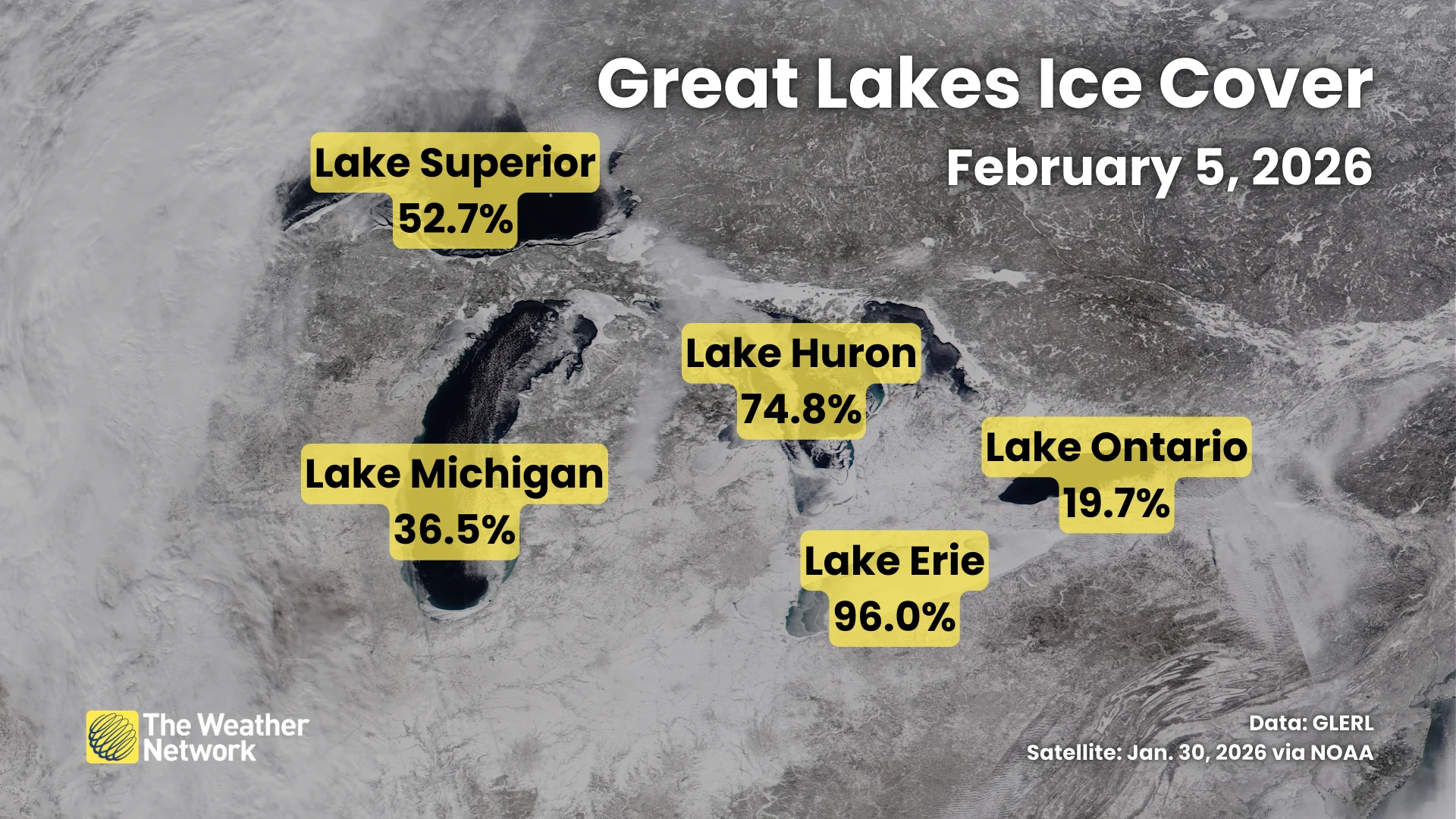
Those frigid temperatures helped build a significant amount of ice across the Great Lakes. The region as a whole saw 56.0 per cent ice coverage as of Feb. 5. This is up from 15.5 per cent coverage just three weeks ago.
Lake Erie saw the greatest ice coverage with almost 96 per cent, followed by about three-quarters of Lake Huron covered by ice this week.
Lake-effect snow gradually cuts off
A healthy buildup of ice cover on the Great Lakes will finally begin shutting off lake-effect snow across the region.

RELATED: Buried: Ontario city on ‘high alert’ after 300 cm of snow
Lake-effect snow forms when cold winds blow over the relatively warm waters. Convection forms due to the sharp vertical temperature contrast, and these bands of precipitation can blow ashore in wicked bouts of intense snowfall.
A crust of ice over the water takes away that fuel source, cutting off the region’s ability to produce lake-effect snowfall. This doesn't mean that lake-effect snow season is totally over yet, but increasing ice coverage will decrease the intensity in many locations.
Lakes lose their moderating abilities
On the flip side, southwestern Ontario and the Greater Toronto Area begin to lose some protection from winter’s bitter chill once the lakes are covered.
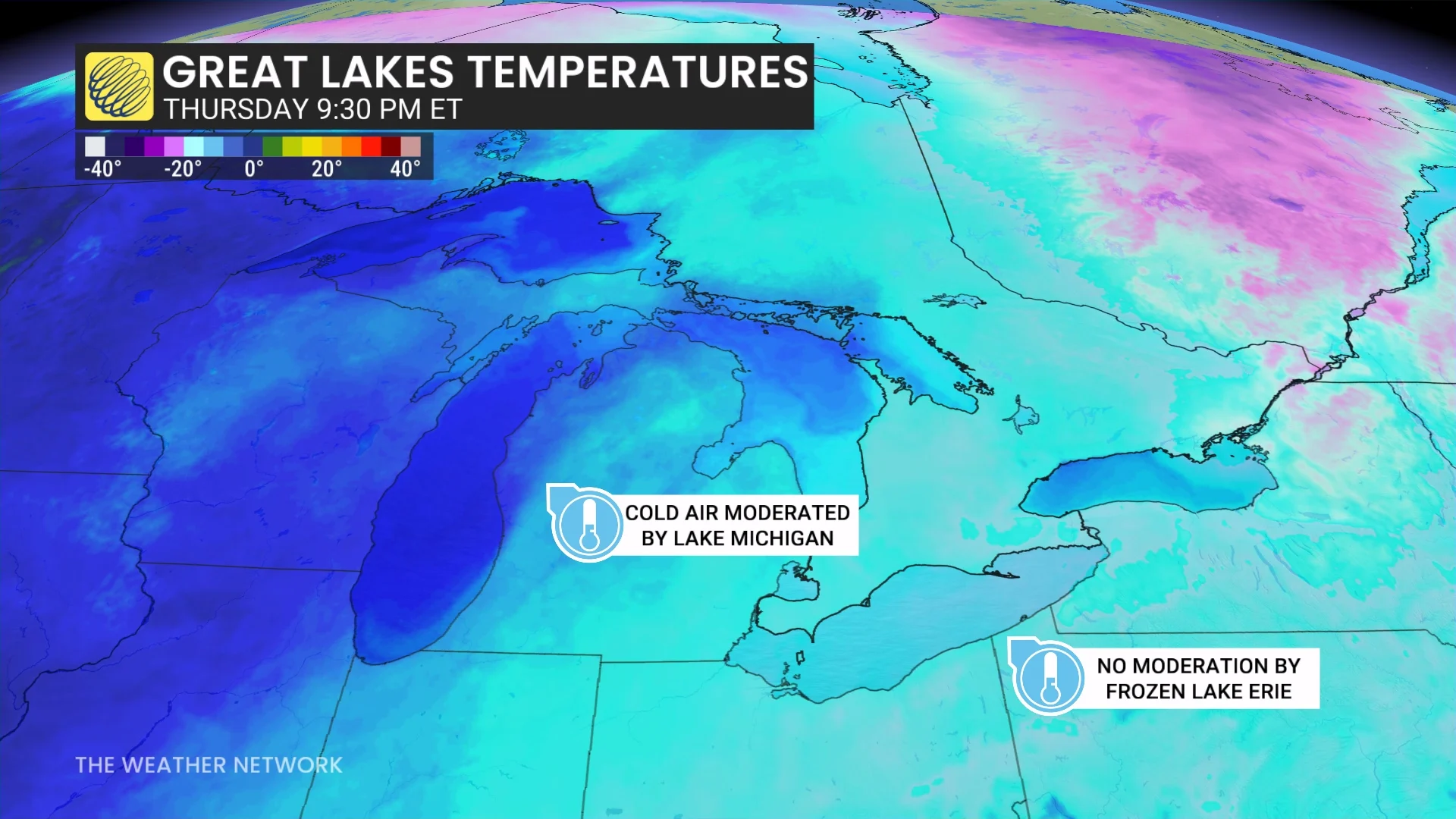
While lake-effect snow finally shuts off, the loss of open waters also shuts off the region’s ability to moderate frigid temperatures rolling in from the Prairies and Northern Canada.
This can result in even colder temperatures for places like Toronto, London, and Windsor during late-season cold snaps.
Good news for recreation, ecosystem
Growing ice is also good news for lakeside communities across Ontario.
Thick and reliable ice coverage is beneficial for the region’s economy, supporting activities like ice fishing and recreational sports.
Some research also shows that ice coverage can be beneficial for the Great Lakes by putting a damper on wave activity that can disrupt aquatic ecosystems.