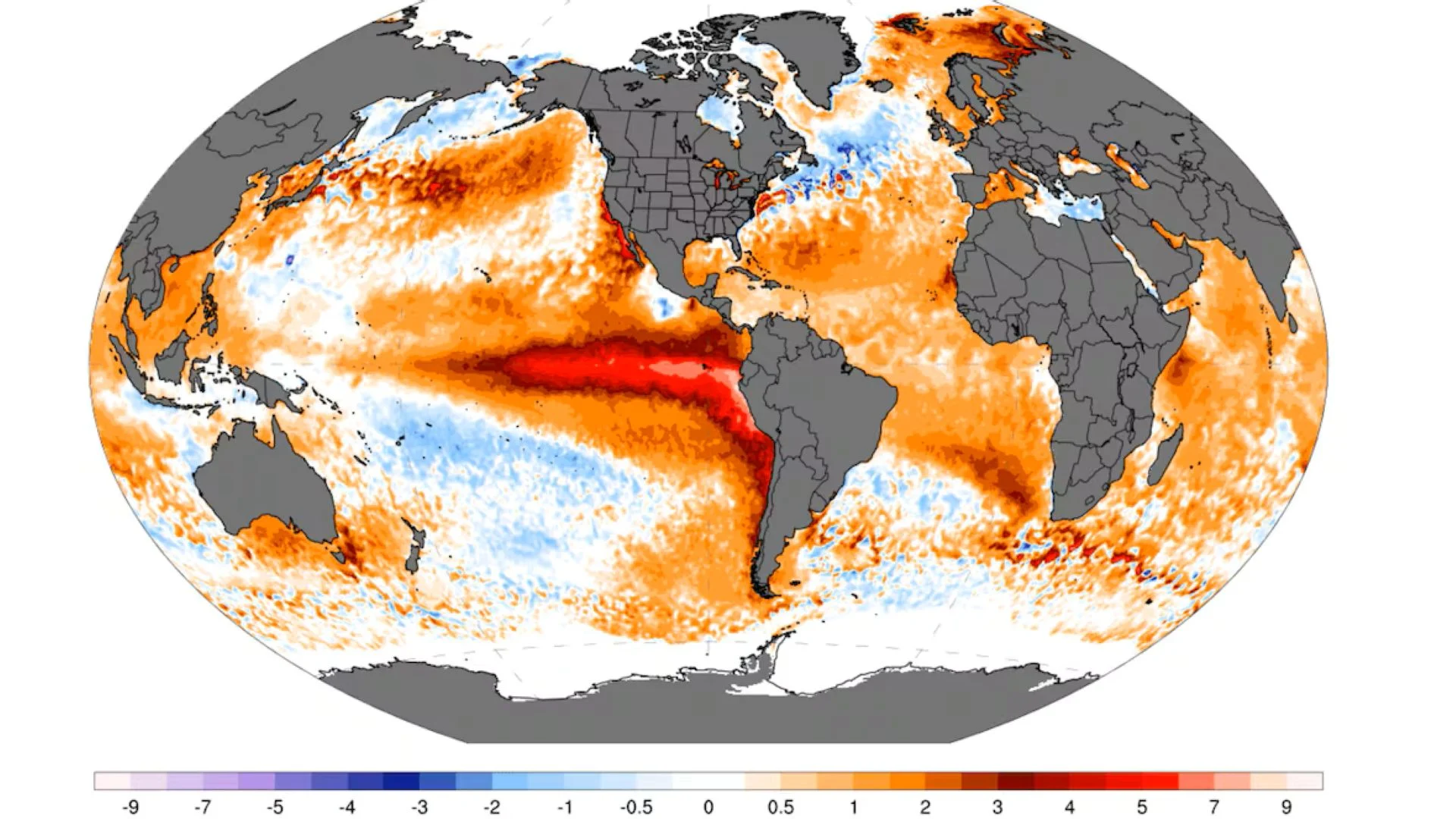
Will this year’s super El Niño push 2026 to be the warmest year on record?

In its monthly temperature update in May, Berkeley Earth, a leading non-profit climate analysis organization, forecast that 2026 had just a 2.5 per cent chance of being the warmest year on record.
Then El Niño started to develop.
The next month it was a 12 per cent chance. By August it had jumped to 69 per cent. Now? Berkeley Earth puts it at a 96 per cent chance.
Is there a link between 2026 potentially being the warmest year on record and this particularly strong El Niño?
This El Niño — a warming in the Pacific Ocean that can contribute to a temporary warming in the global temperature — is already the strongest one since record-keeping began in 1950, beating out the previous record set in 2015-16 by a wide margin.
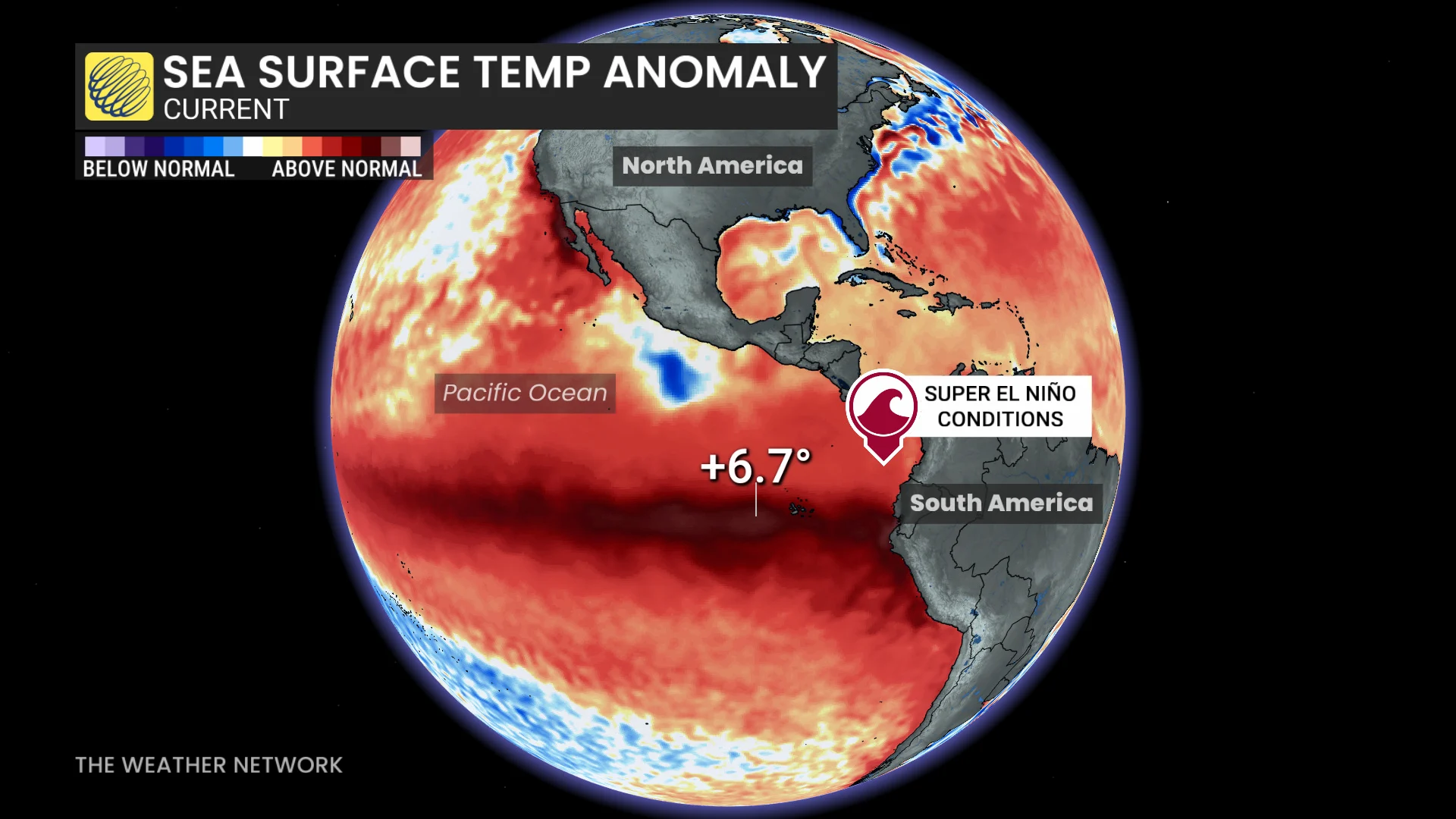
Scientists consider a strong El Niño to be a warming of 2 C above average. Ocean temperatures in a specific part of the Pacific, near the equator, dubbed “Niño 3.4” reached 3.5 C above average last week.
Typically, we see the effects of an El Niño on the global temperature about three months after its peak, which is forecast for November or December. However, models show that 2026 will either be the warmest year on record, beating out 2024, or the second-warmest.
“El Niño definitely is leading to the warmth that we're seeing,” said Kent Moore, a professor of atmospheric physics at the University of Toronto.
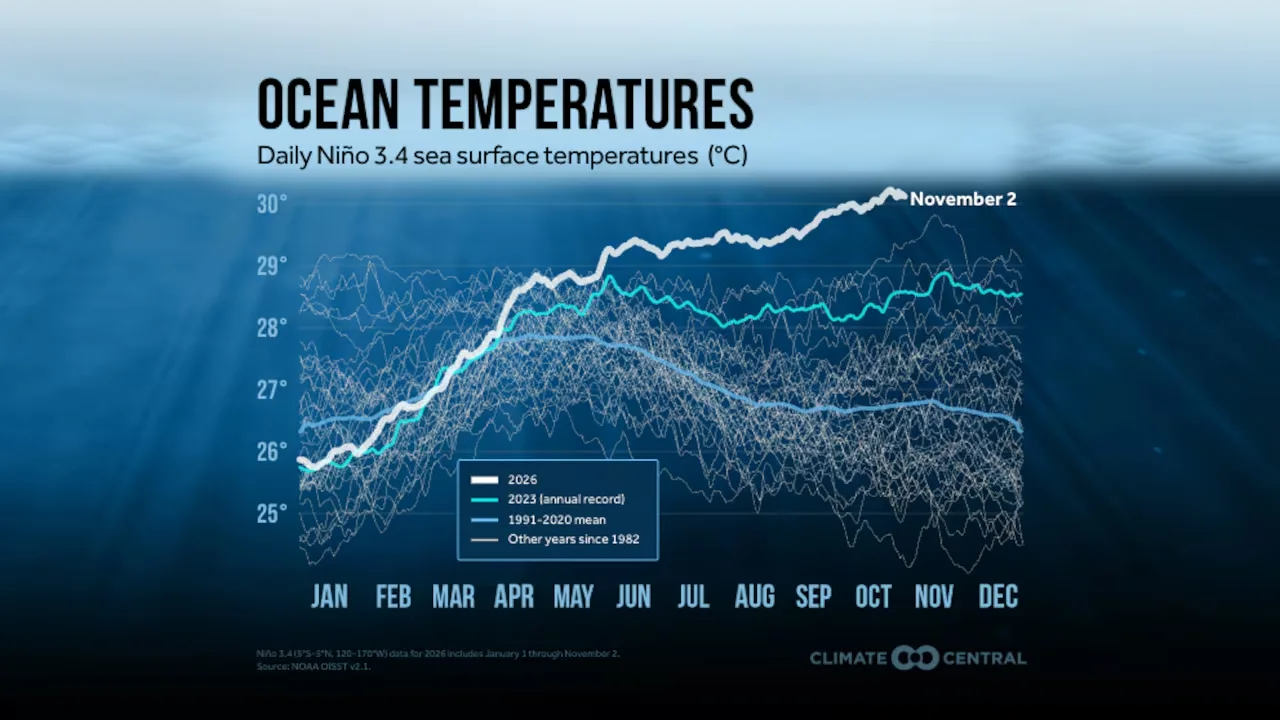
The ocean temperature in a part of the Pacific Ocean near the equator dubbed Niño 3.4, which is used to measure the strength of an El Niño, is the warmest since records started in 1950. (Climate Central)
In its September monthly update, Berkeley Earth reported, "It remains sharply warmer than other months in 2026. September 2026 continued the run of months above the 1.5 C mark that began in July, as the warming influence of El Niño has grown."
But it’s not all El Niño.
Trapped ocean heat
As World Meteorological Organization (WMO) Secretary-General Celeste Saulo told the Global Heat Forum last month, “El Niño doesn't add new heat to the planet. It releases heat the ocean has already been storing beneath the surface.”
And that heat is due to climate change, as we continue to burn fossil fuels, pumping more greenhouse gases into the atmosphere.
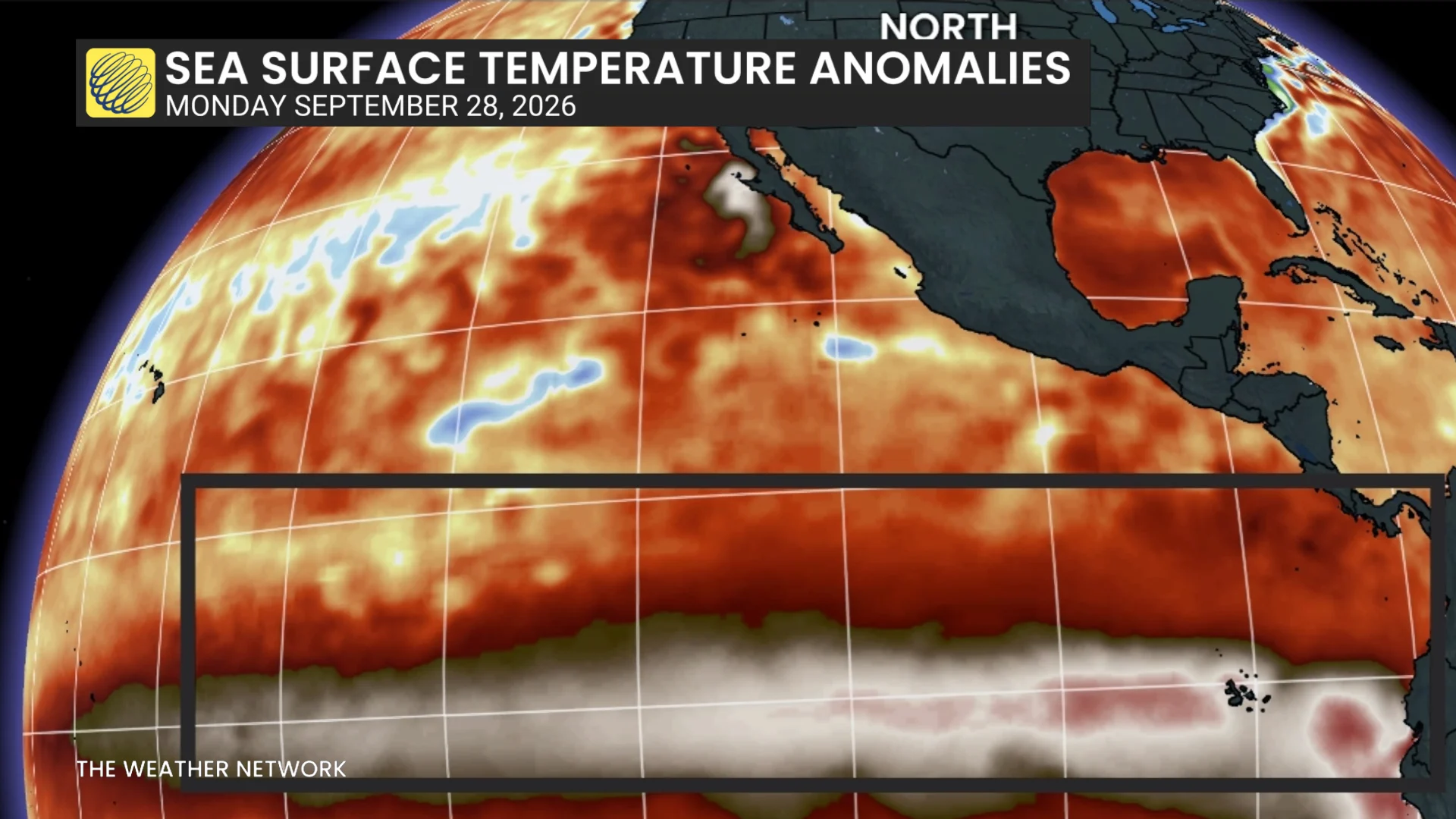
Sept. 28, 2026 sea surface temperatures anomalies.
“The warmth we're seeing in the ocean ... is mostly related to the fact that we've just been warming the ocean up for the last 150 years,” Moore said.
Overall, global ocean temperatures are the warmest they’ve ever been on record, and that’s because the oceans are really good at trapping excess heat.
And it turns out they’re also really good at trapping CO2. But there are limits.
“As the ocean warms, the amount of carbon dioxide that it can hold is reduced," said Moore. "So, there's a bit of a feedback loop there. As the oceans warm, they become a less efficient sink for carbon dioxide, which means more of the carbon dioxide stays in the atmosphere [and it] warms more.”
So, while El Niño may be playing a small role in 2026's annual global temperature, the main driver is the use of fossil fuels and greenhouse gases released into our atmosphere.
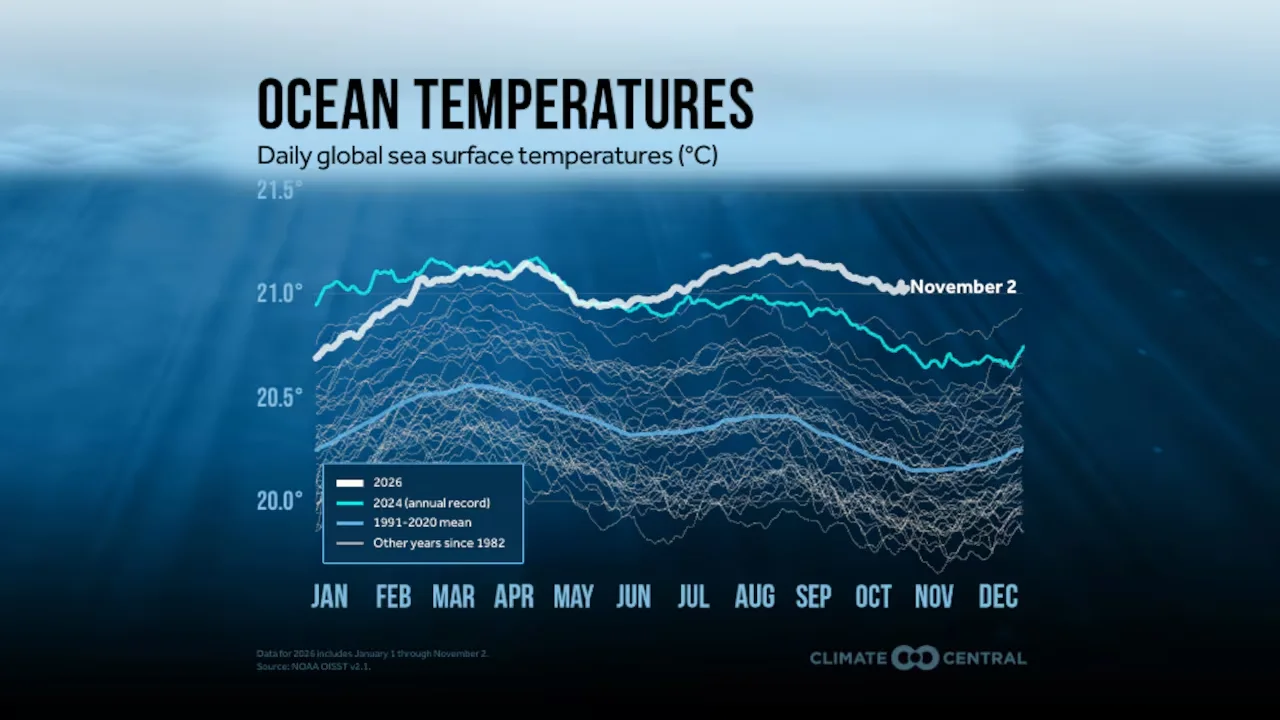
Ocean temperatures have been the warmest in recorded history. (Climate Central)
“You got the slow gradual warming of the ocean, and then the El Niño comes along, kicks [around], for six months or so, [and] the temperature goes way up,” Moore said. “And then, of course, El Niño will go away. But of course the warming will still be there.”
Now, not everyone thinks 2026 will beat out 2024 as the hottest year on record.
The U.S. National Centers for Environmental Information gives only a 0.1 per cent chance of it being the warmest and an 86.9 per cent chance of it being the second-warmest.
But 2027's annual global temperature will definitely be more influenced by El Niño.
Climate scientist Zeke Hausfather, writing for Carbon Brief, a climate publication, said, "This year’s record-setting El Niño will have its largest effect on global temperatures in 2027. Carbon Brief projects 2027 at around 1.7 C above pre-industrial levels, with a 96 per cent chance that it will be the warmest year on record."
Thumbnail courtesy of Climate Reanalyzer via CBC News.
The story was originally written by Nicole Mortillaro and published for CBC News.