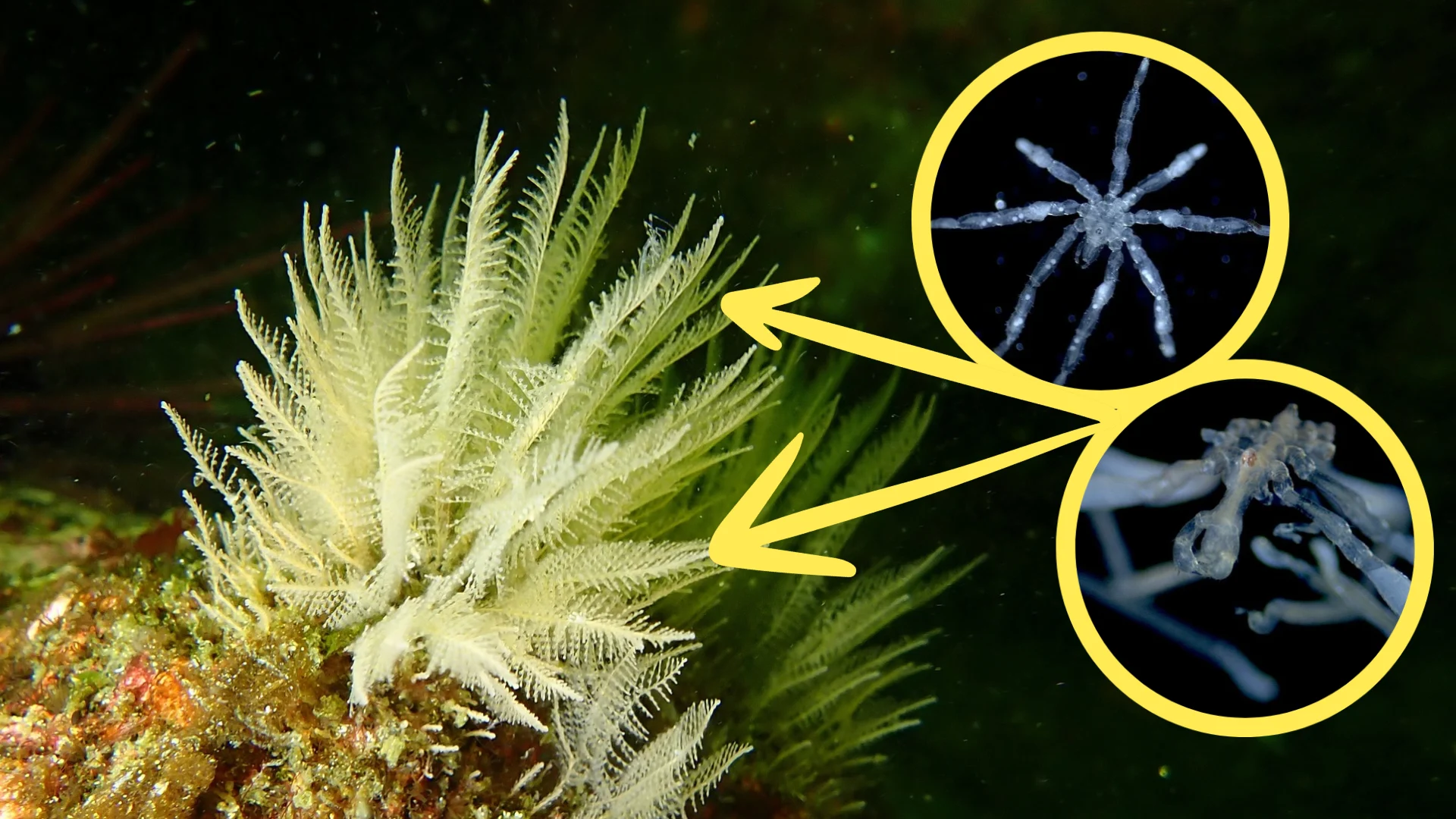
Newly discovered sea spiders bring the creepy crawlies to B.C.’s coast

Hairy legs, red eyes, and snoots to boot; researchers at the University of British Columbia recently discovered two new species of sea spiders.
Spiders. They’re creepy; they’re crawly. Some people love them, while others hate them. And even in the ocean, we’re not safe from the skittering arthropods. That’s right, we’re talking about sea spiders. But unlike their land counterparts, sea spiders aren’t actually arachnids, meaning they’re not technically real spiders. They do, however, provide just as much, if not more, nightmare fuel.
Researchers at the University of British Columbia recently discovered two new species of sea spiders while studying the impacts of climate change on these marine arthropods between September 2023 and August 2024. The discovery adds to the current list of about 1,500 known species of sea spider, only 20 of which can be found in the Salish Sea off B.C.’s coast. Their research was published in August 2026 in the journal Organisms Diversity & Evolution.
SEE ALSO: Climate versus weather: What's the difference?
While the idea of spiders living in the ocean may be unsettling, to say the least, the lead author of the published study, Cormac Toler-Scott, says sea spiders are harmless.
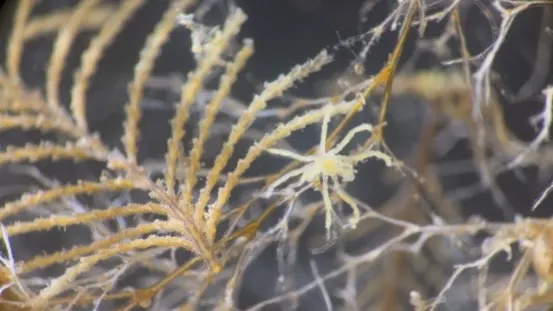
A small sea spider on a hydroid in the Salish Sea. (Credit: Cormac Toler-Scott)
“Sea spiders are a harmless group of strictly marine arthropods that are related to spiders and other arachnids but evolved hundreds of millions of years before and never made a transition to land, unlike their arachnid cousins,” he said.
Meet the new spiders crawling in the ocean
The new species were dubbed Callipallene pilosuspedes, a play on the Latin term for hairy feet, and Tanystylum kiixin, after the ancient Indigenous village near where the specimens were found.
Luckily, anyone swimming in the Salish Sea doesn’t have to worry about coming out of the water covered in tiny sea spiders.
“These sea spiders feed on the bodily juices of a colonial invertebrate called a hydroid, which is an animal related to jellyfish, sea anemones, and corals,” Toler-Scott added. “They live and feed on the hydroid for their entire lifespan, functioning as a parasite.”
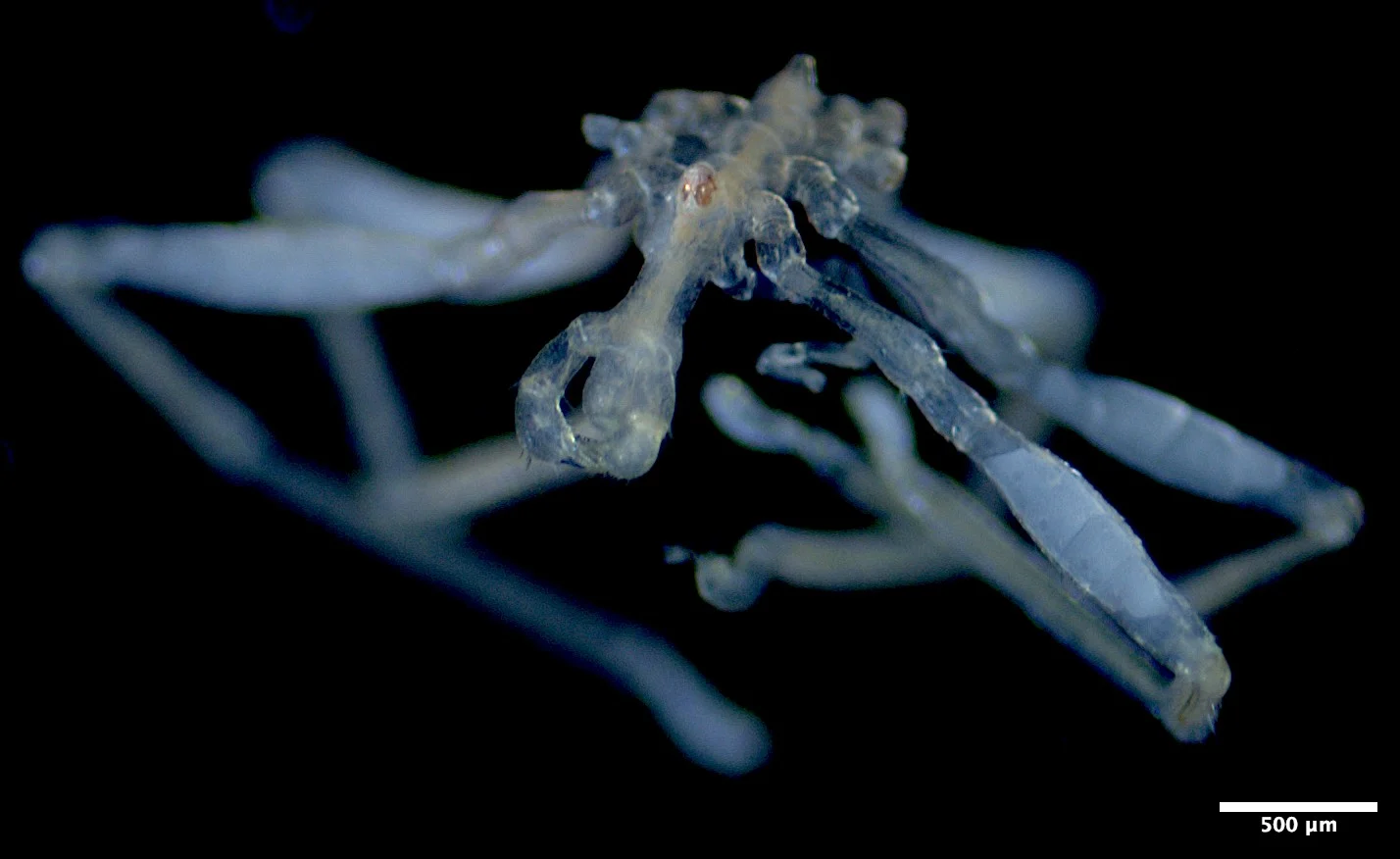
A closeup of Callipallene pilosuspedes, a newly discovered sea spider from the Salish Sea off of B.C.'s coast. (Credit: Cormac Toler-Scott)
And if you were covered in them, you likely wouldn’t even notice anyway.
“The two new species are approximately a centimeter in leg span and transparent, making them very well camouflaged and hard to see with the human eye.”
The Callipallene pilosuspedes have beady red eyes and, as per its name, hairy legs which it uses to groom itself. It also has a short proboscis and triangular-shaped mouth with three lips covered in sensory tendrils.
On the other hand, Tanystylum kiixin, looks much more like a traditional spider and less like a trumpet with legs. Its limbs are much smaller and less dexterous than its red-eyed relative, which means it can’t groom itself. As a result, the parasite is a host to tiny parasites of its own.
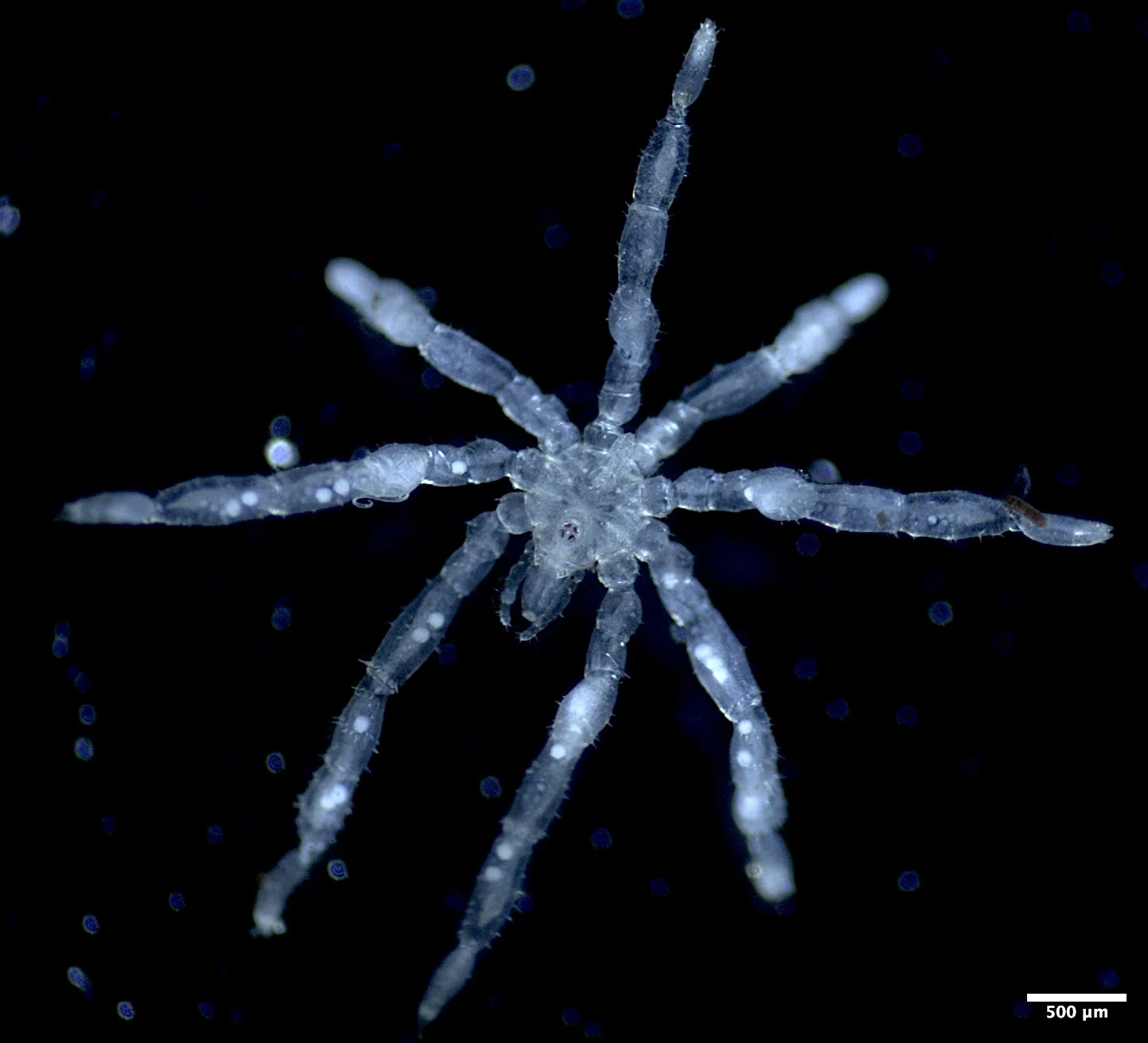
A closeup of Tanystylum kiixin, a newly discovered sea spider from the Salish Sea off of B.C.'s coast. (Credit: Cormac Toler-Scott)
Grim future awaits these new species and others
Toler-Scott has his own interest in how sea spiders and other marine invertebrates in the Salish Sea are at risk from climate change.
DON'T MISS: From parmesan to parme’gone’: Climate change is putting cheese in danger
“The Salish Sea hosts one of the most biodiverse ecoregions in Canada and also contains the highest density of threatened species in Canada,” he said. “Baseline data on most marine invertebrates is either non-existent or spotty, but we know that many species, particularly those that are less mobile, like corals and molluscs, are extremely sensitive to changes in water temperature, physical disturbance, and ocean acidification; all things that are expected to increase [and currently are] in the Salish Sea with climate change.”
But he says it’s not just climate change putting marine life at risk; rapid industrialization and coastal development are also major factors impacting organisms living in the Salish Sea, which is why filling the gap in knowledge about lesser-known species like sea spiders is becoming increasingly important.
“Accurately measuring and documenting marine biodiversity is an important step in identifying where conservation efforts will have the greatest impact in addressing anthropogenic threats to the Salish Sea. However, this is challenging without proper species description and identification. At the current global trajectory, many marine invertebrate species will likely become extinct before they are even discovered.”
Thumbnail image made using file photos provided by Cormac Tolen-Scott/Univeristy of British Columbia.