El Niño could delay persistent frost and hard freezes across Canada

While the pattern favours a warmer autumn, never count out the cold across Canada
Canada will continue to feel the effects of a very strong El Niño for months to come. The pattern will hold significant sway over how quickly temperatures decline in the weeks ahead.
Autumn is a particularly dynamic season for gardeners as average temperatures gradually drop.
The big question, as always, is how long we can go before frosts and freezes nip the growing season in the bud, and how much of a role El Niño will play in the process.
DON’T MISS: Understanding Canada's 'frost zones,' and when that first frost may hit
Frost and freeze are critical to growers
Tracking the season’s first frost and freeze potential is critical information for planters across the spectrum.
Frost forms on cold, clear mornings with calm winds. Temperatures at ground level can reach the freezing point even if thermometers a few metres up remain above 0°C. A hard freeze occurs when temperatures drop down to -2°C or colder for several hours.
Both of these conditions can damage or kill sensitive plants.
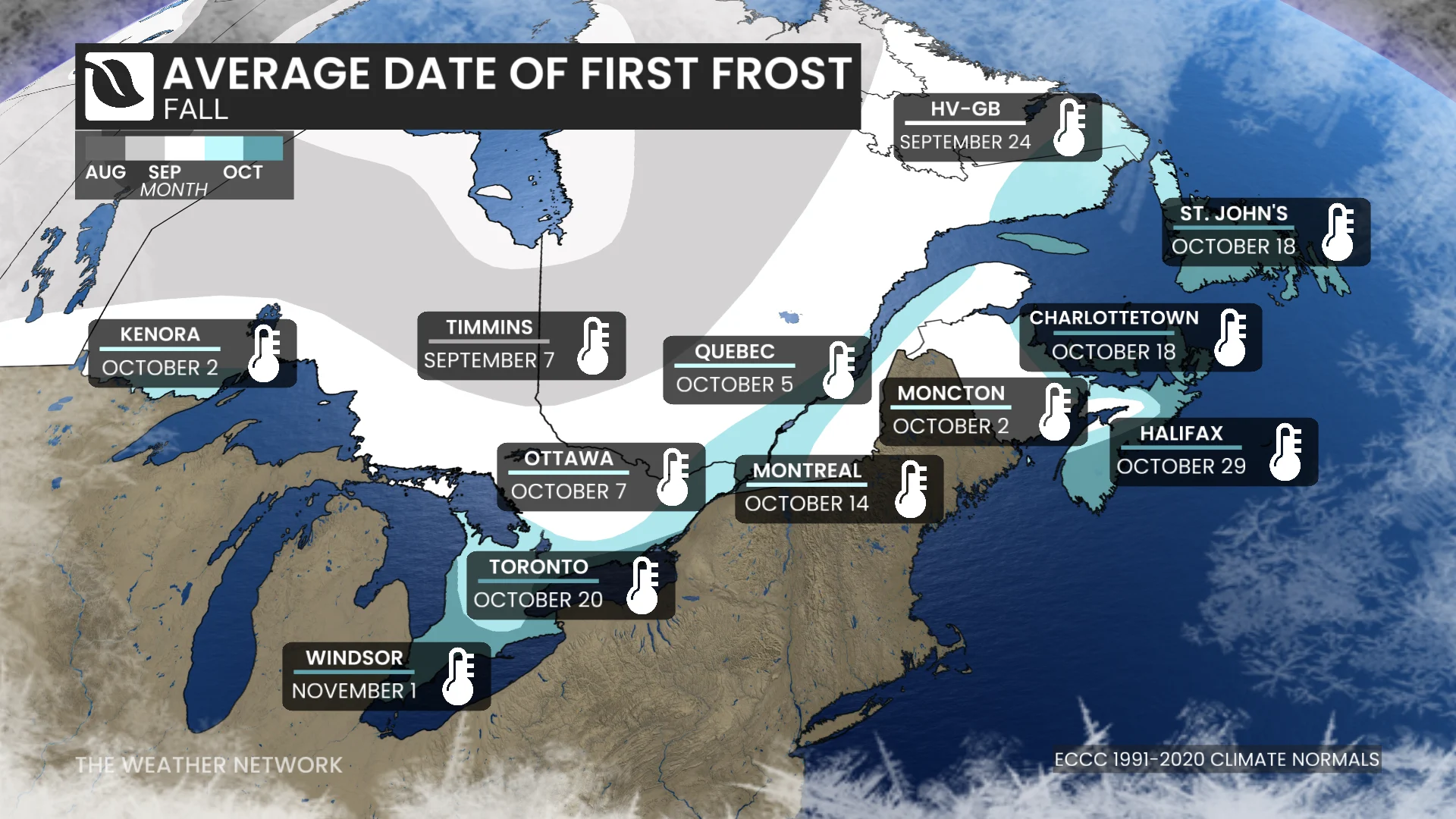
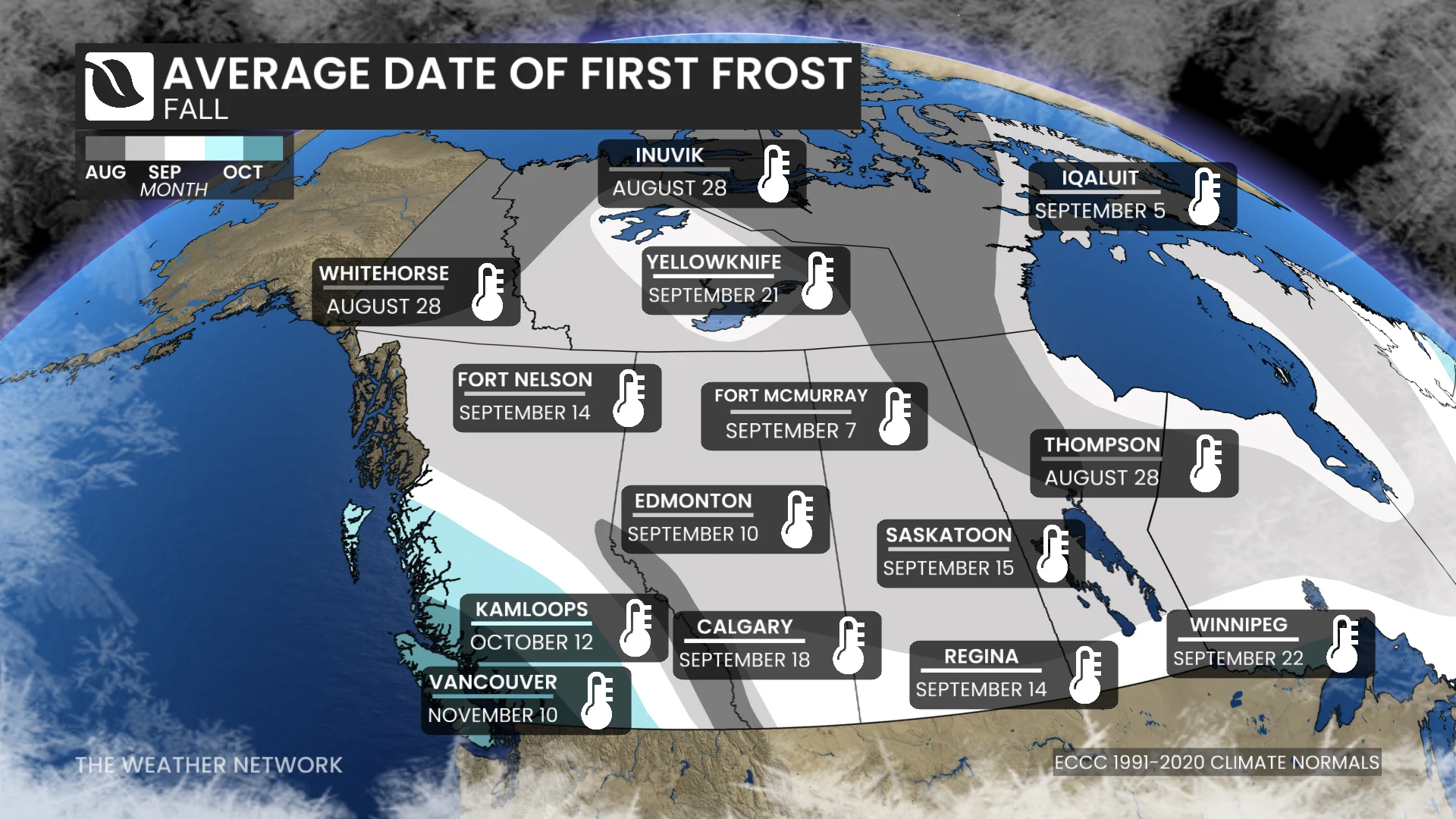
Many communities on the Prairies see their average first frost around the middle of September, with the season’s average first frost arriving in October for southern Ontario, southern Quebec, the Atlantic provinces, and B.C.’s Interior.
These are average dates, though, and the inaugural frost can arrive much sooner or much later depending on each year’s conditions.
The El Niño connection
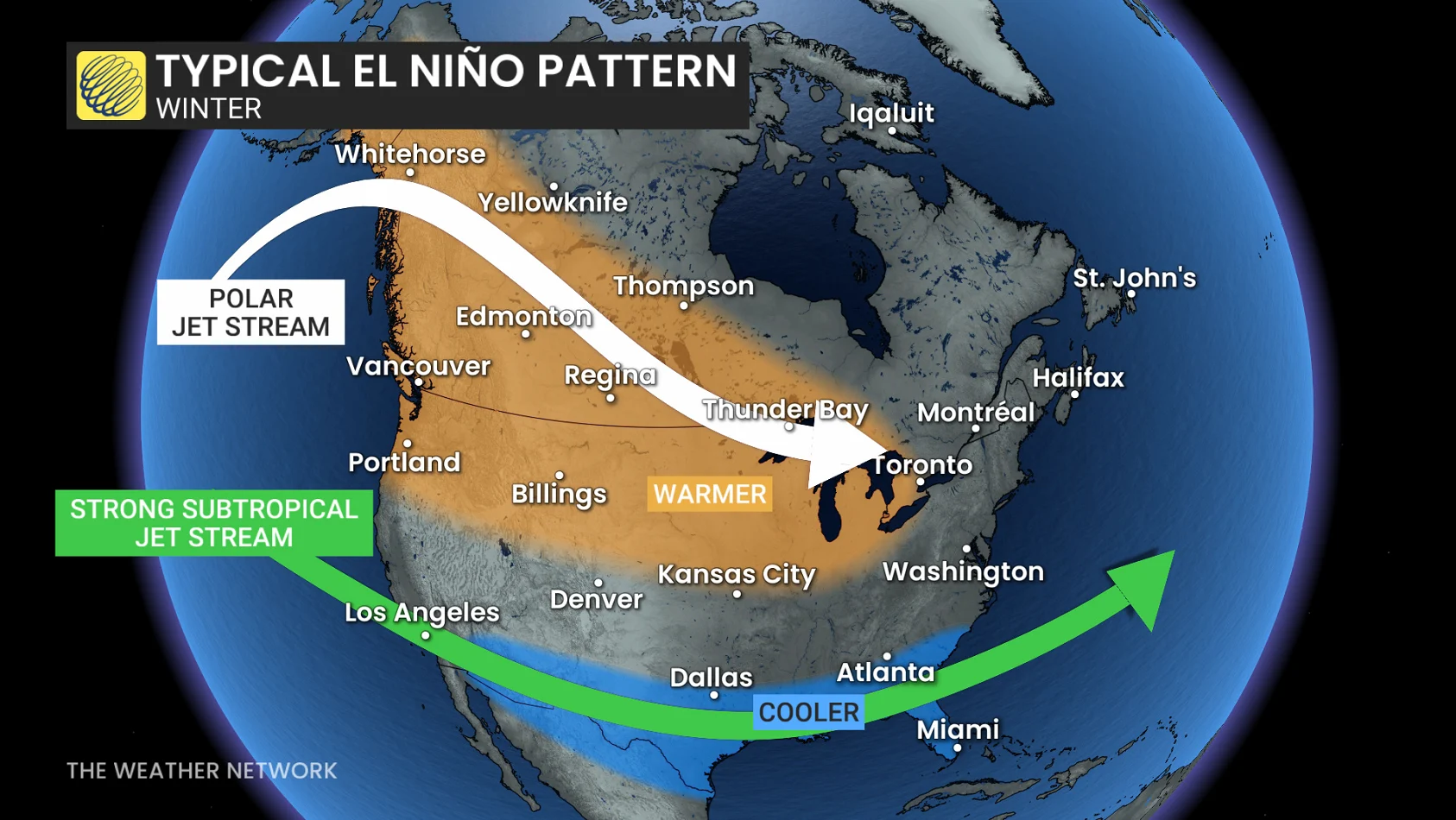
The warmer-than-normal waters of an El Niño can significantly alter seasonal weather conditions across North America by influencing the jet stream. Since the jet stream is more robust during the cooler seasons, we feel El Niño’s greatest effects in autumn and winter.
The polar jet stream gets forced northward allowing Arctic air to remain trapped at higher latitudes, which allows temperatures in the southern half of Canada trend warmer than normal.
Thanks to El Niño’s influence, it’s likely that this year will see a delay in frosts and hard freezes for many Canadians. This won’t be the case across the board--after all, we’ve already seen frost advisories in portions of New Brunswick, Newfoundland, Quebec, and Ontario already this season.
A delayed frost may actually prove helpful for a late-season harvest on the Prairies, where many areas are behind schedule after very wet spring and summer seasons.
Despite the overall warmer pattern, we may see occasions for brief interruptions of cold air in the weeks ahead that may lead to frosts and freezes in some areas. Always keep up with your local forecast for the latest on conditions in your area.