Florida drought gradually improving despite lack of hurricanes

The Sunshine State’s severe drought has dropped by nearly half since the spring months
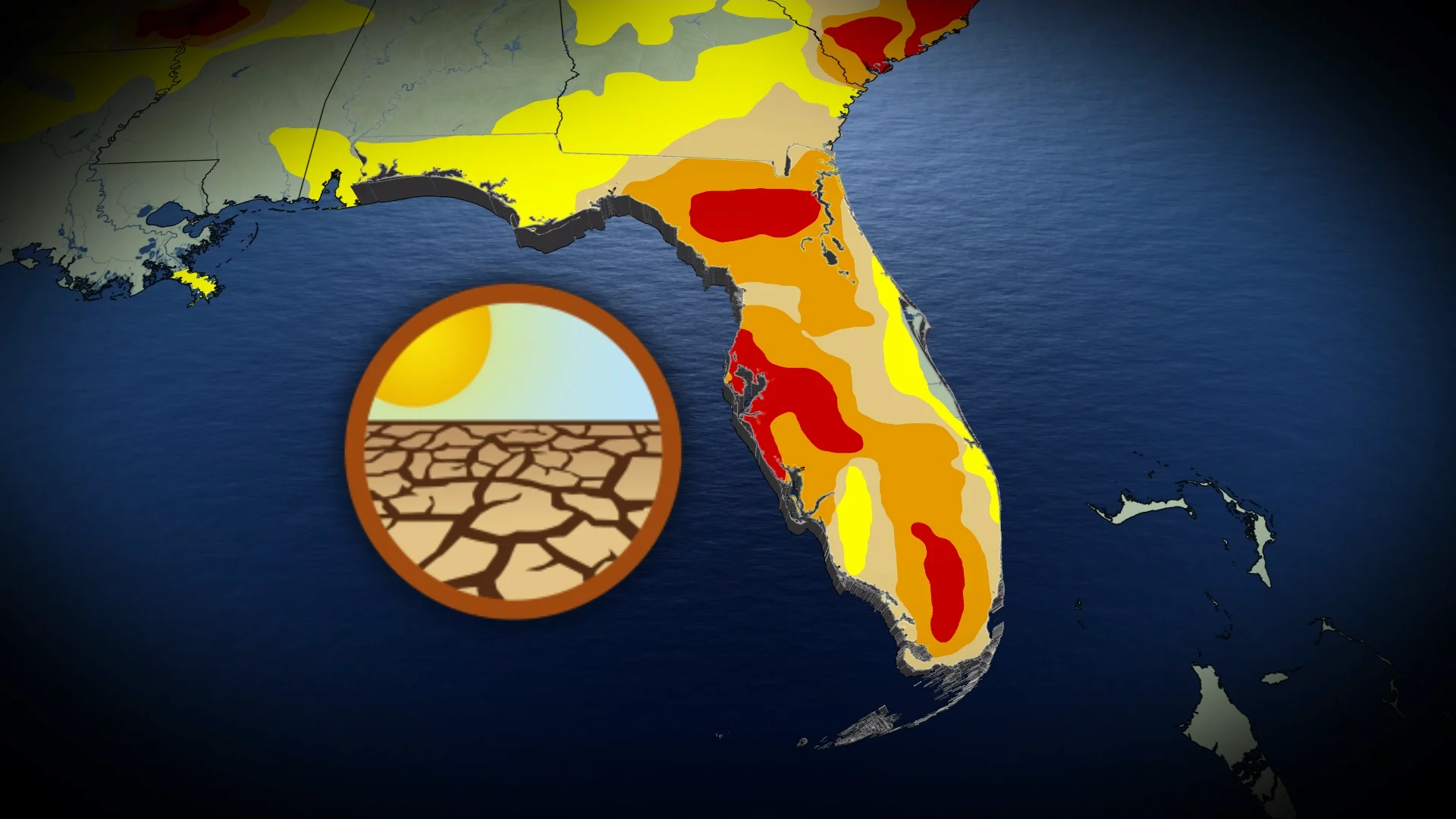
Florida’s reputation for “liquid sunshine” is holding strong this summer as daily thunderstorms chomp away at the region’s once-extreme drought.
Only about half of the state is mired in a severe drought or worse, which is down significantly from near-complete coverage just a few months ago.
DON’T MISS: Rapid El Niño may force the slowest hurricane season in years
Florida is a global hub for both tourism and agriculture, two industries that rely heavily on ample rain to replenish and rehydrate the region’s strained natural resources.
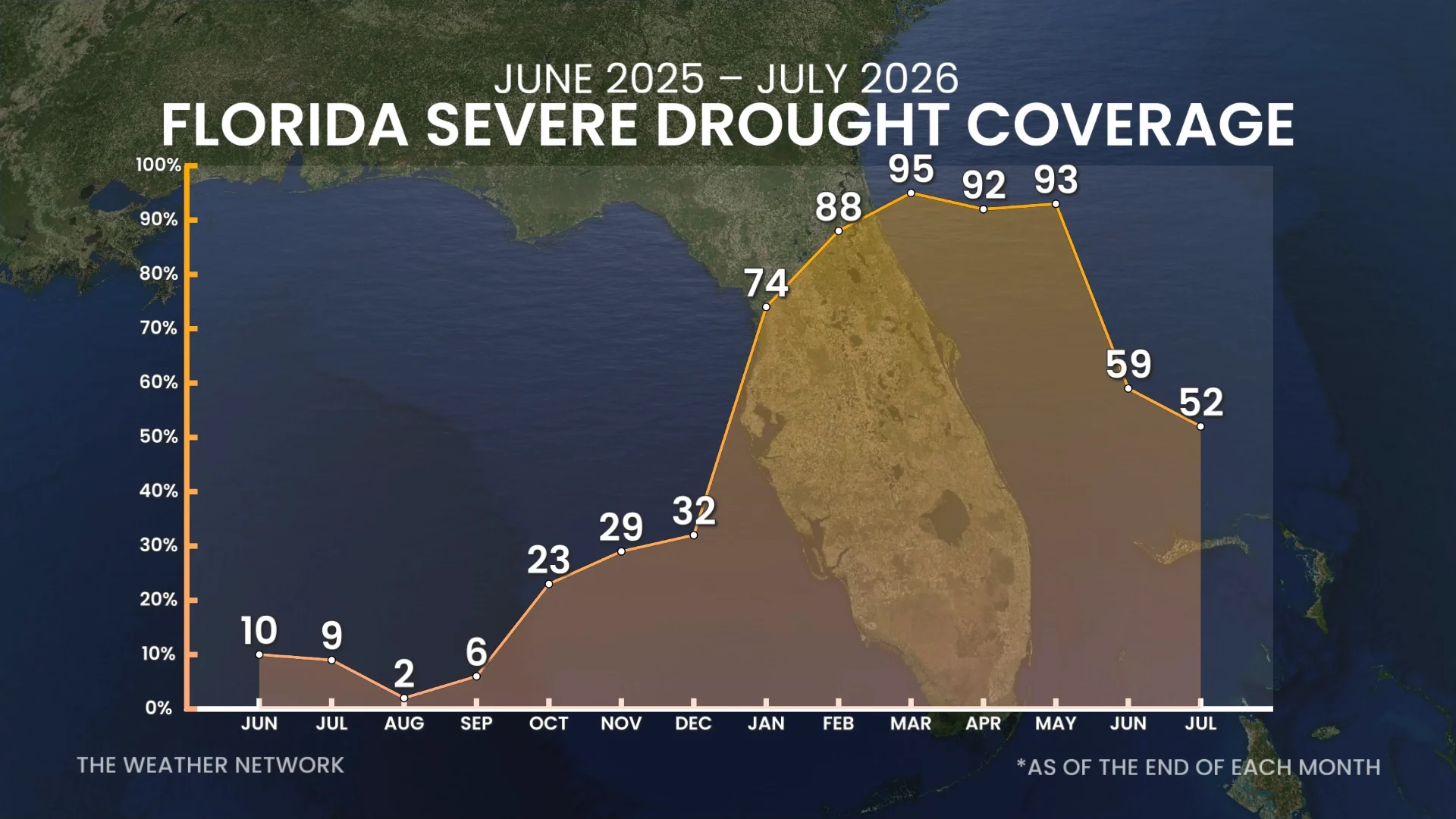
A significant drought that began this past September peaked during the late winter and early spring months, with almost all of the state covered by severe drought or worse. The persistent lack of rain prompted widespread water restrictions and fire bans.
Conditions have improved significantly since the start of the summer season.
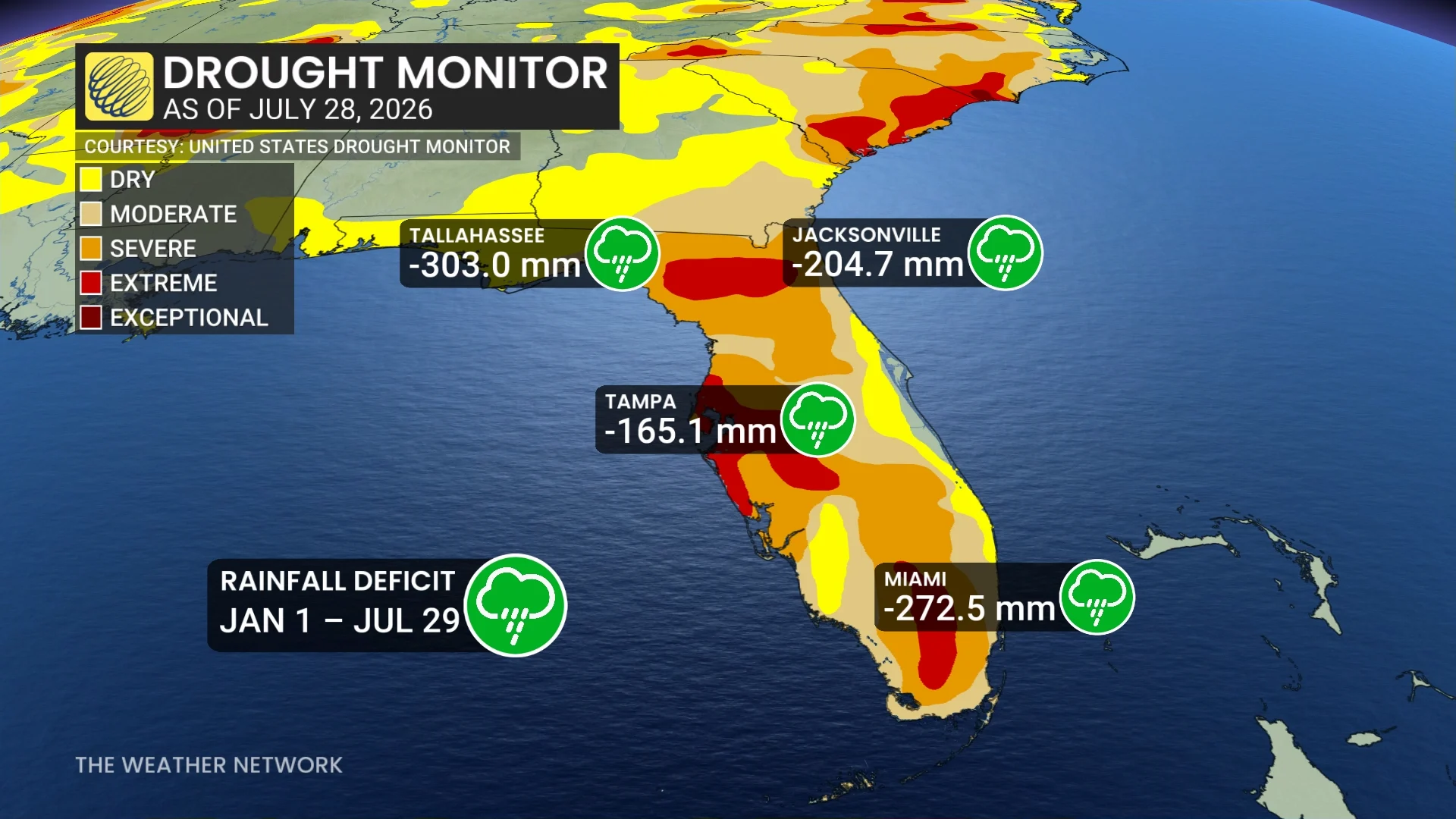
As of the July 28 update of the U.S. Drought Monitor, severe drought or worse only covered 52 per cent of Florida’s landscape.
Despite the improvement, most of the state’s major cities are still running significant rainfall deficits since the beginning of the year. This includes totals 303.0 mm below average in Tallahassee, 273.5 mm behind in Miami, and 165.1 mm off normal in Tampa.
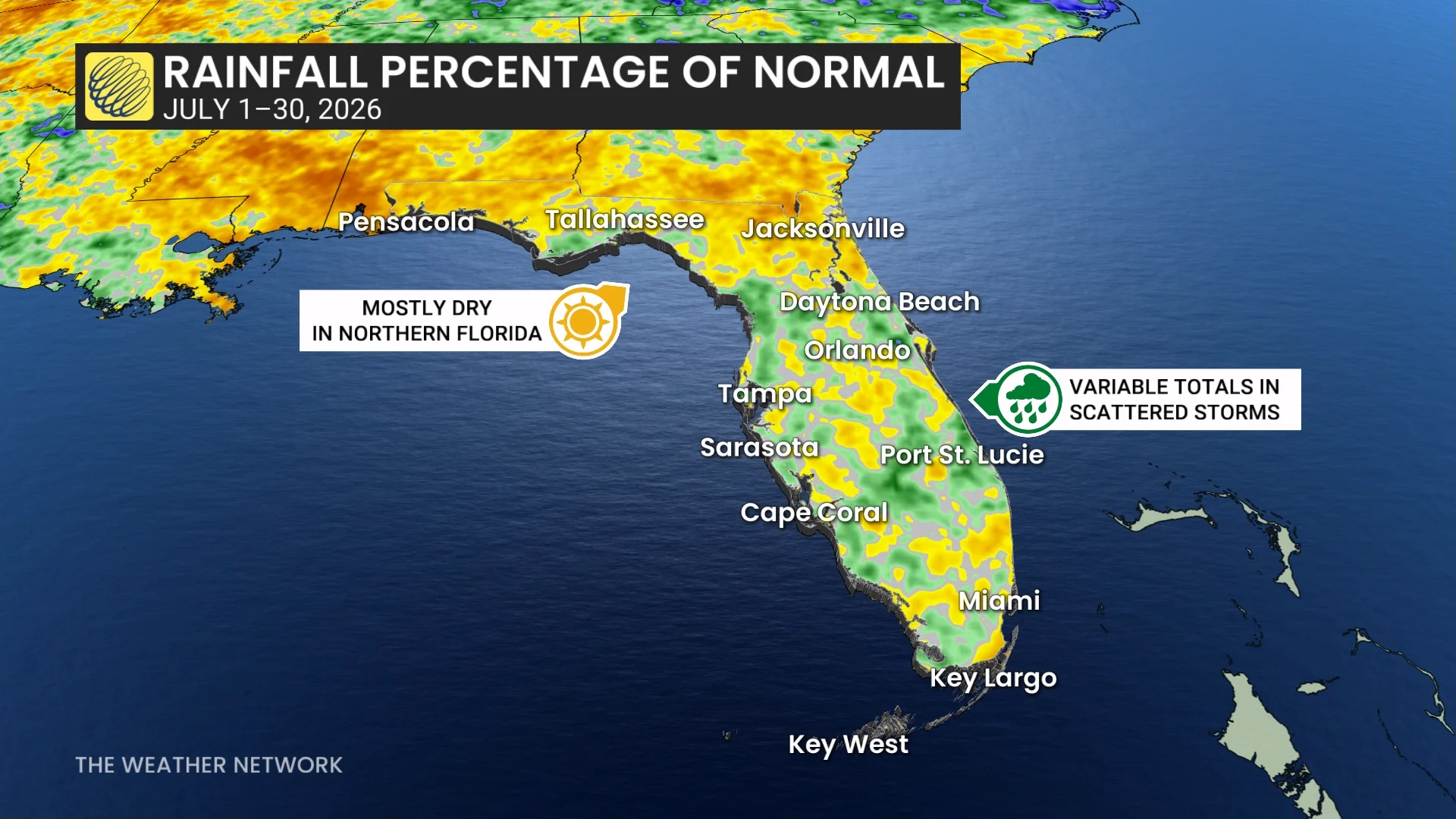
Florida’s daily and iconic afternoon thunderstorms have helped to put a significant dent in the region’s drought.
A map of the percentage of normal rainfall over the past 30 days shows a splotchy signature from Daytona Beach south toward Miami, characteristic of heavy rain in scattered thunderstorms.
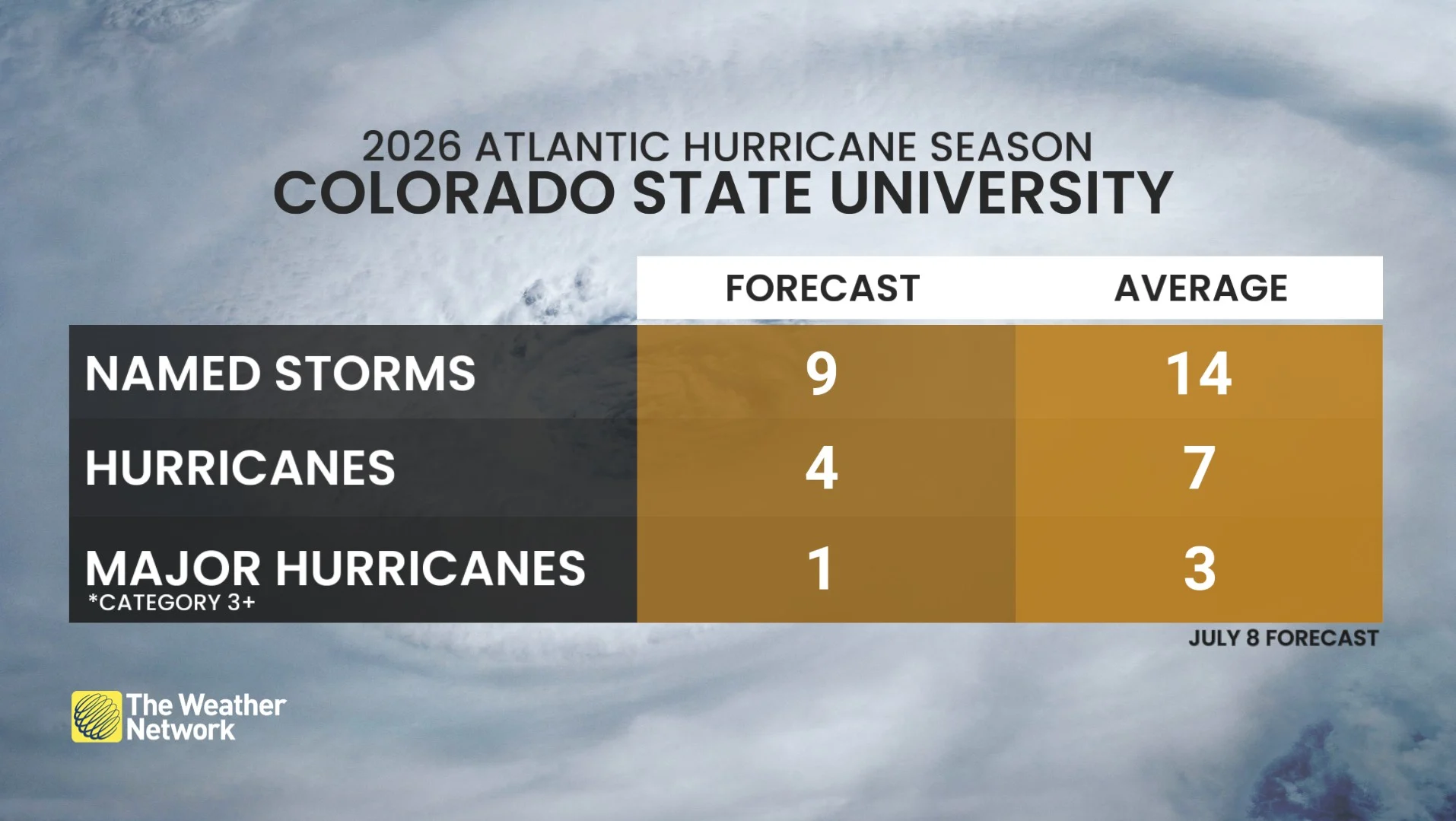
This reversal is especially good news given that we’re in the midst of a below-average hurricane season across the Atlantic basin. Many droughts in the southeastern U.S. often require a landfalling tropical system to see meaningful relief during the warm season.
A drought in Florida can have global effects.
Florida exported $5.4 billion USD worth of goods to Canada in 2025, making it the state’s second-largest trading partner on the world stage. A significant portion of that annual trade consists of fruits and vegetables, crops that are directly affected by the region’s ongoing drought.